



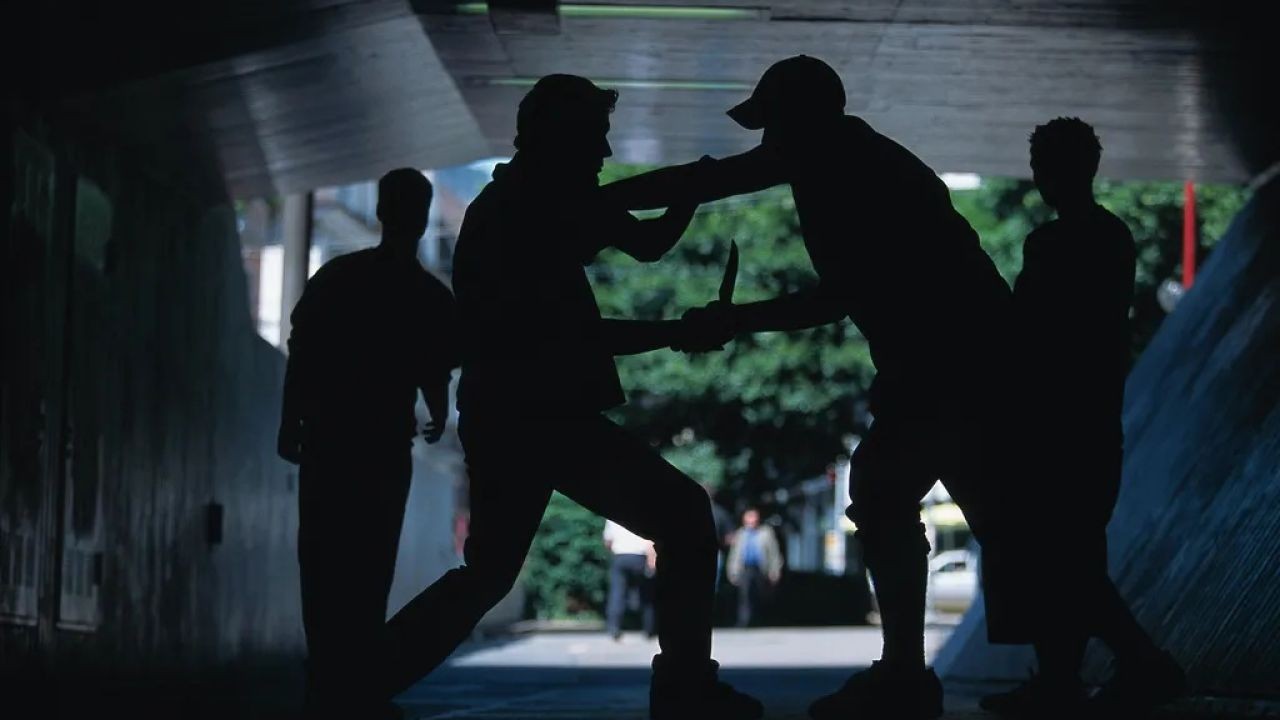
1. Introduction: Not Born Violent, Made Invisible
New Zealand loves its self-image as a safe, laid-back corner of the world — a place where kids can still ride their bikes to the dairy, where rugby boots hang on the fence to dry after training, and where “she’ll be right” is the national mantra. But behind the postcard version of Aotearoa, something darker is brewing: our rangatahi (youth) are increasingly picking up knives, falling into gang life, and lashing out in ways that shock families, schools, and communities.
The most sobering truth? These young people aren’t born violent. They’re shaped by environments that ignore them, systems that exclude them, and struggles that make them invisible.
The Alarming Shift in Numbers
Police data shows youth offending overall has been on a downward trend for years, but in the last few, knife-related incidents and violent assaults among teenagers have spiked. Headlines of 14-year-olds caught in ram raids or stabbings outside schools have become disturbingly common. Community leaders warn that what used to be seen as “isolated scraps” is morphing into something more organised — linked to gang grooming and the underground economy.
In South Auckland, one youth worker recently said: “These aren’t bad kids. These are good kids who’ve been pushed to the wall. If home doesn’t feel safe, school kicks them out, and society doesn’t see them, they’ll find belonging somewhere else — even if it’s a gang.”
The Good Kid vs. System Soldier Tension
Here lies the uncomfortable tension at the heart of the issue. Most Kiwis still like to think of “bad kids” as the exception — a few rough cases who simply need a firm hand. But dig deeper and the pattern is unmistakable: poverty, food insecurity, over-policing of Māori and Pasifika youth, school suspensions, and untreated mental health struggles. These aren’t random bad apples. They’re the predictable result of a system that fails to nurture, educate, and heal its most vulnerable.
When a 15-year-old slips a knife into his school bag, it’s not because he woke up violent — it’s because he woke up scared. Scared of the gang prospects waiting outside the bus stop. Scared of being jumped after school. Scared of being invisible in a world that keeps telling him he doesn’t belong.
A Human Story Behind the Statistics
Take Jayden (not his real name), a 16-year-old from Wellington. After being suspended from school multiple times for fighting, he drifted into a local crew that promised him protection. His solo mum works two jobs and struggles to put kai (food) on the table. With no one at home to talk to and no mental health support available without a six-month wait, he found belonging with older boys who carried knives. Within six months, Jayden was arrested for his first violent offence.
His story isn’t unique — it’s alarmingly common. And unless New Zealand tackles the deeper roots of exclusion, poverty, and trauma, we will keep producing more Jaydens.
Why This Matters Now
The “youth violence spike” isn’t just about crime statistics. It’s about the kind of country we’re becoming. If Aotearoa prides itself on fairness, whānau, and giving everyone a fair go, then we need to confront why so many of our young people feel they have none of those things.
2. The Numbers Behind the Spike
When it comes to youth crime in Aotearoa, the numbers tell a story that’s more complicated than the headlines. On paper, youth offending overall has been dropping for years. The Ministry of Justice notes that offending by under-17s has more than halved since the early 2010s. That’s the good news.
But here’s the sting: within that overall decline, certain types of violence — especially knife crime, ram raids, and aggravated assaults — have surged among rangatahi (youth). And it’s this shift in how young people are offending that has communities, police, and schools on edge.
Knife Crime on the Rise
Police reports show an uptick in knife-related incidents involving teenagers over the last five years. While firearms often dominate political debates, it’s knives that are increasingly being carried by young people as a form of protection — and sometimes as a status symbol.
In Auckland, schools have reported multiple cases of students bringing blades to class or stashing them in bags. In 2023, frontline youth workers in South Auckland warned that carrying a knife had become “as common as carrying a vape.” For many kids, it’s less about wanting to attack someone and more about not wanting to be the one left vulnerable.
Ram Raids and Violent Theft
Ram raids became one of New Zealand’s most publicised youth crime waves in 2022–2023. Data from Police showed hundreds of ram-raid style burglaries, with nearly half committed by offenders under 18. These smash-and-grab thefts often made headlines, but what got less attention was the social context: many of the kids caught were under 15, often disconnected from school, and acting under the influence — or direction — of older gang members.
Who’s Most Affected?
The stats also reveal stark inequities. Māori and Pasifika rangatahi are disproportionately represented in youth crime figures. According to Oranga Tamariki data, Māori youth account for over 60% of those in the youth justice system, despite making up only about 16% of the national youth population. This isn’t about individual failings — it points to deeper systemic inequities around poverty, education, and policing.
Comparisons With the Past
Back in the 1990s, New Zealand saw high rates of youth crime, but the pattern was different — more property offences like car thefts and shoplifting. What’s alarming today is the normalisation of violence at a younger age. Youth advocates say it’s not just about kids “getting into trouble” but about kids internalising violence as a survival tool in their daily lives.
Why the Numbers Matter
The numbers aren’t just cold stats; they’re signals of a shifting environment. On one hand, fewer young people are offending overall — a success story we shouldn’t ignore. On the other, the spike in knife-carrying and violent crimes tells us that the small group still falling through the cracks is falling harder than ever.
As one Christchurch youth mentor put it: “We’ve got less kids offending, but the ones who are — they’re younger, angrier, and carrying sharper tools. That’s the real worry.”
3. Gang Grooming: The Silent Recruitment Machine
When most Kiwis think of gangs, they picture patched men on Harleys, not a 14-year-old school kid being recruited after the final bell. But across Aotearoa, that’s exactly what’s happening. The rise in youth violence isn’t random — it’s fuelled by a growing pattern of gangs deliberately grooming rangatahi who feel invisible, unwanted, or excluded.
How the Grooming Works
Grooming isn’t always obvious. It starts with small gestures: a free feed, a lift home, a bit of “protection” if someone’s getting hassled at school. For a young person living in poverty or bouncing between whānau homes, that show of care feels like whanaungatanga (family connection).
Before long, that “older brother” figure starts asking for favours — maybe carrying a package, standing lookout, or joining in on a ram raid. The young person is pulled in deeper, earning status, clothes, or even cash. What feels like belonging quickly becomes obligation.
As one youth worker in South Auckland put it: “They’re not being asked, they’re being harvested.”
The Perfect Targets
Gangs don’t need to target every teenager. They know who’s vulnerable:
Kids excluded or suspended from school.
Rangatahi in overcrowded homes, where parents are working multiple jobs.
Those with undiagnosed mental health struggles or untreated trauma.
Kids who’ve already been stopped by Police and feel labelled as “trouble.”
These young people are easier to reach than we’d like to admit. One West Auckland mentor described it bluntly: “The gangs are showing up where the system isn’t. They’re filling the gaps we leave behind.”
Why Knives, Not Guns?
While gangs themselves may have access to firearms, younger recruits are usually encouraged to carry knives. They’re cheaper, easier to hide, and carry less heat with the Police than guns. For the gangs, it’s practical. For the kids, it’s about power — a blade in the pocket is a shield against fear, a tool to prove toughness, and, tragically, a ticket into violence.
From Grooming to Generational Cycles
The real danger is that grooming doesn’t just recruit one kid — it creates cycles. A 15-year-old drawn into gang life often becomes a 20-year-old patched member, who in turn grooms the next wave of 13-year-olds. It’s not just about today’s spike in knife crime. It’s about tomorrow’s generational entrenchment.
Research from the University of Otago highlights that children of gang members are significantly more likely to end up in the justice system themselves. This means every “Jayden” we lose to grooming today is tomorrow’s mentor for another vulnerable teen.
The Grooming We Don’t See
Not all grooming is street-based. Social media has become a quiet recruitment tool. Instagram, TikTok, and Snapchat are flooded with videos glamorising fast cash, stolen cars, and “brotherhood.” Some crews use private group chats to target kids as young as 12, offering them a pathway into what looks like respect and status — but is really exploitation.
4. Poverty and the Price of Belonging
If you want to understand why some rangatahi end up carrying knives, you can’t just look at crime — you’ve got to look at poverty. Because in Aotearoa, violence often starts in the fridge, the bedroom, or the power bill.
Poverty as the Backdrop
New Zealand likes to see itself as a land of opportunity, but the stats paint a different picture. According to Child Poverty Action Group, around 1 in 6 Kiwi kids live in material hardship, meaning basics like food, shoes, or warm housing aren’t guaranteed. For Māori and Pasifika tamariki, the numbers are even worse — closer to 1 in 4.
What does this mean in real life? It means kids going to school hungry, sleeping on couches because there aren’t enough beds, and wearing the same hoodie for a week because the washing machine is broken and there’s no money to fix it.
When poverty becomes normal, kids learn early that society doesn’t see them as a priority. And that’s where gangs and street crews step in, offering what looks like a shortcut to dignity.
The False Economy of Belonging
Imagine you’re 14, your mum’s juggling two jobs, and your old man’s not around. The fridge is often empty, and you’re embarrassed to bring mates home. Then someone older offers you cash to run an errand — maybe $50 for holding a package, or a pair of fresh Nikes for helping on a ram raid. Suddenly, you’ve got what your family can’t afford.
It’s not just about money. It’s about mana (status). That new pair of kicks, that phone upgrade, that shout at Macca’s — they’re symbols of belonging, of being seen, of not being the kid everyone writes off. But it comes at a price: loyalty to people who will use you, then discard you.
School Exclusion and Poverty’s Double Blow
Poverty also fuels school exclusion. Kids who can’t afford uniforms, stationary, or transport are often the first to disengage. When schools don’t have the resources to support them — especially those with learning needs — they’re more likely to be suspended or expelled.
And once a kid’s out of the classroom, they’re sitting ducks. As one Hamilton youth advocate put it: “A suspended kid is a recruited kid — it’s just a matter of who gets to them first.”
The Hidden Costs
It’s easy to talk about poverty in terms of dollars and cents, but its real cost is psychological. Poverty teaches kids they’re invisible. That invisibility breeds resentment, hopelessness, and a willingness to take risks. Carrying a knife, then, isn’t just about safety — it’s about carving out power in a world that keeps taking it away.
The Bigger Picture
The connection between poverty and violence isn’t just anecdotal. International studies show strong links between inequality and crime, and New Zealand is no exception. Areas with higher deprivation consistently show higher rates of youth offending. It’s not because kids in those areas are “bad” — it’s because they’re surviving conditions that wealthier suburbs will never see.
5. School Exclusion: Classrooms to Courtrooms
Schools are meant to be safe havens — places where rangatahi (youth) learn, grow, and find guidance. Yet for many Kiwi kids, the opposite is happening. Suspension and expulsion aren’t just disciplinary measures; in today’s environment, they often act as stepping stones from the classroom straight into gang life and violent offending.
The Scale of the Problem
Data from the Ministry of Education shows that thousands of students are suspended or expelled each year, with Māori and Pasifika youth disproportionately affected. In 2022, Māori students made up roughly 50% of all stand-downs and suspensions, despite being only about 16% of the school-age population. This overrepresentation isn’t a reflection of behaviour alone — it’s also a symptom of systemic bias, socio-economic disadvantage, and under-resourced support structures.
Youth advocates warn that these numbers are just the tip of the iceberg. Many incidents go unreported or are handled informally, meaning a growing number of at-risk kids slip under the radar.
The School-to-Prison Pipeline
When a teenager is suspended or expelled, they’re suddenly outside the protective framework of school. For some, home may not be a safe environment — overcrowding, neglect, or exposure to violence can make isolation dangerous.
At this point, gangs or older peers often step in. They provide structure, belonging, and protection — albeit in the form of illegal activity. The result is predictable: the young person becomes involved in petty crime, theft, or even violent offences. As one South Auckland youth worker put it:
“We’re not losing kids to crime; we’re losing them to systems that fail them. School exclusion just accelerates it.”
Why Exclusion Happens
Schools often suspend or expel students for:
Physical fights or aggression
Truancy or chronic absenteeism
Behaviour that disrupts learning
Yet the root causes of these behaviours — poverty, trauma, learning difficulties, family stress — are rarely addressed in parallel. Without targeted support, punitive measures simply remove kids from the environment where they could learn coping skills, mentorship, and resilience.
Consequences Beyond the Classroom
Exclusion carries long-term impacts:
Educational gaps: Missed curriculum and qualifications reduce future employment options.
Social isolation: Being outside the school community can erode friendships and supportive networks.
Increased risk of offending: As the previous section highlighted, poverty and lack of supervision create a fertile ground for gang grooming.
The irony is stark: schools are intended to prevent crime by equipping students with skills and guidance, yet in many cases, exclusion accelerates the very behaviours it seeks to stop.
A Way Forward
Experts argue for:
Restorative practices: Focusing on repairing harm rather than purely punishing.
Alternative education pathways: Flexible programmes that keep at-risk youth engaged.
Integrated support: Combining mental health services, social work, and educational assistance.
When schools act as part of a support system rather than a gatekeeper, rangatahi are less likely to fall through the cracks, carry knives, or end up in gangs.
6. Mental Health Collapse: A Crisis Within a Crisis
If poverty and school exclusion are the soil for youth violence, mental health is the storm that drives it. Across New Zealand, rangatahi (youth) are struggling with unprecedented levels of anxiety, depression, trauma, and other mental health challenges — and for many, the system designed to help them is failing.
The Rising Mental Health Burden
Statistics show that one in four Kiwi teens experiences significant mental health issues, yet access to timely support is limited. Waitlists for counselling and child mental health services can stretch for months, particularly in rural areas or low-income communities. By the time support arrives, the youth may already be entrenched in negative coping mechanisms — including joining gangs, carrying knives, or acting out violently.
Auckland psychologist, Dr. Tane Raukura, explains:
"These kids aren’t inherently violent. They’re scared, depressed, and desperate for control. Violence becomes a language for the feelings they can’t express anywhere else."
Trauma and Exposure to Violence
Many young people exposed to domestic violence, community crime, or abuse at an early age carry deep trauma into adolescence. Unaddressed, trauma manifests as aggression, impulsivity, and emotional dysregulation — key drivers behind knife-related offences.
For Māori and Pasifika youth, historical trauma compounds these challenges. Colonisation, systemic marginalisation, and intergenerational hardship mean that mental health struggles are often layered, complex, and culturally nuanced. Without culturally competent interventions, these young people remain underserved.
Suicide, Anxiety, and Aggression
New Zealand has one of the highest youth suicide rates in the OECD. Anxiety and depression don’t just affect mood — they impact behaviour, decision-making, and social interactions. Some youth respond to these pressures by externalising their pain through aggression, while others self-isolate, leaving them vulnerable to gang recruitment.
Case in point: Rico, a 15-year-old from South Auckland, was experiencing untreated depression after his father left and his family struggled with housing instability. With no counselling available, he began carrying a knife to school for “protection,” ultimately involved in an assault that could have been prevented with early intervention.
Systemic Barriers to Mental Health Support
Waitlists: Public mental health services often have delays of several months.
Accessibility: Rural areas face acute shortages of child psychologists and social workers.
Cultural Mismatch: Services that do not integrate Māori and Pasifika approaches often fail to engage youth.
Without access to timely, culturally aware support, young people internalise their pain or find it in environments where violence is the currency.
Prevention Through Early Intervention
Experts argue that improving mental health access is one of the most effective ways to prevent youth violence:
School-based counselling: Embedding psychologists and social workers in schools.
Whānau-centred approaches: Working with families to provide stability and support.
Peer support programmes: Trained youth mentors who can identify early warning signs.
Culturally informed therapy: Using tikanga Māori and Pasifika frameworks to create trust and engagement.
Addressing mental health is not just about reducing anxiety or depression — it’s about breaking the link between trauma and violence, giving rangatahi the tools to navigate challenges without resorting to knives, gangs, or crime.
7. The Role of Social Media and Pop Culture
In the age of TikTok, Instagram, and YouTube, influence comes in milliseconds. For many rangatahi (youth) in Aotearoa, social media and pop culture are not just entertainment—they’re a blueprint for identity, status, and belonging. And in some cases, they’re quietly feeding the spike in youth violence.
The Glamorisation of Violence
Across platforms, videos of gang activity, knife-carrying, and ram raids circulate widely. Drill music, in particular, has gained traction among teens. Its lyrics often glorify toughness, retribution, and “street respect,” while the flashy videos show status symbols like cars, cash, and designer gear.
For vulnerable teens, these images send a powerful message: violence is glamorous, respected, and a way to be seen. A youth worker in South Auckland observes:
"Some of these kids aren’t watching the news—they’re learning what it means to survive and gain respect online."
Online Recruitment
Gangs are no longer waiting at the bus stop to find recruits. They use social media to contact teens, flaunt perceived power, and subtly lure them into illegal activity. Private chats, TikTok comments, and Instagram DMs act as recruitment channels, offering a sense of community and belonging that youth may lack offline.
Identity, Peer Pressure, and Social Currency
In Kiwi schools and communities, social status is increasingly influenced by online presence. Teens who aren’t part of the “in” group risk marginalisation, making them more susceptible to gang influence. Carrying a knife, joining a crew, or posting a viral “street” video becomes a way to gain peer approval, assert dominance, or simply be noticed.
The Dark Side of Connectivity
While social media has positive potential—education, connection, self-expression—it also amplifies:
Anxiety and FOMO (Fear of Missing Out): Teens compare themselves to idealised, often violent images of success.
Normalization of Violence: Repeated exposure can desensitize young people to harm.
Cyber Pressure: Viral trends can escalate risky behaviour offline.
Counteracting Negative Influence
Experts stress the importance of guiding youth in navigating online spaces responsibly:
Digital Literacy Programs: Teaching teens to critically assess what they see online.
Positive Role Models: Highlighting local heroes, creatives, and athletes who use social media for good.
Community Monitoring & Mentoring: Adults and youth mentors helping young people understand the consequences of online and offline actions.
By understanding the role of social media and pop culture, parents, schools, and communities can intervene early, guide identity formation, and reduce the lure of gangs and violent behaviour.
8. Law Enforcement vs. Prevention: Clash of Approaches
New Zealand has long prided itself on being a safe, fair society, yet when it comes to youth violence, the response is often reactive rather than preventive. Police crackdowns, curfews, and “zero tolerance” policies frequently collide with community-driven, restorative approaches, leaving rangatahi (youth) caught in the middle.
Police Enforcement: Quick Fix or Band-Aid?
The New Zealand Police have intensified efforts to tackle knife crime and youth gang activity, deploying:
Increased patrols near schools and public spaces
Stop-and-search operations targeting minors
Gang liaison officers engaging with known groups
While these measures can disrupt criminal activity temporarily, experts warn they don’t address root causes. A 15-year-old caught carrying a knife may face court intervention or a caution—but if poverty, trauma, or gang grooming isn’t addressed, the underlying risk remains.
The Youth Justice System
The Youth Justice Act and Oranga Tamariki aim to balance accountability with rehabilitation. Options include:
Supervision orders and youth justice conferencing
Family group conferences for restorative approaches
Detention in youth justice residences as a last resort
Critics argue that detention, even short-term, can reinforce negative identities, isolating youth from school, peers, and supportive whānau, and sometimes deepening gang involvement upon release.
Prevention: Community and Whānau Approaches
Community programmes take a different tack, focusing on prevention and support rather than punishment. Examples include:
Mentorship schemes connecting youth with positive role models
Sport, arts, and skills programmes keeping rangatahi engaged
Whānau-centred initiatives addressing trauma, poverty, and mental health
These approaches recognise that violence is often a symptom of systemic neglect, and that early intervention can prevent escalation.
The Clash: Enforcement vs. Engagement
The tension arises when enforcement-focused measures exclude preventive support:
Stop-and-search tactics can erode trust between police and communities, making youth less likely to seek help.
Strict school exclusions and legal penalties may push teens further into gangs.
Community programmes, while effective, often lack funding or national coverage, limiting their reach.
Dr. Tane Raukura, a youth psychologist, summarises:
"We’re stuck in a tug-of-war. The system reacts with punishment, but the kids need support, guidance, and belonging. Until we shift the balance, the cycle continues."
Towards a Balanced Response
Experts advocate for a dual approach:
Targeted enforcement to keep communities safe and hold offenders accountable.
Comprehensive prevention addressing mental health, poverty, education, and gang recruitment.
This combined strategy requires coordination between police, schools, social services, and community organisations, recognising that intervention works best when enforcement and prevention operate together, not at odds.
9. What’s Working: Community and Whānau Solutions
Amid the grim statistics and rising youth violence, there is hope. Across Aotearoa, community-led initiatives, whānau-centred programs, and culturally informed interventions are demonstrating that with the right support, rangatahi (youth) can be steered away from knives, gangs, and crime.
Māori and Pasifika-Led Programs
Cultural grounding is key. Many Māori and Pasifika organisations integrate tikanga (customs) and whānau values into youth programs, reinforcing identity and belonging. Examples include:
Te Pūtahitanga o Te Waipounamu: Provides mentoring and family support to at-risk Māori youth in the South Island.
Pasifika Futures Youth Mentorship: Focuses on leadership, education, and community engagement for Pasifika teenagers.
These programs emphasise that belonging and respect, not punishment, are the foundations of change.
Mentorship and Positive Role Models
Mentorship programs connect youth with adults who have lived experience or professional expertise. Having someone to model positive behaviour, offer guidance, and listen without judgment reduces the lure of gangs. Sports coaches, artists, and tradespeople are often used as mentors to show alternative paths to status and success.
Education and Alternative Pathways
Alternative education settings, including teen-focused academies and vocational programs, keep students engaged while addressing past exclusion. Flexible schooling can combine study with life skills, counselling, and social support, reducing the risk of re-offending.
Mental Health and Trauma Support
Community health initiatives embed psychologists, social workers, and counsellors directly into youth programs. Early access to trauma-informed care helps young people process experiences, learn coping skills, and avoid turning pain into violence.
Family Engagement
Whānau-centred approaches recognise that youth behaviour is deeply influenced by family context. Programs that strengthen parental support, reduce household stress, and encourage communication have proven success in reducing knife carrying and gang involvement.
Real-Life Success Stories
In South Auckland, a local mentoring program reports that over 70% of participants avoided gang recruitment for at least 12 months.
A Wellington creative arts initiative redirected multiple teens from suspension to showcasing their work publicly, boosting self-esteem and community recognition.
Key Takeaway
The message is clear: intervention works best when it is holistic, culturally informed, and family-focused. These programs demonstrate that youth violence isn’t inevitable — it’s preventable when communities, whānau, and social services collaborate effectively.
10. Conclusion: From Invisible to Seen
The spike in youth violence across New Zealand isn’t about “bad kids.” It’s the product of systemic failures: poverty, school exclusion, untreated mental health challenges, and gang grooming have left too many rangatahi (youth) feeling invisible. And when young people feel unseen, the lure of knives, gangs, and risky behaviour grows stronger.
Key Takeaways
Youth aren’t born violent: They’re shaped by environments that neglect, exclude, or traumatise them.
Poverty and inequality matter: Material hardship increases vulnerability to crime and gang influence.
School exclusion is a risk factor: Suspensions and expulsions often push teens toward gangs rather than solutions.
Mental health is central: Untreated trauma, anxiety, and depression can manifest as violence.
Social media and pop culture amplify risk: Online content often normalises dangerous behaviour.
Community solutions work: Holistic programs that combine mentorship, whānau support, and cultural grounding can prevent youth from turning to crime.
From Awareness to Action
Ending youth violence requires all Kiwis to see the bigger picture — to see the youth behind the statistics. Policy change, restorative education, mental health support, and community engagement must work hand-in-hand to break the cycle.
As Daniel Chyi, co-founder of Vidude.com and youth advocate, explains:
"These kids aren’t born violent. They’re made invisible. When we start seeing them, listening to them, and giving them a chance, we don’t just prevent crime — we give New Zealand’s youth a future worth fighting for."
The crisis is urgent, but it’s not inevitable. By making rangatahi visible, valued, and supported, Aotearoa can ensure that every young person has the chance to choose a path of hope, not harm.