






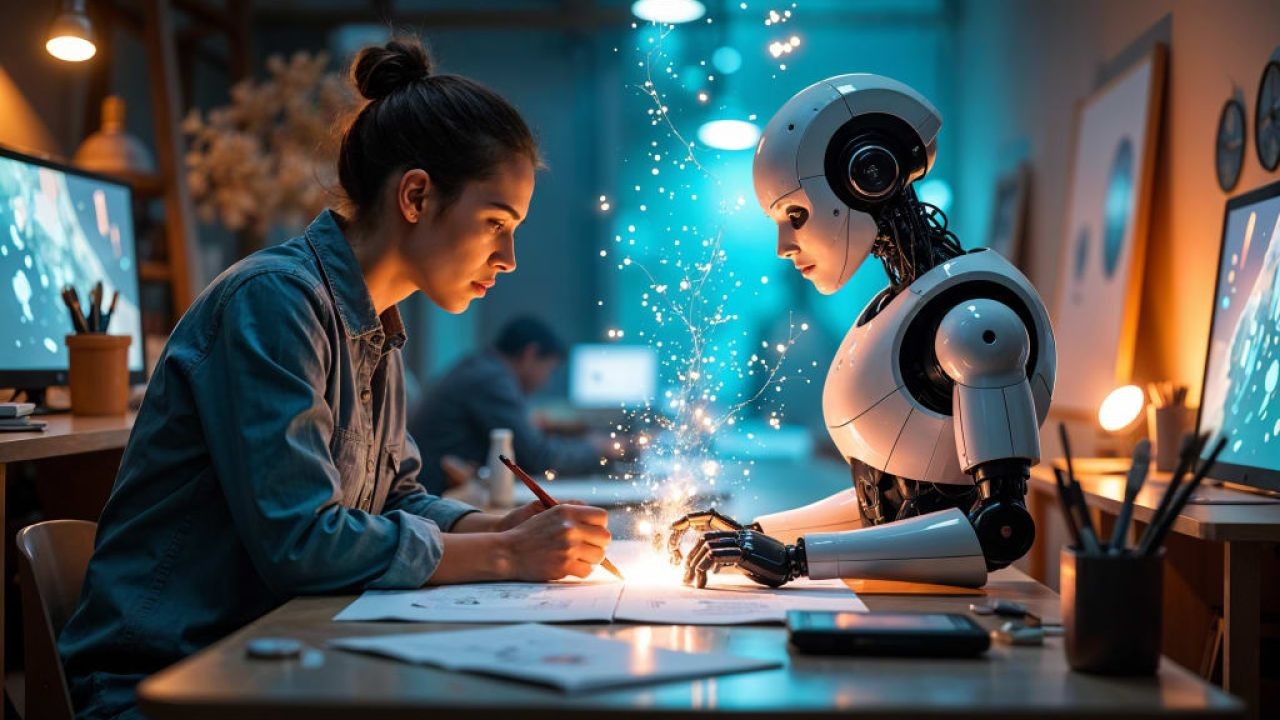
In a world where AI is becoming an integral part of marketing, the question arises: can it truly replace human creativity? Or will it be a powerful ally, augmenting human capabilities? As New Zealand businesses increasingly adopt AI technologies, this discussion holds significant relevance for Kiwi marketers navigating this evolving landscape. According to MBIE, AI-driven tools have already seen a 30% adoption rate among New Zealand enterprises, indicating a growing trend that demands scrutiny.
The Tale of Two Forces: AI and Human Creativity
Imagine a scenario: Emma, a marketing manager at a sustainable fashion brand in Auckland, faces a challenge. Her team needs to craft a compelling campaign to launch a new eco-friendly product line. Emma considers leveraging AI to analyze consumer trends and predict customer preferences. However, she also values the unique human touch that her creative team brings to storytelling—a touch that resonates with their audience on an emotional level.
AI: The Analytical Powerhouse
AI has revolutionized the marketing domain by providing data-driven insights and automating repetitive tasks with precision. For instance, AI algorithms can analyze consumer data sets to forecast buying patterns, a feature particularly useful for New Zealand's retail sector, which has seen fluctuating consumer behavior due to economic shifts (Source: Stats NZ). AI tools like Persado and Jasper.ai are capable of creating tailored marketing messages that can boost conversion rates by up to 40%.
Human Creativity: The Emotional Connector
While AI provides efficiency and data accuracy, human creativity remains unmatched in crafting narratives that connect emotionally with audiences. Consider the success of New Zealand's tourism campaigns that blend storytelling with stunning visuals to attract international visitors. These campaigns rely on human creativity to evoke emotions and inspire action—elements that AI, with its current limitations, cannot replicate entirely.
The Pros and Cons of AI in Marketing
Pros
- Efficiency: AI streamlines marketing processes, reducing operational costs by automating tasks.
- Data-Driven Insights: AI provides marketers with valuable analytics, enhancing decision-making.
- Personalization: AI can tailor content to individual preferences, improving customer engagement.
Cons
- Creativity Limitations: AI lacks the nuanced understanding and emotional depth of human creativity.
- Privacy Concerns: The use of AI in data analysis raises issues surrounding consumer privacy.
- High Initial Costs: Implementing AI technology can be costly for small businesses.
Case Study: Xero – Merging AI with Human Ingenuity
Problem: Xero, a New Zealand-based accounting software company, faced the challenge of effectively managing customer queries as their user base expanded.
Action: They integrated an AI-powered chatbot to handle routine inquiries, freeing up human agents to focus on complex issues. The implementation involved training the AI to understand common customer questions and providing relevant solutions.
Result: Within six months, Xero reduced response times by 50% and improved customer satisfaction ratings by 30%. This blend of AI efficiency and human problem-solving enhanced their customer service experience.
Takeaway: Xero's approach exemplifies how AI and human creativity can coexist, creating a more effective marketing and customer service strategy. Other New Zealand businesses can adopt similar tactics to balance efficiency with personalized service.
Debunking Myths: AI's Role in Marketing
Myth: "AI will eliminate marketing jobs."
Reality: While AI automates certain tasks, it creates new roles focused on AI management and strategy. According to a 2024 report by NZTech, 80% of marketing roles will evolve rather than disappear.
Myth: "AI-generated content is always superior."
Reality: Human creativity is essential for crafting engaging narratives. AI tools can assist but not replace the human touch needed for impactful storytelling.
Future Trends: The AI and Creativity Convergence
Looking ahead, the integration of AI in marketing is set to increase, with New Zealand businesses leading innovative applications. By 2026, it's predicted that AI will drive 60% of all digital marketing strategies in New Zealand (Source: NZ Business Insights 2025). As AI tools become more sophisticated, marketers will need to develop skills in AI management, ensuring that human creativity and AI insights coexist harmoniously.
Final Takeaway & Call to Action
The future of marketing in New Zealand lies in the synergy between AI and human creativity. While AI offers unparalleled efficiency and data insights, human creativity remains crucial for storytelling and emotional engagement. For Kiwi marketers, the challenge is clear: embrace AI as a tool, not a replacement, and leverage its capabilities to enhance, not overshadow, the human touch.
Ready to harness the power of AI in your marketing strategy? Join our exclusive NZ Marketing Innovations Forum for insights into AI tools and strategies tailored for sustainable business growth!
People Also Ask (FAQ)
What are the biggest misconceptions about AI in marketing?
One common myth is that AI will replace all marketing jobs. However, research from NZTech shows that most roles will evolve, with a focus on strategy and AI management.
How does AI impact businesses in New Zealand?
NZ businesses leveraging AI report 30% higher customer retention, according to MBIE. Adopting AI strategies can enhance engagement and revenue by automating processes and providing data-driven insights.
Related Search Queries
- AI in New Zealand marketing
- Human creativity vs. AI
- AI tools for Kiwi businesses
- Future of marketing in New Zealand
- AI and data privacy concerns


























lioncostum
28 days ago