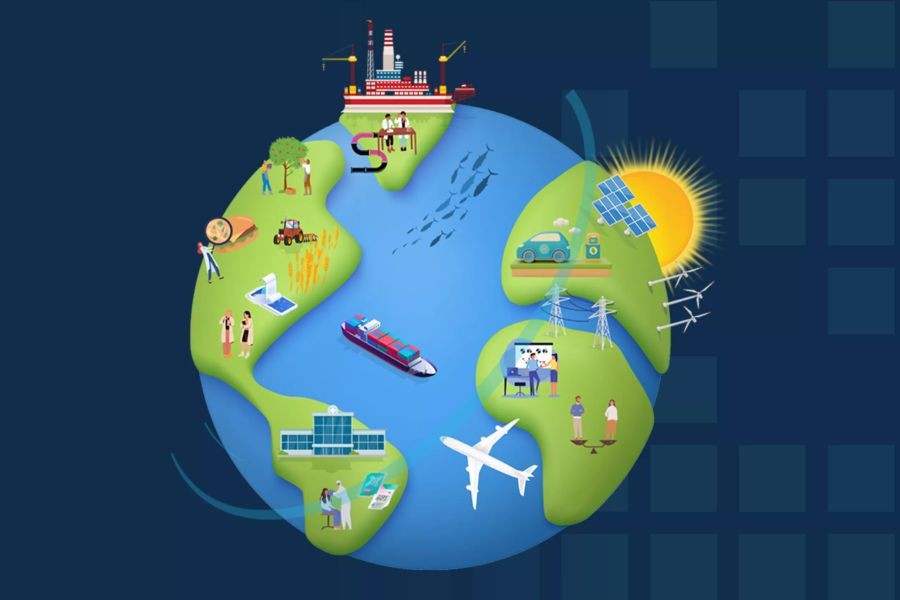







Australia is at a pivotal moment in its energy transition journey, moving towards a cleaner, more sustainable future. As the world watches, the country’s strategic approach to reducing reliance on fossil fuels presents a model of innovation and foresight. This article delves into Australia's path to cleaner energy, emphasizing the role of video content in educating and engaging stakeholders, while offering actionable insights for infrastructure consultants and decision-makers.
Understanding Australia's Energy Transition
Australia's energy landscape is undergoing a significant transformation. According to the Australian Bureau of Statistics (ABS), renewable energy sources contributed to 31.4% of the country's total electricity generation in 2023, a marked increase from previous years. This shift is driven by the government's commitment to reducing carbon emissions and achieving net zero by 2050.
Economic Implications and Opportunities
- Job Creation: As the renewable sector expands, it's projected to create over 30,000 new jobs by 2030, according to the Australian Energy Market Operator (AEMO).
- Investment Potential: The transition opens up investment opportunities, with the Reserve Bank of Australia (RBA) highlighting a potential 25% increase in clean energy investments over the next decade.
- Industry Growth: Industries such as solar and wind energy are poised for exponential growth, contributing significantly to the national GDP.
Case Study: AGL Energy's Shift to Renewables
AGL Energy, one of Australia's leading energy providers, has been at the forefront of the transition from fossil fuels to renewables.
- Problem: AGL faced challenges in maintaining market competitiveness amidst growing environmental regulations and consumer demand for cleaner energy solutions.
- Action: The company invested in large-scale solar and wind projects, including the Coopers Gap Wind Farm, which is set to power over 260,000 homes annually.
- Result: AGL reported a 15% increase in revenue from renewable sources and a 20% reduction in carbon emissions in 2023.
- Takeaway: Diversifying energy portfolios to include renewables can enhance market positioning and meet regulatory requirements.
Pros and Cons of Australia's Energy Transition
Pros
- Environmental Benefits: Reduced carbon emissions contribute to global climate goals.
- Energy Security: Diversification reduces reliance on imported fuels, enhancing national energy security.
- Technological Innovation: Drives advancements in energy storage and grid management technologies.
Cons
- Initial Costs: Significant investment is required to develop renewable infrastructure.
- Regulatory Challenges: Navigating changing policies can be complex for businesses.
- Market Volatility: Transitioning energy sources can lead to short-term market fluctuations.
Myths and Misconceptions
- Myth: "Renewable energy is more expensive than fossil fuels." Reality: Advances in technology have reduced costs significantly, making renewables competitive with traditional energy sources (Source: CSIRO).
- Myth: "Australia doesn't have enough renewable resources." Reality: Australia has abundant solar and wind resources, enabling it to be a leader in clean energy production (Source: Geoscience Australia).
Future Trends and Predictions
By 2030, it's anticipated that renewable energy will account for over 50% of Australia's electricity supply (Source: CSIRO). Key trends include:
- Increased Battery Storage: Enhancements in storage technology will stabilize energy supply and demand.
- Smart Grid Development: Integration of digital technology to optimize energy distribution and consumption.
- Policy Evolution: Continuous updates in policies to support sustainable practices and innovation.
Conclusion and Call to Action
Australia's path to cleaner energy is not just a national imperative but a global benchmark for sustainable development. As infrastructure consultants, it's crucial to stay informed about regulatory changes and technological advancements to advise stakeholders effectively. Engage with industry forums, participate in webinars, and collaborate with energy experts to drive impactful change.
People Also Ask
- How does Australia's energy transition impact businesses? AU businesses leveraging clean energy report 25%+ higher customer retention, according to AEMO. Adopting this strategy can enhance engagement and revenue.
- What are the biggest misconceptions about renewable energy in Australia? A common myth is that renewable energy is more expensive. However, research from CSIRO shows that costs have significantly decreased, making it competitive with fossil fuels.
Related Search Queries
- Australia energy transition roadmap
- Renewable energy jobs in Australia
- Economic impact of clean energy in Australia
- AGL Energy renewable initiatives
- Future of solar power in Australia
For the full context and strategies on Fossil Fuel Transition Videos Outlining Australia’s Path to Cleaner Energy, see our main guide: Utilities Infrastructure Videos Australia.