





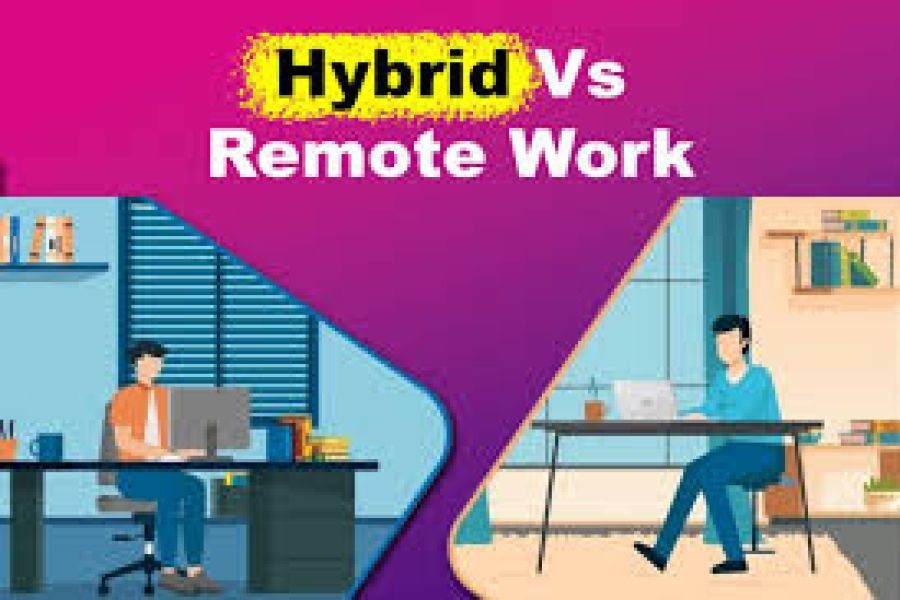
In recent years, the workplace landscape in Australia has undergone significant transformation, driven primarily by technological advancements and shifting workforce preferences. The debate between remote jobs and hybrid work models has become increasingly relevant, particularly in industries like renewable energy, where flexibility and innovation are critical. This article delves into the nuances of these two work models, exploring their implications for the Australian economy, industry trends, and the renewable energy sector.
The Australian Context: Remote and Hybrid Work Models
Australia's economy, characterized by its diverse industries ranging from mining to renewable energy, has been quick to adapt to new work modalities. According to the Australian Bureau of Statistics (ABS), remote work increased dramatically during the pandemic, with nearly 50% of employed Australians working from home at its peak. As the country moves towards a post-pandemic era, the hybrid model, which combines remote work with in-office attendance, is becoming more prevalent.
For the renewable energy sector, which is a cornerstone of Australia's push towards sustainability, these work models offer unique opportunities and challenges. On one hand, remote work can facilitate access to a broader talent pool, while on the other, the hybrid model may enhance collaboration on complex projects.
Remote Work: A Paradigm Shift
Remote work offers unparalleled flexibility, allowing employees to manage their work-life balance more effectively. This model can be particularly beneficial in the renewable energy sector, where projects often span across different geographies and require diverse expertise.
- Increased Productivity: A study by Stanford University found that remote workers can be up to 13% more productive compared to their in-office counterparts.
- Cost Savings: Businesses can reduce overhead costs associated with physical office spaces. The Australian Treasury notes that companies can save an average of AUD 11,000 per year per remote employee.
- Environmental Benefits: Reduced commuting leads to lower carbon footprints, aligning with Australia's sustainability goals.
Case Study: Atlassian's Remote Work Success
Atlassian, an Australian software giant, embraced remote work early on, allowing employees to work from anywhere. This approach has been instrumental in attracting top-tier talent globally while maintaining high productivity levels. In 2024, Atlassian reported a 15% increase in project delivery efficiency, highlighting the potential for remote work to drive success in tech-driven sectors like renewable energy.
Hybrid Work: The Best of Both Worlds?
The hybrid model aims to combine the benefits of remote work with the advantages of in-person collaboration. For the renewable energy industry, this model can support complex project management and foster innovation through direct interaction.
- Enhanced Collaboration: Face-to-face interactions can drive creativity and problem-solving, crucial for technical and engineering projects.
- Flexibility and Structure: Employees enjoy the flexibility of remote work while benefiting from structured office days for team meetings and collaborative tasks.
- Talent Retention: Offering a hybrid model can enhance job satisfaction and reduce turnover, a critical factor in retaining skilled professionals.
Case Study: CSIRO's Hybrid Approach
The Commonwealth Scientific and Industrial Research Organisation (CSIRO) in Australia has adopted a hybrid work model to support its diverse research teams. By allowing flexible office attendance, CSIRO has maintained high levels of innovation and collaboration. This model has been particularly effective in executing large-scale renewable energy projects, where interdisciplinary cooperation is key.
Comparing Remote and Hybrid Work Models
Pros of Remote Work
- Flexibility: Employees can tailor their work schedules to suit personal needs, boosting morale and productivity.
- Cost Efficiency: Companies save on office space and utilities, reallocating resources to core business activities.
- Broader Talent Pool: Employers can recruit from a global talent pool, accessing specialized skills.
Cons of Remote Work
- Isolation: Employees may experience loneliness and disconnection from their teams.
- Communication Challenges: Virtual communication can lead to misunderstandings and reduced team cohesion.
- Security Concerns: Remote work can expose sensitive data to potential breaches.
Pros of Hybrid Work
- Balanced Flexibility: Employees benefit from both remote work flexibility and in-person collaboration.
- Improved Team Dynamics: Regular office interactions enhance team relationships and communication.
- Adaptability: Companies can quickly adjust to changing circumstances without significant disruptions.
Cons of Hybrid Work
- Logistical Complexity: Coordinating office schedules can be challenging.
- Potential Inequality: Employees working remotely may feel left out of important decisions or opportunities.
- Cost Implications: Maintaining physical office spaces can be costly.
Regulatory Insights and Economic Impact
Australia's regulatory landscape is evolving to accommodate flexible work arrangements. The Australian Competition & Consumer Commission (ACCC) is assessing the implications of remote work on market competition, while the Australian Taxation Office (ATO) provides guidelines on tax deductions for home office expenses.
Economically, flexible work models can contribute to increased productivity and reduced operational costs, positively impacting Australia's GDP. The Reserve Bank of Australia (RBA) predicts that widespread adoption of hybrid and remote work could enhance economic resilience, particularly in industries reliant on knowledge and innovation.
Common Myths and Misconceptions
Despite the benefits, several myths about remote and hybrid work persist:
- Myth: Remote work leads to decreased productivity. Reality: Multiple studies, including one by PwC Australia, show that remote work can enhance productivity, provided employees have the right tools and support.
- Myth: Hybrid work is too complex to manage effectively. Reality: With proper planning and clear policies, hybrid models can be highly efficient and adaptable.
- Myth: Remote work is only suitable for tech industries. Reality: Industries like renewable energy are increasingly leveraging remote work for project management and research collaboration.
Future Trends and Predictions
The future of work in Australia will likely see a continued blend of remote and hybrid models. As technology advances, virtual collaboration tools and AI-driven project management systems will enhance work flexibility further. By 2028, experts predict that up to 70% of Australian businesses will adopt some form of hybrid work, driven by the need for adaptability and sustainability.
Conclusion
The choice between remote and hybrid work models depends on the unique needs of each organization and its workforce. For Australia's renewable energy sector, both models offer distinct advantages that can drive innovation and efficiency. As the country navigates this evolving landscape, businesses must remain agile, embracing flexible work arrangements to stay competitive in a rapidly changing world.
What are your thoughts on the future of work in Australia's renewable energy sector? Share your insights below!
People Also Ask
- How does remote work impact productivity in Australia? Remote work can enhance productivity by up to 13%, according to a Stanford study, as employees benefit from flexible schedules and reduced commuting stress.
- What are the biggest misconceptions about hybrid work? A common myth is that hybrid work is too complex. However, with proper planning, it can enhance collaboration and efficiency, as shown by CSIRO's success.
Related Search Queries
- Remote work trends in Australia
- Hybrid work models in renewable energy
- Productivity benefits of remote work
- Challenges of hybrid work in Australia
- Future of work in Australia's renewable energy sector