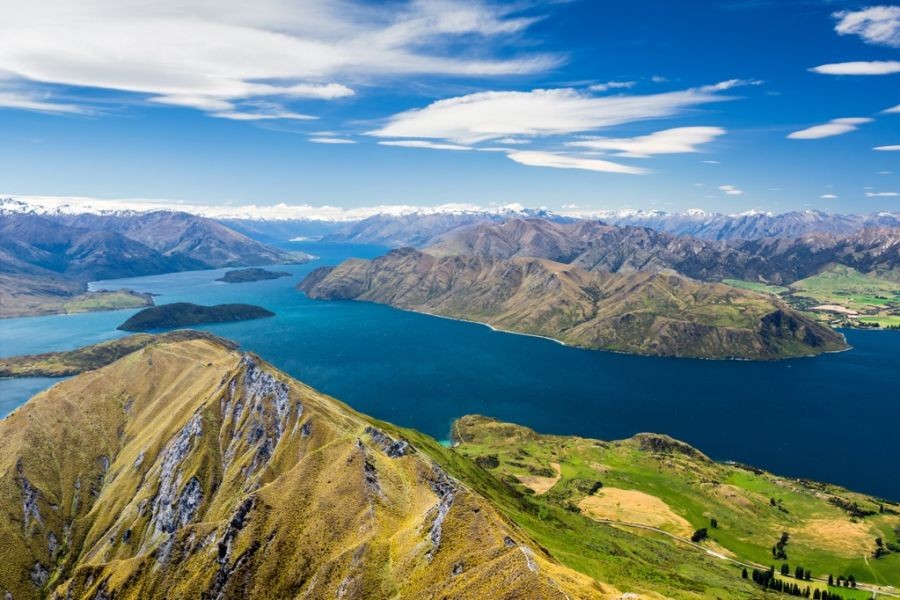






In recent years, New Zealand has emerged as a beacon of cultural preservation and sustainability. This transformation reflects the country's commitment to embracing its indigenous roots, promoting sustainable tourism, leading climate change initiatives, and celebrating Pacific Islander communities. These elements are not just cultural or environmental pursuits; they are strategic pillars that drive New Zealand's innovation and economic growth.
New Zealand is undergoing a transformation that is often discussed in fragments but rarely understood as a whole. Cultural revitalisation and sustainability are no longer side conversations confined to heritage, environment, or social policy. They are becoming organising principles that are reshaping how the country makes decisions across business, infrastructure, education, tourism, energy, and governance.
This shift is not driven by idealism alone. It is emerging from necessity. Economic exposure, environmental limits, demographic change, and global instability are forcing New Zealand to reconsider what resilience actually looks like in a small, open economy. Cultural renewal and sustainability have moved from values-based aspirations to practical frameworks for long-term survival and competitiveness.
Why this shift matters now
For much of the late twentieth century, New Zealand’s development model prioritised efficiency, deregulation, and global integration. That approach delivered growth, but it also left vulnerabilities. Environmental degradation, regional inequality, cultural marginalisation, and economic concentration became harder to ignore.
At the same time, global markets began rewarding exactly the qualities New Zealand had historically undervalued: environmental credibility, social cohesion, ethical production, and authentic identity. What once appeared like constraints are increasingly becoming strategic assets.
The convergence of cultural revitalisation and sustainability reflects this recalibration. Together, they offer a way to align economic activity with social legitimacy and environmental reality.
Cultural revitalisation as infrastructure, not symbolism
Cultural revitalisation in New Zealand is often misunderstood as symbolic recognition rather than structural change. In practice, it is increasingly embedded in how systems operate.
The growing visibility of te reo Māori, tikanga, and mātauranga Māori across public and private institutions is not merely representational. It is reshaping governance models, decision-making processes, and definitions of value.
In sectors such as education and health, cultural frameworks are influencing how outcomes are measured and how services are delivered. In business, they are informing leadership styles, stakeholder engagement, and long-term planning horizons. The emphasis on whakapapa, intergenerational responsibility, and collective wellbeing introduces perspectives that conventional Western models struggle to account for.
This does not replace existing systems. It changes how they function.
Sustainability as an economic constraint and opportunity
Sustainability in New Zealand is often framed as environmental protection, but its implications are far broader. It acts as both a constraint and a filter on economic activity.
Natural limits around water, land use, emissions, and biodiversity are increasingly shaping what is permissible rather than merely what is profitable. Industries that fail to adapt face rising compliance costs, reputational risk, and reduced access to capital.
Conversely, sectors that align with sustainability principles are attracting investment, talent, and policy support. Renewable energy, regenerative agriculture, sustainable construction, and circular manufacturing are not niche experiments. They are becoming central to how New Zealand positions itself economically.
The key distinction is that sustainability in New Zealand is not driven by scale or speed. It is driven by durability.
The role of Māori economic models
One of the most influential yet underappreciated dynamics is the rise of Māori economic participation grounded in long-term stewardship rather than short-term extraction.
Post-settlement entities now manage significant assets across land, fisheries, forestry, property, and increasingly technology and infrastructure. These organisations often operate with investment horizons measured in generations, not quarters.
This approach naturally aligns with sustainability goals. Decisions are filtered through environmental impact, social responsibility, and cultural continuity alongside financial return. While this can slow execution, it also reduces volatility and enhances resilience.
As global investors and governments grapple with balancing growth and responsibility, New Zealand’s experience in integrating indigenous economic models is attracting growing attention.
Sector-by-sector transformation
In tourism, cultural revitalisation and sustainability are redefining value. The emphasis is shifting away from volume-driven models toward experiences rooted in place, story, and environmental respect. This responds to both capacity constraints and changing visitor expectations.
In agriculture, pressure to reduce emissions and protect waterways is forcing innovation. Cultural concepts of guardianship are increasingly intersecting with science, reshaping land management practices and redefining productivity.
In energy and infrastructure, sustainability is no longer optional. Projects are evaluated not only on economic return, but on environmental impact and social licence. Cultural engagement is becoming a prerequisite rather than an afterthought.
In the creative industries, cultural confidence is translating into stronger global positioning. Film, fashion, design, and digital content increasingly draw strength from local identity rather than attempting to dilute it for international appeal.
Business implications for New Zealand firms
For businesses, this shift changes how competitive advantage is built. Efficiency alone is no longer sufficient. Credibility, alignment, and long-term thinking are becoming differentiators.
Companies that treat cultural engagement and sustainability as compliance exercises tend to struggle. Those that integrate them into strategy often find unexpected benefits, including stronger brand loyalty, improved workforce engagement, and access to new markets.
There is also a growing expectation that businesses understand their role within communities rather than operating above them. This is particularly pronounced in New Zealand’s smaller cities and regions, where economic activity and social impact are closely linked.
Tensions and trade-offs
This transition is not without friction. Sustainability requirements increase costs. Cultural consultation takes time. Long-term thinking can conflict with short-term financial pressures.
There is also legitimate debate about how far these frameworks should extend and how they are applied. Not all sectors or communities experience the benefits evenly, and there is ongoing tension between national ambitions and local realities.
These debates are not signs of failure. They are symptoms of a society negotiating change in real time.
How this shapes New Zealand’s global position
Internationally, New Zealand is increasingly seen as a test case. It lacks the scale to dominate markets, but it has the coherence to influence them.
Cultural revitalisation and sustainability provide a narrative that resonates globally, not because it is perfect, but because it is lived. New Zealand’s credibility stems from the fact that these values are contested, negotiated, and operationalised rather than simply advertised.
In an era where trust is fragile and greenwashing is common, that authenticity matters.
What the next five years are likely to bring
Over the next three to five years, the integration of culture and sustainability will deepen rather than recede. Regulatory frameworks will tighten. Consumer expectations will rise. Investment criteria will continue to shift.
The most successful organisations and sectors will be those that treat this not as a constraint to manage, but as a framework to design within. Those that resist are likely to face increasing friction and diminishing relevance.
For New Zealand, the future trajectory is not about choosing between growth and responsibility. It is about redefining growth itself.
Cultural revitalisation and sustainability are no longer parallel movements. Together, they are shaping how New Zealand decides what is worth building, protecting, and passing on.
Future Forecast & Trends
New Zealand's focus on cultural revitalization and sustainability is shaping its future trajectory across multiple sectors. Here are key trends that are expected to define the landscape:
- Maori Cultural Revitalization: The Maori culture is experiencing a renaissance. With government initiatives and community-driven projects, there is a resurgence in Maori language schools (Kura Kaupapa Maori) and cultural programs. This cultural revival not only strengthens community bonds but also enhances New Zealand's global cultural identity.
- Sustainable Tourism Post-Pandemic: New Zealand's tourism industry is pivoting toward sustainability. A report from the Ministry of Business, Innovation and Employment (MBIE) indicates a 30% increase in eco-tourism businesses since 2022. The focus is on reducing carbon footprints and promoting eco-friendly travel options, which enhances the country's appeal to conscious travelers.
- Climate Change Leadership: New Zealand is taking decisive action on climate change. The Zero Carbon Act aims for net-zero carbon emissions by 2050. This policy is influencing industries across the board, encouraging innovation in renewable energy and sustainable practices.
- Influence of Pacific Islander Communities: The cultural influence of Pacific Islander communities is increasingly visible in New Zealand’s arts, fashion, and food scenes. This enriches the nation’s cultural tapestry and offers new avenues for creative industry growth.
Debate & Contrasting Views
While these trends are promising, they are not without debate. Here are some contrasting perspectives:
Maori Cultural Revitalization
- Advocate View: Proponents argue that revitalizing Maori culture strengthens national identity and promotes social cohesion. It also presents economic opportunities through cultural tourism and education.
- Critic View: Critics argue that commercialization of Maori culture risks diluting its authenticity. There are concerns about cultural appropriation and the need for genuine community involvement.
- Middle Ground: A balanced approach involves ensuring Maori communities lead cultural initiatives, with transparent collaboration with businesses and government entities.
Sustainable Tourism
- Pro View: Sustainable tourism is seen as a necessary shift post-pandemic. It supports conservation efforts and attracts eco-conscious travelers.
- Con View: Some argue that sustainable tourism initiatives can be cost-prohibitive for small operators and may limit tourism growth.
- Compromise: Government subsidies or incentives could support small operators in transitioning to sustainable practices.
Expert Opinion & Thought Leadership
Industry experts and thought leaders provide insights into these transformative trends:
Maori Cultural Impact
Dr. Rangi Matamua, a Maori cultural expert, emphasizes, "The revival of Maori culture is not just about language or arts; it’s about reclaiming identity and empowering future generations. This is vital for societal health and economic diversification."
Sustainable Tourism Growth
James Fitzgerald, a sustainable tourism consultant, notes, "Post-pandemic, travelers are more conscious of their environmental impact. New Zealand's commitment to sustainability positions it as a leader in eco-tourism, which will drive visitor growth and industry resilience."
Case Study: Whale Watching Kaikoura
One illustrative example is the town of Kaikoura, known for its whale watching tours. After a devastating earthquake in 2016, the town rebuilt with sustainability at its core. Today, Kaikoura serves as a model of eco-tourism, attracting visitors with its commitment to preserving marine life. According to the Department of Conservation, Kaikoura's sustainable practices have led to a 20% increase in tourism revenue since 2018.
Tackling Myths & Mistakes
Common Myths
- Myth: "Sustainable tourism limits economic growth." Reality: Sustainable tourism has shown to boost long-term economic gains by attracting a loyal, eco-conscious clientele (Source: MBIE, 2023).
- Myth: "Maori cultural initiatives are only relevant to Maori communities." Reality: These initiatives foster national unity and present international tourism opportunities, benefiting the wider economy (Source: Tourism New Zealand).
Mistakes to Avoid
- Neglecting Community Involvement: Successful cultural and sustainable initiatives require community buy-in and leadership.
- Overlooking Authenticity: Businesses should avoid superficial adoption of cultural elements without understanding or respecting their significance.
- Failing to Innovate: With rapid changes, industries must continuously innovate to stay relevant and competitive.
Conclusion
New Zealand's strategic focus on cultural revitalization and sustainability reflects its commitment to a holistic, inclusive, and innovative future. By embracing these trends, New Zealand not only enhances its cultural and environmental landscape but also drives economic prosperity. As these initiatives gain momentum, they offer compelling opportunities for businesses, communities, and policymakers to collaborate towards a sustainable and culturally rich future.
Ready to embrace the future? Join the conversation on New Zealand’s cultural and sustainable transformation. Share your thoughts and insights below!
Related Search Queries
- Maori cultural revitalization New Zealand
- Sustainable tourism trends NZ
- New Zealand climate change initiatives
- Pacific Islander influence in New Zealand
- eco-tourism growth post-pandemic
For the full context and strategies on and lifestyle: 1. Maori Cultural Revitalization and Its Impact on New Zealand Society 2. The Rise of Sustainable Tourism in New Zealand Post-Pandemic 3. New Zealand's Role in Global Climate Change Initiatives 4. The Influence of Pacific Islander Communit – What You Need Before Everyone Else Jumps In, see our main guide: Product Demo Tutorial Videos Nz.