




In the high-stakes world of healthcare, the difference between reactive care and proactive intervention is often measured in patient outcomes, operational costs, and institutional reputation. Imagine a system where a primary care clinic in Christchurch can identify patients at high risk of diabetes-related hospitalisation six months before a crisis, or where a DHB can forecast emergency department demand with 95% accuracy to optimise staff rostering. This is not a distant future—it is the tangible power of predictive analytics applied to anticipate patient and population needs. For healthcare consultants in New Zealand, this represents the single most significant lever for driving value-based care, improving equity, and ensuring the sustainability of our health system amidst growing demand and finite resources.
The New Zealand Imperative: A System Under Pressure
The case for predictive analytics in Aotearoa is not merely academic; it is an operational necessity. Our health system faces unique demographic and geographic challenges. An ageing population is increasing the burden of chronic conditions, while rural communities contend with access disparities. Critically, the 2023 NZ Health Survey data reveals a telling statistic: nearly one in five adults (18%) reported not visiting a GP due to cost in the past year. This points to a system where late presentations and avoidable acute episodes are likely, driving up long-term costs and worsening health outcomes. Predictive analytics offers a pathway to invert this model—shifting resources upstream to prevention and early management, thereby reducing inequities and total cost of care. For consultants, the mandate is clear: integrating predictive intelligence is key to advising clients on achieving the outcomes-focused goals of the Pae Ora (Healthy Futures) reforms.
Deconstructing Predictive Analytics: From Data to Foresight
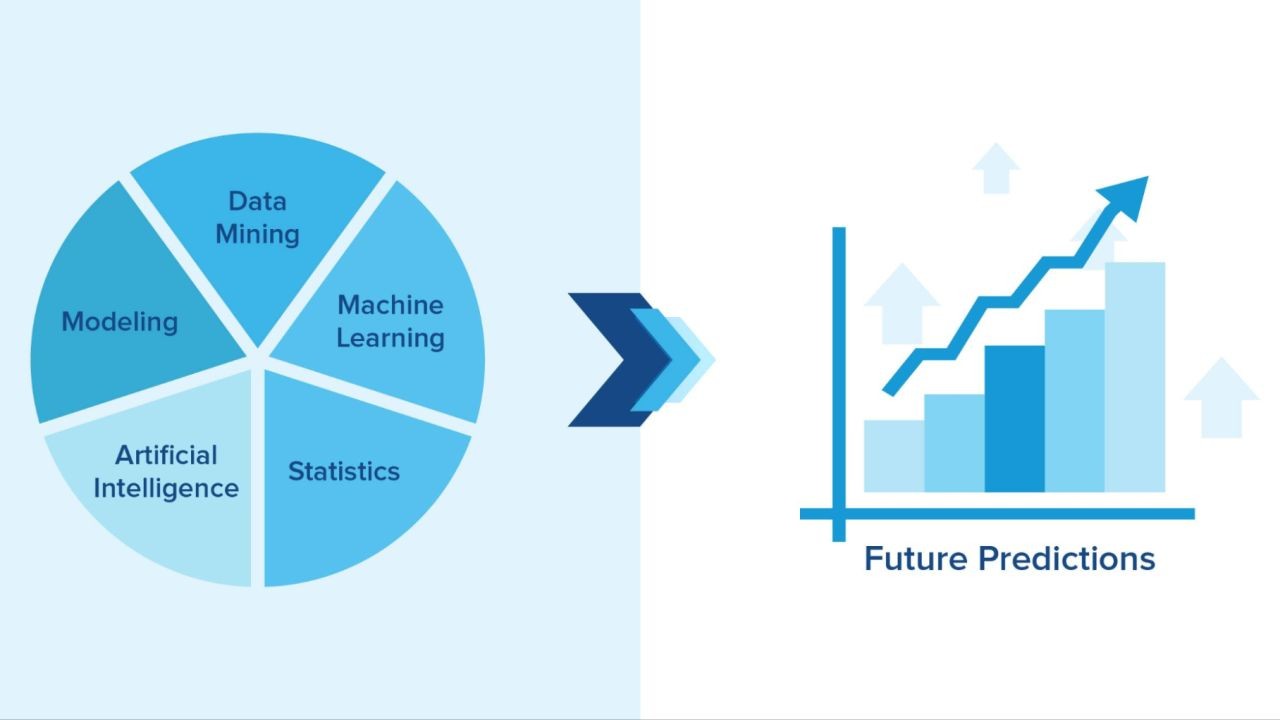
At its core, predictive analytics in healthcare uses historical and real-time data to forecast future events. It moves beyond descriptive analytics (what happened) to prescriptive insights (what should we do about it). The process is built on a structured framework:
- Data Aggregation: Consolidating structured (EHRs, lab results) and unstructured (clinical notes, imaging reports) data from across the care continuum.
- Feature Engineering: Identifying the most predictive variables, such as medication adherence rates, recent hospital visits, or social determinants of health (e.g., NZDep index scores).
- Model Development & Training: Applying machine learning algorithms (e.g., random forests, gradient boosting) to find patterns correlating with target outcomes like readmission or disease progression.
- Deployment & Integration: Embedding model outputs into clinical workflows via dashboards or EHR alerts for frontline staff.
- Continuous Validation: Regularly recalibrating models with new data to maintain accuracy and address drift.
The New Zealand Data Landscape: Opportunity and Caution
A significant advantage for New Zealand is the integrated nature of our National Health Index (NHI) number, which provides a lifelong identifier across health services. This creates a powerful foundation for longitudinal patient analysis. However, the fragmentation between primary, secondary, and community care data systems remains a hurdle. The establishment of Health New Zealand (Te Whatu Ora) presents a pivotal opportunity to break down these silos. Consultants must guide organisations not only on technical model building but on the essential data governance, ethical use, and Māori Data Sovereignty principles outlined in frameworks like Te Mana Raraunga, ensuring analytics initiatives earn community trust and align with tikanga.
Actionable Frameworks for Healthcare Consultants
Implementing predictive analytics is a strategic undertaking, not just a technical one. The following phased framework provides a roadmap for consultants engaging with DHBs, PHOs, or private providers.
Phase 1: Strategic Prioritisation & Use Case Selection
Begin with high-impact, tractable problems. Use a 2x2 matrix to evaluate potential use cases based on Clinical/Operational Impact versus Data Readiness & Implementation Feasibility.
- Quick Wins (High Feasibility, High Impact): Predicting missed appointments (DNA rates) to optimise scheduling and reduce clinic waste.
- Strategic Projects (High Impact, Lower Feasibility): Population health risk stratification for chronic disease management, requiring cross-organisational data sharing.
- Foundation Builders (High Feasibility, Lower Impact): Forecasting inventory needs for high-cost surgical supplies.
- Avoid (Low Feasibility, Low Impact): Overly complex models with unclear clinical pathways.
Phase 2: The ROI Justification Model
Securing executive buy-in requires a clear financial and clinical value proposition. Build a business case around three pillars:
- Direct Cost Avoidance: Model the reduction in avoidable hospital admissions. For example, if a predictive model identifies 100 high-risk patients for heart failure readmission and a targeted community intervention reduces readmissions by 20%, calculate the saved bed-days at a cost of ~$1,500 NZD per day.
- Quality & Outcome Improvement: Tie predictions to improved clinical metrics (e.g., HbA1c control in diabetics) that link to longer-term system savings and better health outcomes.
- Operational Efficiency: Quantify gains from optimised staff allocation or reduced patient wait times, improving both workforce satisfaction and patient experience.
Case Study: Mercy Hospital (Auckland) – Reducing Surgical Site Infections
Problem: Mercy Hospital, a leading private surgical facility in Auckland, faced a challenge with surgical site infections (SSIs) following joint replacement procedures. While their rate was within national benchmarks, SSIs represented a serious clinical complication, leading to extended hospital stays, readmissions, significant patient distress, and increased costs estimated at over $20,000 NZD per incident.
Action: A multidisciplinary team implemented a predictive analytics initiative. They aggregated pre-operative data (patient BMI, smoking status, diabetic control, pre-op skin preparation), intra-operative data (surgery duration, antibiotic timing), and post-operative indicators. A machine learning model was trained to identify patients at elevated risk of developing an SSI before any clinical signs appeared.
Result: Within 12 months of integrating the risk scores into pre-admission and post-op nursing workflows:
- ✅ SSI rate decreased by 32% for targeted high-risk joint replacement cohorts.
- ✅ Unplanned readmissions within 30 days for infection-related causes dropped by 28%.
- ✅ Generated an estimated annual cost avoidance of $450,000 NZD in direct treatment and bed-day costs.
Takeaway: This case demonstrates that predictive analytics is not solely for large public health systems. A focused, data-driven approach in a private setting can yield rapid, measurable ROI. For New Zealand consultants, the lesson is to start with a discrete, high-cost clinical complication. The model's success was as much about the changed clinical protocols for high-risk patients (enhanced monitoring, tailored discharge plans) as it was about the algorithm itself.
The Critical Debate: Algorithmic Insight vs. Clinical Judgement
A significant industry controversy centres on the role of predictive models in the clinical encounter. Consultants must navigate this tension expertly.
✅ The Advocate View: Augmented Intelligence
Proponents argue that models act as a powerful "second set of eyes," processing thousands of data points beyond human capacity. They reduce cognitive bias and post-code lottery variations in care. For instance, a model might flag a patient with seemingly mild symptoms as high-risk based on subtle patterns in their lab history, prompting earlier intervention. The goal is not replacement but augmentation, freeing clinicians to focus on complex diagnosis and patient rapport.
❌ The Critic View: De-Skilling & Accountability Erosion
Sceptics warn of "alert fatigue" from poorly integrated systems, where clinicians ignore model outputs. A deeper concern is the potential de-skilling of clinical intuition and the opaque "black box" nature of some algorithms. Who is liable if a model fails to flag a risk—the developer, the health board, or the clinician who over-relied on it? There are also valid concerns that models trained on historical data may perpetuate existing biases in care delivery against Māori and Pasifika populations.
⚖️ The Consultant's Middle Ground: The "Human-in-the-Loop" Framework
The optimal solution is a structured integration. Predictive outputs should be presented as risk scores or probabilities within the clinical workflow, not as directives. Mandatory fields requiring the clinician to acknowledge the alert and document a rationale for either acting or dismissing it create accountability. Furthermore, models must be developed and continuously audited with equity lenses, using techniques like fairness-aware machine learning, to ensure they advance, rather than hinder, the pursuit of health equity in New Zealand.
Pros and Cons of Predictive Analytics in Healthcare
✅ Pros:
- Proactive, Preventative Care: Shifts the system from costly crisis management to early intervention, aligning perfectly with the Pae Ora preventative vision.
- Enhanced Resource Optimisation: Allows for precise forecasting of demand for beds, staff, and equipment, dramatically improving operational efficiency in resource-constrained DHBs.
- Improved Patient Outcomes & Equity: Enables targeted outreach to vulnerable populations who may disengage from care, potentially reducing stark health outcome disparities.
- Data-Driven Strategic Planning: Provides population health insights that inform long-term service planning and commissioning decisions.
- Financial Sustainability: Directly addresses the biggest cost drivers (avoidable admissions, chronic disease complications) through pre-emptive action.
❌ Cons:
- High Initial Investment & Complexity: Requires significant upfront investment in data infrastructure, analytics talent, and change management.
- Data Quality & Integration Hurdles: "Garbage in, garbage out." Success is wholly dependent on clean, comprehensive, and interoperable data, a known challenge in NZ's fragmented IT landscape.
- Clinical Integration & Change Resistance: Models that disrupt workflow without clear benefit will be rejected by frontline staff. Success hinges on co-design with clinicians.
- Ethical & Privacy Risks: Raises serious concerns about patient privacy, informed consent for data use, and the potential for algorithmic bias, requiring robust governance.
- Over-Reliance & Alert Fatigue: Poor implementation can lead to clinicians ignoring alerts, rendering the system useless and wasting investment.
Common Myths and Costly Mistakes to Avoid
Myth 1: "Predictive analytics requires 'big data' from millions of patients." Reality: High-quality, relevant data is more important than vast volume. A well-constructed model using several years of data from a single DHB or a large PHO can be extremely powerful. Starting with a defined cohort (e.g., all patients with COPD) is a more effective strategy than waiting for a perfect national dataset.
Myth 2: "The model itself is the solution." Reality: This is the most common and costly mistake. The model is only 20% of the solution; 80% is the change management, workflow integration, and clinical pathway redesign that acts on its predictions. Investing in the algorithm without budgeting for implementation support guarantees failure.
Myth 3: "Predictive analytics will solve health inequities automatically." Reality: Without deliberate design, it can worsen them. If historical data reflects biased care patterns (e.g., lower referral rates for Māori), the model will learn and perpetuate these biases. A 2021 study by the University of Auckland on algorithm fairness warned of this exact risk in Aotearoa. Proactive auditing and fairness constraints are non-negotiable.
Mistake to Avoid: Neglecting the "Last Mile" of Care Delivery. Even a perfect prediction is worthless without a clear, resourced action plan. If a patient is flagged as high-risk for a diabetes amputation, what is the next step? An automatic referral to a podiatrist? A dedicated nurse phone call? Defining and resourcing the intervention is paramount.
Mistake to Avoid: Underestimating the Cultural and Governance Journey. For Māori, data is a taonga (treasure). Consultants must ensure projects adhere to principles of Māori Data Sovereignty, involving iwi and Māori health providers from the outset to build trust and ensure analytics serve Māori aspirations for wellbeing.
The Future of Predictive Analytics in New Zealand Healthcare
The next five years will see predictive analytics evolve from discrete projects to a pervasive, real-time nervous system for our health system. Key trends for consultants to watch include:
- Integration of Social Determinants of Health (SDOH): Future models will incorporate real-time data from housing (e.g., Tenancy Services), economic (Stats NZ) and environmental sources, providing a holistic view of patient risk. A pilot in Canterbury already explores linking housing instability data with health service use.
- The Rise of the "Predictive Health Whānau": Models will move beyond individual patients to assess risk and resilience at a whānau level, enabling more culturally appropriate and effective support structures.
- Wearable & IoT Data Streams: Continuous data from consumer wearables and prescribed medical devices will feed models, enabling dynamic risk adjustment for conditions like heart failure. The challenge will be integrating this flood of unstructured data.
- Generative AI for Explanation & Communication: LLMs will be used to translate complex model outputs into plain-language explanations for clinicians and personalised health advice for patients, bridging the interpretability gap.
- Policy-Driven Adoption: We predict that by 2028, Crown funding agreements with providers will include specific incentives or requirements for demonstrated use of predictive risk stratification in chronic care management, making analytics a core component of contractual compliance.
Final Takeaway & Call to Action
For the healthcare consultant in New Zealand, predictive analytics is the definitive tool for translating the ambitions of health system reform into measurable, on-the-ground improvement. It turns the reactive, volume-based system of yesterday into the proactive, value-based system of tomorrow. The journey requires equal parts technical acumen, strategic vision, and deep cultural competency.
Your action plan starts now:
- Audit your client's data readiness and identify one high-impact, feasible use case.
- Build the business case focusing on clinical outcome improvement and total cost of care reduction.
- Design with equity and Te Tiriti obligations at the core, engaging Māori partners early.
- Plan for the 80%—the change management, workflow integration, and intervention pathways—not just the 20% algorithm.
The question is no longer if predictive analytics will reshape New Zealand healthcare, but how quickly and how equitably. The consultants who master this domain will be the architects of a more sustainable and effective health system for all New Zealanders.
Ready to move from theory to implementation? Begin by mapping your client's key cost drivers and patient outcome gaps—the most powerful predictive models are born from addressing the most pressing problems.
People Also Ask (PAA)
How does predictive analytics improve health equity in New Zealand? When designed with equity lenses, it can identify underserved populations (e.g., high-needs Māori patients) and enable proactive, targeted outreach. However, without deliberate safeguards, it risks automating historical biases, making ethical design and Māori data governance principles critical.
What is the first step for a small NZ medical practice to use predictive analytics? Start with your existing practice management system data. Analyse patterns in missed appointments or hospital referral rates for your enrolled population. Simple statistical analysis can reveal predictive insights without complex AI, building a case for further investment.
What are the biggest barriers to adoption in New Zealand's health sector? The primary barriers are fragmented IT systems hindering data aggregation, a shortage of local data science talent with health domain expertise, and clinical resistance due to poor past experiences with disruptive technology. A phased, clinician-co-designed approach is essential to overcome these.
Related Search Queries
- predictive analytics healthcare New Zealand DHB
- machine learning patient readmission risk NZ
- health data analytics consultant jobs Auckland
- Te Whatu Ora predictive modelling strategy
- Māori Data Sovereignty predictive analytics
- ROI of predictive analytics in primary care NZ
- clinical decision support tools New Zealand
- population health management software NZ
- ethical AI healthcare New Zealand guidelines
- chronic disease risk stratification tool NZ
For the full context and strategies on The Power of Predictive Analytics – How to Anticipate Customer Needs – The One Trend No Kiwi Can Afford to Miss, see our main guide: How Kiwi Creators Make Money Vidude.