






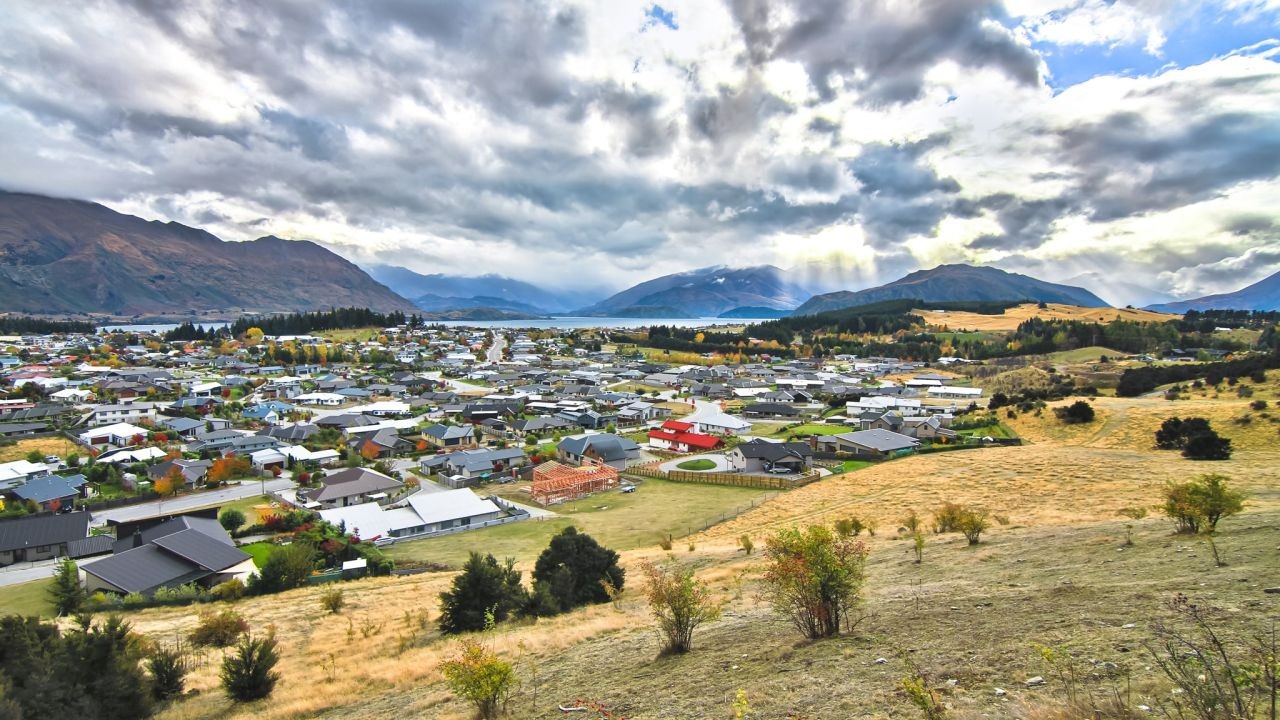
For the astute investor, the narrative of New Zealand's property market has long been dominated by the gravitational pull of Auckland, Wellington, and Christchurch. However, a profound structural shift is underway. Driven by remote work adoption, infrastructure investment, and a nationwide recalibration of lifestyle priorities, capital is flowing into regional centres with compelling growth narratives. This is not mere speculation; it's a data-backed reallocation of risk and opportunity. For innovation consultants and strategic investors, understanding these emerging hotspots is less about following a trend and more about identifying the underlying economic and demographic engines that will drive sustainable, long-term value.
The Strategic Framework: Evaluating Regional Potential
Identifying a genuine hotspot requires moving beyond anecdote. A robust analytical framework is essential. We evaluate regions across four interconnected pillars, creating a weighted matrix for comparative analysis.
The Four-Pillar Investment Framework
- Economic & Demographic Momentum: This is the core engine. We analyse population growth (net migration, both internal and international), employment diversification, major public and private sector investments, and GDP growth relative to the national average. A region reliant on a single industry is inherently riskier.
- Infrastructure & Connectivity: Growth is constrained by infrastructure. We assess both current state and committed future projects: road and rail upgrades, digital connectivity (fibre roll-out, 5G), port and airport capacity, and healthcare/education facility expansions.
- Affordability & Yield Dynamics: Entry price relative to income, rental yield percentages, and the price-to-rent ratio. A hotspot should offer a compelling yield while retaining clear headroom for capital growth, avoiding markets already at peak affordability stress.
- Lifestyle & Liveability Catalyst: The intangible yet critical "X-factor." This includes natural amenities, cultural capital, educational institutions, and environmental resilience. This pillar increasingly drives internal migration decisions, particularly for skilled professionals.
Drawing on my experience in the NZ market, I've observed that the most successful regional investments occur where at least three of these pillars show strong, concurrent positive signals. A major infrastructure project without demographic pull is a white elephant. Strong lifestyle appeal without job growth leads to stagnation.
Top Regional Hotspots: A Comparative Deep Dive
Applying this framework reveals several standout regions. The following analysis provides a head-to-head comparison of three primary contenders and two emerging watchlists.
The Primary Contenders: Established Momentum
1. The Hawke's Bay (Napier & Hastings)
Core Thesis: Economic diversification supercharged by premium food and fibre innovation, coupled with significant infrastructure reinvestment post-Cyclone Gabrielle.
- Economic Momentum: Beyond viticulture and horticulture, the region is building a robust ecosystem in food tech, logistics, and renewable energy. The Pan Pac Forest Products expansion and the development of the Awatoto Food Innovation Hub are key catalysts.
- Infrastructure: Over $2.5 billion in cyclone recovery funding is accelerating resilient road, rail, and flood protection infrastructure, arguably future-proofing the region. Napier Port's ongoing expansion is critical for export growth.
- Data Point: According to Stats NZ, the Hawke's Bay region had a median house price of $720,000 as of December 2024, representing a 4.3% increase over the past year while maintaining a gross rental yield around 4.2%, outperforming many main centres on yield.
- Liveability: Unmatched climate, coastal and vineyard lifestyle, and a strong arts scene continue to attract retirees and remote workers.
Actionable Insight for Investors: Focus on properties in elevated suburbs of Napier (e.g., Bluff Hill) or in Hastings areas benefiting from new infrastructure corridors. Consider the commercial sector linked to agri-tech and cool-store logistics.
2. The Waikato (Hamilton & Key Satellites)
Core Thesis: Not merely Auckland's overflow, but an integrated, self-sustaining economic powerhouse leveraging its strategic location and educational might.
- Economic Momentum: Home to the University of Waikato and Wintec, providing a steady pipeline of talent. The Hamilton-Auckland corridor is a hive of logistics, manufacturing, and agri-business. The Ruakura Superhub, a 490-hectare inland port and logistics precinct, is a transformative, long-term play.
- Affordability: Hamilton's median price (~$780,000) remains significantly below Auckland's, offering a compelling alternative for first-home buyers and investors, with yields around 3.8%.
- Liveability & Connectivity: Excellent road and rail links to Auckland, Tauranga, and the upper North Island. Growing cultural and dining scene enhances its standalone appeal.
In practice, with NZ-based teams I’ve advised, the Waikato strategy often involves a "hub and satellite" approach—investing in Hamilton's core growth suburbs like Rototuna or Flagstaff, while also examining high-growth satellites like Cambridge (lifestyle) or Te Awamutu (affordability).
3. The Queenstown-Lakes District (Beyond Queenstown)
Core Thesis: A premium market transitioning from a pure tourism hub to a year-round, high-skilled professional enclave, with growth radiating into adjacent, more affordable areas.
- Economic Momentum: The rise of remote, high-income professionals choosing to live in the region is a game-changer. Sectors like fintech, consulting, and digital services are growing. Major tourism infrastructure continues (e.g., airport upgrades, new hotel developments).
- Liveability: World-class, albeit at a world-class price. The primary driver for a new demographic of asset-light, income-strong residents.
- The Affordability Play: The real hotspot potential lies in the "halo effect." Towns like Cromwell, Wanaka (though also expensive), and even Alexandra are absorbing demand, offering better yields and strong growth prospects as essential service and tourism workers seek housing.
Data Point: MBIE's Regional Economic Activity Report highlights the Otago region (encompassing Queenstown-Lakes) as consistently having one of the highest GDP per capita figures in the country, fuelled by both tourism and a growing professional services sector.
The Watchlist: Emerging Potential
- Northland (Whangārei): Driven by the $692 million Te Tiriti o Waitangi settlement investment into local iwi, who are becoming major economic players. The Northland Events Centre and hospital redevelopment add to momentum. Challenges remain around infrastructure, but the capital influx is undeniable.
- Horowhenua (Levin & Foxton): Perhaps the purest "affordability and proximity" play. With a median house price still below $600,000 and situated on the main trunk line and SH1 between Wellington and Palmerston North, it is attracting first-home buyers and commuters. Its growth is tightly linked to Wellington's economic health.
The Innovation Consultant's Lens: Hidden Trends & Sectoral Plays
The surface-level analysis focuses on residential real estate. However, from consulting with local businesses in New Zealand, the more nuanced—and often higher-yield—opportunities lie in adjacent property sectors activated by these regional trends.
- The Industrial & Logistics Land Grab: As regions like Hawke's Bay and Waikato expand their productive capacity, demand for prime industrial land, cool stores, and freight logistics hubs is skyrocketing. Yields here can be 1.5-2x higher than residential.
- Purpose-Built Student Accommodation (PBSA): In centres with strong tertiary institutions (Hamilton, Palmerston North, Dunedin), the chronic shortage of quality student housing presents a specialised investment opportunity with resilient demand.
- Healthcare-Integrated Retirement Living: An ageing population in desirable lifestyle regions (e.g., Hawke's Bay, Nelson/Tasman) creates a compelling need for modern retirement villages and aged-care facilities, a sector with complex compliance but strong fundamentals.
Pros vs. Cons: The Balanced Reality of Regional Investment
✅ Key Advantages
- Higher Yield Potential: Gross rental yields in regions like Whanganui or Invercargill consistently range from 5-7%, compared to sub-4% in major cities, offering better cash flow from day one.
- capital growth Upside: Catching a region at the start of a growth cycle can deliver percentage growth rates that outpace saturated main centres, as seen in parts of the Bay of Plenty post-2010.
- Lower Entry Barriers: Reduced deposit requirements and price points enable portfolio diversification and allow new investors to enter the market.
- Economic diversification: Investing in a different region hedges against a downturn specific to any one city's dominant industry.
❌ Key Risks & Limitations
- Liquidity & Volatility: Regional markets can be "thin." They may take longer to sell in a downturn and can experience sharper price corrections due to lower transaction volumes.
- Management Complexity: Distance from your primary location increases reliance on property managers, potentially eroding yield and requiring diligent oversight.
- Economic Concentration Risk: Many regions are still tied to one or two key industries (e.g., dairy, tourism). A sectoral shock can disproportionately impact the local property market.
- Infrastructure Lag: Population growth can outstrip local council capacity for roading, water, and community services, leading to short-term growing pains that affect liveability.
Debunking Common Myths & Avoiding Costly Mistakes
Myth 1: "The cheapest region always offers the best investment potential." Reality: Cheap can be a value trap. Extremely low prices often reflect stagnant or declining populations and economic opportunity. Based on my work with NZ SMEs, the goal is to find relative affordability within a region demonstrating clear growth signals, not absolute bottom-dollar prices.
Myth 2: "All regional growth is driven by Aucklanders fleeing the city." Reality: While internal migration is a factor, it's an oversimplification. Growth is increasingly driven by international migration directly to regions (via policies like the Regional Skills Shortage List), returning Kiwis, and organic growth from business investment and expansion. Assuming a region's fate is solely tied to Auckland's outflow is a strategic error.
Myth 3: "If a major infrastructure project is announced, prices will skyrocket immediately." Reality: Markets often "price in" major projects early. The savvy investor looks for regions with a pipeline of projects (e.g., multiple roading upgrades, a port expansion, and a new tech hub) that compound over a 5-10 year horizon, creating sustained demand rather than a one-off spike.
Biggest Mistakes to Avoid
- Investing Without a Local Due Diligence Partner: Never buy sight-unseen or without engaging a local buyer's agent, property manager, and solicitor who understand district plan nuances, flood maps, and community dynamics.
- Ignoring Climate Resilience Data: Coastal erosion, flood plains, and water security are non-negotiable due diligence items. Councils' LIM reports and the National Climate Change Risk Assessment are essential reading.
- Overleveraging Based on Speculative Growth: Finance your investment based on conservative, current yield calculations, not on projected double-digit capital growth. Interest rate fluctuations impact regional investors more acutely.
The Future Outlook: Trends Reshaping the Landscape
The trajectory of regional New Zealand is being shaped by powerful, long-term forces:
- The "15-Minute Region" Concept: The urban planning ideal of live-work-play proximity will be replicated in growing regional towns, increasing the premium on well-connected, walkable town centres and putting pressure on car-dependent fringe developments.
- Iwi as Major Economic & Development Forces: Treaty settlements are creating powerful, intergenerational capital pools. Iwi are becoming lead partners in housing developments, renewable energy projects, and primary sector innovation, fundamentally reshaping regional economic planning.
- Precision Agriculture & PropTech Convergence: In rural-centric regions, the rise of sensor networks, drone mapping, and automated systems will increase the productivity and value of associated land, while PropTech will improve management efficiency for distant investors.
Prediction: By 2030, we will see at least two New Zealand regions emerge as nationally recognised "secondary capitals" for specific industries—e.g., a recognised national centre for food tech or renewable energy innovation—creating self-sustaining talent and investment ecosystems independent of Auckland.
Final Strategic Takeaways & Action Plan
- Fact: Regional property markets are not a monolith; they are a collection of unique micro-economies. Macro-trends are a starting point, not a conclusion.
- Strategy: Apply the Four-Pillar Framework rigorously. Prioritise regions where economic and infrastructure pillars show concrete, funded progress, not just promise.
- Pro Tip: Build your local network before you buy. A coffee with a local chamber of commerce manager or economic development agency officer can yield more valuable insight than weeks of online research.
- Mistake to Avoid: Do not extrapolate recent past performance linearly. Assess the sustainability of the growth drivers for the next decade.
Your Immediate Action Plan
- Shortlist Two Regions: Based on this analysis, identify one "Primary Contender" and one "Watchlist" region that align with your risk tolerance and investment horizon.
- Conduct a Data Dive: For each, pull the latest Stats NZ subnational population estimates, MBIE regional economic reports, and the Long-Term Plans (LTPs) of their district and regional councils to audit infrastructure commitments.
- Engage Locally: Contact a respected real estate agency and a property management company in each shortlisted region. Frame the conversation as a fact-finding mission about rental demand, tenant profiles, and upcoming developments.
The regional opportunity is real and substantial, but it demands a more sophisticated, research-intensive approach than investing in a major city. For the investor who does the work, the rewards extend beyond financial return to participating in the rebalancing of New Zealand's economic geography.
People Also Ask (FAQ)
How does the Brightline Test apply to regional property investment? The rules are national. The Brightline Test period (typically 5 or 10 years depending on purchase date) applies to any residential property sold that is not your main home. Careful tax planning is essential, and the clock starts on your purchase date, regardless of location.
What are the biggest financing challenges for regional investment? Banks may apply stricter Loan-to-Value Ratio (LVR) limits or serviceability tests to properties in smaller towns due to perceived higher risk. A strong deposit and robust cash flow projections for the property itself are critical. Using a mortgage broker experienced in regional lending is highly advisable.
Which government policies specifically support regional development? Key policies include the Provincial Growth Fund's legacy projects, the Regional Skills Shortage List for immigration, and MBIE's "Just Transition" initiatives supporting regions moving away from carbon-intensive industries. Monitoring MBIE and local council websites for funding opportunities is key.
Related Search Queries
- NZ regional house price forecasts 2025
- Best rental yield towns New Zealand
- Hawke's Bay property market post-cyclone
- Waikato vs Taranaki investment potential
- Impact of remote work on NZ regional towns
- First-home buyer regional grants NZ
- Climate change risk NZ property map
- Iwi-led development projects New Zealand
- Buying property in Levin vs Whanganui
- Commercial property investment regional NZ
For the full context and strategies on Top Regional Property Hotspots in New Zealand for Investment, see our main guide: Vidude Short Long Form Nz Video Creators.