





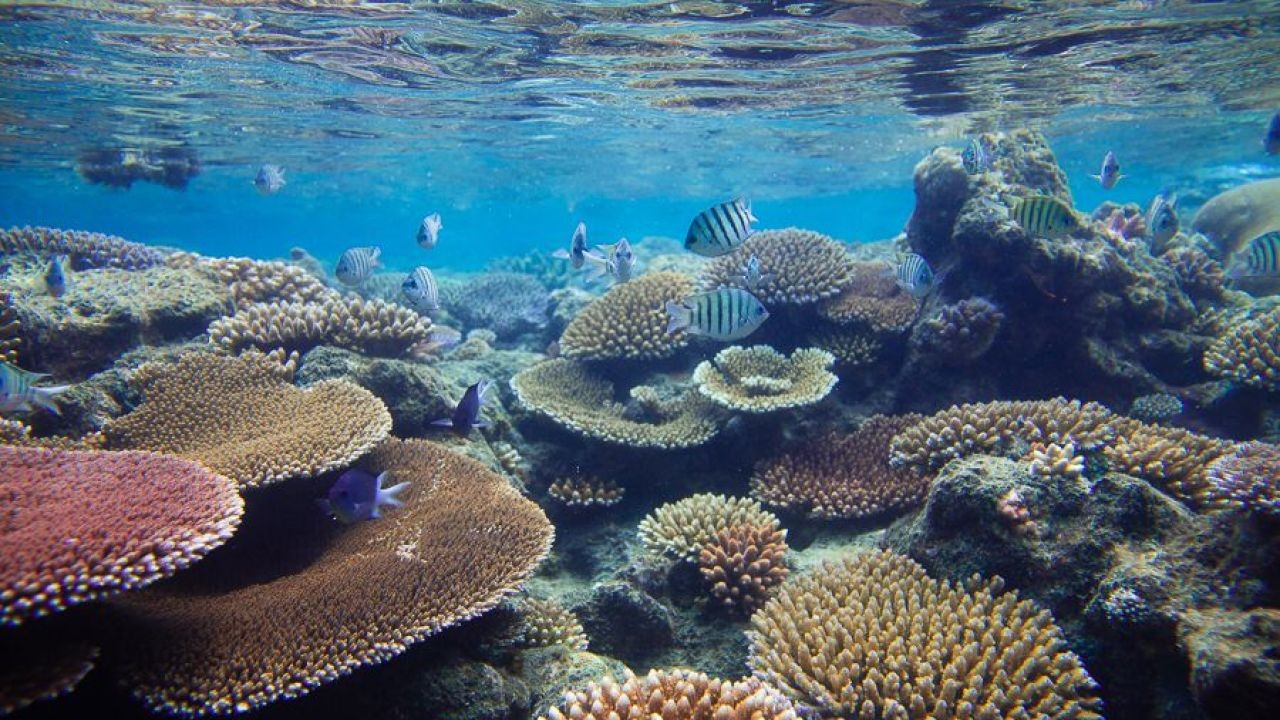
The Great Barrier Reef is not merely a natural wonder; it is a vast, living economic engine and a profound ecological sentinel. For decades, its breathtaking beauty has been the poster image for Australia's tourism industry, yet this iconic status has often obscured the complex, data-driven reality of its decline and the multifaceted battle to preserve it. The Reef's current state is a stark ledger of climate change impacts, where rising sea temperatures, acidifying oceans, and intensifying weather events are meticulously recorded in the bleaching of its corals and the shifting composition of its ecosystems. To view this solely as an environmental tragedy is to miss a critical part of the story. From my work with Australian SMEs in tourism and coastal regions, I've observed firsthand how the Reef's health is inextricably linked to economic stability, insurance liabilities, and long-term business viability. The conversation has decisively shifted from simple conservation to a complex calculus of risk management, adaptive governance, and technological innovation in the face of an accelerating climate.
A Historical Perspective: From Natural Wonder to Climate Canary
The modern narrative of the Great Barrier Reef is a story of escalating scientific alarm punctuated by political and industrial contention. Formal protection began with the establishment of the Great Barrier Reef Marine Park in 1975, a world-leading move at the time focused on managing direct human impacts like shipping, fishing, and coastal development. For years, the primary threats were considered local and manageable. However, the seminal 1998 mass bleaching event, followed by even more severe events in 2002, 2016, 2017, 2020, and 2022, irrevocably changed the paradigm. These events, driven by marine heatwaves, provided irrefutable evidence that a global phenomenon—anthropogenic climate change—had become the dominant threat.
This historical pivot is crucial for understanding current policy. Early conservation could focus on building resilience by improving water quality and controlling crown-of-thorns starfish outbreaks, under the assumption that a healthier reef could better withstand periodic stress. Today, that assumption is being stress-tested to its limit. The Australian Institute of Marine Science’s (AIMS) Long-Term Monitoring Program data shows a worrying trend: while reefs can recover from bleaching if given sufficient time, the frequency of events is now outpacing natural recovery cycles. The historical perspective teaches us that management strategies must evolve as rapidly as the threats do, a lesson that remains fraught with difficulty in practice.
The Economic Calculus: More Than a Tourist Attraction
Discussions of the Reef’s value often cite its contribution to tourism—an estimated $6.4 billion annually and 64,000 jobs. While significant, this framing is dangerously reductive. The Reef’s economic value is systemic and embedded across multiple Australian industries and financial instruments.
Firstly, its role in coastal protection is a direct financial safeguard. The reef structure dissipates wave energy, reducing the cost of damage from storms and cyclones. Degradation of this natural infrastructure directly increases the physical and financial vulnerability of Queensland’s coastal communities and assets, a risk increasingly scrutinised by insurers and the Australian Prudential Regulation Authority (APRA), which has flagged climate change as a systemic financial risk.
Secondly, its biological function supports commercial fisheries. The complex habitats are nurseries for species like coral trout and emperor fish. The Australian Bureau of Statistics (ABS) reports that the total gross value of fisheries production in Queensland was approximately $369 million in 2021-22, a sector directly reliant on reef health.
Drawing on my experience supporting Australian companies in the supply chain, the risk extends beyond direct operators. Accommodation providers, equipment hire companies, food and beverage suppliers, and transport services across regional Queensland form an interconnected economic web. A downturn in reef health triggers a cascade of financial stress through this network, affecting regional economies far from the coastline itself. This underscores why conservation is not a niche environmental issue, but a core matter of economic resilience and strategic risk management.
Case Study: The Insurance Industry’s Reef Risk Assessment
Problem: Global reinsurance giant Swiss Re has been at the forefront of quantifying environmental risks. Their models historically focused on direct physical damage from cyclones and floods to property in North Queensland. However, they identified a gap in assessing the compounding risk posed by the degradation of natural coastal defences, specifically the Great Barrier Reef, and the subsequent impact on sovereign and corporate risk profiles.
Action: Swiss Re, in collaboration with scientific bodies, began integrating ecological data from AIMS and the Great Barrier Reef Marine Park Authority (GBRMPA) into their catastrophe modelling. They moved beyond viewing the Reef as a static entity and started modelling its declining health as a dynamic variable that increases the probable maximum loss (PML) from storm surges over time. This work directly informs the premiums and terms offered to insurers, businesses, and even government entities in the region.
Result: This analysis has led to several tangible outcomes:
- Risk-Priced Premiums: Businesses with assets in areas where reef-mediated protection is declining may face higher insurance costs or stricter conditions.
- Informed Capital Allocation: The modelling provides data for APRA’s climate vulnerability assessments, influencing how Australian banks and insurers manage their exposure to climate-sensitive assets.
- Advocacy for Mitigation: From a purely financial perspective, it has made entities like Swiss Re vocal advocates for investment in reef conservation and restoration, framing it as a cost-effective form of risk mitigation.
Takeaway: This case study demonstrates that the market is already pricing in the decline of natural capital. For Australian businesses, particularly in tourism, hospitality, and real estate, understanding this evolving insurance landscape is critical for long-term planning. Proactive engagement with insurers about resilience measures, including support for reef conservation outcomes, may become a strategic financial necessity.
Current Conservation Efforts: A Multi-Toolbox Approach
Contemporary reef management is a suite of interventions operating at different scales, from localised hands-on restoration to global climate advocacy. It is a defensive, triage-oriented strategy.
- The Reef 2050 Plan: The cornerstone Australian and Queensland government policy, recently updated with a significantly increased emissions reduction target. Its success hinges on integrating land-based water quality improvements with global climate action.
- Assisted Evolution & Restoration: Pioneered by institutions like the Australian Institute of Marine Science, this includes breeding heat-tolerant corals in nurseries, deploying larval reseeding techniques, and researching the manipulation of coral and algal symbiosis. In practice, with Australia-based teams I’ve advised, scaling these technologies from lab to reef remains a monumental and expensive challenge.
- Water Quality Improvement: Continued efforts to reduce agricultural runoff of sediments and nutrients through the Reef Trust and farmer incentive programs. While vital, this addresses a secondary stressor, not the primary driver of heat stress.
- Crown-of-Thorns Starfish Control: Direct culling programs to protect coral cover during recovery windows. This is a labour-intensive but locally effective firefighting strategy.
Reality Check for Australian Businesses
A significant and costly strategic error for businesses, especially in tourism, is to treat the Reef’s condition as a marketing problem to be managed with careful imagery and messaging, rather than a fundamental business risk requiring adaptation. The assumption that consumer demand will remain resilient regardless of ecological decline does not hold up under scrutiny.
International research, including work by the University of Sydney, indicates that tourist satisfaction is directly correlated with perceived coral health and biodiversity. As bleaching events become more frequent and visible, the risk of "last-chance tourism" giving way to reputational damage and demand softening increases. Furthermore, the data contradicts the notion that only "green" tourists care. Mainstream operators are now fielding pointed questions from a more informed global clientele about sustainability practices and the operator’s own contribution to conservation.
Based on my work with Australian SMEs in this sector, the businesses future-proofing themselves are those going beyond compliance. They are:
- Investing in credible eco-certification (not greenwashing).
- Directly funding reef restoration science through a portion of ticket sales.
- Training guides to deliver frank but hopeful climate education, transforming the tourist experience from passive sightseeing to engaged citizen science.
- Diversifying offerings to include hinterland and cultural experiences, reducing sole dependence on reef health.
The Inevitable Debate: Preservation vs. Transformation
The future of the Great Barrier Reef forces a difficult, values-driven debate, often unspoken in public discourse.
Side 1: The Preservationist Perspective
Advocates for this view argue that the goal must be to preserve the Reef’s ecological function and biodiversity as close to its historical state as possible. This camp supports aggressive, immediate global emissions reduction as the only viable solution and views technological interventions like assisted evolution as a risky distraction or a slippery slope towards creating an artificial, "designer" reef. Their strategy is one of relentless advocacy for climate policy and protecting the Reef’s integrity from new industrial threats, such as fossil fuel development.
Side 2: The Adaptationist Perspective
This viewpoint, increasingly held by some scientists and pragmatic managers, accepts that a certain degree of warming and acidification is now locked in. Given this, they argue we must actively engineer and assist the Reef’s transition to a new, hotter-state ecosystem that retains some ecological and economic value. This means massively scaling up interventions like heat-resistant coral breeding, cloud brightening, and active restoration to buy time and shape the outcome. The goal shifts from preservation to managing a controlled transition.
The Necessary Middle Ground
A cautious, evidence-based path forward must synthesise both views. It requires a dual track: unrelenting advocacy and action for global decarbonisation (addressing the root cause), coupled with strategic, ethically governed investment in adaptation and restoration science (addressing the unavoidable consequences). To abandon mitigation for pure adaptation is to surrender the Reef to an unrecognisable future. To reject adaptation in favour of mitigation alone is to ignore the reality already unfolding on the Reef today. Australian policy and funding must reflect this dual imperative.
Future Trends & Predictions: The Reef in 2040
Projecting forward, the Reef’s trajectory will be shaped by the interplay of global emissions and local innovation.
- Ecosystem Shift: Even under optimistic scenarios, the Reef of 2040 will have lower coral diversity and a different structural complexity. We will see a shift towards thermally tolerant species and non-calcifying organisms. The tourism experience and the fisheries it supports will adapt to this new normal.
- Financialisation of Resilience: As the Swiss Re case shows, we will see the growth of blue bonds, resilience insurance products, and natural capital accounting that formally values the Reef’s protective services. The Australian Taxation Office (ATO) and Treasury may need to consider incentives for businesses that invest in verified reef-positive outcomes.
- Technology at Scale: Predictions suggest that by 2035, assisted evolution and robotic larval dispersal could move from pilot projects to large-scale, operational deployment. This will require new regulatory frameworks from bodies like the GBRMPA and significant private-sector investment.
- Community-Led Monitoring: Citizen science, leveraging AI to analyse data from tourist-submitted photos, will become a primary source of real-time health monitoring, creating a more engaged and advocacy-driven visitor base.
Actionable Insights for the Australian Sustainability Advocate
Beyond policy, meaningful action is possible at multiple levels.
- For Businesses: Conduct a climate vulnerability assessment that includes dependency on the Reef’s ecosystem services. Engage with initiatives like the Great Barrier Reef Foundation’s Reef Credit pilot, which allows businesses to invest in verified water quality improvements. Make corporate advocacy for strong national climate policy a board-level agenda item.
- For Investors & Funders: Scrutinise investment portfolios for exposure to climate risks amplified by reef degradation. Actively seek out and fund ventures in reef restoration technology, sustainable aquaculture, and climate-resilient tourism models.
- For Individuals: Choose tourism operators who are certified (e.g., Ecotourism Australia) and transparently contribute to science. Use your voice as a consumer and voter to support political candidates and businesses committed to science-based 2030 and 2050 targets. Support research institutions like AIMS directly through donations.
Final Takeaway & Call to Action
The story of the Great Barrier Reef is no longer a simple environmental lament. It is a live case study in planetary boundaries, economic interdependence, and the limits of conventional conservation. Its fate will be determined not by a single heroic effort, but by the relentless, integrated application of climate policy, financial innovation, cutting-edge science, and daily consumer and corporate choices. The Reef’s greatest legacy may ultimately be its role as a teacher, forcing Australia and the world to confront the tangible cost of inaction and the complex, collaborative work required to forge a resilient future.
The question is no longer whether we will act, but how decisively and how wisely. The data, the models, and the bleaching events are clear. What will you, as an advocate, investor, business owner, or citizen, do to change the trajectory? The next chapter is unwritten.
People Also Ask (PAA)
Can the Great Barrier Reef recover from current bleaching events? Recovery is possible but contingent on a reduction in thermal stress. Corals can regain their algae if water temperatures drop in time. However, back-to-back bleaching events, as seen in 2016 and 2017, severely compromise recovery capacity, leading to increased coral mortality and ecosystem shift.
What is Australia's government currently doing to protect the Reef? The Australian and Queensland governments are implementing the Reef 2050 Plan, focusing on improving water quality, controlling crown-of-thorns starfish, and investing in restoration science. A significant point of contention remains the alignment of national climate policy (emissions targets) with the level of action scientists say is necessary to secure the Reef's future.
How does climate change specifically damage coral reefs? Primarily through ocean warming, which causes corals to expel their symbiotic algae (bleaching), and ocean acidification, which reduces the availability of carbonate ions needed for corals to build their calcium carbonate skeletons. Increased cyclone intensity also causes direct physical destruction.
Related Search Queries
- Great Barrier Reef bleaching 2024 update
- Economic value of Great Barrier Reef Australia
- Great Barrier Reef conservation jobs
- Coral restoration technology Australia
- Impact of climate change on Australian tourism
- Great Barrier Reef Marine Park Authority regulations
- How to visit the Great Barrier Reef sustainably
- Great Barrier Reef water quality program
- Future predictions for Great Barrier Reef
- Australian climate policy and coral reefs
For the full context and strategies on The impact of climate change on Australia's Great Barrier Reef and conservation efforts – The Key to Unlocking Growth in Australia, see our main guide: Aviation Airport Videos Australia.