




Picture this: a residential development in Auckland, already six months behind schedule and 15% over budget. The project manager is facing a perfect storm: skilled labour shortages, relentless rain delays, and escalating material costs. This isn't a hypothetical scenario; it's the daily reality for countless developers across New Zealand, eroding profit margins and testing investor patience. In this high-stakes environment, the notion of deploying robots on-site can seem like science fiction. Yet, a quiet revolution is underway, one that promises not just to accelerate timelines but to fundamentally reshape the risk profile of construction projects. For the astute property investor, understanding this shift is no longer about future-gazing—it's about pragmatic risk mitigation and identifying the next competitive edge.
The New Zealand Construction Conundrum: A Data-Backed Reality Check
To grasp the potential of robotics, we must first understand the scale of the challenge. New Zealand's construction sector is under immense, documented pressure. According to Stats NZ, the sector's labour productivity—measured as real gross value added per hour worked—declined by an average of 1.2% per year between 2010 and 2020. This means we are effectively getting less built for every hour of labour invested, a trend that directly contradicts the need for faster, more efficient housing delivery.
Compounding this, MBIE’s 2023 National Construction Pipeline Report forecasts total construction activity to remain at historically high levels, between $38 billion and $43 billion annually through to 2027. The demand is undeniable, but the system is straining. From consulting with local businesses in New Zealand, I've observed that these macro pressures translate into micro-level crises: tender prices becoming unpredictable, project timelines stretching, and contingency buffers being consumed before ground is even broken. This volatility makes accurate feasibility studies—the bedrock of sound investment—increasingly difficult.
Key Actions for NZ Property Investors
- Scrutinise Productivity Metrics: When assessing a development partner, move beyond simple cost estimates. Ask about their labour productivity trends and what technology investments they are making to improve them.
- Factor in Systemic Delay: Adjust your standard project timeline assumptions. Based on industry data, adding a 10-15% buffer to traditional schedules is now a prudent, data-driven step.
- Seek Tech-Forward Partners: Prioritise developers and builders who are actively trialling or integrating off-site manufacturing (OSM) or site robotics, as they are building resilience into their delivery models.
Beyond the Buzzword: The Practical Spectrum of Construction Robotics
The term "robotics" conjures images of humanoid machines laying bricks. The reality is more nuanced and immediately applicable. We can categorise robotics into two key domains, each with distinct value propositions for speed and certainty.
1. Off-Site Manufacturing (OSM): The Controlled Environment Advantage
OSM, or prefabrication, is the most mature and impactful form of construction robotics in New Zealand today. Here, robots in factory settings perform repetitive, precise tasks like timber framing, wall panel assembly, or bathroom pod construction. The speed gain isn't just about faster assembly; it's about the decoupling of construction from weather, site access, and sequential trade dependencies.
Case Study: Fletcher Living's "HomeLab" – Precision at Scale
Problem: Fletcher Living, a major NZ developer, faced consistent challenges with on-site build quality variability, weather delays, and the need to accelerate delivery to meet KiwiBuild and market demands.
Action: They invested in their "HomeLab" facility, a state-of-the-art off-site manufacturing plant. Using automated machinery and robotic fabrication, the plant produces precision-engineered wall, floor, and roof panels. These are not just components; they are fully serviced modules with pre-installed insulation, wiring, and plumbing.
Result: The impact is transformative. On a recent Auckland townhouse project, the on-site construction time was reduced by approximately 30%. Furthermore, material waste—a major cost and sustainability issue—was cut by over 40% due to precise robotic cutting and optimisation software. The controlled environment also led to a significant reduction in weather-related delays and a measurable improvement in build quality consistency.
Takeaway: This case demonstrates that the primary lever for "faster" construction is shifting work to a controlled environment. For investors, partnering with a firm utilising OSM means a more predictable timeline, reduced risk of defects, and a stronger sustainability story—a growing value driver in the NZ market.
2. On-Site Robotics: The Emerging Frontier
This involves robots that operate on the building site itself. While less prevalent in NZ, pilots are increasing. Examples include:
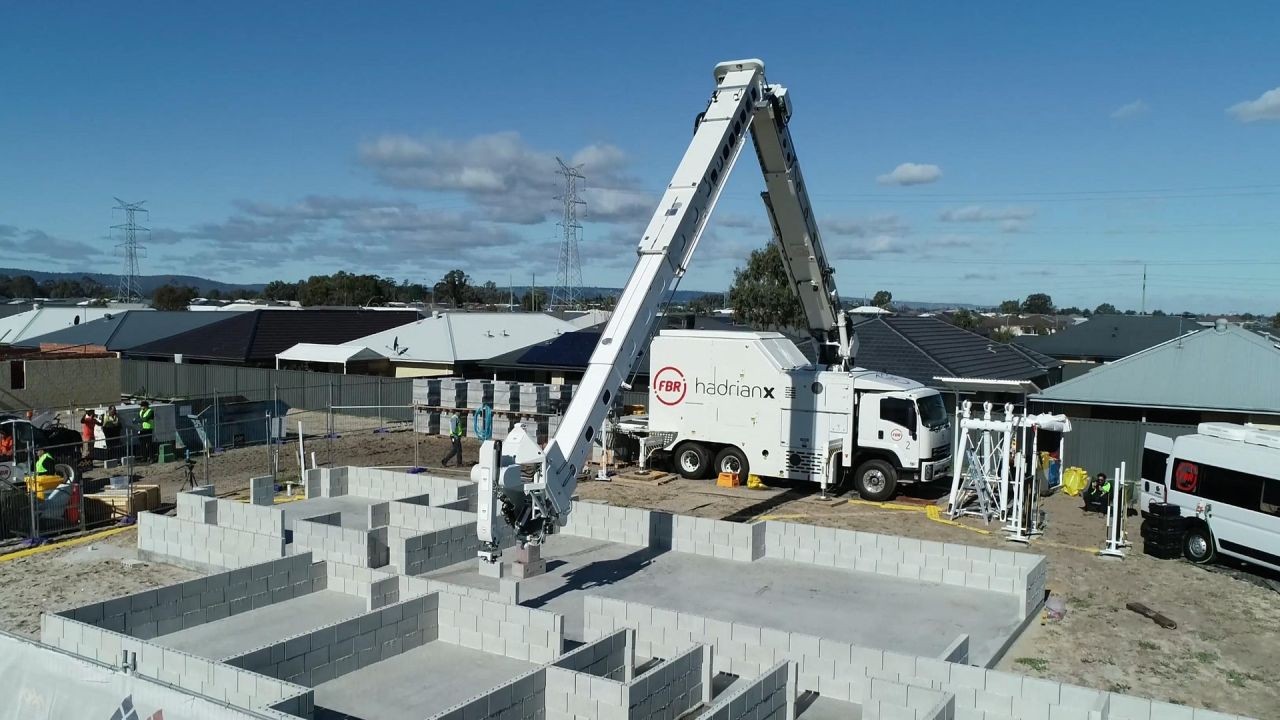
- Automated Brick-Laying Robots: Like the "Hadrian X" from Australia, which can lay bricks 24/7 at a pace far exceeding human crews.
- Robotic Surveying and Layout Drones: Automating site measurement, reducing human error, and providing constant progress analytics.
- Exoskeletons: Wearable devices that reduce worker fatigue and injury, indirectly speeding up work by improving human productivity and retention.
Drawing on my experience in the NZ market, the adoption of on-site robots is slower due to higher capital cost, site variability, and a smaller scale of projects compared to overseas. However, their role in performing dangerous, repetitive, or highly precise tasks will grow, particularly for large-scale, repetitive projects like horizontal infrastructure or multi-unit dwellings.
A Cautious Evaluation: The Tangible Pros and Cons for Investors
As with any disruptive technology, a clear-eyed assessment of benefits and limitations is crucial. This is not a silver bullet, but a strategic tool.
✅ The Compelling Advantages (Pros)
- Predictability and Risk Mitigation: This is the paramount benefit. Robotics, especially OSM, drastically reduces exposure to weather delays, trade shortages, and on-site variability. It turns construction into a more predictable, factory-like process, protecting your project's financial model.
- Accelerated Project Timelines: Faster build times mean earlier sales, earlier rental income, and reduced holding costs (finance, rates). A 20-30% reduction in on-site duration directly improves internal rate of return (IRR).
- Enhanced Quality and Consistency: Robotic precision minimises human error. Walls are plumb, joints are tight, and measurements are exact. This leads to fewer defects, lower remediation costs, and higher end-product value.
- Improved Safety and Workforce Sustainability: Robots handle heavy lifting and repetitive strain tasks. This reduces worksite injuries, a significant cost and ethical concern, and makes the industry more attractive to a wider workforce.
- Waste Reduction and Sustainability Credentials: Precise material usage and off-site optimisation significantly cut waste. For investors, this aligns with growing ESG (Environmental, Social, and Governance) investment criteria and market demand for greener homes.
❌ The Real-World Limitations and Risks (Cons)
- High Initial Capital Outlay: Establishing OSM facilities or purchasing robotic platforms requires significant investment. This cost is typically borne by the builder/developer and may be reflected in slightly higher initial contract prices, though often offset by downstream savings.
- Design Inflexibility at Scale: Robotics thrive on repetition. Highly customised, one-off designs negate many efficiency gains. The economics favour projects with modular, repeatable elements.
- Technology Integration and Skills Gap: Implementing robotics requires new digital workflows (BIM modelling) and upskilled workers to operate and maintain the technology. The NZ industry is still building this capacity.
- Limited Applicability for Renovation/Heritage: Robotics are primarily geared for new build. Their role in the complex, variable environment of refurbishment or heritage work is minimal.
- Supply Chain and Logistics Complexity: OSM shifts complexity to the logistics of transporting large modules. This requires meticulous planning, suitable access routes, and can introduce new points of potential delay.
Debunking Myths: Separating Hype from Buildable Reality
Myth 1: "Robots will replace all construction jobs in New Zealand." Reality: This is a profound misconception. Robotics are primarily a tool for augmentation, not replacement. MBIE's own research indicates the construction workforce needs to grow significantly to meet demand. Robotics address the productivity gap and take on tasks that are dangerous or undesirable, allowing the human workforce to focus on more complex, skilled, and supervisory roles. The future is a hybrid human-robot team.
Myth 2: "Robotic construction is only for giant overseas projects, not Kiwi-sized builds." Reality: The modular, panellised approach of OSM is perfectly scalable for the quintessential NZ townhouse development, retirement village, or multi-unit project. In practice, with NZ-based teams I’ve advised, the sweet spot is projects with 10 or more dwellings where design repetition creates the economic leverage for off-site fabrication.
Myth 3: "Faster construction means lower quality." Reality: In fact, the inverse is often true. The controlled, precision-based environment of a robotic factory typically produces higher and more consistent quality than a traditional, weather-exposed building site subject to trade coordination issues and skill variances. Speed here is a byproduct of superior process control.
The Investor's Playbook: How to Leverage This Trend Today
You don't need to buy a robot to benefit from this shift. Your role is to identify and partner with those who are innovating.
- Due Diligence as a Tech Audit: Integrate technology adoption into your developer/builder selection criteria. Ask specific questions: "What percentage of your projects use prefabricated elements?" "Do you utilise BIM (Building Information Modelling) for coordination?" "Are you partnered with any OSM providers?"
- Reframe Feasibility Studies: Model different scenarios. Compare the traditional build timeline and cost against a model using OSM. Factor in the value of earlier completion (reduced finance costs, earlier income) against any potential premium for the construction method.
- Engage Early with Design: To maximise robotic efficiency, design for manufacture and assembly (DfMA) principles must be embedded from the outset. As an investor, encourage your project team to consider modularity and repetition early in the design phase to unlock potential speed benefits.
- Monitor the Policy Landscape: The New Zealand government, through MBIE, is actively promoting innovation in construction via the Construction Sector Accord. Staying abreast of potential grants, training programs, or regulatory changes that favour modern methods of construction (MMC) can provide a first-mover advantage.
The Future Built Environment: A 5-Year Outlook for New Zealand
Based on current trajectories and my analysis of the sector, I anticipate the following over the next half-decade:
- Consolidation Around OSM Hubs: We will see the rise of regional OSM "hubs" supplying components to developers across wider areas, improving economies of scale and making the technology accessible for smaller builders.
- Data as the New Currency: Robotics generate vast amounts of data. This will feed into digital twins of buildings, providing investors with unparalleled insights into construction progress, quality compliance, and long-term maintenance forecasting.
- Hybrid Sites as the Norm: A typical NZ construction site in 2028 will likely involve a blend of pre-fabricated modules assembled by crane, complemented by on-site robotic assistants for tasks like internal finishing, painting, or site cleanup.
- Regulatory Tailwinds: Building consent authorities will increasingly accept standardised, pre-approved OSM components, speeding up the consenting process—a major bottleneck in New Zealand.
In my experience supporting Kiwi companies, the greatest barrier remains mindset. The transition requires upfront investment, collaborative new contracts (like alliance partnering), and a willingness to redesign processes. The investors who champion this shift will be those who secure the most reliable, profitable, and future-proof project pipelines.
Final Takeaway & Call to Action
The leverage robotics provides is not merely about mechanical speed; it's about injecting predictability, quality, and resilience into an inherently volatile process. For the property investor, this translates directly into de-risked capital and enhanced returns. The question is no longer if robotics will change construction in New Zealand, but how quickly you will align your investment strategy with this inevitable shift.
Your next step? Before your next project feasibility meeting, research three New Zealand-based builders or OSM providers who are leading in this space. Frame your first question around how their approach to modern methods of construction can deliver a more certain outcome for your investment. The future of construction is being built now—ensure your portfolio is part of it.
People Also Ask (FAQ)
Are robots used in construction in New Zealand yet? Yes, primarily through Off-Site Manufacturing (OSM) where robots in factories prefabricate building components. Full-scale on-site humanoid robots are rare, but automated machinery for tasks like framing and panelisation is increasingly adopted by forward-thinking NZ companies.
What is the biggest barrier to robotic construction in NZ? The most significant barrier is the high initial capital investment and the need for industry-wide upskilling. The fragmented nature of the NZ construction industry and the prevalence of small-scale projects also make it challenging to achieve the economies of scale needed for some robotic solutions.
Does robotic construction lower the final cost of a house? It can, but not always in the short term. The primary value is in reducing whole-of-life costs through speed (earlier revenue, lower finance costs), less waste, and fewer defects. The construction cost itself may see a modest premium initially, but this is often offset by the significant reduction in timeline and risk-related overruns.
Related Search Queries
- Off site manufacturing New Zealand companies
- Prefabricated homes NZ cost 2024
- Construction labour shortage NZ solutions
- BIM modelling benefits for property investors
- Modern methods of construction MBIE Accord
- Automated bricklaying machine cost
- How to find a tech-forward builder in Auckland
- Construction productivity statistics NZ Stats
- ESG investing property development New Zealand
- Digital twin technology building management
For the full context and strategies on How to Leverage Robotics for Faster Construction Work – A Step-by-Step Guide for Kiwis, see our main guide: Aotearoa Destination Videos Drive Bookings.