



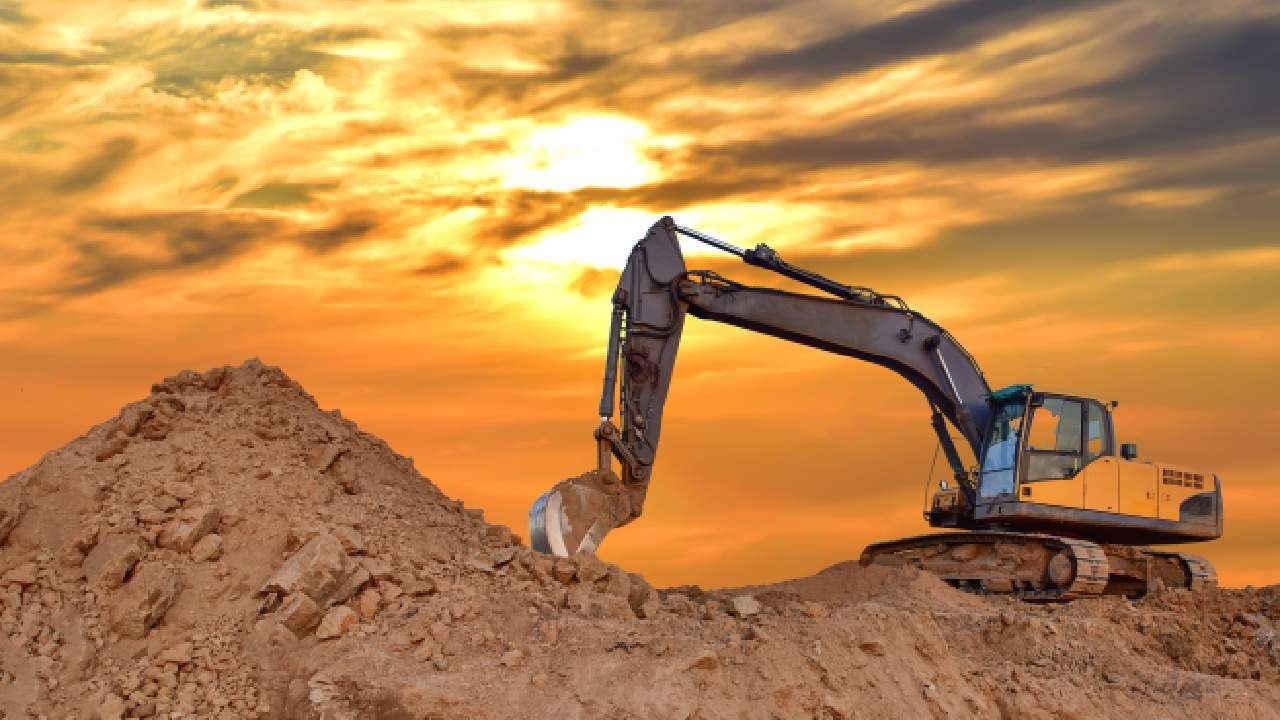
Australia’s mining industry is a cornerstone of national prosperity, contributing over 10% of GDP and accounting for roughly 60% of goods exports. The narrative of economic benefit, however, often overshadows a complex and accumulating ledger of environmental liabilities. While the sector champions technological innovation and rehabilitation efforts, a data-driven analysis reveals that the full environmental cost remains systematically under-accounted for, creating a significant long-term risk for the Australian economy and its transition to a sustainable future.
The Quantifiable Burden: Beyond carbon emissions
Discussions of mining's environmental footprint frequently centre on Scope 1 and 2 greenhouse gas emissions. While significant—the sector contributes approximately 20% of Australia’s total emissions—this is merely the most visible line item. The true cost is a multi-faceted equation involving water, land, and biodiversity, where data points to substantial, ongoing externalities.
Water consumption is a critical pressure point. The Australian Bureau of Statistics (ABS) data indicates that the mining industry consumed 658 gigalitres of water in 2021-22, representing 4% of national water consumption. However, this national figure masks severe regional impacts. In the water-stressed Pilbara, mining operations can account for over 50% of local water use, directly competing with environmental flows and other industries. Furthermore, acid mine drainage (AMD) presents a centuries-long liability. A 2023 study from the University of Queensland estimated that treating AMD from just one legacy mine site in Queensland could cost taxpayers up to $100 million annually in perpetuity.
Land Disturbance and Rehabilitation Debt
The physical footprint is staggering. Geoscience Australia estimates over 95,000 abandoned mine sites exist across the country, with less than a third having undergone any form of rehabilitation. For active mines, the rate of disturbance often outpaces rehabilitation. Data from the Minerals Council of Australia shows that while 67,000 hectares were rehabilitated between 2018-2022, the total disturbed land area continued to grow. This creates a "rehabilitation debt"—future obligations that are not fully provisioned for on company balance sheets. Based on my work with Australian SMEs in the environmental consulting sector, the technical and financial challenges of achieving "closure equivalence" are routinely underestimated, leading to significant cost overruns and, in some cases, bond forfeitures that leave the public liable.
Assumptions That Don’t Hold Up
Several entrenched beliefs within industry and policy circles require re-examination against the available data.
- Myth: Financial bonds and assurances fully cover future rehabilitation costs. Reality: Bonds are often set using historical cost estimates that fail to account for inflation, technological challenges, and long-term monitoring. The Queensland government’s 2022 audit found a $2 billion shortfall between held securities and estimated rehabilitation liabilities for the state’s mines.
- Myth: Technological innovation will inevitably solve waste and emission challenges. Reality: While innovation is crucial, it is not a panacea. The volume of mine waste, particularly tailings, continues to grow exponentially with lower ore grades. The Global Tailings Review highlights that catastrophic tailings dam failures have increased in frequency, with Australia not immune, as seen in the Cadia Valley operations incidents. Technology addresses symptoms but does not negate the fundamental scale of the waste problem.
- Myth: The economic benefits of mining unequivocally outweigh the environmental costs. Reality: This is a cost-benefit analysis with incomplete data. Traditional accounting does not price in the loss of ecosystem services (water filtration, carbon sequestration, biodiversity), the impact on other industries like agriculture and tourism, or the long-term healthcare costs associated with pollution. When these externalities are modelled, the net benefit narrows considerably.
The Financial Reporting Blind Spot
A core issue is accounting standards. Under current AASB standards, environmental rehabilitation provisions are recognised, but the methodology is fraught. Estimates are based on present-day costs and technology, discounting future liabilities back to net present value. This systematically undervalues long-term obligations that may span hundreds of years. From consulting with local businesses across Australia in financial risk assessment, it's evident that few investors fully price in the risk of regulatory shifts, such as future carbon border adjustments or stricter liability laws, which could drastically revalue mining assets.
The case of Newcrest Mining's Cadia Valley Operations is instructive. Following a series of tailings dam wall cracks and dust emissions exceeding license limits, the operator faced escalating regulatory scrutiny, community action, and significant additional capital expenditure on monitoring and management. While the direct fines were manageable, the indirect costs—including reputational damage, increased insurance premiums, and accelerated investment in mitigation—eroded profitability in ways not captured in quarterly reports. This underscores that environmental mismanagement translates directly into financial and operational risk.
Balancing the Ledger: The Advocate vs. Critic Perspective
The debate around mining's environmental cost is often polarised. A balanced analysis requires weighing both perspectives.
The Industry Advocate Perspective
Proponents argue that the industry is the engine of the Australian economy, funding public services and innovation. They point to leading-practice initiatives like the Towards Sustainable Mining framework, investments in renewable energy to power operations, and world-class mine rehabilitation projects. The sector employs over 270,000 people directly, often in regional areas with few alternatives. They contend that global demand for critical minerals for the clean energy transition makes Australian mining an environmental necessity, not just an economic one, and that continuous improvement, driven by market and social pressure, is effectively internalising costs.
The Critical Analyst Perspective
Critics, including many environmental economists, argue that improvement is not synonymous with sustainability. They highlight that absolute emissions and waste volumes continue to rise, even as efficiency improves. The principle of "intergenerational equity" is violated when future generations inherit degraded land and water without having received the economic benefits. They point to policy failures, such as the limited success of the "Safeguard Mechanism" in driving deep decarbonisation within the sector, and argue that without full-cost accounting and much stronger regulatory enforcement, the hidden costs will eventually manifest as a systemic economic shock.
The Middle Ground: Integrated Accounting and Strategic Transition
The compromise lies in reforming the economic model itself. This involves mandating Natural Capital Accounting alongside financial reporting, forcing companies and nations to explicitly value ecosystem services and liabilities. Furthermore, a portion of mining super-profits must be legislatively directed into a sovereign wealth fund specifically dedicated to funding long-term environmental management and regional economic diversification, ensuring wealth generated from non-renewable resources builds permanent, sustainable capital for the future.
Future Trends & The Coming Accountability Shift
The regulatory and financial landscape is poised for dramatic change, which will force these hidden costs into the open.
- IFRS Sustainability Standards: The mandatory adoption of global sustainability disclosure standards, including climate-related (IFRS S2) and general sustainability (IFRS S1) information, will increase transparency. Companies will need to disclose detailed plans for managing environmental risks, with assurance required, making it harder to obscure liabilities.
- Litigation and Liability: Following global trends, we anticipate a rise in climate and environmental litigation against Australian mining companies, both domestically and in international courts. This will elevate insurance costs and access to capital, particularly for projects with high environmental risks.
- Investor-Led Scrutiny: Major investment funds, driven by APRA's guidance on climate risk, are increasingly applying negative screens and demanding credible transition plans. Projects with poor environmental cost profiles will find financing more expensive and scarce. Drawing on my experience in the Australian market, the analysts at major super funds are now conducting far more granular due diligence on site-level rehabilitation plans and water stewardship than ever before.
The data suggests that by 2030, a mining company's valuation will be intrinsically linked to its verifiable environmental management and closure plan, not just its resource reserves. Operations with high hidden costs will be stranded assets.
Actionable Insights for Australian Stakeholders
For industry analysts, investors, and policymakers, passive observation is no longer viable. The data demands proactive strategy.
- For Investors & Analysts: Scrutinise environmental provisions in financial statements. Pressure companies to disclose the key assumptions (discount rates, cost estimates, timeframes) behind their rehabilitation liabilities. Model scenarios involving stricter regulation, lower discount rates, and carbon pricing. Favour companies with transparent, science-based closure plans and independent verification.
- For Policymakers: Reform financial assurance schemes to reflect full life-cycle costs, using dynamic bonds that adjust with new risk information. Invest in independent, public-scale research into rehabilitation technologies. Integrate natural capital accounts into national and state budgeting to inform land-use planning.
- For Industry Executives: Beyond compliance, invest in circular economy innovations—such as reprocessing tailings for critical minerals—that simultaneously reduce liability and create value. Engage genuinely with Traditional Owners and regional communities in co-designing post-mining land use, recognising their knowledge and long-term stake in the environment.
Final Takeaway & Call to Action
The hidden environmental cost of Australia's mining industry is a material, quantifiable, and growing contingent liability on the national balance sheet. It is not an argument for the cessation of mining, but for the radical transparency and true-cost accounting of it. The sector's social license and long-term viability depend on its ability to internalise these costs fully. The transition to a sustainable economy requires that the wealth extracted from the ground is not offset by a permanent deficit in our natural capital.
The imperative for Australian decision-makers is clear: Audit the true liability. Price the risk. Invest in the transition. The data provides the map; the will to act on it will define Australia's economic and environmental legacy for the next century.
What’s your assessment of the largest un-priced environmental risk in your sector? Share your data-driven perspective in the comments below.
People Also Ask (PAA)
How does mine rehabilitation work in Australia? Rehabilitation aims to return a site to a safe, stable, and sustainable condition. It involves landform shaping, soil replacement, and revegetation. Success is legally defined by state-based "closure criteria," but achieving long-term ecological equivalence to pre-mining conditions is often challenging and costly, leading to ongoing debate about standards.
What is the biggest environmental risk from mining? Beyond climate emissions, the largest long-term risks are acid mine drainage from waste rock, which can pollute waterways for centuries, and the structural stability of tailings storage facilities. Catastrophic tailings dam failures, while rare, have devastating human and environmental consequences.
Are Australian mining companies leaders in environmental management? Many Australian companies are at the forefront of deploying technology for efficiency and reporting. However, leadership is contested. Critics argue true leadership would mean absolute reductions in emissions and waste, full provisioning for liabilities, and voluntarily adopting rehabilitation standards that exceed regulatory minimums.
Related Search Queries
- mine rehabilitation success stories Australia
- acid mine drainage treatment cost
- tailings dam failure statistics Australia
- mining water license Australia impact
- natural capital accounting Australia policy
- ASX mining companies environmental reporting
- critical minerals mining environmental cost
- Abandoned mines liability Queensland
- Mining sector decarbonisation pathway Australia
- Safeguard Mechanism mining industry effectiveness
For the full context and strategies on The Hidden Environmental Cost of Australia’s Mining Industry – Why Australian Experts Are Paying Attention, see our main guide: Australian Finance Professional Services.