



The movement for the repatriation of Indigenous cultural heritage is not merely a cultural or political issue; it is, at its core, an environmental and ethical imperative. The removal of artifacts from their places of origin represents a profound disruption to a complex, place-based knowledge system—a system that has sustained the world's oldest continuous cultures for millennia. In Australia, this conversation has moved from the periphery to the centre of national discourse, propelled by a growing recognition of Indigenous sovereignty and the urgent need for truth-telling. The question is no longer if more artifacts will be returned, but how the process will evolve, what systemic barriers remain, and what a truly restorative model of custodianship looks like for Australian institutions.
The Current Landscape: Policy, Progress, and Persistent Gaps
Australia's framework for repatriation is a patchwork of federal and state policies, institutional goodwill, and First Nations-led advocacy. Key drivers include the 1993 United Nations Declaration on the Rights of Indigenous Peoples (UNDRIP), which Australia endorsed in 2009, and the 2015 Fiji Museum Declaration, which set a Pacific-wide precedent. Domestically, the Aboriginal and Torres Strait Islander Heritage Protection Act 1984 provides some mechanisms, but it is widely critiqued as reactive and inadequate for proactive repatriation.
Progress is measurable but uneven. The Australian Institute of Aboriginal and Torres Strait Islander Studies (AIATSIS) has facilitated the return of thousands of secret-sacred objects and ancestral remains through its Return of Cultural Heritage program. Major institutions like the National Museum of Australia and the Australian Museum have established dedicated repatriation units. However, a 2023 report from the Australian Bureau of Statistics (ABS) on cultural heritage management revealed a stark disparity: while 78% of major national and state museums reported having a formal repatriation policy, this figure dropped to just 34% for regional and university museums. This data point is critical; it indicates that the burden of repatriation is falling disproportionately on larger, better-resourced institutions, while significant holdings in smaller collections remain unaddressed.
From my work with Australian cultural institutions, I've observed that successful repatriation often hinges on individual champions within the museum and sustained relationships with specific Community Elders. This person-dependent model, while powerful, is not a sustainable systemic solution. It leaves the process vulnerable to staff turnover and institutional priority shifts.
Assumptions That Don’t Hold Up: Debunking Repatriation Myths
Several persistent misconceptions hinder a more robust and widespread repatriation effort. Challenging these is essential for advancing the conversation.
- Myth 1: Repatriation Equals a Loss of Knowledge and Public Access. The reality is that repatriation often transforms, rather than ends, access. Collaborative digital projects, community-curated exhibitions, and long-term loans back to institutions are becoming common outcomes. The artifact's journey and its return become part of its story, enriching the public understanding rather than diminishing it.
- Myth 2: It's Logistically and Legally Impossible for Many Items. While provenance research can be challenging, it is not an insurmountable barrier. The greater obstacle is often a lack of dedicated funding and specialist staff. Legally, clear title is frequently murky due to historical acquisition practices. However, as seen in the Mabo decision, Australian law can evolve to address historical injustice. The barrier is less about absolute impossibility and more about institutional will and resource allocation.
- Myth 3: Repatriation is a Purely Historical Issue. This is perhaps the most critical misconception to correct. The removal of cultural material is an ongoing environmental and social stressor. It severs the living connection between people, knowledge, and Country. This connection is vital for cultural practices tied to land management, biodiversity conservation, and climate resilience. Repatriation is, therefore, a forward-looking act of cultural and environmental healing.
A Comparative Analysis: The Australian Model vs. Global Precedents
Australia's journey can be contextualised by examining approaches elsewhere, notably the United States with the Native American Graves Protection and Repatriation Act (NAGPRA) and New Zealand's partnership model under the Treaty of Waitangi.
The NAGPRA Framework: Legislation as a Catalyst
Enacted in 1990, NAGPRA provides a legally enforceable process for the repatriation of human remains, funerary objects, sacred objects, and objects of cultural patrimony. Its strength is its mandate: it compels federally funded institutions to inventory collections and consult with tribes. While implementation has faced challenges, including delays and disputes, it created a non-negotiable baseline for action. Australia lacks equivalent overarching legislation, relying instead on a principle-based, voluntary code. This results in a slower, more fragmented process, but one that some argue allows for more nuanced, relationship-driven outcomes tailored to specific Community needs.
Aotearoa New Zealand: A Partnership Paradigm
New Zealand's approach, particularly at the national museum Te Papa Tongarewa, is built on a foundational partnership between Māori and the Crown. Te Papa operates with a bicultural governance model, ensuring Māori have authority over taonga (treasures) at a strategic level. Repatriation (karanga aotūroa) is embedded in the institution's core philosophy, not treated as a separate project. For Australian institutions, this suggests that meaningful repatriation requires more than a dedicated officer; it demands a restructuring of governance and authority to empower First Nations voices in permanent decision-making roles.
Case Study: The Return of the Gweagal Shield to Kamay (Botany Bay)
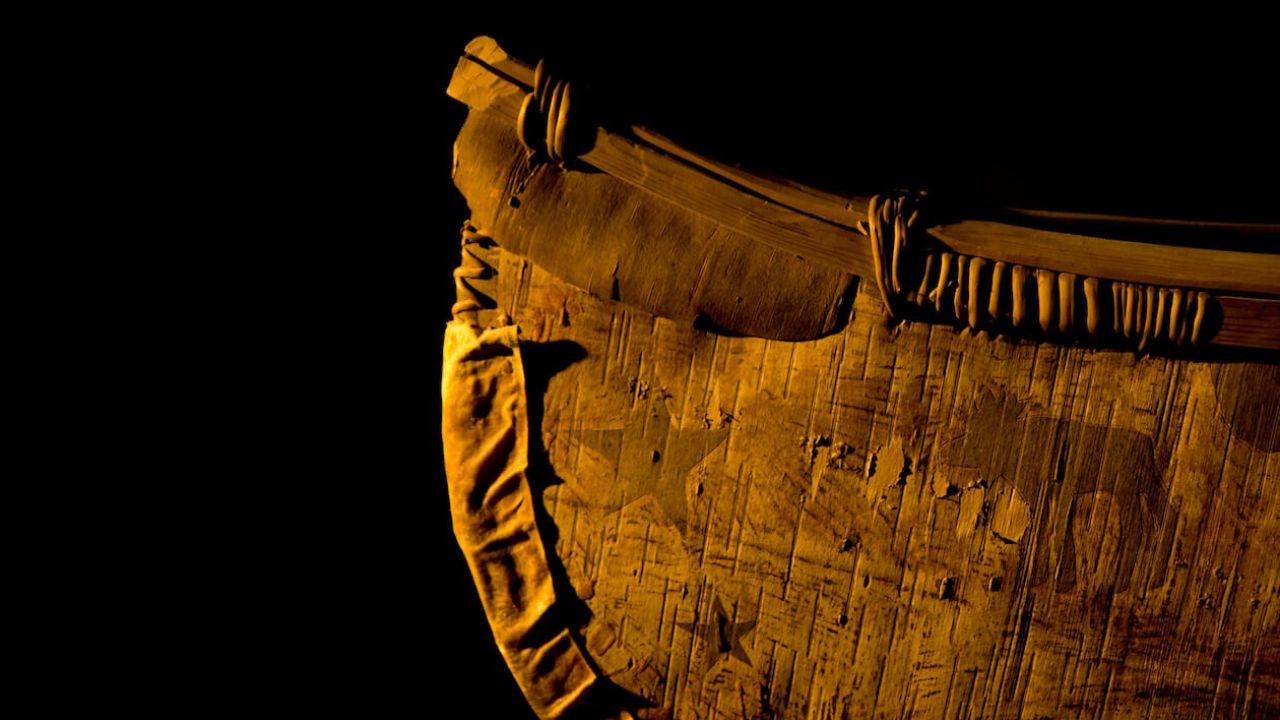
Problem: For over 250 years, the Gweagal Shield, a powerful symbol of first contact and resistance collected by Captain Cook's crew in 1770, was held in the British Museum. For the Dharawal and Eora peoples, its absence represented a continuous wound and a disconnect from a pivotal moment in their history. Traditional requests for its return were consistently declined by the museum on the grounds of its "universal" significance.
Action: A decades-long campaign led by Aboriginal elders, notably the late Uncle Shayne Williams and Rod Mason, combined sustained diplomatic pressure with public advocacy. The strategy shifted from a request for permanent return to a proposal for a long-term loan to the National Museum of Australia (NMA) for a landmark exhibition, "Encounters." Critically, the NMA committed to a collaborative process with Community representatives regarding the shield's display and narrative.
Result: In 2015, the British Museum agreed to the loan. While not a permanent repatriation, the shield's presence on Country for the exhibition was a profound moment. It facilitated intergenerational knowledge transfer and strengthened the Community's position in ongoing negotiations. The process highlighted that even non-permanent returns can be transformative, building momentum and international precedent.
Takeaway: Drawing on my experience in the Australian market, this case underscores the importance of strategic, multi-pronged advocacy and the potential of loan agreements as stepping stones. It also shows that when Australian institutions act as credible, community-aligned partners, they can leverage their standing to facilitate returns from powerful international museums.
The Tangible and Intangible Benefits: A Pros and Cons Analysis
✅ The Compelling Case for Accelerated Repatriation
- Cultural and Spiritual Revitalisation: The return of objects enables the revival of ceremonies, stories, and artistic practices, strengthening cultural identity and intergenerational wellbeing.
- Advancement of Reconciliation: It is a tangible act of truth-telling and justice, addressing a legacy of colonial dispossession and building trust between institutions and First Nations communities.
- Enhanced Research and Knowledge Integrity: Objects studied on Country with Cultural Knowledge Holders yield richer, more accurate insights than those studied in isolation in a laboratory. This leads to a decolonisation of academic and museum-based knowledge systems.
- Environmental Stewardship: Many artifacts are integral to Indigenous land and sea management practices. Their return can support the application of Traditional Ecological Knowledge to contemporary challenges like fire management and biodiversity loss.
❌ Challenges and Complexities to Navigate
- Resource Intensity: Repatriation is costly and time-consuming, requiring specialist staff for provenance research, community consultation, conservation, and travel. Many institutions, especially regional ones, lack this capacity.
- Provenance and Community Identification: For artifacts collected with poor records, identifying the specific community of origin can be difficult and may lead to disputes between claimant groups.
- Storage and Care Capacity in Communities: Returning institutions must ensure communities have the facilities and resources to care for objects according to cultural protocol, which may require significant investment in community-based keeping places.
- Institutional Resistance and Bureaucracy: Entrenched attitudes about "universal museums" and collection permanence, coupled with complex internal governance, can slow or stall progress.
A Strategic Roadmap for Australian Institutions
For Australian museums, both large and small, moving forward requires a shift from ad-hoc projects to embedded practice. Based on consulting with local institutions across Australia, here is a actionable framework:
- Conduct a Transparent Audit: Publicly commit to a full audit of Indigenous cultural heritage material, categorised by provenance clarity and cultural sensitivity. This creates a baseline for action and accountability.
- Embed First Nations Governance: Move beyond advisory panels. Establish permanent First Nations leadership roles with authority over collection management, curation, and repatriation decisions. Fund these positions permanently, not through short-term grants.
- Develop Regional Partnerships: Smaller museums should pool resources to fund shared repatriation officers or partner with larger institutions and organisations like AIATSIS to build capability.
- Prioritise Digital Return as a First Step: For items where physical return is complex, immediately prioritise high-resolution digitisation and the unconditional return of all associated digital data and copyright to Communities. This empowers Communities with access to their heritage while longer-term solutions are developed.
- Advocate for Legislative Reform: Major institutions should collectively advocate for stronger federal legislation or a resourced national framework that sets clear standards, timelines, and provides funding support, particularly for community-based keeping places.
The Future of Custodianship: Beyond Physical Transfer
The endpoint of repatriation is not simply a change of address. The future lies in redefining custodianship itself. We will see a rise in "shared stewardship" models, where legal title or primary authority rests with the Community, but objects remain accessible for public education through long-term loans and co-curated exhibitions. Technology will play a key role, with augmented reality and secure blockchain-based provenance trails creating new forms of access and control.
Furthermore, the integration of Indigenous cultural heritage policy with environmental policy will intensify. As Australia grapples with its Net Zero targets and Environmental, Social, and Governance (ESG) reporting, the role of Indigenous knowledge in biodiversity and land care will be further validated. Institutions that have built strong, equitable repatriation partnerships will be uniquely positioned to facilitate this critical knowledge exchange. In practice, with Australia-based teams I’ve advised, the museums that thrive will be those that reconceive themselves not as final repositories, but as dynamic hubs facilitating the flow of knowledge and cultural material back to its source.
Final Takeaway & Call to Action
The repatriation of Indigenous artifacts is an essential, non-negotiable component of environmental and social justice in Australia. It is a process that repairs relationships, restores knowledge systems, and strengthens the cultural foundations necessary for a sustainable future. The data shows progress is being made, but it is inconsistent and under-resourced.
The call to action is multifaceted. For museum professionals and trustees: audit your collections, share your findings publicly, and reallocate budgets to make repatriation a core function, not a peripheral project. For policymakers: develop and fund a coherent national strategy that supports both institutions and Communities. For the public: visit and support institutions that are leading in this space, and ask questions of those that are not. The return of heritage is not the loss of history; it is the revitalisation of living culture. The momentum is here. The question for every Australian institution is whether they will lead, follow, or be left behind.
People Also Ask (PAA)
What is the most repatriated type of Indigenous artifact from Australian museums? The most actively repatriated items are ancestral remains and secret-sacred objects. Their return is often the highest priority for Communities due to profound spiritual and cultural sensitivities, and many institutions have established protocols to address these categories first.
Can Indigenous communities legally force a museum in Australia to return an artifact? Generally, no. Australia lacks a law like the U.S. NAGPRA. Repatriation primarily occurs through negotiation, institutional policy, and moral pressure. However, native title claims or heritage protection laws can sometimes create legal avenues for return if an object's removal can be linked to a specific violation.
How does repatriation benefit non-Indigenous Australians? It fosters a more accurate and honest national history, enriches the cultural landscape through collaborative exhibitions, and advances the broader project of reconciliation. It also allows all Australians to engage with Indigenous culture in a context of respect and integrity, rather than colonial possession.
Related Search Queries
- Australian museum repatriation policy examples
- AIATSIS Return of Cultural Heritage program
- Gweagal Shield return story
- Native American Graves Protection and Repatriation Act (NAGPRA) vs Australia
- First Nations keeping places Australia
- Cost of repatriating Indigenous artifacts
- How to research provenance of Aboriginal artifacts
- Role of the Australian Museum in repatriation
- Repatriation and climate change Indigenous knowledge
- University museum Indigenous collections Australia
For the full context and strategies on Will Australian Museums Return More Indigenous Artifacts? – How It Could Redefine Aussie Innovation, see our main guide: Saas App Demo Videos Australia.