





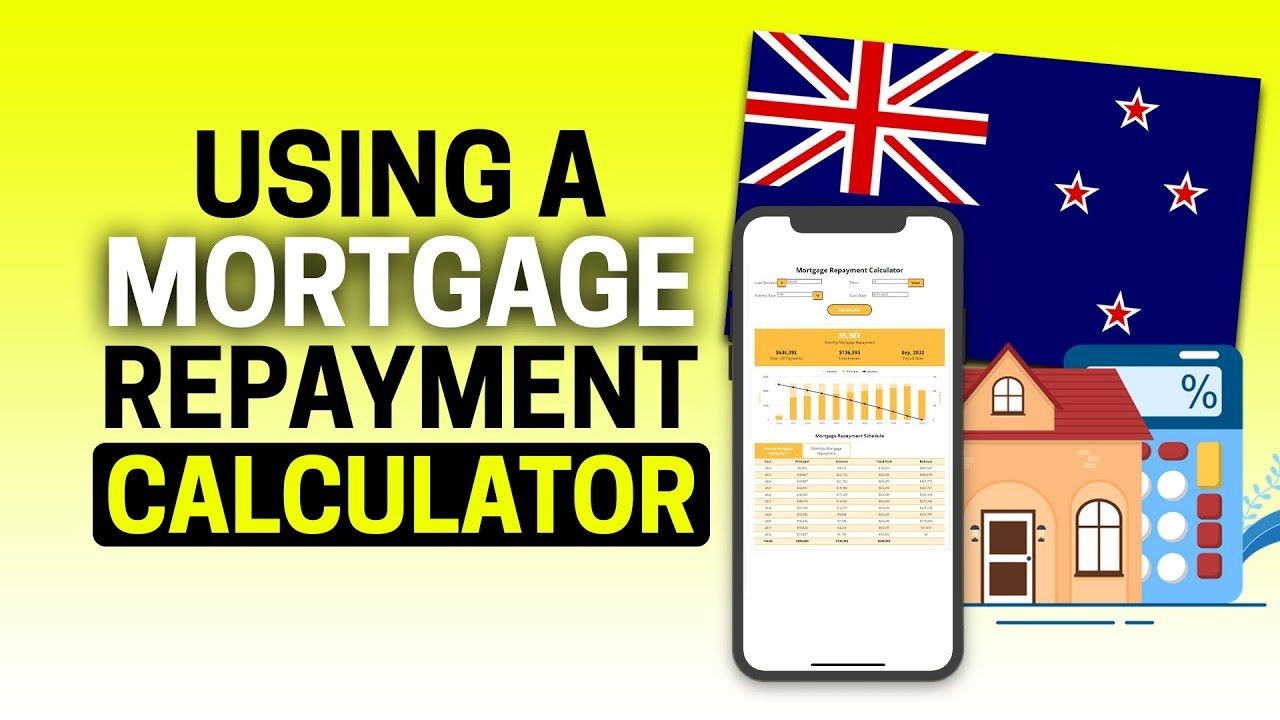
The Reserve Bank of New Zealand’s Official Cash Rate (OCR) is not merely a technical instrument; it is the primary lever controlling the cost of capital across the economy. For sophisticated investors and financial professionals, navigating mortgage structures during a tightening cycle is a critical exercise in liability management and capital preservation. The conventional wisdom of "set and forget" with a standard principal-and-interest mortgage becomes a significant liability when the OCR climbs. This analysis moves beyond basic consumer advice to dissect the strategic repayment options available, evaluating them through the dual lenses of risk mitigation and opportunity cost, with a firm focus on the unique contours of the New Zealand financial landscape.
The Mechanics of Mortgage Repayment in a High-OCR Environment
When the RBNZ signals a hawkish stance, as seen in the 2021-2023 cycle where the OCR rose from 0.25% to 5.50%, the transmission mechanism to mortgage rates is direct and potent. Floating and short-term fixed rates recalibrate almost immediately, while longer-term fixed rates bake in expectations of future hikes. In this climate, a mortgage is not just a home loan; it is a sizable, interest-rate-sensitive liability on a personal or investment balance sheet. The strategic response involves actively managing this liability's duration and cost.
The core options bifurcate into acceleration strategies and structural flexibility plays. Acceleration, such as increasing repayment amounts or making lump-sum payments, directly reduces the principal, thereby lowering total interest paid over the life of the loan. Structural flexibility involves selecting mortgage types—floating, fixed, or revolving credit—that align with interest rate forecasts and liquidity needs. The most sophisticated approach often blends both, but the weighting depends heavily on forward-looking OCR projections and personal cash flow resilience.
Drawing on my experience in the NZ market, a common oversight among even seasoned property investors is failing to model the impact of sustained higher rates on portfolio-wide cash flow. A portfolio that was neutrally geared at a 3.5% interest rate can quickly turn cash-flow negative at 6.5%, forcing distressed asset sales. Proactive repayment strategy is, therefore, a fundamental component of portfolio stress-testing.
Actionable Insight for Kiwi Investors: The Pre-commitment Strategy
Based on my work with NZ SMEs and investors, one underutilized tactic is the "pre-commitment strategy." This involves using surplus cash flow during lower-rate periods to build a buffer in an offset or revolving credit facility. When rates rise, this buffer is already in place, effectively reducing the interest-bearing debt without needing to find new capital during a potentially tighter financial period. It’s a form of self-insurance against monetary policy tightening.
Evaluating the Strategic Arsenal: A Rigorous Pros & Cons Analysis
Each repayment mechanism carries distinct financial implications and risk exposures. A blanket recommendation is imprudent; the optimal choice is a function of risk tolerance, interest rate outlook, and liquidity requirements.
Fixed-Rate Mortgages: The Certainty Premium
Pros: The principal advantage is payment certainty. Budgeting becomes predictable for the fixed term, insulating the borrower from further OCR increases during that period. This is invaluable for cash flow management, especially for businesses or investors with tight margins. In a rising rate environment, locking in a rate can provide significant savings compared to a floating alternative.
Cons: This certainty comes at a cost, often through a higher interest rate compared to the initial floating rate (the "term premium"). The major drawback is a severe loss of flexibility. Making significant extra repayments typically incurs break fees, which can be substantial if interest rates have fallen since fixation. You are effectively locked into a contract, unable to capitalize on lower rates or easily restructure debt.
Floating Rates & Revolving Credit: Flexibility at a Price
Pros: Maximum flexibility is the key benefit. Borrowers can make unlimited extra repayments without penalty, and funds in linked offset or revolving credit accounts reduce interest calculations daily. This is a powerful tool for those with irregular income (e.g., business owners) or significant cash reserves they wish to deploy against their debt. It allows for rapid debt reduction when cash is available.
Cons: You are fully exposed to every OCR adjustment. The Reserve Bank of New Zealand's data shows the rapid pass-through to floating rates; there is no insulation. This creates payment shock risk. Furthermore, the discipline required to use revolving facilities effectively is high—it can become a tempting source of funds for other purposes, undermining the debt reduction goal.
Accelerated Repayments: The Direct Path to Equity
Pros: Every extra dollar repaid is a direct reduction in principal, which compounds into substantial interest savings over the loan's lifetime. It builds equity faster, strengthening your balance sheet and improving loan-to-value ratios (LVRs), which is crucial for investors facing potential bank reassessments.
Cons: It commits liquid capital to an illiquid asset. This represents a significant opportunity cost. That capital could potentially generate a higher after-tax return elsewhere (e.g., in a business or other investments). It also reduces cash buffers, which can be dangerous if economic conditions deteriorate and income is interrupted.
Industry Insight: The Hidden Risk in "Mortgage Prison"
A critical, often undiscussed risk in rising OCR periods is the phenomenon of "mortgage prison." This occurs when a property's value declines or stagnates while interest rates rise, leaving the borrower with an LVR that no longer meets the bank's refinancing criteria. Even if they find a better rate elsewhere, they cannot switch lenders. From observing trends across Kiwi businesses, this traps borrowers with their existing bank, potentially on less favorable terms, and severely limits their strategic options. Proactively managing repayments to maintain a low LVR is a defensive tactic against this scenario.
Case Study: Strategic Restructuring for a NZ Property Portfolio
Problem: A client with a portfolio of three Auckland investment properties faced a severe cash flow crunch as successive OCR hikes pushed their combined mortgage payments up by over 40%. All loans were on short-term fixed rates maturing at different times, creating a rolling series of payment shocks. Their equity was substantial but trapped, and they risked selling an asset under duress.
Action: We conducted a full liability review. The strategy involved three steps: 1) Consolidating all debt with a single lender to negotiate a portfolio-based interest rate and waive LVR fees on internal refinancing. 2) Restructuring the debt into a mix: a large portion fixed for two years to provide payment certainty, and a smaller portion placed in a revolving credit facility secured against the property with the highest equity. 3) Using a planned business dividend to fully pay down the revolving portion, then re-drawing it to make a lump-sum payment against one of the fixed loans upon its maturity (using the bank's annual allowance).
Result: This orchestrated move achieved multiple objectives:
- Cash Flow Stability: Fixed-rate portion reduced monthly outgoings by 15% versus the projected rolling refix scenario.
- Interest Savings: The lump-sum repayment via the revolving credit maneuver saved an estimated NZD $82,000 in interest over the life of that loan.
- Strategic Flexibility: The revolving facility remained in place as a strategic liquidity buffer for future opportunities or emergencies.
Takeaway: Passive management was the primary risk. Active, holistic liability management—treating the portfolio as a single entity and using banking tools strategically—turned a defensive position into a more optimized, resilient structure. This case underscores that in a high-OCR environment, the value of expert financial engineering increases substantially.
Common Myths and Costly Mistakes to Avoid
Myth 1: "Fixing for the longest term possible is always safest during rate hikes." Reality: While long terms lock in certainty, they often carry the highest term premium and the greatest break cost risk. A laddered strategy, fixing portions of the debt for different terms (e.g., 1, 2, and 3 years), can provide a balance of certainty, cost, and ongoing flexibility to refix parts of the loan at potentially lower rates if the cycle turns.
Myth 2: "Paying down mortgage debt is the best guaranteed return." Reality: The return is the mortgage interest rate saved, which is indeed guaranteed and tax-free. However, it must be compared to the after-tax return of alternative investments. For a top-tier taxpayer, paying down a 7% mortgage is equivalent to a ~10% pre-tax investment return. The mistake is not evaluating this opportunity cost, especially if business or investment opportunities offer higher potential yields.
Mistake 3: Neglecting to Re-budget After a Refix. A 2023 RBNZ report highlighted that a significant proportion of households experienced a >40% increase in mortgage payments when refixing. The critical error is maintaining previous spending patterns. The disciplined approach is to act as if the higher payment was in place all along, directing the hypothetical "extra" into savings or debt reduction during the lower-rate period.
The Future of Debt Management in New Zealand
The recent OCR cycle has been a stark reminder of interest rate risk. Looking ahead, we anticipate a permanent shift in borrower and lender behavior. Borrowers will likely show a greater preference for mortgage structures with embedded flexibility, such as offset accounts, even at a slight premium. Lenders, under renewed regulatory scrutiny for serviceability testing, will continue to stress-test applications at higher rates. Furthermore, the integration of open banking data could lead to more dynamic, personalized repayment products that automatically optimize extra payments based on real-time cash flow. The era of passive mortgage ownership is over; active liability management is now a core component of financial sophistication in New Zealand.
Final Takeaways & Strategic Call to Action
- Treat Your Mortgage as a Liability Portfolio: Actively manage its duration, cost, and structure as you would any financial instrument.
- Model Cash Flow Rigorously: Stress-test your commitments against a sustained high-OCR environment (consider 7-8%).
- Blend Certainty with Flexibility: Use fixed rates for budget stability but maintain a portion in flexible facilities for strategic repayments and liquidity.
- Evaluate Opportunity Cost: Before making lump-sum repayments, explicitly calculate the after-tax alternative return you are forgoing.
The current monetary policy landscape demands a proactive, analytical approach to personal and investment debt. The strategies outlined here are not about speculation, but about prudent risk management and capital optimization. For investors and professionals, the question is no longer if you should manage your mortgage strategically, but how and when you will execute your plan.
Ready to stress-test your portfolio? Re-examine your last mortgage statement not as a bill, but as a balance sheet liability. Model the impact of one more 25-basis-point OCR hike. The insights from that exercise will be the foundation of your next strategic move.
People Also Ask (PAA)
How do OCR increases directly impact different mortgage types in NZ? Floating and revolving credit rates adjust almost immediately with OCR changes. Short-term fixed rates (6m-1y) are highly sensitive to OCR expectations. Longer-term fixed rates (2-5y) reflect wholesale swap rates, which anticipate the entire future OCR path, not just the next move.
Is it worth breaking a fixed mortgage to get a better rate in a rising environment? Almost never. Break fees are designed to compensate the bank for its loss when rates are below your contracted rate. In a rising rate environment, your fixed rate is likely below market, making break costs prohibitively high. The calculation only becomes viable if you are moving to a significantly lower rate, which is atypical during tightening cycles.
What is the single most important factor for Kiwis to consider when choosing a repayment strategy? Personal cash flow resilience. The optimal strategy is meaningless if you cannot sustain the required payments. Your first analysis must be a conservative assessment of your ability to service debt under stressed interest rate and income scenarios.
Related Search Queries
- OCR forecast New Zealand 2024 2025
- Fixed vs floating mortgage NZ calculator
- Break fee calculation NZ fixed mortgage
- Revolving credit facility tax deduction NZ
- Mortgage stress test calculator NZ
- RBNZ monetary policy statement dates
- Portfolio lending NZ banks
- How to negotiate better mortgage rate NZ
- Impact of OCR on NZD exchange rate
- Debt recycling strategy New Zealand
For the full context and strategies on Understanding Mortgage Repayment Options During Rising OCR Periods, see our main guide: Video Learning Resources Nz Students.