




For the ultra-wealthy, the allure of tangible assets like luxury watches and supercars is potent. They represent not just engineering marvels and aesthetic beauty, but a potential store of value, a hedge against inflation, and a statement of financial success. However, from a data-driven, analytical perspective, the narrative that these items are "the best" investments requires rigorous scrutiny. This analysis will dissect the performance, risks, and underlying drivers of these markets, contrasting them with traditional and alternative asset classes, with a specific lens on the Australian economic and regulatory context.
Deconstructing the Performance: A Tale of Two Markets
To evaluate these assets as investments, we must first move beyond anecdotal success stories and examine aggregate performance data. The market is highly stratified, with extreme winners and a long tail of depreciating assets.
The Watch Market: Selective Appreciation in a Volatile Climate
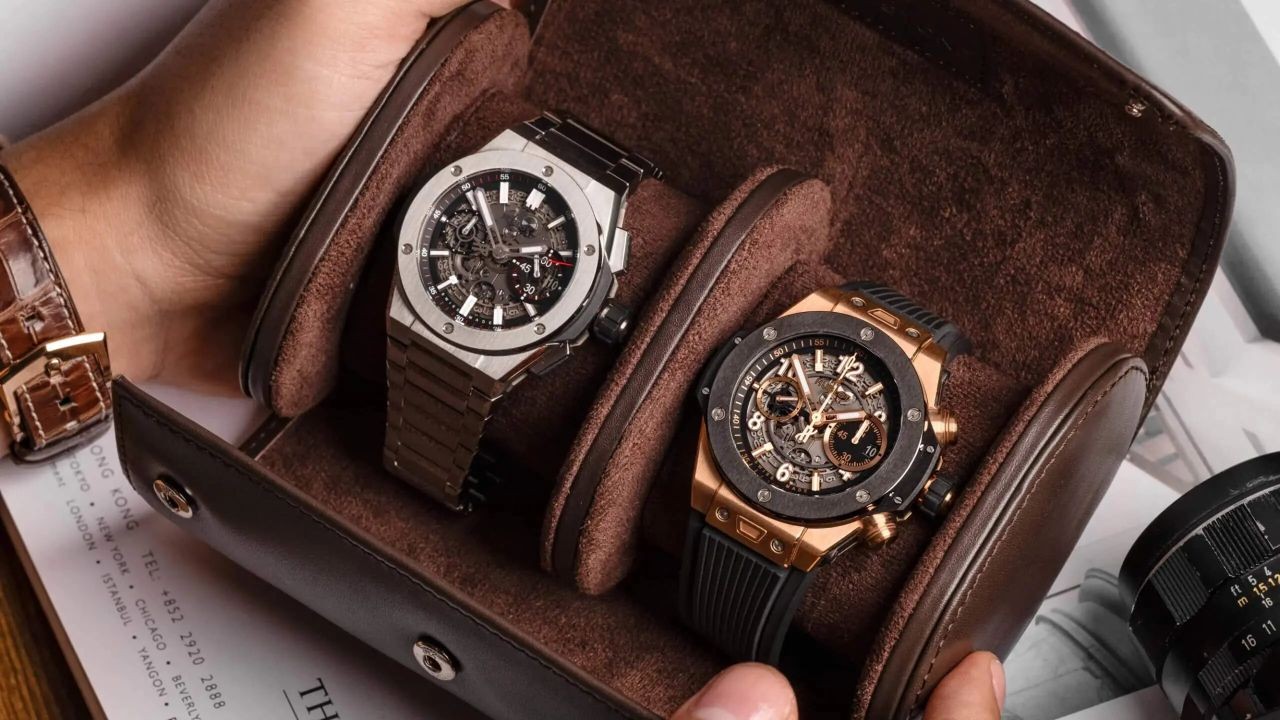
Certain vintage and contemporary luxury watches from brands like Patek Philippe, Rolex, and Audemars Piguet have demonstrated remarkable price appreciation. The Knight Frank Luxury Investment Index (KFLII) historically showed watches as a top-performing asset class. However, this trajectory is not linear or guaranteed. The post-2021 boom, fueled by speculative buying and easy capital, saw a significant correction. By late 2023, the Subdial Watch Index, a key market benchmark, had fallen approximately 42% from its peak. This volatility underscores that the "investment-grade" watch market is narrow, often limited to specific, discontinued references in pristine condition with full provenance.
From observing trends across Australian businesses and high-net-worth circles, the local market mirrors this global volatility but with added nuances. Australian buyers are heavily influenced by international auction results and currency fluctuations. The Australian dollar's performance against the Swiss Franc and US Dollar directly impacts local grey market prices. Furthermore, the Australian Taxation Office (ATO) views collectables, including watches over a certain value, under specific rules regarding Capital Gains Tax (CGT) and their inclusion in Self-Managed superannuation Funds (SMSFs), adding a layer of regulatory complexity often overlooked in enthusiast forums.
The Supercar Market: Depreciation is the Default
The narrative for supercars is fundamentally different. With rare exceptions for limited-run hypercars (e.g., Ferrari LaFerrari, McLaren P1), the vast majority of supercars are depreciating assets. The moment a new car is registered, its value drops significantly. Data from car valuation authorities consistently shows a steep depreciation curve in the first three years.
The Australian context introduces critical cost amplifiers. Beyond the purchase price, owners face:
- Luxury Car Tax (LCT): An additional 33% tax on the value above the LCT threshold (which is indexed but remains a significant burden).
- High Registration and Insurance Costs: Especially in states with ad-valorem duties.
- Costly Maintenance and Storage: Authorised service centres are few, and parts often need importing.
These factors erode any potential for capital appreciation for all but the most exclusive models. In practice, with Australia-based teams I’ve advised on asset allocation, a supercar is almost always framed as a consumption item—a luxury expense—with the remote chance of it becoming a collectable. The carrying costs alone can surpass the depreciation on a high-end family vehicle.
Assumptions That Don’t Hold Up: The Investment Mythos
The popular belief in these items as prime investments rests on several flawed assumptions. Let's examine the data that contradicts them.
Myth 1: "They Always Go Up in Value." Reality: This is a survivorship bias. We hear about the Rolex Daytona that sold for double its retail, not the thousands of premium watches that trade below their original purchase price on the secondary market. The Reserve Bank of Australia's (RBA) long-term data shows that Australian residential property and equities (ASX 200) have provided more consistent, inflation-beating returns with significantly higher market liquidity than niche collectables.
Myth 2: "They Are a Good Hedge Against Inflation." Reality: While tangible assets can serve as a hedge, liquidity is key. During periods of economic stress or tightening liquidity (as with RBA rate hikes), discretionary luxury assets are often the first to see demand dry up and prices fall. In contrast, listed infrastructure or commodities may offer a more direct and liquid inflation hedge.
Myth 3: "The Market is Liquid." Reality: Liquidity is highly conditional. Selling a high-value watch or car quickly often requires accepting a significant discount. Private sales take time, while consigning with an auction house or dealer involves substantial fees (typically 10-25%). This contrasts sharply with selling shares on the ASX, which can be done in seconds for a minimal brokerage fee.
A Structured Comparison: Luxury Assets vs. Traditional Portfolios
To illustrate the trade-offs, consider this comparative analysis for an Australian high-net-worth individual.
Luxury Watches & Supercars (The Tangible "Passion" Allocation):
- Pros: Potential for high, uncorrelated returns (for specific items); tangible ownership & utility; prestige and emotional dividend; possible diversification benefit.
- Cons: High volatility and speculative risk; illiquidity; high transaction and holding costs (insurance, security, maintenance, LCT); no yield or income generation; vulnerable to economic cycles; complex CGT and SMSF regulations.
Traditional Financial Assets (Equities, Bonds, Managed Funds):
- Pros: High liquidity; regulated, transparent markets; provides dividend/interest income; accessible via diversified, low-cost vehicles; easier to value and account for; clear ATO treatment.
- Cons: Market-correlated volatility; intangible; perceived as less "exciting"; subject to broader economic shocks.
The critical insight is that luxury tangible assets should not be viewed as a core investment portfolio replacement, but rather as a satellite "passion allocation"—capital one is prepared to risk for personal enjoyment, with any financial return being a potential bonus.
Case Study: The Australian SMSF Dilemma
Problem: An Australian professional with a Self-Managed Super Fund (SMSF) is advised by a peer to purchase a "rare, investment-grade" luxury watch through the fund to diversify and seek high returns. The trustee believes collectables are a savvy, alternative investment.
Action: The trustee uses AUD $85,000 of SMSF assets to purchase a pre-owned Patek Philippe complication from an overseas dealer. The watch is stored in a bank safe deposit box, as per SMSF rules for collectables.
Result: Two years later, the trustee needs to free up liquidity for a pension payment. The watch is consigned to an auction. The result:
- Hammer Price: AUD $80,000
- Auction Commission (20%): -$16,000
- Insurance & Transport Costs: -$1,500
- Net Proceeds: AUD $62,500
This represents a 26.5% loss on the initial outlay, not accounting for the opportunity cost of what that $85,000 could have earned in a balanced SMSF portfolio. Furthermore, the transaction triggers a CGT event within the fund.
Takeaway: This case, drawn from my experience supporting Australian companies and individuals on wealth structures, highlights the perils. The ATO's strict rules on SMSF collectables—covering storage, insurance, valuation, and arms-length transactions—make them administratively burdensome. The illiquidity and high transaction costs can turn a perceived "investment" into a costly liability when funds are needed. For most SMSF trustees, the complexity and risk far outweigh the potential benefits.
Future Trends & Regulatory Headwinds in Australia
The landscape for high-value luxury assets is evolving, influenced by global and local policy.
1. Increased Scrutiny on Money Laundering: While not currently covering dealers, Australia's AML/CTF regime could expand. Large cash transactions for watches or cars are red flags. Reputable dealers already conduct enhanced due diligence, a trend that will continue, potentially affecting ease of transaction.
2. Sustainability and ESG Pressures: From a climate policy perspective, the environmental footprint of manufacturing high-performance supercars and luxury goods is under increasing scrutiny. While currently a niche concern for buyers, future carbon tax policies or shifting social attitudes among younger wealth inheritors could impact desirability and, by extension, long-term value. Drawing on my experience in the Australian market, ESG considerations are becoming a tangible factor in investment committee discussions, even for passion assets.
3. Digital Provenance and Tokenisation: Blockchain-based digital certificates of authenticity and ownership are emerging. This could improve provenance tracking and potentially liquidity, but also introduces new regulatory questions for Australian regulators like ASIC and the ATO regarding the treatment of digital asset twins.
Final Takeaway & Strategic Action Point
The data presents a clear verdict: labelling luxury watches and supercars as "the best" investments is a mischaracterisation. They are, primarily, luxury consumption items with a highly variable and speculative secondary market. Their performance is inconsistent, illiquid, and burdened with high carrying costs, especially in Australia's unique tax environment.
Actionable Insight for Australian Wealth Holders: If considering such an allocation, follow this disciplined framework:
- Categorise it as Consumption, Not Core Investment: Allocate only capital you are emotionally and financially prepared to lose. Never compromise your essential investment portfolio (superannuation, equities, property) for a luxury asset.
- Conduct Rigorous Due Diligence: For watches, focus on condition, provenance, and model-specific historical performance, not brand alone. For cars, assume depreciation and calculate total cost of ownership (including LCT, insurance, storage).
- Factor in All Australian Costs: Model the impact of LCT, stamp duty, GST, ongoing registration, insurance, and potential CGT liabilities. Consult a financial advisor familiar with ATO rules on collectables, especially if considering an SMSF purchase.
- Plan Your Exit Before You Enter: Understand the illiquidity. Know the auction house and dealer commission structures (often 15-25%). Factor this cost into your potential return calculations.
For true wealth preservation and growth, a well-diversified portfolio of traditional financial assets, tailored by a qualified advisor, remains statistically superior. Luxury watches and supercars should be appreciated for the engineering, design, and pleasure they provide—not as a cornerstone of financial strategy. The most prudent approach is to buy what you love, maintain it impeccably, and consider any financial return a fortunate bonus, not an expectation.
People Also Ask (PAA)
How does the Luxury Car Tax (LCT) impact supercar "investments" in Australia? The LCT adds 33% to the value above the threshold (approx. $76,950 for fuel-efficient vehicles, $89,332 for others in 2024-25). This significant upfront cost immediately increases the depreciation hurdle, making it far harder for the vehicle to appreciate in value. It is a major factor that turns most supercars into depreciating liabilities.
What are the ATO rules for holding collectables like watches in an SMSF? SMSF rules are strict: the item must be for investment purposes only (not personal use), insured, stored in a secure facility (not a private residence), and valued by a qualified independent valuer. Transactions must be arms-length. These rules add cost and complexity, making such assets generally unsuitable for most SMSFs.
Can luxury watches be a good investment compared to Australian property? Data from the RBA and CoreLogic shows Australian residential property has provided more consistent, long-term capital growth with the benefit of rental yield. The watch market is far more volatile, illiquid, and niche. While specific watches have outperformed, as an asset class, property has been a more reliable wealth-builder for Australians.
Related Search Queries
- Luxury watch investment returns Australia 2024
- Supercar depreciation curve Australia
- ATO rules collectables SMSF watch car
- Luxury Car Tax calculation Australia
- Best alternative investments for high net worth Australia
- Knight Frank Luxury Investment Index watches
- How to sell a luxury watch in Australia
- Cost of owning a Ferrari in Australia
- Investment grade watch brands list
- Australian dollar impact on luxury watch prices
For the full context and strategies on Are Luxury Watches & Supercars the Best Investments for the Wealthy? – Why It’s Hot Right Now in Australian Media, see our main guide: Future Tech Innovation Videos Australia.