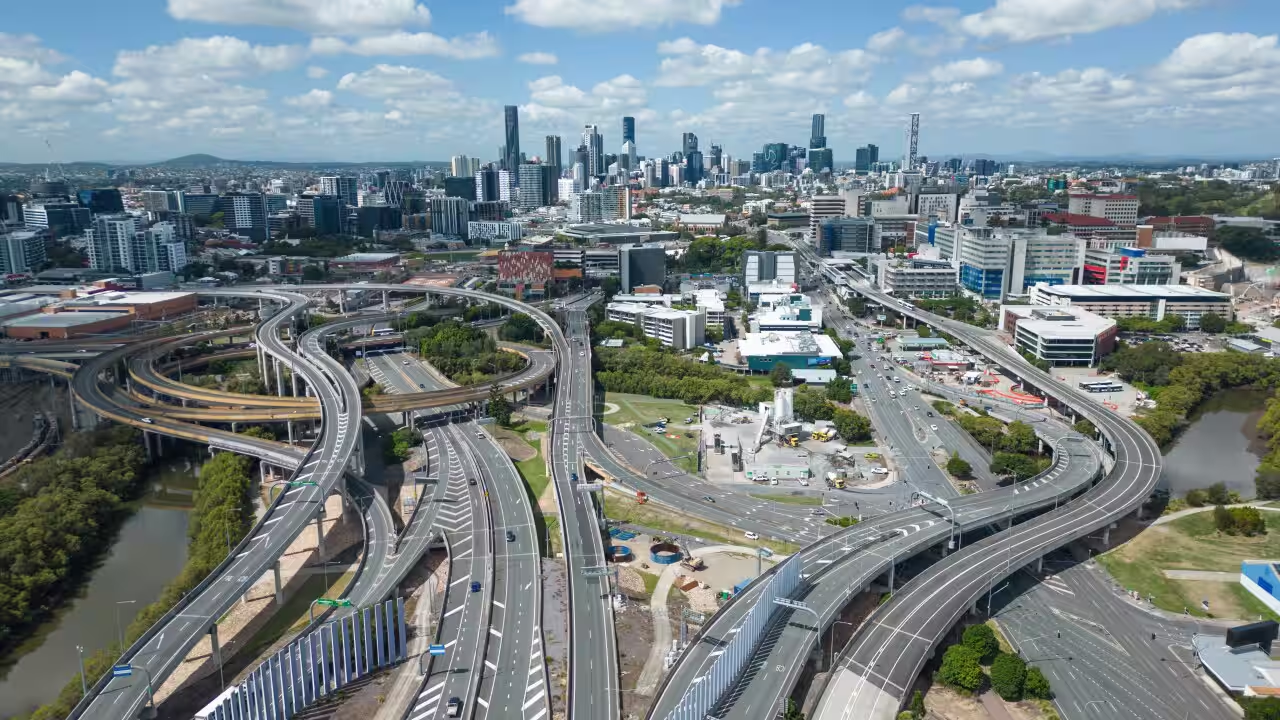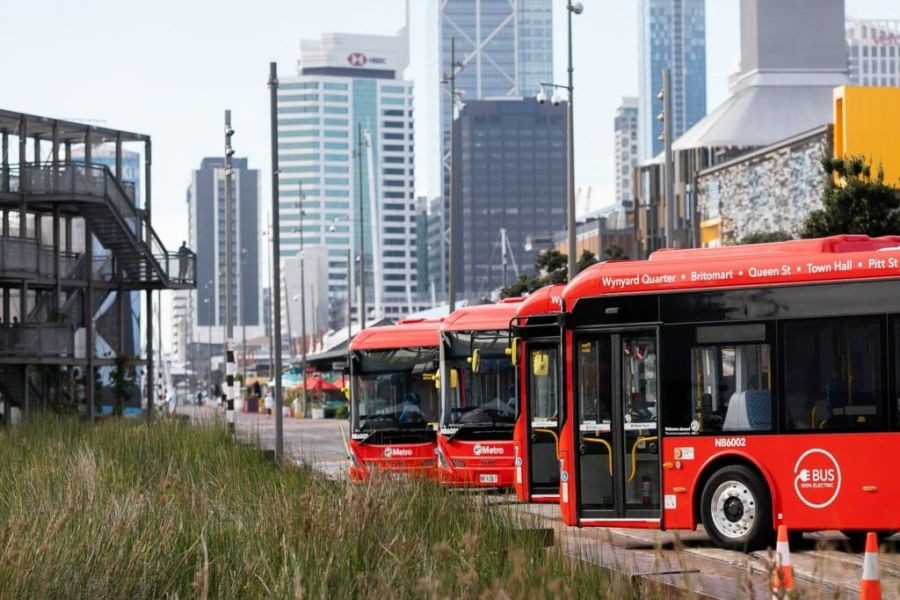






For anyone involved in property development, infrastructure is more than a civic amenity; it's the circulatory system of value creation. It determines land accessibility, influences zoning viability, and ultimately dictates where capital flows. Yet, a persistent, costly phenomenon plagues our cities and regional corridors: the seemingly perpetual roadworks on major Australian arterials. The public narrative often defaults to complaints of inefficiency or wasted tax dollars. From a development and strategic investment standpoint, that superficial view is not just incorrect—it’s dangerously misleading. The constant construction is not a sign of failure, but a symptom of a complex, multi-layered system grappling with decades of deferred investment, exponential demand, and a fundamental shift in how we must build for the future.
The Infrastructure Deficit: A Ticking Time Bomb of Deferred Maintenance
The most immediate and quantifiable driver is Australia's colossal infrastructure maintenance backlog. We are not merely building new roads; we are playing a desperate game of catch-up on a decaying asset base. The Australian Infrastructure Audit, a pivotal document, consistently paints a stark picture. The 2021 report by Infrastructure Australia highlighted that the cost of road congestion alone is projected to rise from $19 billion in 2016 to $39 billion by 2031. This isn't about growth; it's about systemic erosion of existing capacity.
From consulting with local businesses across Australia, I've seen firsthand how a single failing bridge or a chronically congested highway strangles local economies, depresses commercial property values in adjacent areas, and escalates logistics costs to unsustainable levels. Councils and state transport authorities are often forced into a reactive, triage mode. A road isn't resurfaced on a optimal, preventative schedule; it's patched until it fails, leading to more disruptive, emergency-style works. This cycle is a direct result of historical under-investment, where political cycles favour ribbon-cutting on new projects over the unglamorous, yet critical, funding for upkeep.
The Data Behind the Decay
Consider the financial scale. The 2023 State of the Assets report from the Australian Local Government Association (ALGA) estimated the national road maintenance backlog for local roads alone—which constitute the vast majority of our road network—at a staggering $5.2 billion. This is not a future liability; it's a present-day cost being borne by every business through delayed deliveries, increased vehicle wear, and lost productivity. When a major state-controlled arterial like Sydney's M4 or Melbourne's Monash requires work, the scale and cost multiply exponentially, often requiring multi-year, phased construction to manage traffic flow, hence the perception of perpetual works.
Reactive vs. Proactive: The Planning Paradox
This leads to the second core issue: our planning paradigm is fundamentally reactive. Property development, at its best, is anticipatory. We analyse demographic trends, employment shifts, and zoning changes to forecast demand. However, large-scale transport infrastructure has chronically lagged behind urban growth. New housing estates are approved and built on the urban fringe, often with inadequate initial road provisions based on optimistic models.
By the time population reaches projected levels, the surrounding road network is already at capacity. The subsequent upgrades are then exponentially more expensive and disruptive, as they must be engineered into a live corridor with minimal downtime. In my experience supporting Australian companies in master-planned communities, the number one point of contention with residents post-handover is traffic congestion—a problem created by the disconnect between land release and trunk infrastructure delivery. The result? Constant, catch-up construction that feels never-ending because the demand it seeks to service is a moving target that’s already years ahead.
Assumptions That Don’t Hold Up: Beyond "Just Fixing the Road"
The public's greatest misconception is viewing roadworks as a simple matter of laying fresh asphalt. Modern major road projects are multifaceted engineering and technology deployments. They are no longer just about the road surface, but about integrating the digital and physical infrastructure required for a 21st-century economy.
- Myth: They're just resurfacing the same old road.
- Reality: The project likely includes installing fibre-optic conduits for smart traffic management, embedding sensors for real-time load monitoring, upgrading drainage to cope with more frequent extreme weather events, and constructing dedicated lanes or safety barriers for active transport. A single "road upgrade" today is a complex civil, digital, and environmental overhaul.
Drawing on my experience in the Australian market, I've reviewed project scopes where the cost of intelligent transport systems (ITS) and utility relocations constituted over 40% of the total budget. This integration is non-negotiable but invisible to the motorist, who only sees lane closures and machinery. Furthermore, stringent environmental and community consultation requirements—managing noise, dust, runoff, and business access—add layers of complexity and time that were absent decades ago.
The Developer's Dilemma and the Value Capture Imperative
Here lies a critical, often overlooked strategic error in our national approach: the failure to effectively implement value capture. When a government spends $500 million widening a highway, the primary financial beneficiaries are often the private landowners and developers whose adjacent holdings skyrocket in value due to improved accessibility. The public bears the cost, while private equity reaps a windfall gain.
In practice, with Australia-based teams I’ve advised, we factor this anticipated public investment into our feasibility models. It's a known variable. A more sophisticated model, used in parts of Europe and Asia, employs value capture mechanisms—special levies, tax increment financing, or developer contributions tied specifically to the infrastructure uplift. This creates a funding pool that can accelerate projects and maintain assets. The recent discussion around the "Betterment Tax" in some states is a nod in this direction, but implementation remains fragmented and politically fraught. Until we close this loop, the public purse will remain strained, and the cycle of underfunding and reactive, prolonged construction will continue.
Case Study: The M4 Motorway Upgrade – A Microcosm of Systemic Challenges
Problem: The M4 in Western Sydney, a critical freight and commuter corridor, was notorious for peak-hour gridlock. Originally built for a smaller population, its capacity constraints were stifling economic growth in the booming Western Sydney region, including the development precincts around the new Western Sydney Airport. Congestion costs were immense, and the road's condition required significant maintenance.
Action: The solution wasn't a simple resurface. The multi-billion dollar M4 Motorway Upgrade involved widening the motorway, adding new intelligent motorway systems (like variable speed limits and lane-use management), and constructing major new interchanges. Crucially, it was delivered in stages over several years to maintain traffic flow, creating a prolonged period of construction activity.
Result: The project improved travel times significantly post-completion, but the journey there was defined by years of continuous works. For property developers, the period created uncertainty for sites with immediate motorway frontage but boosted long-term valuations for a wider catchment area. The project highlighted the trade-off: comprehensive, integrated upgrades necessitate long, visible construction periods. The alternative—smaller, more frequent disruptions—is often less efficient and more costly over the long term.
Takeaway: This case exemplifies the modern reality. Major artery upgrades are now decade-long programs of continuous improvement, not discrete projects. For developers, the insight is to model not just the endpoint of improved accessibility, but the multi-year impact of the construction phase itself on sales, marketing, and tenant acquisition for affected sites.
A Roadmap for the Future: From Reactive Patching to Strategic Asset Management
The future of our road network—and by extension, the property values it supports—depends on a fundamental shift in thinking.
- Adopt Whole-of-Life Asset Planning: Transport assets must be managed like a portfolio, with dedicated, depoliticised funding for preventative maintenance, based on sensor data and predictive analytics, not visible deterioration.
- Integrate Land Use and Transport Planning Ruthlessly: No major land release should be approved without a fully funded, phased transport plan locked in. This requires unprecedented coordination between state planning departments and transport agencies.
- Embrace and Monetise Value Capture: Implement transparent, consistent mechanisms to recoup a portion of the land value uplift created by public infrastructure investment, recycling it directly into the infrastructure pipeline.
- Communicate the Complexity: Authorities must better communicate the multi-utility nature of modern road projects. What looks like a hole in the ground is often the installation of the digital backbone for future autonomous vehicle corridors.
Final Takeaway & Call to Action
The perpetual roadworks are not a symbol of incompetence, but a costly testament to historical short-termism and the immense complexity of modernising a continent's circulatory system. For property professionals, this isn't just a commuting nuisance; it's a critical market variable. The location, timing, and scale of this continuous construction directly influence development feasibility, construction logistics, and asset valuation.
Your move is to look beyond the traffic cone. Scrutinise state infrastructure pipelines not as a list of projects, but as a decade-long map of value transition zones. Factor the construction phase risk into your cash flow models. Advocate for, and design within, frameworks that prioritise integrated, upfront infrastructure. The road to a more efficient, valuable property portfolio is, quite literally, under construction. The question is whether you see it as an obstacle or the most significant value-creation map in the public domain.
What’s your experience with property values in long-term construction corridors? Have you successfully modelled the impact of phased infrastructure works on your project’s viability? Share your insights and challenges below.
People Also Ask
How do perpetual roadworks impact commercial property values in Australia? In the short term, frontage properties can suffer from access issues and perceived nuisance, potentially suppressing rents or sales. However, upon completion, well-executed upgrades significantly boost values for a wide catchment area by improving accessibility and reducing congestion costs, a factor savvy investors capitalise on.
What is value capture and how could it change Australian infrastructure? Value capture is a funding model where a portion of the increased land value generated by a public infrastructure project is used to help pay for it. If implemented effectively in Australia, it could create a sustainable funding loop, accelerating project delivery and reducing reliance on general tax revenue, thereby potentially shortening construction timelines.
Related Search Queries
- Australian infrastructure funding backlog
- Impact of road construction on house prices
- Value capture Australia explained
- Smart motorways technology Australia
- Local government road maintenance cost Australia
- Property development near major road upgrades
- Infrastructure Australia audit 2024 key findings
- How long do major road projects take in Australia
- Developer contributions infrastructure NSW
- Future of transport infrastructure planning Australia
For the full context and strategies on The Real Reason Some Roads in Australia Are Constantly Under Construction – How It’s Quietly Powering Australia’s Future, see our main guide: Energy Sustainability Videos Australia.