



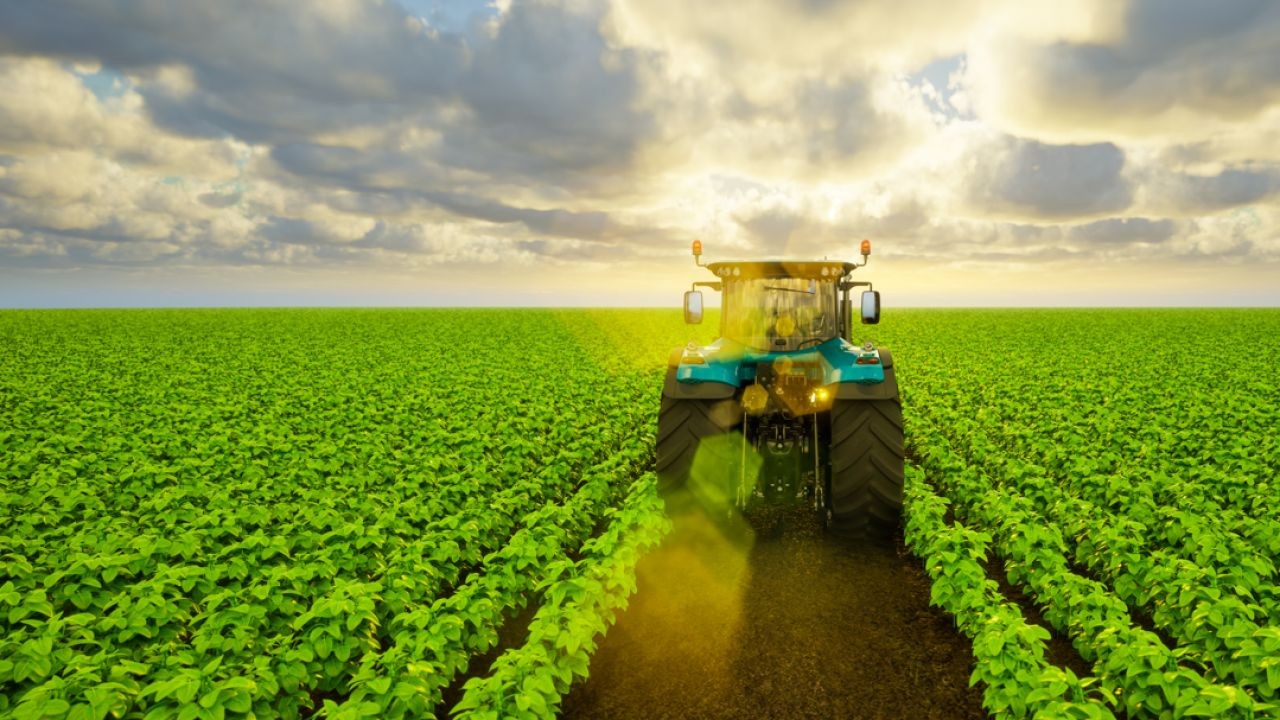
Picture a map of New Zealand. Now, draw a line that separates our bustling urban centres from our vast, productive heartland. Beyond that line, a remarkable economic reality persists: nearly three-quarters of the rural population is directly engaged in agriculture. This isn't just a statistic; it's the foundational pillar of our national identity and a significant contributor to our export-led economy. However, this concentration presents both a profound strength and a critical strategic vulnerability. For New Zealand's long-term prosperity, we must view this not as a static fact, but as a dynamic business challenge requiring immediate and innovative diversification. The future of our regions—and by extension, our nation—depends on our ability to leverage this agricultural powerhouse to seed and grow new, resilient industries.
The Strategic Landscape: A SWOT Analysis of NZ's Rural Employment Concentration
To navigate this complex terrain, we must first conduct a clear-eyed strategic assessment. A SWOT framework reveals the full picture of our rural employment landscape.
Strengths & Opportunities: The Bedrock of Our Advantage
Our agricultural dominance is not accidental. It is built on formidable strengths that create unique opportunities.
- Unparalleled Expertise & Global Brand: We possess a deep, generational knowledge base in pastoral farming, horticulture, and viticulture. This expertise underpins our "NZ Inc." brand, synonymous worldwide with quality, safety, and sustainability. From my consulting with local businesses in New Zealand, I've seen how this brand equity can be a launchpad for premium food innovation and agri-tech exports.
- Economic Engine: According to Stats NZ, in the year ended March 2023, agriculture, forestry, and fishing contributed over $13.8 billion to New Zealand's GDP. This economic heft provides a stable platform for investment in diversification.
- Opportunity in Value-Addition: The real margin lies not in commodities, but in branded, value-added products. The opportunity is to transform raw milk into patented nutritional proteins, wool into high-tech insulation, and kiwifruit into specialised nutraceuticals.
- Renewable Energy Synergy: Our rural landscapes are ideal for wind, solar, and bioenergy generation. This aligns perfectly with both our climate commitments and the chance to create new, tech-focused jobs in regional energy hubs.
Weaknesses & Threats: The Concentrated Risk
Over-reliance on any single sector is a classic strategic risk. Our rural employment profile exposes several critical vulnerabilities.
- Market Volatility: Global commodity prices, geopolitical tensions, and trade barriers can cause severe income shocks for regions with limited alternative employment. A downturn in dairy or meat prices reverberates instantly through provincial towns.
- Workforce Attraction & Retention: A mono-industry image can deter skilled workers in other fields, leading to a brain drain of youth to urban centres. Based on my work with NZ SMEs in the regions, the number one concern is often, "How do we attract a digital marketer or a software engineer to our town?"
- Environmental Pressures: The He Waka Eke Noa partnership and emissions pricing directly impact farming models. Regions dependent on agriculture are on the frontline of this transition, requiring costly adaptation.
- Climate Change Vulnerability: Droughts, floods, and biosecurity incursions pose an existential threat to agricultural output. A region with 75% of its workforce in agriculture has 75% of its livelihoods directly exposed to these climate risks.
The Diversification Imperative: A 2x2 Matrix for Strategic Prioritisation
Diversification is not about abandoning agriculture; it's about building complementary pillars. We can prioritise initiatives using a 2x2 matrix, evaluating opportunities based on their Strategic Fit with existing assets and their projected Economic Impact.
High Impact, High Fit (The "Power Zone"): These are the immediate priorities. They leverage core agricultural competencies to create new value. Examples: - Precision Agritech: Developing and exporting IoT sensors, drone analytics, and farm management software. In practice, with NZ-based teams I’ve advised, we've seen startups from Taranaki to Canterbury creating world-leading effluent management and pasture monitoring systems. - Specialised Food & Beverage Manufacturing: Establishing regional facilities for high-value nutritional products, plant-based proteins, and craft beverages. This keeps processing jobs and profits local.
High Impact, Lower Fit (The "Transformational Zone"): These require more investment but can be game-changers. Examples: - Regional Renewable Energy Projects: Large-scale solar farms or green hydrogen production, creating engineering, construction, and maintenance careers. - Niche Tourism & Experiential Clusters: Moving beyond generic tourism to agri-tourism, wellness retreats, and specialised adventure tourism that can operate year-round.
High Fit, Lower Impact (The "Foundation Zone"): Essential for enabling growth. Examples: - Digital Infrastructure: Ubiquitous, ultra-fast broadband and 5G are non-negotiable for modern business. This is a public-private imperative. - Logistics & Cool-Chain Innovation: Enhancing port and transport links to get higher-value goods to market faster and fresher.
Next Steps for Kiwi Leaders: The Diversification Action Plan
- Conduct a Regional Capability Audit: Map your existing assets—skills, natural resources, infrastructure, and educational institutions. Identify your unique "adjacent possible" industries.
- Forge Unconventional Partnerships: Federated Farmers should be co-hosting innovation summits with local tech incubators. District councils need to work with iwi and private investors on joint ventures.
- Champion "Place-Based" Strategies: Support initiatives like the Government's Provincial Growth Fund, but with a sharper, business-led focus on creating export-capable firms, not just local services.
Case Study: The Manawatū-Whanganui Region – From Farming Heartland to Innovation Platform
Problem: The Manawatū-Whanganui region, historically one of NZ's most intensive agricultural zones, faced the classic diversification challenge. Its economy and employment were deeply tied to pastoral farming, leaving it exposed to commodity cycles and environmental regulations. The region needed to future-proof its economy while respecting its primary sector roots.
Action: A concerted, multi-decade strategy focused on leveraging its central location and agricultural expertise to build new pillars. Key actions included: - Doubling down on Food & Fibre Innovation: Establishing the Riddet Institute, a world-leading centre for advanced food science, and the FoodPilot, a scale-up facility for food manufacturers. - Creating an Agri-Tech Cluster: Fostering startups and attracting established players like Agricom and BioLumic through initiatives like the Manawatū Agritech Cluster. - Investing in Education & Research: Positioning Massey University's Palmerston North campus as a specialist in agriculture, veterinary science, and engineering, creating a steady pipeline of talent. - Developing Logistics as a Service: Capitalising on the central freight hub and the Palmerston North Airport for specialised cool-chain logistics.
Result: The region has systematically reduced its over-reliance on farming alone. While agriculture remains crucial, it now sits within a broader ecosystem.
✅ The region now boasts over 150 agri-tech businesses, contributing significantly to high-skilled employment.
✅ Palmerston North has become a recognised centre for food science and research, attracting global investment.
✅ It has created a more resilient economic base capable of withstanding sector-specific shocks and attracting a wider demographic.
Takeaway: The Manawatū-Whanganui model proves diversification is possible without displacement. The strategy was not to compete with agriculture but to complement and elevate it through science, technology, and education. The key was long-term vision, cross-sector collaboration, and targeted investment in infrastructure and skills. Other regions can adapt this "innovation platform" approach based on their unique strengths.
Debunking Common Myths: Challenging Rural Economic Assumptions
Progress is often stalled by outdated beliefs. Let's dismantle three pervasive myths.
Myth 1: "Diversification means turning our back on farming." Reality: Modern, profitable farming requires diversification. The most successful farm businesses are those integrating technology, renewable energy, and hospitality. Diversification strengthens agriculture by creating new local markets for services, reducing operational risks, and providing off-farm income that supports succession. Drawing on my experience in the NZ market, the farmers thriving are those thinking like portfolio managers.
Myth 2: "High-value jobs can only exist in Auckland or Wellington." Reality: Digital connectivity has decoupled location from opportunity. A software developer in Dannevirke can work for a Silicon Valley firm; a graphic designer in Gore can service clients worldwide. The challenge is not the lack of potential, but ensuring regions have the digital infrastructure and community vibrancy to attract and retain these professionals. Programs like the Ministry of Business, Innovation and Employment's (MBIE) Regional Skills Leadership Groups are specifically tasked with addressing this.
Myth 3: "Government grants are the primary tool for regional development." Reality: While strategic public investment is crucial, sustainable diversification is driven by private enterprise and investment. The role of government and local councils is to be an enabler: creating a supportive regulatory environment, investing in backbone infrastructure (broadband, roads), and facilitating connections between local businesses and global capital. The most impactful thing a council can do is to be a fast, predictable, and supportive partner to business.
The Future of Rural New Zealand: A Bold Prediction and Actionable Roadmap
By 2030, I predict the most dynamic and resilient regional economies in New Zealand will be those that have successfully transitioned from being agricultural production zones to integrated bio-economy hubs. In these hubs, farming will be one core input into a circular ecosystem that includes renewable energy generation, waste-to-value processing, agri-tech R&D, and premium experiential tourism.
The data supports this shift. Stats NZ's Agricultural Production Statistics already show a long-term trend of fewer, larger farms employing slightly fewer people directly. The future job growth will be in the sectors that support and add value to this evolving model.
Key Actions for NZ Executives & Policymakers Today:
- Embed "Diversification by Design" in Local Plans: Every Long-Term Plan (LTP) for regional councils should have a measurable diversification KPI, such as "Increase the percentage of regional GDP from non-primary value-added sectors by 5% in 10 years."
- Create Regional Investment Attraction Prospectuses: Move beyond generic "great lifestyle" marketing. Develop professional investment documents showcasing specific projects in energy, tech, and manufacturing, with clear ROI models.
- Establish a Rural Digital Talent Accelerator: A nationwide initiative that sponsors remote work placements for urban tech talent in regional businesses, coupled with incentives for those who relocate permanently.
Final Takeaway & Call to Action
The statistic that 75% of rural New Zealand works in agriculture is a testament to our historic success, but it must not be our future constraint. The strategic imperative is clear: we must leverage our unparalleled agricultural prowess as a platform to build a more complex, innovative, and shock-resistant regional economy. This is not a task for government alone; it requires courageous leadership from agri-businesses, entrepreneurs, iwi, and investors.
The question for every leader with a stake in provincial New Zealand is this: What is the one new economic pillar your region will build in the next five years? Will it be agri-tech, renewable energy, niche manufacturing, or something uniquely yours? Identify it, build a coalition, and execute with urgency. The vitality of our heartland depends on the decisions we make today.
I challenge you to start that conversation in your boardroom, your council chamber, or your local café. Share your region's diversification vision or challenge below—let's build this future together.
People Also Ask (FAQ)
What are the biggest barriers to diversifying rural NZ economies? The primary barriers are access to risk capital for non-farming ventures, a shortage of diverse skills locally, and sometimes, a cultural reluctance to shift from known industries. Overcoming these requires targeted investment networks, upskilling programs, and strong change leadership.
How does climate change policy impact rural employment diversification? Policies like the Emissions Trading Scheme and He Waka Eke Noa directly increase costs for traditional farming. This financial pressure accelerates the economic case for diversification, making investments in renewable energy and low-emission technologies both an environmental and a business imperative for regional survival.
Can tourism be a reliable pillar for rural diversification? Tourism can be a valuable component, but it is volatile and seasonal. The key is developing specialised, high-value tourism (e.g., agri-tourism, conservation volunteering, luxury retreats) that complements other industries and encourages longer, off-peak stays, rather than relying solely on generic sightseeing.
Related Search Queries
- New Zealand rural employment statistics 2024
- Agri-tech opportunities in New Zealand
- Provincial Growth Fund success stories
- How to attract skilled workers to regional NZ
- Economic diversification strategies for small towns
- Impact of emissions pricing on NZ farmers
- Manawatū-Whanganui economic development
- Future of work in rural New Zealand
- Renewable energy projects in NZ regions
- Value-added agriculture examples NZ
For the full context and strategies on Nearly 75% of New Zealand’s Rural Population Works in Agriculture – What Smart New Zealanders Are Doing Differently, see our main guide: Eco Tourism Videos Promote Sustainable Nz Travel.