





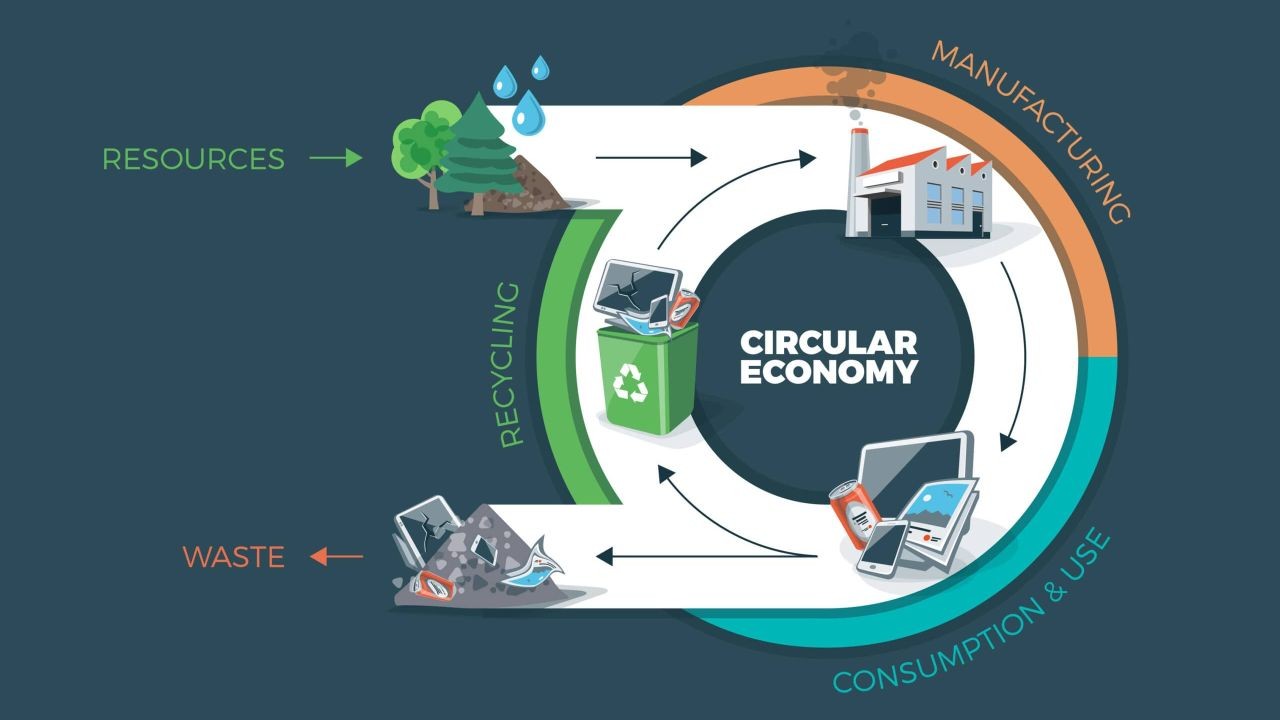
New Zealand's environmental ambition is undeniable. From the Zero Carbon Act's legislative backbone to the "clean, green" brand that underpins our export economy, the intent is clear. Yet, as a specialist who scrutinises the financial and structural frameworks of businesses and policy, a persistent and troubling gap emerges between ambition and outcome. The nation's environmental strategies, while well-intentioned, are often hamstrung by a misalignment of economic signals, regulatory complexity, and a failure to fully harness the fiscal toolkit. This isn't a story of poor intent, but one of incomplete execution—where the financial and tax architecture meant to drive change is not yet operating at full capacity.
The Fiscal Landscape: A Comparative Analysis of Carrots and Sticks
Globally, successful environmental transitions are powered by coherent economic policy. The Nordic countries, for instance, have long employed robust carbon pricing alongside targeted investment in green R&D, creating a predictable market signal. In Aotearoa, our approach is more fragmented. The Emissions Trading Scheme (ETS) is our cornerstone, but its price volatility and sectoral exemptions, particularly for agriculture—our largest emissions source—dilute its effectiveness. Drawing on my experience in the NZ market, I've observed that this creates a two-tier system: one for energy and industry facing a tangible carbon cost, and another for pastoral farming where the financial imperative is deferred and indirect.
This inconsistency is stark when you examine the data. Stats NZ's Environmental-economic accounts: 2023 reveals that while the emissions intensity of our GDP improved by 33% between 2007 and 2022, gross greenhouse gas emissions fell by only 13%. This decoupling is positive, but the slow pace of absolute reduction highlights the limitation of partial measures. The economic signal is not strong or uniform enough to catalyse the systemic overhaul required, particularly in hard-to-abate sectors.
Key actions for Kiwi businesses and advisors
- Stress-test your strategy against a higher, broader carbon price. Do not base long-term capital decisions on today's ETS settings. Model scenarios where agricultural emissions enter the ETS fully and where the price reaches $100+/tonne.
- Look beyond compliance. The real competitive advantage will lie in anticipating and exceeding future standards. From consulting with local businesses in New Zealand, those treating sustainability as a compliance checkbox are already being outpaced by those viewing it as an innovation and brand-equity driver.
- Audit your supply chain's emissions profile. Scope 3 emissions are coming into focus for our export partners. Proactive measurement and management, perhaps through tools like Toitū Envirocare, is becoming a prerequisite for market access.
Myth vs. Reality: Unpacking Common Misconceptions
To navigate this landscape effectively, we must first dispel several pervasive myths that cloud strategic decision-making.
Myth 1: "The 'Clean, Green' Image Is a Sufficient Economic Driver"
Reality: While our brand has immense value, it is increasingly a qualifier rather than a differentiator. Consumers and B2B buyers in key markets like the EU and UK are moving beyond marketing to demand verified, audited environmental credentials. The EU's Carbon Border Adjustment Mechanism (CBAM) is a tangible example—it will impose a carbon cost on imports, directly impacting NZ exporters. Relying on imagery without substantive, verified action is a significant financial and reputational risk.
Myth 2: "Environmental Investment Is Always a Net Cost"
Reality: This is a fundamental misreading of modern capital allocation. Through my projects with New Zealand enterprises, I've seen leading firms turn efficiency investments into profit centres. For example, a food processing client invested in a wastewater heat-recovery system. The capital outlay was significant, but the project paid for itself in under four years through reduced energy costs, with ongoing savings flowing directly to the bottom line. The narrative must shift from "cost" to "strategic capital expenditure with defined ROI."
Myth 3: "Government Grants Are the Primary Funding Solution"
Reality: Public funding, such as the Government Investment in Decarbonising Industry (GIDI) fund, plays a role, but it is inherently limited and competitive. The primary capital must come from private markets, redirected by clear policy signals. The emergence of green bonds and sustainability-linked loans (SLLs) in New Zealand, where interest rates are tied to sustainability performance targets, shows the market is ready. However, uptake requires robust internal measurement and reporting—a capability many SMEs lack.
The Hidden Lever: Tax Policy as a Catalyst for Change
This is where a specialist lens reveals a critical underutilised tool: the tax system. Currently, our tax settings are largely neutral—they don't actively discourage unsustainable activity nor sufficiently incentivise green investment at the scale and pace needed. This is a missed opportunity of monumental proportions.
Consider depreciation rates. While some energy-efficient assets may qualify for accelerated depreciation, the scheme is complex and not widely understood or leveraged. A more aggressive, simplified approach—such as full expensing for verified clean technology investments—could dramatically improve cashflow and payback periods for businesses. Based on my work with NZ SMEs, the complexity of applying for such incentives often deters uptake; simplification is as important as the incentive itself.
Furthermore, our R&D tax incentive scheme, while valuable, is not explicitly weighted towards environmental technology. Contrast this with jurisdictions that offer "patent box" regimes with lower tax rates on income derived from green innovations. Introducing a similar, targeted policy in New Zealand could transform our tech sector into a global exporter of agricultural emissions-reduction solutions, for instance.
Industry Insight: The Capital Gains Tax That Isn't There
From a structural economic perspective, one of the most significant distortions is the absence of a comprehensive capital gains tax (CGT), particularly on residential property. This has long been debated for equity reasons, but its environmental impact is seldom discussed. The tax system currently incentivises capital allocation into relatively unproductive asset classes like housing, diverting investment away from productive, innovative, and potentially greener enterprises. It fuels a cycle of land speculation and urban sprawl, increasing transport emissions and degrading productive soils. While politically charged, any serious discussion about aligning New Zealand's entire economy with environmental goals cannot ignore this fundamental fiscal distortion.
Case Study: Z Energy – The Biofuels Pivot and Its Fiscal Hurdles
Problem: Z Energy, a leading New Zealand fuel company, identified a strategic and environmental imperative to reduce the carbon intensity of its product suite. A key pillar was investing in domestic biofuel production, specifically a planned sustainable aviation fuel (SAF) plant using tallow as feedstock. This aligned with both global aviation trends and NZ's decarbonisation goals. However, the company faced a classic "green premium" challenge: producing SAF was significantly more expensive than conventional jet fuel, without a clear market mechanism to absorb the cost.
Action: Z pursued a multi-pronged strategy: securing offtake agreements with airlines, seeking government co-investment through mechanisms like GIDI, and advocating for a sustainable fuel mandate (which would require a percentage of fuel sold to be low-carbon). Their financial modelling had to account for volatile commodity prices, high capital expenditure, and uncertain regulatory future.
Result: Despite significant effort, Z announced in 2023 that it was halting its standalone biofuels project. The company cited "current market conditions" and the need for "stronger regulatory settings" as key reasons. The financial risk, absent a guaranteed and stable price signal (like a robust mandate or carbon price), proved too great for commercial investment alone.
Takeaway: This case is a microcosm of the national challenge. Technological capability and corporate will existed. What was missing was the decisive, long-term policy framework that de-risked the capital investment. A sustainable fuel mandate, common in other markets, would have provided the demand certainty needed. The lesson for policymakers is that without creating the market conditions for green products to compete, even the most viable projects can stall. For businesses, it underscores the necessity of deep policy engagement and risk modelling when betting on green transitions.
Future Forecast & Trends: The Evolving Pressure Points
The next five years will see external pressures crystallise, forcing acceleration in New Zealand's approach. Three trends are paramount:
- Border Carbon Adjustments: As the EU's CBAM and similar mechanisms in the UK and potentially the US come into force, the cost of our emissions profile will be paid at the border. This directly hits export revenue. Our agricultural and industrial exporters will face a new line-item cost unless they can prove their products are low-carbon.
- Financial Sector Scrutiny: The Reserve Bank of New Zealand and financial regulators are increasingly focused on climate-related financial risks. This will translate into stricter lending criteria for emissions-intensive activities and a greater demand for disclosure from businesses seeking finance. The External Reporting Board's (XRB) climate standards will make comprehensive reporting mandatory for many.
- Consumer & Talent Expectations: The social license to operate is tightening. Top talent seeks employers with authentic environmental credentials, and consumers are rapidly adopting tools to trace product provenance. Greenwashing will be met with severe commercial and reputational consequences.
Pros and Cons of New Zealand's Current Policy Mix
✅ Pros:
- Foundational Framework Exists: The Zero Carbon Act and ETS provide a legislative and market-based foundation that many countries lack, offering a starting point for iterative improvement.
- Innovation Potential: Our size and integrated economy allow for piloting solutions, like regenerative farming practices or renewable energy microgrids, that can be scaled and exported.
- Strong Brand Equity: The "clean, green" reputation, while needing substantiation, provides a valuable platform for marketing verified sustainable goods and attracting green investment.
- Growing Green Finance Market: The rapid growth of green bonds and SLLs demonstrates private capital is available and seeking aligned opportunities.
❌ Cons:
- Policy Volatility & Lack of Certainty: Political cycles lead to changing priorities, undermining the long-term investment horizon businesses need for major decarbonisation projects.
- Sectoral Fragmentation: The bifurcated treatment of agriculture versus other sectors creates economic distortion and delays action in our highest-emitting industry.
- Underpowered Fiscal Levers: The tax system remains largely passive, failing to aggressively incentivise green capital investment or disincentivise high-emission activities.
- Complexity & Compliance Burden: For SMEs, navigating the web of grants, reporting standards, and ETS obligations is daunting and resource-intensive, acting as a barrier to entry.
- Infrastructure Deficit: Lagging investment in national infrastructure, such as public transport and the electricity grid resilience needed for widespread electrification, constrains private sector action.
A Contrarian Take: Is Carbon Offsetting a Dangerous Distraction?
The rapid growth of the voluntary carbon market, particularly through forestry offsets, is often hailed as a success story for New Zealand. However, from a strategic fiscal and environmental perspective, an over-reliance on offsetting poses a profound risk. It allows emitters, including the government itself via its carbon budgets, to pay to postpone the fundamental operational and technological changes needed. In practice, with NZ-based teams I’ve advised, I see a tendency to treat offsets as a first resort rather than a last resort after all feasible reduction efforts are exhausted.
This creates a perverse long-term liability. As more companies and nations adopt "net-zero" targets, global demand for high-integrity offsets will skyrocket, raising their price significantly. More critically, converting productive sheep and beef farmland into pine forests for carbon credits exports our emissions reduction on paper but can hollow out rural communities, reduce agricultural diversification, and create a future biodiversity and land-use problem. A truly robust strategy would focus the vast majority of effort and investment on gross emissions reduction at source, treating offsets as a minor, temporary bridging tool. The current trend risks building an economy on a carbon accounting loophole that may soon close.
Final Takeaways & A Call for Coherent Action
- Fact: Stats NZ data shows a disconnect between improving emissions intensity and stubbornly high gross emissions, signalling that incremental efficiency gains are insufficient.
- Strategy: Businesses must integrate a shadow carbon price (min. $100/tonne) into all investment decisions and develop granular, audited emissions data for their entire value chain.
- Mistake to Avoid: Viewing environmental strategy as a CSR side-project or a mere compliance exercise. It is a core determinant of future cost base, market access, and capital availability.
- Pro Tip for Advisors: Help clients navigate not just current tax settings, but advocate for and model the impact of potential future reforms, like enhanced depreciation for green tech or a sustainable fuel mandate.
The path forward requires a more courageous and coherent application of economic tools. The government must provide the unwavering long-term signal: through a strengthened and broadened ETS, through tax policy that actively rewards green capital, and through regulations that phase out high-emission technologies. The private sector must respond with innovation and investment, moving beyond offsetting to fundamental operational change. As a specialist who sees the numbers behind the narratives, I can state that our current trajectory is one of increasing cost and risk. The alternative—a truly strategic, fiscally coherent green transition—is our largest economic opportunity this century. The question is whether we have the collective will to align our financial architecture with our environmental aspirations.
What's your next move? For business leaders, the immediate step is a rigorous audit of your environmental liabilities and opportunities through a financial lens. For advisors, it's about equipping yourselves to guide this transition. The decade of incrementalism is over; the era of material, financially-driven environmental strategy has begun.
People Also Ask (FAQ)
How does New Zealand's ETS compare to international carbon pricing? The NZ ETS is a cap-and-trade system but is considered moderate in price and impact due to significant sectoral exemptions (e.g., agriculture), price controls, and high use of forestry offsets. This contrasts with the EU's higher, broader carbon price and emerging Carbon Border Adjustment Mechanisms which will directly impact NZ exports.
What are the biggest tax incentives for green business in NZ currently? Key incentives include accelerated depreciation for certain energy-efficient assets, the R&D tax credit (which can apply to green tech development), and various regional grants like GIDI. However, these are often complex and fragmented, lacking the scale and simplicity of a unified green investment tax credit.
What upcoming regulatory changes will affect NZ businesses the most? Mandatory climate-related disclosures (using XRB standards) for large financial institutions and listed companies are now in effect, cascading requirements down supply chains. Additionally, potential entry of agriculture into the ETS and the impact of foreign carbon border taxes (like EU CBAM) are the most significant looming changes.
Related Search Queries
- New Zealand Emissions Trading Scheme explained 2024
- Climate reporting standards NZ XRB
- GIDI fund application process
- Sustainable finance green bonds New Zealand
- Carbon tax vs emissions trading
- Agriculture emissions NZ policy
- Depreciation rates energy-efficient assets NZ
- EU Carbon Border Adjustment Mechanism impact on NZ
- Net zero target New Zealand business
- Voluntary carbon market NZ integrity
For the full context and strategies on Why New Zealand’s Environmental Strategies Aren’t Reaching Their Full Potential – How It’s Shaping New Zealand’s Future, see our main guide: Regional Nz Travel Videos Plan Your Trip.