





The promise of artificial intelligence in medicine is often sold as a gleaming, frictionless future of perfect diagnoses and zero mistakes. In Australia, where a 2023 report from the Australian Commission on Safety and Quality in Health Care (ACSQHC) estimated that clinical errors contribute to as many as 18,000 deaths annually, the allure of an AI saviour is understandably potent. But the critical question isn't whether AI-powered diagnostics could reduce errors—it's whether our healthcare system, with its unique blend of world-class research and deeply entrenched structural challenges, is prepared to harness this technology effectively, ethically, and equitably. The gap between the Silicon Valley pitch and the on-the-ground reality in a Sydney hospital or a rural Queensland clinic is where the real story lies.
The Australian Medical Error Landscape: A System Under Strain
To understand the potential impact of AI, we must first diagnose the system itself. Medical errors in Australia are not simply a function of individual clinician failure; they are a systemic symptom. The Australian Institute of Health and Welfare (AIHW) data consistently highlights the pressures: an ageing population with complex comorbidities, rising chronic disease burdens, and stretched hospital resources. A 2024 study from the Grattan Institute pointed to ambulance ramping and emergency department overcrowding as visible signs of a system where time-poor clinicians are making high-stakes decisions under duress.
From my consulting with health administrators across Australia, the error profile often involves diagnostic delays in busy EDs, missed incidental findings in the sheer volume of medical imaging, or adverse drug events due to complex patient histories. The human cognitive load has a breaking point. This is the precise entry point for AI: not as a replacement for the doctor, but as a cognitive partner designed to handle vast data synthesis and pattern recognition at machine speed, flagging anomalies for human review.
How AI-Powered Diagnostics Actually Work: Beyond the Hype
Moving past the buzzwords, current diagnostic AI operates on several fronts, each with a distinct value proposition and set of limitations.
Medical Imaging Analysis: The Vanguard
This is where AI has seen its most concrete successes. Deep learning algorithms, trained on millions of annotated images (X-rays, CT scans, MRIs, histopathology slides), can identify patterns indicative of disease with remarkable, and sometimes superhuman, accuracy. A landmark 2020 study in Nature demonstrated an AI model that outperformed radiologists in detecting breast cancer from mammograms. In Australia, companies like Harrison.AI (with its Annalise CXR and Enterprise solutions) are already deployed in numerous radiology practices, acting as a "second pair of eyes" to highlight potential nodules, fractures, or opacities.
Drawing on my experience in the Australian market, the adoption here is not about replacing radiologists but addressing a critical shortage and workload issue. The Royal Australian and New Zealand College of Radiologists (RANZCR) has long warned of a workforce crisis. AI triage tools can prioritise urgent cases, ensuring a pneumothorax isn't buried at the bottom of a 100-scan list. The tangible value is in reducing "looker's error"—the simple human mistake of missing a subtle finding in a fatiguing workflow.
Clinical Decision Support Systems (CDSS): The Data Integrator
This is a more complex, holistic layer. These systems integrate with Electronic Health Records (EHRs), ingesting structured and unstructured data—patient history, lab results, vital signs, medication lists—to generate diagnostic suggestions or risk alerts. For instance, an AI CDSS might analyse a patient's rising creatinine, recent prescription of an NSAID, and history of hypertension to flag a high risk of acute kidney injury long before it becomes clinically obvious.
The challenge in Australia is fragmentation. Our health data is siloed across state hospital systems, federal My Health Record, and private providers. Having worked with multiple Australian startups in this space, the biggest technical hurdle isn't the AI model itself, but creating the interoperable data pipelines to feed it. A CDSS is only as good as the data it can access, making national digital health infrastructure a prerequisite, not an add-on.
Pathology and Genomics: The Microscopic and Molecular Frontier
AI is revolutionising pathology by analysing digitised tissue slides to identify cancerous cells with extreme precision, quantifying features invisible to the human eye. In genomics, AI tools can help interpret the deluge of data from genetic sequencing, linking complex genetic markers to disease propensity and treatment response. This moves diagnostics from reactive to predictive and personalised.
Assumptions That Don’t Hold Up: A Reality Check for Australian Businesses
The narrative around medical AI is riddled with optimistic assumptions that crumble under scrutiny in the real-world Australian context.
- Myth: "AI diagnostic tools will immediately slash error rates across the board." Reality: The initial impact is likely to be incremental and specific. Errors related to visual pattern recognition in imaging may drop, but errors stemming from systemic issues like poor communication, handovers, or social determinants of health will persist. AI doesn't fix broken processes.
- Myth: "Implementing AI is primarily a technical purchase." Reality: It is overwhelmingly a change management challenge. Based on my work with Australian SMEs and hospitals piloting these tools, success hinges on clinician engagement, workflow redesign, and addressing "alert fatigue." If an AI system generates too many false-positive flags, clinicians will swiftly ignore it, a phenomenon known as automation bias in reverse.
- Myth: "AI will democratise healthcare, especially in rural Australia." Reality: Without deliberate policy, it could exacerbate the digital divide. High-performance AI requires robust internet, modern digital infrastructure, and IT support—resources often scarce in regional areas. The risk is a two-tier system: AI-augmented metropolitan medicine and legacy-care everywhere else.
The Critical Debate: Augmentation vs. Automation, and the Liability Black Hole
The central tension lies in defining the AI's role. The advocate perspective champions AI as a pure augmentation tool—a diagnostic assistant. Its value is in handling drudgery and volume, elevating the clinician to focus on complex synthesis, communication, and care. Proponents point to studies like one from the CSIRO's Australian e-Health Research Centre, showing AI-assisted breast cancer screening can improve radiologists' sensitivity by up to 10%.
The critic perspective warns of a slippery slope towards deskilling and over-reliance. They argue that as systems become more capable, the pressure to automate for efficiency will grow, potentially eroding clinical reasoning skills. The most potent criticism, however, is legal and ethical. Who is liable when an AI system misses a diagnosis that a human might have caught? The developer? The hospital that configured it? The clinician who trusted it? Australia's current regulatory framework, overseen by the Therapeutic Goods Administration (TGA) which classifies some AI as medical devices, is still playing catch-up to this profound question.
The middle ground, and the only sustainable path, is "human-in-the-loop" design with clear accountability. The AI must be a transparent tool, showing its "reasoning" (e.g., heatmaps on an image), not a black box oracle. The final diagnostic decision and accountability must rest unequivocally with the registered medical practitioner. This requires new standards, auditing, and a cultural shift in clinical practice.
Case Study: The Queensland AI in Healthcare Initiative – A Systemic Approach
Rather than a single company, examining a coordinated government-led approach is more instructive for Australia's future.
Problem: Queensland Health, managing a vast and geographically dispersed population, faced challenges with diagnostic consistency and timeliness, particularly in resource-constrained regions. The goal was to improve patient outcomes while managing clinician workload.
Action: The Queensland government, through its Clinical Excellence Division, launched a multi-faceted AI initiative. This included partnering with local universities and companies to pilot AI imaging tools in select hospitals, establishing an AI ethics advisory committee, and investing in the digital infrastructure to securely share de-identified data for algorithm training. Crucially, they focused on integrating pilots into real clinical workflows from the start, involving clinicians in the design process.
Result: Early pilot data from a Mackay Hospital radiology AI deployment showed a measurable reduction in report turnaround times for chest X-rays and a high rate of corroboration between AI findings and radiologist diagnosis. More importantly, the initiative created a governance blueprint for responsible AI adoption, addressing data privacy, equity of access, and clinician training.
Takeaway: This case highlights that success depends on a system-wide strategy, not just procuring a shiny tool. It requires parallel investment in infrastructure, ethics, governance, and change management. For other Australian states, the lesson is to build collaborative ecosystems that include public health, research, and industry, ensuring solutions are tailored to local needs rather than imposed from overseas.
Costly Strategic Errors in Implementation
Australian health services rushing toward AI must avoid these pitfalls:
- Prioritising Technology over Workflow: Buying an AI solution and then asking "Where do we plug it in?" is a recipe for wasted investment. The workflow must be mapped and redesigned first. How will the alert be presented? Who acts on it? What happens next?
- Neglecting Data Quality and Curation: AI models trained on international data may perform poorly on Australian populations, which have unique demographics and disease presentations. Investing in curating high-quality, locally representative datasets is non-negotiable for accuracy and equity.
- Underestimating the Total Cost of Ownership: The software license is just the start. Costs include integration with existing EHRs, ongoing validation, clinician training, IT support, and regular updates. From observing trends across Australian businesses, a lack of long-term budget planning is a common cause of project failure.
The Future of AI Diagnostics in Australia: A Five-Year Prognosis
By 2030, AI will not have solved medical errors, but it will have irrevocably changed the diagnostic process. We will see:
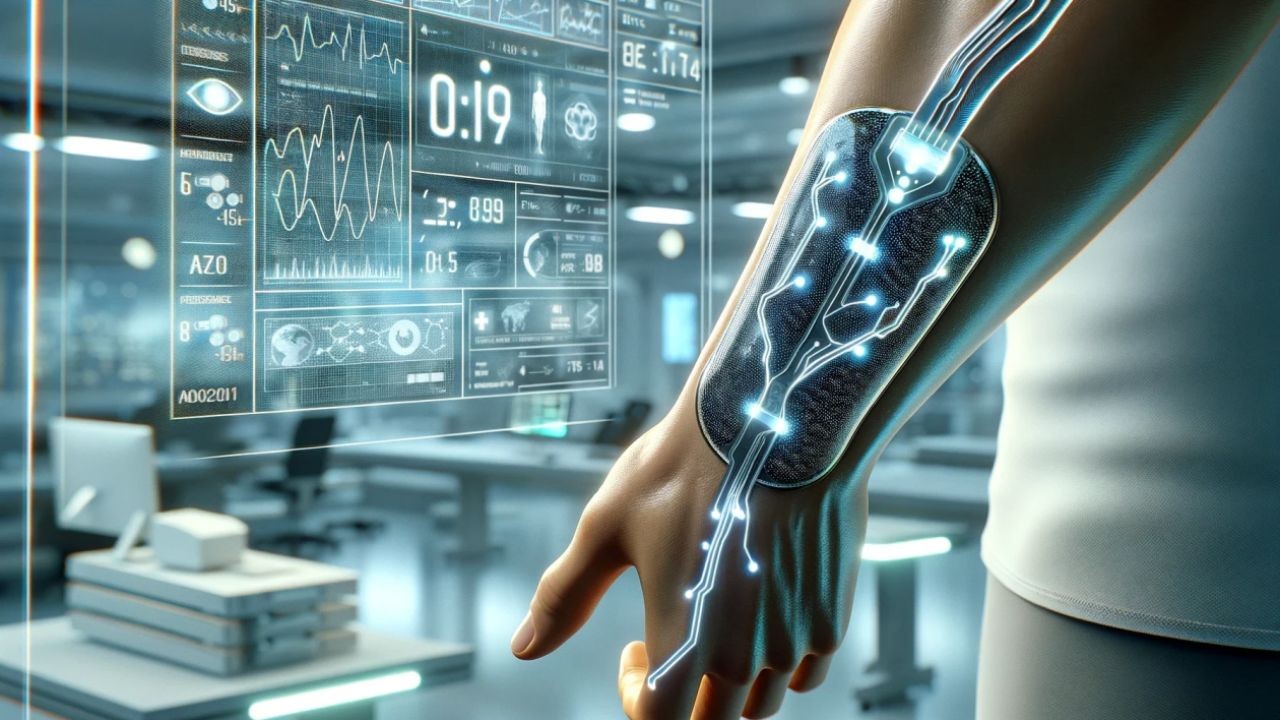
- Multimodal AI Dominance: The next generation won't just analyse images or labs in isolation. It will fuse radiology, pathology, genomics, and real-time wearable data into a unified diagnostic probability engine, providing a holistic patient portrait.
- Regulatory Maturation: The TGA, in collaboration with professional colleges like RACGP and RANZCR, will develop more sophisticated post-market surveillance and performance standards for "adaptive" AI that learns over time.
- The Rise of the "Diagnostic Navigator": AI will power patient-facing tools that help individuals understand symptoms and navigate the health system appropriately, potentially reducing low-acuity presentations in EDs—a major pressure point identified by the Australian Institute of Health and Welfare.
- Persistent Equity Challenges: Unless proactively addressed through federal and state policy (e.g., targeted funding for rural digital health), the benefits will accrue disproportionately, making the case for Medicare-funded access to essential diagnostic AI tools a coming political debate.
Final Takeaway & Call to Action
AI-powered diagnostics present a profound opportunity to make Australian healthcare safer and more efficient. However, it is not a magic bullet. It is a powerful but demanding tool that amplifies both our strengths and our weaknesses. The reduction of medical errors will not come from the algorithm alone, but from our collective ability to build the integrated digital infrastructure, the robust ethical frameworks, and the clinician-led workflows that allow this technology to serve its true purpose: augmenting human compassion with machine precision.
The conversation must move from "if" to "how." For healthcare executives, the action is to start with a clinical problem, not a tech solution. For clinicians, engage now with the pilots and governance committees—shape the tools that will shape your profession. For policymakers, the imperative is to accelerate data interoperability and establish clear national guidelines on liability and equity. The future of Australian healthcare diagnostics is being coded now. Will we be passive patients or active architects?
What's your take? Does the liability challenge outweigh the potential benefits for AI in Australian medicine? Share your insights below.
People Also Ask (FAQ)
Is AI currently being used to diagnose patients in Australia? Yes, but primarily in an assistive capacity. AI tools for analysing medical images like chest X-rays and CT scans are increasingly common in radiology practices, acting as a "second reader" to flag potential abnormalities for a radiologist's final diagnosis.
What are the biggest barriers to AI adoption in Australian healthcare? Key barriers include fragmented health data systems (hindering AI training and deployment), high upfront and ongoing costs, unresolved medico-legal liability questions, and clinician reluctance due to workflow disruption and concerns over deskilling.
Could AI eventually replace doctors for diagnosis? Highly unlikely in the foreseeable future. The prevailing expert view is that AI will serve as a diagnostic aid. The complex synthesis of clinical data, patient communication, ethical judgment, and treatment planning remains a deeply human domain that AI cannot replicate.
Related Search Queries
- AI medical imaging Australia TGA approved
- Cost of AI diagnostic tools for hospitals
- Medical error statistics Australia 2024
- Harrison.AI Annalise CXR performance
- AI and clinician liability law Australia
- My Health Record and AI integration
- Rural healthcare AI access Australia
- Best AI for radiology reporting
- Australian startups in health diagnostics AI
- Ethics of artificial intelligence in healthcare
For the full context and strategies on Could AI-Powered Diagnostics Reduce Medical Errors in Australia? – Why It Matters More Than Ever in Australia, see our main guide: Cybersecurity Compliance Videos Australia.