





Forget the slow, geological pace of evolution you learned about in textbooks. In Australia, the rulebook is being rewritten in real-time. As an economic development officer, my focus is on resilience, adaptation, and long-term strategic planning for communities and industries. What we are witnessing in our natural environment is not merely an ecological curiosity; it is a profound, accelerated case study in adaptation under extreme pressure. The rapid morphological and behavioural shifts occurring in Australian fauna are a stark biological indicator of the systemic climate shocks that will, and already are, reshaping our economic landscape. This isn't just about animals; it's a live demonstration of the adaptive capacity—or lack thereof—that will define which Australian sectors survive the coming decades.
The Unseen Economic Indicator: Phenotypic Plasticity on Overdrive
Traditionally, evolution operates through natural selection acting on genetic variation over generations. Climate change has supercharged this process through two primary mechanisms: intense selective pressure and increased phenotypic plasticity—the ability of an organism to change its traits in response to the environment. In Australia, a continent with historically variable but now increasingly extreme conditions, this is manifesting at an observable rate. The economic parallel is clear: businesses and regions with high adaptive capacity (plasticity) and the right inherent assets (genetic variation) will weather the storm. Those that are rigid will fail. From consulting with local businesses across Australia, I see this dichotomy daily. Agribusinesses diversifying crops and adopting regenerative practices are the phenotypic plasticists. Those clinging to monoculture and 20th-century water assumptions are facing a form of corporate extinction.
Case Study: The Australian Parrot's Beak – A Lesson in Resource Adaptation
Problem: Researchers have documented that several species of Australian parrots, notably the red-rumped parrot and the gang-gang cockatoo, are developing larger beaks. This morphological change is directly linked to a shift in diet forced by climate change. As heatwaves and droughts become more frequent and severe, traditional soft-fruit food sources are becoming scarcer. Birds are increasingly forced to rely on harder, more durable seeds and nuts, requiring greater bite force.
Action: This is not a conscious choice but a brutal selective filter. Parrots with genetically slightly larger, stronger beaks are more successful at accessing this tougher food, surviving, and reproducing. Over a remarkably short period—just a few decades—this has led to a measurable increase in average beak size within these populations. The change is quantifiable and directly correlated with climatic data.
Result: Studies, including those from the Australian National University, show a measurable increase in beak depth and width of up to 4-10% in some populations since the 1970s. This is an evolutionary shift observable within a human professional lifetime.
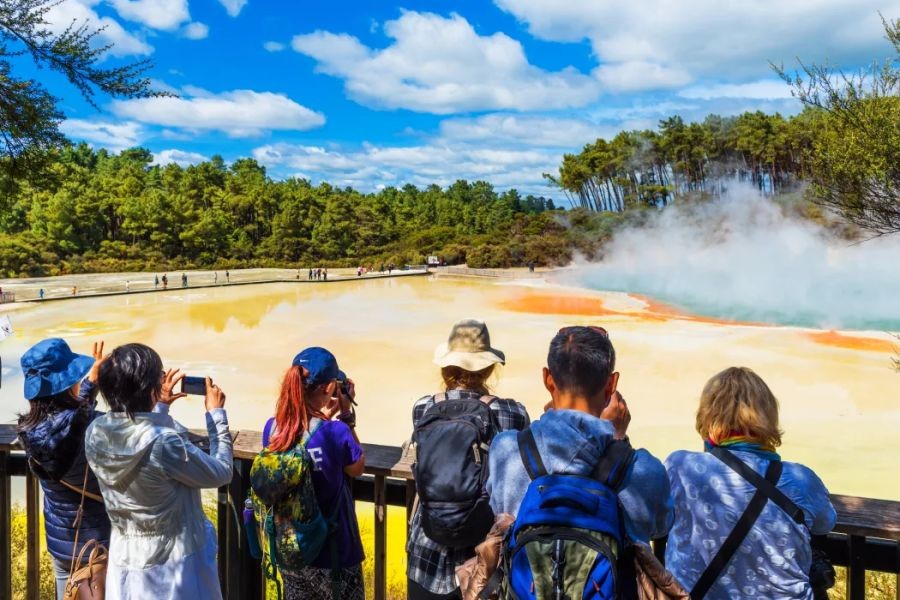
Takeaway: This is a pure-play adaptation to a changing resource base. The economic translation is immediate. Australian industries reliant on a single, climate-vulnerable resource must adapt their "beaks." For example, a tourism region whose sole appeal is a climate-sensitive natural wonder (like a coral reef or a ski field) must diversify its offerings—its "diet"—or face attrition. Having worked with multiple Australian startups in the ag-tech and climate resilience space, I see the direct parallel. They are developing the "stronger beaks"—technologies for water efficiency, heat-tolerant crops, and alternative proteins—that will be essential for future resource security.
Where Most Policy Frameworks Go Wrong: Ignoring the Pace of Change
A critical error in both ecological conservation and economic planning is using historical data as a reliable proxy for the future. The assumption that change will be linear and slow is dangerously obsolete. The rapid evolution of Australian animals proves that biological systems can hit tipping points and shift gears abruptly. Similarly, economic and climate models that project smooth, incremental change are likely underestimating systemic risk.
- Myth: "Evolution is too slow to matter for contemporary policy."
- Reality: The documented cases in Australia show significant trait changes in under 50 years. This is within the planning horizon of a major infrastructure project, a multi-decade agricultural lease, or a long-term regional development strategy.
- Myth: "Adaptation is something we can plan for later, after mitigation."
- Reality: Adaptation and mitigation are concurrent necessities. The animals evolving now are doing so because past climatic changes are already locked in. The CSIRO and Bureau of Meteorology State of the Climate 2024 report confirms Australia's climate has warmed by an average of 1.50°C since 1910, with more extreme heat, fire weather, and marine heatwaves. The economic impacts—on supply chains, insurance, labour productivity, and asset valuation—are not future concerns; they are present-day cost centres.
- Myth: "A broad strategy is sufficient for a continent as diverse as Australia."
- Reality: Evolution is hyper-local. A parrot population in Victoria may be adapting differently to one in NSW due to micro-climates and local resource pressures. Likewise, a national "one-size-fits-all" climate adaptation policy will fail. Economic development responses must be regionally specific, leveraging local comparative advantages and addressing unique vulnerabilities.
The Pros and Cons of Rapid Adaptation: An Economic Lens
Viewing these biological changes through a strategic development framework reveals a nuanced balance of risks and opportunities that mirror business decisions.
✅ The Advantages (The "Pros" of Evolutionary Agility)
- Immediate Survival Guarantee: For the individual species, rapid adaptation is the difference between persistence and extinction. For a business, analogous agility—pivoting a product line, adopting new tech—ensures short-term survival in a volatile market.
- Exploitation of New Niches: Some species may thrive in altered ecosystems. Similarly, new economic niches are opening in disaster resilience, carbon farming, and renewable energy infrastructure. Drawing on my experience in the Australian market, the regions proactively investing in these niches are building future economic resilience.
- Increased Systemic Resilience: A more adaptable ecosystem can absorb shocks better. An economy with diverse, innovative SMEs and multiple industry pillars is far more resilient than one reliant on a single, sunset industry.
❌ The Costs and Risks (The "Cons" and Strategic Warnings)
- Eroding Genetic Diversity: Rapid selection can narrow a population's genetic pool, making it more vulnerable to the next unforeseen shock. In business terms, a company that adapts too hastily by cutting R&D or specialist staff may lose its long-term innovative capacity.
- Trade-offs and Unintended Consequences: Energy diverted to growing a larger beak is energy not spent elsewhere, potentially weakening other traits. An economy that focuses solely on adapting to climate change (e.g., building desalination plants) without mitigating it (decarbonising) incurs massive, recurring costs without solving the root problem.
- The Maladaptation Trap: Not all rapid change is good. An adaptation to one stressor might increase vulnerability to another. An economic parallel is a region becoming over-dependent on a single climate adaptation industry, like insurance, which itself may become unstable in a world of cascading disasters.
The Great Debate: Managed Retreat vs. Fortified Resilience
This biological phenomenon fuels a critical strategic debate in economic development circles. Do we emulate species that adapt in place, or those that migrate?
Side 1: The Adaptation-in-Place Advocates (The "Large Beak" Strategy): This school argues for doubling down on local resilience through technological and infrastructural investment. It involves engineering solutions—seawalls, drought-resistant crops, urban cooling—to allow communities and industries to remain where they are. Proponents point to the sunk costs of existing infrastructure and the social fabric of communities. In practice, with Australia-based teams I’ve advised in the resources sector, this often looks like major capital investment in water recycling and heat-stress management for workers.
Side 2: The Managed Retreat Proponents (The "Migration" Strategy): This view, increasingly voiced by insurers and fiscal conservatives, holds that some geographical and economic activities are no longer viable. It argues for a strategic, planned withdrawal from high-risk areas (floodplains, extreme bushfire zones), relocating assets and communities to safer ground. This is politically fraught but is seen as an inevitable, fiscally responsible response to escalating disaster recovery costs, which are ultimately borne by taxpayers and state budgets.
⚖️ The Middle Ground – The Adaptive Zoning Model: The most pragmatic approach emerging is hybrid. It involves rigorous, data-driven national risk mapping (a form of ecological niche modelling for human settlements) to define zones. High-risk areas may see building moratoriums or conditions for "retrofit-or-retreat," while medium-risk zones become the focus of intensive resilience investment. This mirrors how conservationists might create wildlife corridors to facilitate natural migration—here, we would be planning for human and economic mobility.
Actionable Insights for Australian Decision-Makers
This is not an academic discussion. The lessons from our rapidly evolving fauna must translate into concrete action.
- Integrate Climate Scenario Planning into All Investment: Every significant public infrastructure project or private investment over $10 million should be stress-tested against not one, but multiple climate scenarios for 2050 and 2100. Will that port, farm, or logistics hub be viable? Based on my work with Australian SMEs seeking finance, those with robust climate risk assessments are increasingly favoured by lenders and insurers.
- Price Risk Accurately and Transparently: The market signal is everything. We must cease subsidising risk through distorted insurance markets or disaster relief that doesn't incentivise relocation. The Australian Prudential Regulation Authority (APRA) has already begun stress-testing financial institutions for climate risk. This principle must flow down to local government rates and development approvals.
- Invest in the "Phenotypic Plasticity" of the Workforce: Just as animals need genetic diversity to adapt, our economy needs a skilled, flexible workforce. This means massive, strategic investment in lifelong learning and re-skilling programs, particularly in regions facing industry transition. The data from the National Skills Commission shows growing demand for roles in renewable energy, environmental management, and digital adaptation—these are the skills of our economic evolution.
- Protect and Enhance Ecological Capital: Healthy, biodiverse ecosystems are more resilient and provide irreplaceable economic services—water filtration, pollination, carbon sequestration, and tourism revenue. Conservation is not a sentimental luxury; it is critical infrastructure maintenance. Economic development strategies must explicitly value and invest in natural capital.
Future Trends: The Biotech and Biomimicry Economy
The most forward-looking economic opportunity lies in learning from, and even leveraging, these rapid adaptations. The field of biomimicry—designing solutions inspired by nature—will explode. We will see investment in:
- Genetic Research for Climate-Resilient Agriculture: Studying the genes that allow certain species to adapt quickly to heat and drought to engineer more resilient crops and livestock.
- Bio-inspired Materials and Designs: Learning from thermoregulatory adaptations in animals to design more energy-efficient buildings.
- Ecosystem Service Markets: As the value of natural capital becomes undeniable, robust markets for biodiversity credits and ecosystem services will emerge, creating new revenue streams for regional Australia and Traditional Owners who are expert land managers.
By 2035, I predict that a significant portion of Australia's venture capital landscape will be dedicated to climate adaptation biotech and biomimicry startups, turning a national vulnerability into a global export opportunity.
Final Takeaway & Call to Action
The accelerated evolution of Australian animals is a canary in the coalmine for the nation's economy. It demonstrates the brutal speed and specificity of adaptation required in a changing climate. The central lesson for economic development officers, policymakers, and business leaders is this: adaptive capacity is now the single most important determinant of long-term economic viability. We must move beyond viewing climate change as an environmental issue to be managed separately from the economy. It is the overarching strategic context for every decision we make.
Your immediate action point: Conduct a vulnerability audit. Whether you are responsible for a local council, a business portfolio, or an industry body, map your key assets, supply chains, and workforce against the projected climate impacts for your specific region over the next 25 years. Identify your single greatest point of fragility—your "small beak" in a world of tougher seeds—and develop a plan to adapt it. The time for gradual, incremental change is over. The pace is now evolutionary.
What is the first adaptation your organisation or region needs to make? Share your insights and challenges below to foster a crucial national conversation on resilience.
People Also Ask (PAA)
How does rapid animal evolution impact Australia's primary industries? It signals profound ecosystem shifts that underpin agriculture, fisheries, and forestry. Pollinator changes, pest population dynamics, and soil microbiomes are all in flux, demanding that primary producers adopt adaptive management practices and genetic technologies to maintain productivity and biosecurity.
What are the economic risks of ignoring these rapid biological changes? The risks are systemic: collapse of ecosystem services (e.g., water purification, crop pollination), irreversible loss of biodiversity-based tourism, uninsurable assets, and supply chain failures. This translates to direct GDP contraction, job losses in vulnerable regions, and escalating government disaster recovery liabilities.
Can Australian businesses benefit from studying these evolutionary changes? Absolutely. They offer a blueprint for rapid adaptation and inspire innovation in biomimicry. Businesses can develop new products, materials, and operational models by understanding how nature solves extreme climate challenges, creating competitive advantage in a global market increasingly focused on sustainability and resilience.
Related Search Queries
- climate change adaptation Australia economic policy
- biomimicry startups Australia
- climate risk assessment for Australian businesses
- managed retreat coastal communities Australia
- CSIRO State of the Climate 2024 economic impacts
- phenotypic plasticity examples Australia
- economic resilience planning regional Australia
- APRA climate risk guidance for companies
- natural capital accounting Australia
- future of Australian agriculture climate change
For the full context and strategies on Why Some Australian Animals Are Evolving Faster Due to Climate Change – The Future Outlook for Aussie Industries, see our main guide: Hair Salon Styling Videos Australia.