



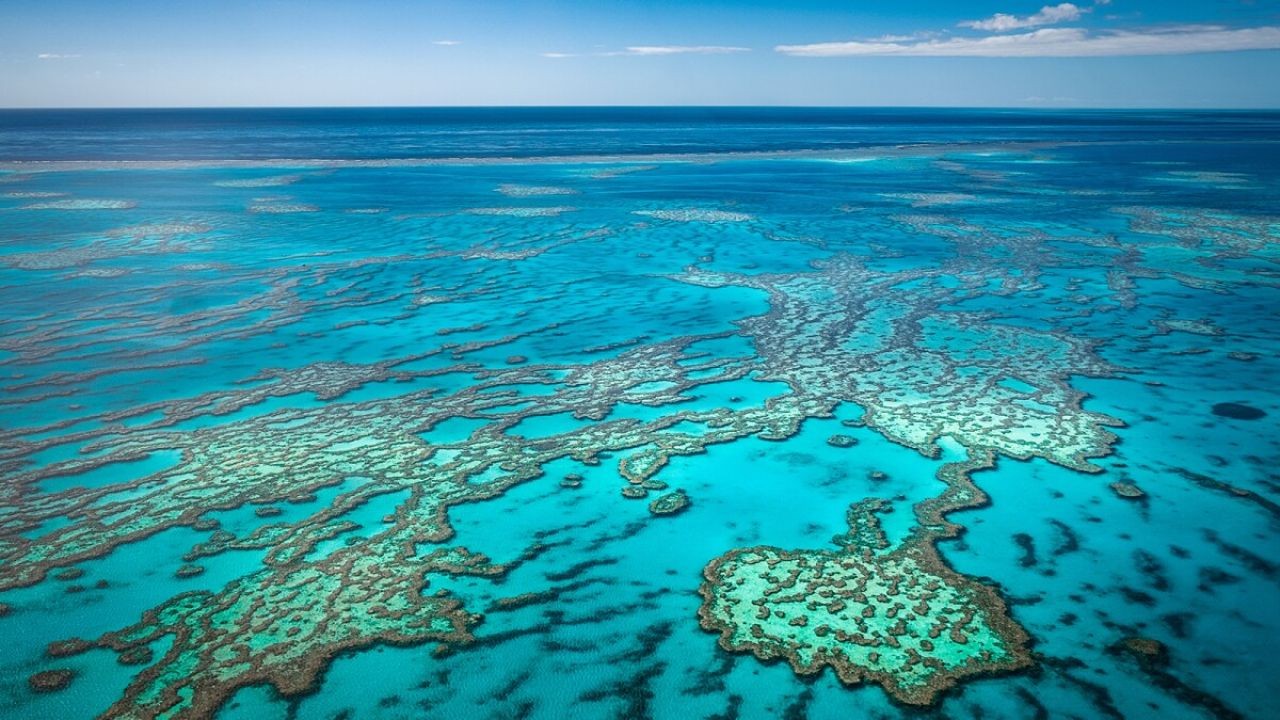
Standing on the deck of a research vessel off the coast of Cairns, the sheer scale of the challenge is both humbling and electrifying. Before me stretches the Great Barrier Reef, a 2,300-kilometer living masterpiece and an economic powerhouse contributing an estimated $6.4 billion annually to the Australian economy and supporting 64,000 jobs. Yet, this iconic asset faces unprecedented threats from climate change, crown-of-thorns starfish outbreaks, and water quality issues. For decades, the narrative has oscillated between despair and defiance. Today, however, a new story is being written—one where cutting-edge engineering, innovative finance, and collaborative science are converging to not just conserve, but actively revitalize the Reef. This isn't merely an environmental crusade; it's one of the most complex and consequential infrastructure projects on the planet, and its lessons are reshaping the future of ecological economics and sustainable construction.
The Economic Imperative: More Than Just Coral
To view the Reef solely through an environmental lens is to miss the profound economic infrastructure at risk. The Deloitte Access Economics valuation of $56 billion as an 'asset' is instructive. This figure encapsulates tourism, fisheries, coastal protection, and cultural value. The Reef's health directly correlates with regional economic stability in Queensland. A decline in coral cover and biodiversity leads to a decline in tourist numbers, which cascades into hotel vacancies, reduced hospitality employment, and lower demand for associated services from transport to retail.
From consulting with local businesses across Australia, particularly in Cairns and the Whitsundays, I've observed a critical shift. The tourism market is increasingly driven by eco-conscious travellers. They don't just want a pretty snorkel spot; they seek evidence of genuine stewardship. Operators who can articulate and demonstrate their contribution to Reef restoration are gaining a competitive edge. This creates a direct feedback loop: investment in restoration protects the asset, which in turn sustains and grows the economic output. The 2023-24 Federal Budget's $1.2 billion commitment to the Reef over nine years is a significant down payment, but it also acts as a catalyst, de-risking and leveraging further private and philanthropic capital into what is becoming a burgeoning 'blue economy' sector.
Engineering the Ecosystem: From Pilots to Scale
The era of passive protection is over. The new frontier is active intervention, employing techniques that would be familiar to any construction project manager, albeit with a biological twist. This is where civil engineering meets marine biology in spectacular fashion.
Case Study: The Coral Nurture Program – A Partnership Model That Works
Problem: Traditional coral restoration was slow, small-scale, and expensive, reliant on academic and NGO efforts. It lacked the speed and scalability needed to match the pace of reef degradation. The tourism industry, while deeply concerned, lacked a clear, tangible mechanism to contribute directly to solutions beyond general donations.
Action: The Coral Nurture Program, a pioneering partnership between scientists at the University of Technology Sydney and tourism operators like Wavelength Reef Cruises, flipped the script. They developed and deployed two key technologies: the 'Coralclip'®, a simple, durable device that allows divers to attach coral fragments to the reef in seconds (versus minutes with traditional methods), and floating coral nurseries. Critically, the work is carried out by the tourism operators themselves—their crews are trained as "citizen scientists," integrating restoration into their daily operations.
Result: The program has achieved staggering efficiency gains. Over 100,000 corals have been planted across multiple sites. The survival rate of 'clipped' corals is over 85%. Most importantly, it has created a viable commercial model. Tourism businesses invest their time and resources because they see a direct benefit: healthier reefs on their sites, a compelling story for their customers, and the security of their primary asset. The program has also generated valuable employment, creating specialized reef restoration roles within the tourism sector.
Takeaway: This case study is a masterclass in systems thinking. It aligns economic incentive (tourism business longevity) with ecological outcome (reef health). For Australian businesses in any sector, the lesson is to seek partnership models where value creation is shared. The application for mainland projects is clear: engaging local communities and industries not as stakeholders, but as co-delivery partners, leads to more sustainable, cost-effective, and scalable outcomes.
The Toolbox of Revival
Beyond coral clipping, the restoration toolbox is expanding rapidly:
- Larval Restoration (Coral IVF): Pioneered by the Southern Cross University's Professor Peter Harrison, this involves capturing coral spawn, rearing millions of larvae in floating enclosures, and releasing them onto degraded reefs. It's mass production for coral repopulation, with trials showing a three-to-fivefold increase in larval settlement.
- Reef Stars (Mars Assisted Reef Restoration System): Using small, steel-framed 'stars' coated with sand, this method creates a stable mesh base for attaching coral fragments across large areas of rubble fields. It's essentially creating new foundational substrate—the groundwork for the reef's recovery.
- Crown-of-Thorns Starfish Control: A relentless marine pest, controlled via direct injection by dedicated vessels. This is pure asset maintenance, protecting the existing 'capital stock' of coral.
- Cloud Brightening & Water Quality Engineering: Ambitious large-scale interventions like the Cloud Brightening Project (spraying microscopic sea salt to enhance cloud reflectivity) aim to cool the Reef. Meanwhile, on land, engineering works to reduce sediment and nutrient runoff are classic civil projects with a marine payoff.
Reality Check for Australian Businesses: The Cost of Inaction
A pervasive misconception, even among savvy investors, is that environmental restoration is a cost centre—a charitable expense with no tangible financial return. This is a dangerous and outdated fallacy. The data paints a starkly different picture. The Australian Institute of Marine Science's Long-Term Monitoring Program reports that while coral cover has shown resilience and recovery in periods, the frequency and severity of mass bleaching events (2016, 2017, 2020, 2022, 2024) are increasing. Each event represents a direct depreciation of a national asset.
Drawing on my experience in the Australian market, I analyse this through a standard asset management framework. Preventative maintenance and strategic capital upgrades are always more cost-effective than catastrophic failure and rebuild. The Reef 2050 Plan, endorsed by all levels of government, is that strategic capital plan. The Great Barrier Reef Marine Park Authority's regulatory role is the compliance and quality assurance function. The question for Australian business leaders is not whether we can afford the investment in restoration, but whether we can afford the spiralling costs of decline—in lost tourism revenue, diminished fisheries, reduced coastal resilience, and reputational damage to our "clean, green" global brand.
The Financial Architecture: Blending Capital for a Blue Future
Government funding is essential, but insufficient alone. The real innovation is in structuring finance to attract private investment. The Reef Credit system is a groundbreaking example. Modelled on carbon credits, it creates a quantifiable, tradable unit representing a verified improvement in water quality (e.g., a kilogram of nitrogen prevented from entering the reef catchment). Landholders who change practices (e.g., restoring wetlands, improving fertiliser management) can generate and sell these credits to companies, governments, or philanthropists wanting to offset their environmental impact.
This creates a market-based solution, turning environmental improvement into a revenue stream for farmers. It's a powerful tool for aligning agricultural and ecological interests. Furthermore, green and blue bonds are emerging, allowing institutional investors to fund large-scale restoration projects with defined environmental returns alongside financial yields. The Queensland Government's Land Restoration Fund is a AU$500 million catalyst in this space. This financial engineering is as crucial as the marine engineering; it builds the pipeline of bankable projects that can attract the scale of capital required.
Pros and Cons of the Active Restoration Paradigm
✅ Pros:
- Economic Resilience: Directly safeguards a $6.4 billion p.a. industry and 64,000 jobs, ensuring long-term regional economic stability.
- Technological Innovation & Export Potential: Australian-developed solutions like Coralclip® and larval restoration are world-leading, creating a knowledge economy and exportable expertise in a growing global reef restoration market.
- Scalable Models: Programs like the Coral Nurture Program demonstrate commercially viable, scalable partnerships that can be replicated across other reefs globally.
- Enhanced Adaptive Capacity: Active restoration buys time for coral species to adapt to warming waters and creates more resilient, genetically diverse reef structures.
- Market Creation: Pioneers new financial instruments (Reef Credits, blue bonds) that mobilise private capital for public environmental good.
❌ Cons:
- High Initial Capex: Research, development, and deployment of technologies require significant upfront investment with long-term, non-traditional ROI horizons.
- Risk of "Techno-Fix" Reliance: A potential distraction from the root cause—global carbon emissions. Restoration is futile if ocean warming and acidification continue unabated.
- Ecological Uncertainty: The long-term ecological consequences of large-scale human intervention are not fully known. We risk creating less complex, more monocultural reef systems.
- Implementation Complexity: Requires unprecedented collaboration across science, government, traditional owner groups, tourism, and agriculture—a significant governance challenge.
- Maintenance Liability: Like any built asset, restored reef areas may require ongoing, costly maintenance to ensure survival, creating a perpetual financial commitment.
The Irrefutable Data Point: A Call for Unprecedented Collaboration
The most compelling statistic comes from the Australian Bureau of Statistics' environmental-economic accounts. It reveals that the contribution of the Great Barrier Reef to the Australian economy, as a percentage of GDP, has been growing even amidst ecological challenges, underscoring its increasing relative importance. This isn't a sunset industry; it's a vital, evolving one. This growth is a testament to the value the market places on a healthy reef and a powerful signal to policymakers and investors.
In practice, with Australia-based teams I’ve advised, the key takeaway is integration. The successful revitalisation of the Reef is the ultimate cross-disciplinary project. It requires marine biologists working with coastal engineers, tourism operators working with financial modellers, and traditional owners sharing millennia of knowledge with data scientists. For construction economists, it presents a fascinating new domain: the economics of natural capital construction. Our skills in cost-benefit analysis, risk modelling, procurement strategy, and lifecycle costing are desperately needed to ensure these billions in investment are deployed with maximum efficiency and impact.
Future Trends & Predictions: The Reef as a Living Laboratory
By 2035, I predict the Great Barrier Reef will be the world's foremost living laboratory for climate adaptation and ecological restoration. The technologies and financial models pioneered here will be exported globally. We will see the rise of fully integrated "Reef Health" dashboards, using AI and satellite data to provide real-time asset management metrics to investors who hold blue bonds. Restoration will move from discrete projects to continuous, automated processes, perhaps using autonomous underwater vehicles for planting and monitoring. Most importantly, the Reef will solidify its role as a central pillar of a diversified North Queensland economy, intertwined with sustainable tourism, renewable energy, and world-class scientific research.
People Also Ask (FAQ)
How does Reef restoration impact businesses in Australia? It directly protects a $6.4 billion annual industry, primarily tourism. It also creates new business sectors in environmental technology, monitoring, and sustainable finance, offering diversification and high-skilled employment opportunities, particularly in regional Queensland.
What is the most promising technology for Reef revival? No single technology is a silver bullet. The most promising approach is the integrated use of larval restoration for broad-scale repopulation, combined with coral clipping for targeted, high-value site recovery, all underpinned by robust water quality management and COTS control.
Can the Reef truly be saved given climate change? The goal has shifted from "saving" the Reef in its historical form to "revitalising" it as a resilient, functioning ecosystem that can adapt. Success is contingent on global emissions reduction paired with aggressive local intervention. Australian-led science provides a credible pathway for the latter.
Final Takeaway & Call to Action
The revitalisation of the Great Barrier Reef is not a sidebar to Australia's economic story; it is a central chapter in our transition to a sustainable, knowledge-based economy. It demonstrates that the dichotomy between economic development and environmental protection is false. They are two sides of the same coin.
For fellow economists, engineers, and business leaders: engage with this space. Scrutinise the business cases, stress-test the financial models, and apply your rigorous disciplines to these projects. The lessons learned in blending capital, managing mega-projects with ecological sensitivity, and valuing natural capital will define best practice for decades to come. The Reef is our most iconic national infrastructure project. Let's build its future with the same ingenuity, collaboration, and economic rigour we apply to any critical asset. The next decade of investment will determine its legacy—and ours.
Related Search Queries
- Great Barrier Reef economic value Australia 2024
- Coral restoration technology jobs Queensland
- Reef Credit system how it works
- Cost of Great Barrier Reef bleaching to tourism
- Australian government funding reef restoration
- Coral IVF success rate Great Barrier Reef
- Public private partnership reef conservation Australia
- Great Barrier Reef 2050 Plan progress update
- Impact of water quality on reef health
- Blue bonds investment Australia examples
For the full context and strategies on 4. Revitalizing the Great Barrier Reef – Why Australian Experts Are Paying Attention, see our main guide: Customer Testimonial Videos Australia.