






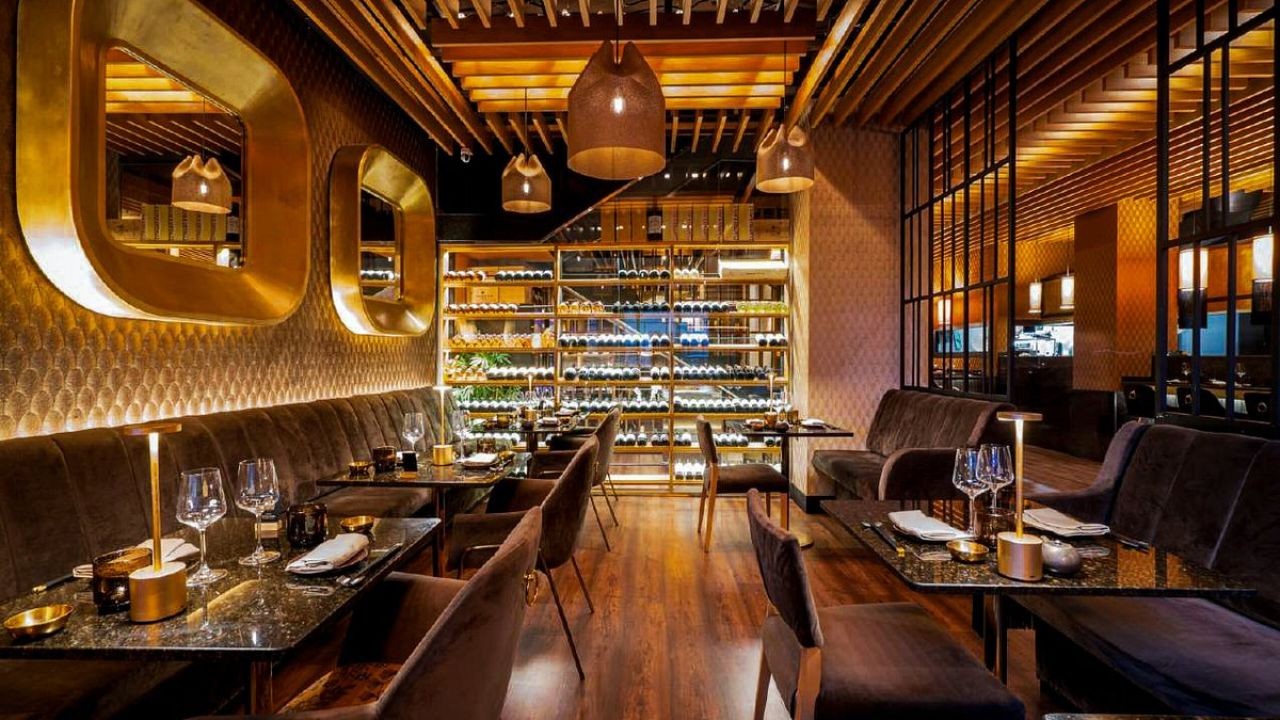
For the discerning investor, the art of ordering at a high-end restaurant is far more than a social nicety; it is a masterclass in applied strategy, value assessment, and behavioural psychology. The principles that govern a successful, memorable dining experience are strikingly analogous to those that drive superior investment decisions. It’s a theatre of calculated choices, where understanding the underlying economics, recognising quality, and navigating social dynamics converge to create exceptional outcomes. In Australia’s vibrant culinary scene—from the harbourside institutions of Sydney to the innovative laneway establishments of Melbourne—this skill set is not just about indulgence, but a powerful tool for building relationships and signalling acumen in a market that values both substance and sophistication.
The Investor's Mindset at the Table: Beyond the Menu
Approaching a tasting menu or an extensive wine list requires the same analytical framework as evaluating a company prospectus. The first step is due diligence. A professional does not arrive blind. They research the establishment, understand the chef’s philosophy (the "management team"), and review recent accolades or reviews (the "market sentiment"). This pre-work frames expectations and allows for strategic questions upon arrival.
From consulting with local businesses across Australia, I’ve observed that the most successful restaurateurs, like the best fund managers, are storytellers. They curate an experience. Your role as the diner-investor is to engage with that narrative. Ask your sommelier or waiter: “What are you most excited about on the menu tonight?” or “Which dish best represents the chef’s current direction?” This opens a channel for insider insight—the equivalent of gaining proprietary research—and often leads to off-menu recommendations or tailored pairings that elevate the entire experience. It transforms a transaction into a partnership.
Case Study: Attica, Melbourne – The Value of Narrative and Scarcity
Problem: Attica, consistently ranked among the world's best restaurants, faced the classic challenge of ultra-fine dining: justifying its premium price point in a competitive Australian market while maintaining a unique, unforgettable identity. The risk was becoming just another expensive meal rather than a cultural event.
Action: Chef Ben Shewry implemented a deeply narrative-driven approach. He didn’t just serve food; he told a story of Australian landscape, indigenous ingredients, and personal memory. The menu became a curated journey, with ingredients foraged from the restaurant’s own garden and remote Australian locales. Scarcity and exclusivity were built-in, not through price alone, but through the uniqueness of the story and ingredient provenance.
Result: Attica achieved legendary status. Its booking system became a study in demand economics, with seats selling out months in advance within minutes of release. While specific revenue figures are private, the business model shift—from selling meals to selling a rare, narrative experience—resulted in:
- Global brand equity that transcends the restaurant industry.
- A multiplier effect on the value of its degustation menu, with customers perceiving it as an investment in a unique cultural asset.
- Positioning as a destination that attracts international visitors, directly contributing to tourism spend. According to Tourism Research Australia, international visitors attending a food or wine event have a higher average spend per trip.
Takeaway: For the investor-diner, Attica’s lesson is about intrinsic value versus price. The highest value on a menu is not always the most expensive ingredient (caviar, wagyu) but the most unique story or preparation. Investing time to understand the narrative allows you to allocate your capital (the meal budget) to the options with the highest experiential ROI.
A Strategic Framework for Ordering: The Portfolio Approach
Think of your meal as an investment portfolio. A savvy investor seeks balance, diversification, and appropriate risk-adjusted returns. Apply this directly:
- Asset Allocation (Courses): Balance heavy, high-impact "assets" (a rich main) with lighter, acidic "counterweights" (a citrusy starter, a palate-cleansing sorbet). Avoid over-concentration in one flavour profile.
- Risk Assessment (Adventurous Dishes): Allocate a portion of your "portfolio" to higher-risk, high-reward choices (the innovative dish with unusual ingredients). But anchor the meal with proven, "blue-chip" classics that the kitchen executes flawlessly.
- Liquidity & Timing (Pacing): Work with the staff on pacing. A rushed meal is like a panic sell—it destroys value. A well-paced experience allows each "investment" (course) to mature and be fully appreciated.
Drawing on my experience in the Australian market, I note that our top-tier restaurants excel at showcasing local produce. Asking "what is particularly good locally today?" is akin to investing in a high-conviction domestic stock with a compelling competitive advantage—terroir.
Reality Check for Australian Diners: Assumptions That Don’t Hold Up
Several misconceptions can lead to a suboptimal—and overpriced—experience. Let's correct them with an investor's lens.
Myth 1: The Second-Most Expensive Wine is the Best Value. Reality: This is a lazy heuristic. The savvy move is to identify the "sweet spot" on the list, which often lies just above the house wine tier or in regions less familiar to the general public. In Australia, look for emerging regions like Tasmania for pinot noir or the Canberra District for shiraz. Engage the sommelier: "I'm looking for value and character around the $X mark—what would you choose?" This prompts a personalised recommendation, often unlocking better value than any rigid rule.
Myth 2: Sending Food or Wine Back is Always a Social Faux Pas. Reality: If a dish is fundamentally flawed (over-salted, cold when it should be hot) or a wine is corked, a polite, prompt notification is not only acceptable but expected. High-end establishments have a quality-control mandate. The key is in the execution: be factual, not emotional. It's the equivalent of exercising a put option when a contract isn't met—a right built into the premium you've paid.
Myth 3: You Must Order an Entrée, Main, and Dessert. Reality: This is a legacy, three-asset portfolio model. Modern fine dining is flexible. Consider two appetisers and a main, or a series of shared smaller plates. This allows for greater diversification and sampling of the kitchen's range. It demonstrates sophistication and a focus on optimising the experience, not just following a script.
The Wine List: A Market of Its Own
The wine list is a live market, rich with opportunity and hidden gems. Here, an investor's skill in spotting undervalued assets shines.
1. Analyse the Mark-ups: Understand typical restaurant margins. While mark-ups of 2-3x cost are standard, look for outliers. Often, older vintages or wines from less-hyped regions have a lower relative mark-up, as the restaurant aims to move inventory. These can be incredible value.
2. The Sommelier is Your Analyst: Provide clear parameters: "I'm looking for a red with structure to pair with the duck, preferably from Australia, with some bottle age, in this price range." This gives them a clear brief. Based on my work with Australian SMEs in hospitality, the best sommeliers are thrilled to guide an engaged guest to a perfect, perhaps unexpected, match—it’s their value proposition.
3. Embrace By-The-Glass (BTG) as a Research Tool: The BTG list is like an ETF sampler. Use it to research a producer or region before committing to a full bottle. It’s a low-cost way to de-risk your larger investment.
Costly Strategic Errors to Avoid
These are the behavioural pitfalls that erode value, mirroring common investment mistakes.
Error 1: Anchoring on the First Price You See. Don't let the first bottle price (often an exorbitant trophy wine) set your mental benchmark. Scan the full list to understand the range and distribution.
Error 2: Ignoring the House Recommendations. The "chef's selection" or sommelier's pairing is often the most rigorously tested and balanced portfolio they offer. Dismissing it out of hand is like ignoring the house view in an equity research report.
Error 3: Failing to Build Rapport. Treating service staff as transactional vendors is a critical error. A relationship built on respect and curiosity is your single greatest asset in the room. It leads to better tables, insightful tips, and often, complimentary extras—the dividend yield of good etiquette.
The Final Analysis: Measuring the Return on Experience (ROE)
For the investor, the ultimate metric isn't just the cost of the meal, but the Return on Experience. This includes the quality of the food and wine, the knowledge gained, the strength of the relationship built with companions and staff, and the memory created. A truly professional order maximises this ROE. It demonstrates confidence, curiosity, and respect for craft—qualities that resonate powerfully in Australian business culture, where trust and personal connection remain paramount.
Your next high-end meal is not an expense; it's a live-case study in decision-making. Approach it with an investor's discipline and curiosity, and the returns, both tangible and intangible, will be profoundly satisfying.
People Also Ask
What’s the most important thing to say to a sommelier in an Australian restaurant? Provide a clear budget and flavour preference. Say, "I'd like a wine around $120 that's bold and pairs with our red meat, perhaps from South Australia or Victoria." This focused brief allows them to showcase their expertise and find you the best value within your parameters.
Is tipping expected in Australian high-end restaurants? While not mandatory due to Australia's award wage system, tipping for exceptional, knowledgeable service (10-15%) is a strong market signal. It rewards outstanding performance and fosters a positive relationship with the establishment, much like incentivising a top-performing fund manager.
How can I identify a truly seasonal, local ingredient on a menu? Look for specific provenance: "Heirloom tomatoes from the Chef's garden in the Dandenongs" or "Hervey Bay scallops." Generic terms like "local fish" are less compelling. Specificity indicates a direct supply chain and a focus on peak quality, a sign of operational excellence.
Related Search Queries
- fine dining etiquette Australia sommelier tips
- how to read a wine list for value
- best degustation restaurants Sydney Melbourne
- Australian seasonal produce guide fine dining
- business dining etiquette investor tips
- how to pair wine with food like a pro
- understanding restaurant wine markups Australia
- Attica Melbourne booking strategy tips
- high-end restaurant vocabulary ordering
- building rapport with restaurant staff benefits
For the full context and strategies on How to Order Like a Pro at High-End Restaurants – Explained with Real AU Examples, see our main guide: Professional Consultancy Videos Australia.