



The conversation around Australia's housing crisis has reached a fever pitch, dominated by debates on interest rates, zoning, and migration. Yet, a new contender has entered the fray, promising not just incremental change but a fundamental reimagining of construction itself: 3D-printed housing. For commercial real estate professionals, this isn't merely a question of architectural novelty; it's a potential market disruptor with profound implications for development timelines, cost structures, and investment theses. The core question we must dissect is not whether the technology is impressive—it is—but whether it possesses the scalability, regulatory adaptability, and economic viability to meaningfully address a deficit the National Housing Finance and Investment Corporation (NHFIC) estimates at a shortfall of over 100,000 homes. This analysis moves beyond the hype to provide a clear-eyed, data-backed comparative assessment of 3D printing's promise against the entrenched realities of the Australian market.
The Allure of Automation: Quantifying the Potential of 3D-Printed Construction
Proponents of 3D-printed construction present a compelling value proposition, particularly in a high-cost, labour-constrained environment like Australia's. The advantages are not merely theoretical; they are being demonstrated in pilot projects globally, with clear applications for the local context.
Speed and Labour Efficiency
The most cited benefit is dramatic time compression. A 3D printer can extrude the walls of a small home in 24-48 hours of print time, compared to weeks for traditional brick-and-mortar construction. This speed directly addresses labour shortages, a critical pinch point identified by the Australian Bureau of Statistics (ABS), which reports persistent vacancies in construction trades. The technology reduces reliance on large crews, instead centralising skill around machine operation and finishing trades.
Material Innovation and Waste Reduction
Modern 3D printers typically use proprietary cementitious mixes, often incorporating recycled materials like fly ash. This aligns with both sustainability goals and potential cost savings. The precision of additive manufacturing also minimises material waste—a significant factor given that the construction and demolition sector accounts for an estimated 40% of Australia's landfill, according to the Department of Climate Change, Energy, the Environment and Water.
Design Flexibility and Resilience
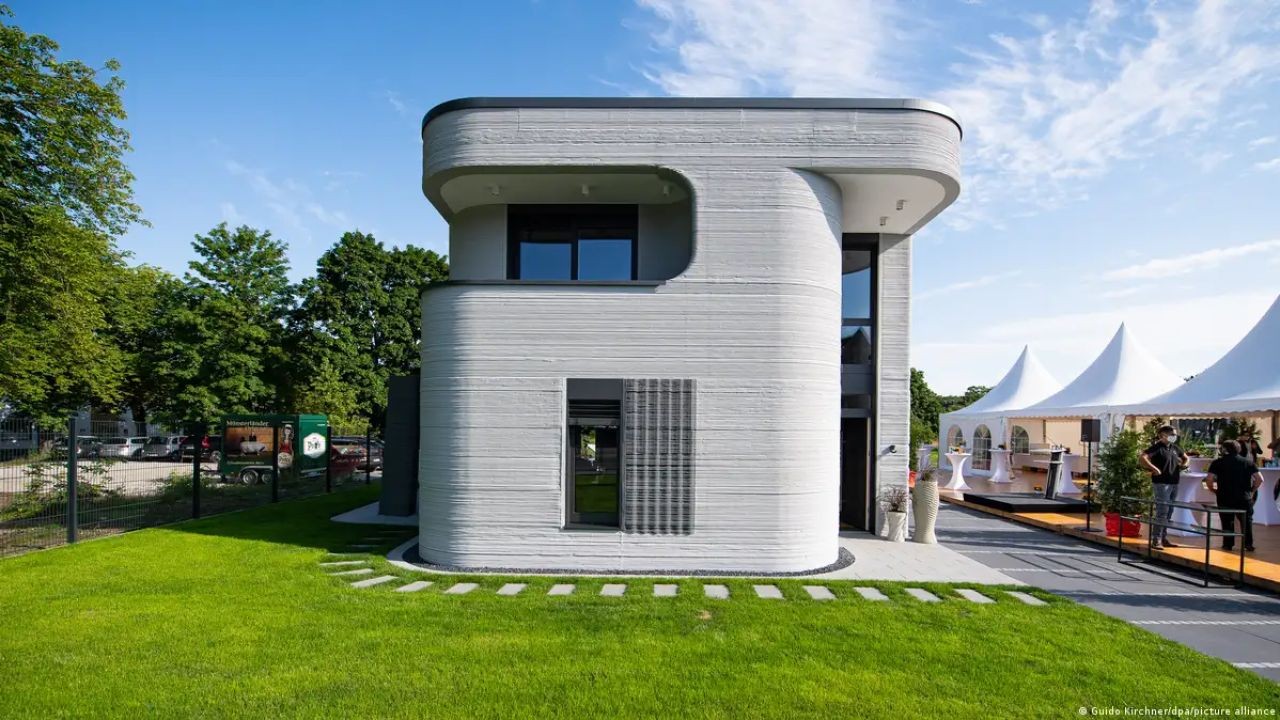
The technology allows for complex, curvilinear designs at little extra cost, enabling optimised structural forms and customisation. Furthermore, printed concrete structures can exhibit excellent thermal mass and, when properly engineered, high resilience to fire and extreme weather—attributes increasingly valuable in the Australian climate.
The Australian Reality Check: Barriers to Scale
Despite its promise, the path to mainstream adoption of 3D-printed housing in Australia is fraught with significant hurdles. These are not mere teething problems but foundational challenges rooted in regulation, economics, and market dynamics.
Regulatory and Standards Hurdles
Australia's building approval framework, governed by the National Construction Code (NCC), is prescriptive and materials-based. 3D-printed concrete, as a system, lacks specific Australian Standards. Each project currently requires a case-by-case assessment via a Performance Solution, a process that is time-consuming, costly, and requires extensive engineering sign-off. Until Standards Australia develops dedicated codes for printed structures, widespread approval will remain a bottleneck. The Australian Competition and Consumer Commission (ACCC) would also scrutinise any anti-competitive aspects of proprietary material supply chains tied to printer manufacturers.
The True Cost Equation: Beyond the Printer
The narrative of "cheap 3D-printed homes" is misleading. While the printed wall structure may be cost-effective, it typically represents only 20-30% of a home's total built cost. The printer does not install roofs, windows, electrical, plumbing, or interior finishes. In Australia, where land cost is the dominant factor in housing prices—often 50-60% of the total in capital cities—savings on the superstructure have a muted impact on overall affordability. The capital expenditure for large-scale printers and the expertise to operate them also presents a high barrier to entry for builders.
Supply Chain and Scale Limitations
Establishing a supply chain for specialised admixtures and maintaining printer fleets is a complex logistical undertaking. The current model is best suited for master-planned communities where multiple units can be printed sequentially on-site. This conflicts with the infill development patterns prevalent in many Australian cities, where sites are smaller, irregular, and access is constrained. The technology, in its current form, struggles with the fragmented lot-by-lot development that characterises much of the urban landscape.
Comparative Analysis: 3D Printing vs. Established Alternatives
To properly gauge its potential, 3D printing must be compared against other construction methodologies vying to solve the same productivity crisis.
- Volumetric Modular Construction: Factories build complete modules (with finishes installed) shipped to site. Benefits include parallel site work, NCC compliance in a controlled environment, and faster on-site assembly. It faces high transport costs and design limitations for long-distance haulage.
- Panelised Prefabrication: Walls, floors, and roofs are factory-made and assembled on-site. It offers more design flexibility than modular and leverages existing trade skills for finishing. It still requires significant on-site labour and weather dependency.
- 3D Printing's Niche: Where 3D printing may hold a distinct advantage is in complex, custom designs (e.g., community facilities, luxury homes) or remote locations where transporting large modules is prohibitive, but moving a printer and silos of dry material is feasible. Its value is in the wall system's speed and form, not as a total cost panacea.
Case Study: Luyten 3D – Piloting the Technology in the Australian Outback
Problem: Australian company Luyten 3D identified two key challenges: the exorbitant cost and slow pace of building critical infrastructure in remote Indigenous communities and mining regions, and the need to prove the technology's viability in harsh Australian conditions.
Action: Luyten developed a mobile 3D printing platform, the "Ultimate Printer," designed for deployment in off-grid locations. They focused on creating a mix using locally available materials where possible. Their pilot project involved printing a small dwelling structure in a remote area, aiming to demonstrate speed, reduce the need for skilled labour imports, and improve resilience.
Result: The company reported printing a 40m² protective structure in under 30 hours of print time. While a full, livable home requires extensive further work, the case proved the logistical model. It demonstrated a significant reduction in on-site time for the structural envelope and a 60% decrease in waste compared to conventional methods for equivalent structures, according to their published data.
Takeaway: This case highlights the technology's potential niche application in regional and remote Australia, where traditional construction is prohibitively expensive and logistically fraught. For commercial developers, the insight is that 3D printing's first major Australian market may not be suburban estates but rather specialised projects in mining, defence, and remote community housing, where its logistical advantages outweigh the regulatory and cost challenges of metro markets.
The Strong Debate: Revolution or Overhyped Distraction?
✅ The Advocate Perspective: A Necessary Disruption
Advocates argue that Australia's construction productivity has stagnated for decades. The Reserve Bank of Australia (RBA) has noted that real construction costs per unit have risen significantly since the 1990s. They see 3D printing as a catalyst for essential industry modernization, forcing digitization, attracting a new tech-savvy workforce, and enabling more sustainable building practices. In a crisis, they contend, we cannot afford to ignore a technology that demonstrably builds faster with less waste.
❌ The Critic Perspective: Addressing the Wrong Problem
Critics, including many seasoned developers, assert that the fundamental constraints in Australia's housing crisis are land supply, planning restrictions, and infrastructure coordination—not how quickly we can erect walls. They argue that focusing on 3D printing distracts from the harder, political work of zoning reform and infrastructure funding. Furthermore, they point out that without a drastic reduction in the cost of the remaining 70% of the build (finishes, services) and the land itself, the impact on end-price affordability will be marginal.
⚖️ The Middle Ground: A Hybrid Tool in the Kit
The most pragmatic view is that 3D concrete printing will not replace other methods but will become another valuable tool for specific applications. Its future likely lies in hybrid construction: printing complex core and shell elements on-site or in a factory, then integrating them with high-quality prefabricated components for roofs, floors, and services. This leverages the strengths of multiple systems.
Common Myths and Mistakes to Avoid
Myth: "3D printing will make houses cheap overnight." Reality: As analysed, land, services, finishes, and regulatory costs dominate. The technology may reduce certain construction costs but is not a silver bullet for overall affordability.
Myth: "It's a fully automated process requiring no tradespeople." Reality: It creates a shift in labour demand, not elimination. Skilled operators, engineers, electricians, plumbers, and finishers are still essential. The mistake is underestimating the need for upskilling and integration with traditional trades.
Myth: "The buildings are substandard or temporary." Reality: Properly engineered printed concrete can meet or exceed NCC standards for durability and resilience. The mistake is assuming novelty equals inferiority; the real challenge is proving compliance within the existing regulatory framework.
Mistake to Avoid: Investing in or promoting 3D-printed housing projects without first engaging with local certifiers and engineers on the Performance Solution pathway. This can lead to fatal delays and cost overruns.
Mistake to Avoid: Comparing the cost of a printed "shell" to the total cost of a traditionally built home. This creates unrealistic expectations and undermines credible financial modelling.
Future Trends and Predictions for the Australian Market
The trajectory for 3D-printed construction in Australia will be incremental and niche-led before any mainstream adoption. We anticipate the following over the next 5-7 years:
- Regulatory Evolution: Expect the first dedicated Australian Standards for 3D-printed construction elements to be in development by 2028, following international precedents and local research from institutions like the University of NSW or RMIT.
- Growth in Non-Residential First: Adoption will accelerate in non-residential sectors with less complex servicing needs and higher value on unique designs: public amenities, disaster relief structures, and bespoke commercial facades.
- Hybrid Systems Gain Traction: The most successful companies will be those offering integrated systems—combining printed structures with prefabricated panelised floors and roofs—to deliver a complete, code-compliant envelope faster.
- Government-Piloted Social Housing: State governments, particularly in Western Australia and the Northern Territory, may pilot the technology for remote Indigenous housing or key worker accommodation, where the cost-benefit equation is more favourable.
Final Takeaway and Strategic Call to Action
3D-printed housing will not single-handedly solve Australia's housing crisis. The constraints of land policy, infrastructure, and fragmented regulation are too profound. However, to dismiss it as a mere gimmick would be a strategic error for the commercial real estate sector. It represents a meaningful step in the essential modernisation of a lagging construction industry.
For brokers, developers, and investors, the imperative is informed engagement. Monitor the progress of regulatory changes. Assess its viability for specific asset classes—particularly in regional, industrial, or community infrastructure projects where its advantages are clearest. Consider partnerships with forward-thinking engineering firms exploring this space.
The question is not "either/or" but "when and where." 3D printing is poised to claim a strategic niche in Australia's built environment. Your role is to understand that niche, accurately quantify its risks and rewards, and advise your clients with the authority that comes from separating transformative potential from market hype.
What's your take? Is your firm evaluating alternative construction technologies for upcoming projects? What barriers do you see as the most significant? Share your insights and let's continue the debate.
People Also Ask (PAA)
How quickly can a 3D-printed house be built in Australia? The printer can extrude the walls of a small home in 1-2 days. However, achieving full occupancy requires installing the roof, windows, and all services, making the total build time several weeks—significantly faster than traditional brickwork, but not a matter of days.
Are 3D-printed houses safe and durable in the Australian climate? When engineered correctly, printed concrete structures exhibit excellent durability, thermal mass, and resistance to fire and extreme weather. The primary challenge is not safety but achieving compliance through Australia's current performance-based building code, which requires extensive engineering certification.
What is the biggest obstacle to 3D-printed homes in Australia? The largest immediate obstacle is the lack of specific Australian Building Standards for 3D-printed construction, requiring costly and time-consuming individual assessments. Beyond that, high land costs and the expense of finishes limit the technology's impact on overall housing affordability.
Related Search Queries
- 3D printed house cost Australia 2024
- Australian building codes 3D printing
- Prefabricated vs modular vs 3D printed homes Australia
- Luyten 3D Australia projects
- Construction labour shortage Australia ABS
- NHFIC housing supply report 2024
- Sustainable building materials Australia
- Remote area construction challenges Australia
- Performance Solution NCC building approval
- Future of construction technology Australia
For the full context and strategies on Will 3D-Printed Houses Solve Australia’s Housing Crisis? – Why Australian Experts Are Paying Attention, see our main guide: Australian Construction Tradies Services.