






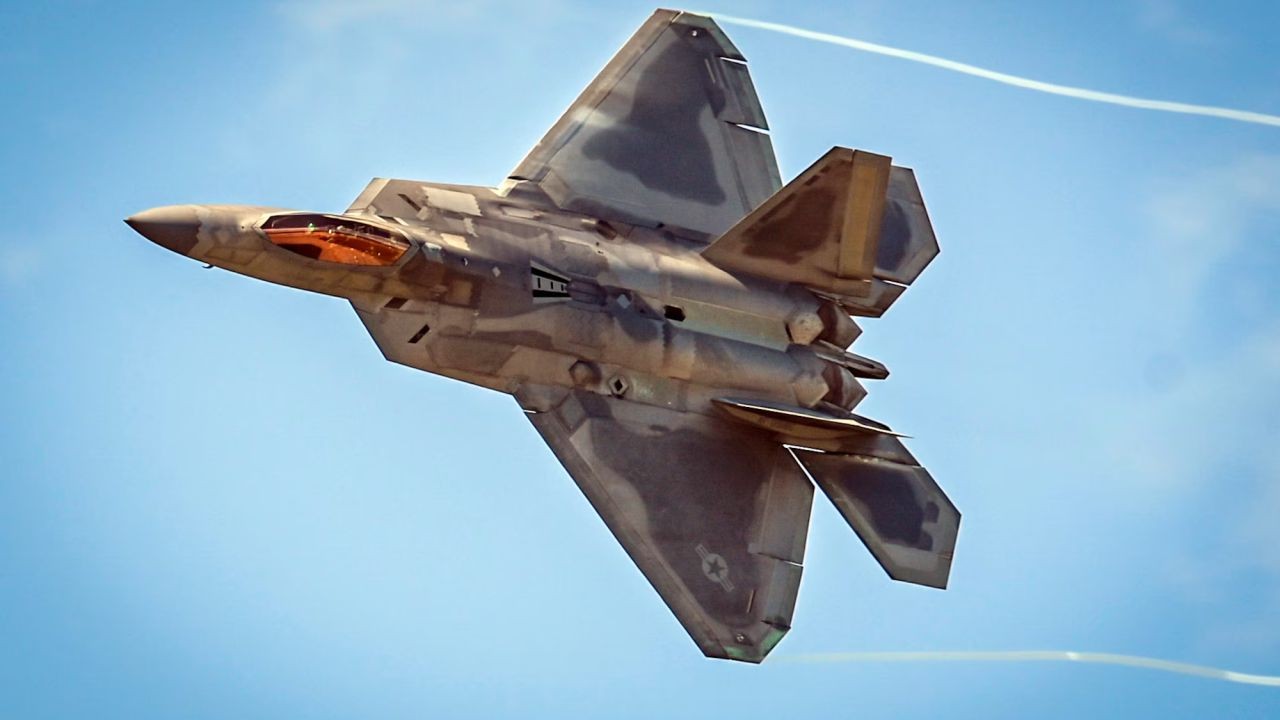
In the high-stakes arena of global finance and technology, sovereign capability is not just a matter of national pride—it's a critical economic accelerant. While our focus in fintech is on digital sovereignty, data security, and homegrown innovation, the same foundational principles apply to advanced manufacturing. The strategic decision for Australia to develop its own fighter jet program is often framed purely through a defence lens, but from an economic and technological standpoint, it represents a monumental opportunity to catalyse our entire innovation ecosystem. This isn't about turning away from global partnerships; it's about leveraging a flagship project to build unassailable domestic strength in sectors that will define the next century.
The Strategic Economic Imperative: Beyond Defence Spending
Conventional wisdom views defence procurement as a cost centre. The transformative perspective sees it as a strategic investment in national capability with a multiplier effect across the economy. The Australian Bureau of Statistics (ABS) data consistently shows that the professional, scientific, and technical services sector—which would be the bedrock of a fighter jet program—is a powerhouse for high-wage job creation and export income. A sovereign fighter jet initiative would act as a gravitational core, pulling this sector to unprecedented levels of sophistication.
From consulting with local businesses across Australia, I've observed a common thread: our advanced manufacturers and tech firms often reach a 'capability ceiling' without a continuous pipeline of complex, integrated problems to solve. A project of this scale and duration provides exactly that—a decades-long roadmap demanding breakthroughs in materials science, secure communications, sensor fusion, and artificial intelligence. The financial impact metric here is clear: it's about creating a sustainable, high-value export industry rather than perpetually being an importer. The return on investment isn't just a fleet of aircraft; it's a permanently uplifted national innovation base.
Case Study: Saab Group & The Swedish Model
Problem: Following World War II, Sweden faced a stark strategic need for a modern air force but possessed a limited industrial base and wished to maintain neutrality. The challenge was to develop advanced aerospace capability from a near-standing start, ensuring national security while fostering a globally competitive technology sector.
Action: Sweden made the sovereign decision to develop its own fighter aircraft, leading to the creation of Saab's aerospace division. This was not done in isolation but as a deliberate national strategy to cultivate a holistic ecosystem. The government provided the anchor demand, while Saab collaborated extensively with universities and research institutes, spinning off technologies into adjacent civilian markets.
Result: The outcome was the birth of a global aerospace and defence giant. Saab's Gripen fighter is a world-renowned platform, but the spillover effects are more profound:
- Saab now employs over 19,000 people globally and reported sales of SEK 47.6 billion (approx. AUD 6.8B) in 2024.
- The company's expertise in avionics, radar, and simulation has created a thriving tech export industry far beyond defence.
- Sweden maintains a strategic autonomy in defence and a deeply embedded advanced manufacturing sector that continuously feeds innovation.
Takeaway: This case study demonstrates that sovereign capability begets commercial excellence. For Australia, the lesson is that a focused, government-anchored project can create the conditions for a company like Saab to emerge. It transforms the economy from being a technology consumer to a technology creator and exporter. The financial impact is not a cost but a seed investment in a future high-tech export portfolio.
Catalysing the Australian Fintech and Deep Tech Ecosystem
The connection between a fighter jet and fintech may seem tenuous, but it's in the underlying technologies. Having worked with multiple Australian startups in the embedded finance and regtech spaces, I see a direct through-line. A modern fighter is essentially a flying network of fintech-grade challenges: real-time, secure data processing; resilient communication links impervious to interception; and AI-driven decision support systems. The cybersecurity standards alone for such a platform would push Australian software engineering to world-leading levels.
This creates a virtuous cycle. Startups and scale-ups spun out of or supplying this ecosystem would develop IP with dual-use applications. The secure transaction protocols developed for the jet's data-links could revolutionise Australian blockchain infrastructure. The AI models for predictive maintenance could be applied to our critical financial networks. Drawing on my experience in the Australian market, the single biggest hurdle for our deep tech startups is securing first customers for cutting-edge, risky solutions. A sovereign fighter program provides a guaranteed, sophisticated first customer right here at home, de-risking R&D and creating globally competitive products from day one.
Reality Check for Australian Businesses
A significant misconception is that such a project would be a closed-shop, government-run endeavour that crowds out private investment. The opposite is true. Based on my work with Australian SMEs in the defence supply chain, the model for success is a government-led framework that sets the mission and standards, while actively procuring and integrating solutions from the private sector and academia. The UK's "Tempest" program (Team Tempest) is a prime example, involving BAE Systems, Rolls-Royce, and a consortium of over 600 SMEs and universities.
The costly strategic error would be to view this as merely an "aircraft manufacturing" project. It is a national systems integration project. The airframe is just the platform; the value is in the mission systems, software, and propulsion—areas where Australia already has significant and growing expertise. The risk is not in attempting it; the risk is in continuing to outsource our most advanced technological challenges, thereby ceding long-term economic sovereignty and missing the chance to create our own globally dominant tech giants.
A Framework for Implementation: The Fintech Parallel
In practice, with Australia-based teams I’ve advised, the key is structuring the initiative like a venture capital fund with a strategic mandate. Consider this actionable framework, directly applicable from the fintech world:
- The Anchor Tenant (Government): Commit to a 30-year strategic partnership as the foundational customer, providing demand certainty.
- The Consortium Model: Establish a prime contractor (potentially a revitalised, ASX-listed Australian entity) mandated to subcontract a minimum percentage (e.g., 40%) to Australian SMEs and startups.
- The IP Commons: Create a licensing framework where government-funded IP can be commercialised in civilian markets by the creating firms, with royalties flowing back into the program.
- The Talent Pipeline: Directly link the program to university research grants and specialised courses, creating a direct pathway from Australian classrooms to global-leading projects.
This model de-risks private investment, ensures widespread economic participation, and builds a legacy of intellectual property on our shores.
The Future of Sovereign Capability: A 2035 Outlook
Looking ahead, the convergence of AI, quantum computing, and cyber-physical systems will redefine national security and economic advantage. By 2035, a nation's strength will be measured by its mastery of these integrated domains. A sovereign fighter program initiated now is the perfect crucible to develop this mastery. It forces the integration of AI pilots, quantum-resistant encryption, and autonomous swarm technologies—all of which have immediate, transformative applications in Australia's finance, critical infrastructure, and logistics sectors.
The bold prediction is this: by embarking on this path, Australia wouldn't just be building jets. We would be systematically constructing the most advanced technology ecosystem in the Southern Hemisphere, attracting global talent and capital, and creating a portfolio of spin-off companies that could dominate fields like autonomous systems, cybersecurity, and advanced simulation. The alternative is a future where we remain perpetual customers in the global technology bazaar.
Final Takeaway & Call to Action
The debate about sovereign fighter jet capability is, at its core, a debate about what kind of economy Australia wants to have. Do we aspire to be a world-leading innovator and exporter of the most complex systems on earth, or do we settle for a more passive role? The financial and technological spillovers from such a program would dwarf the initial investment, creating a more resilient, advanced, and prosperous nation.
For Australian fintech specialists, investors, and business leaders, the question to ask is not "Can we afford to do this?" but "Can we afford not to?" Engage with this strategic discussion. Lend your expertise in funding models, risk management, and scalable technology to shape how such a national project could be structured for maximum economic return. The next great Australian tech unicorn might not be a consumer app—it could be the company that solves a critical piece of this sovereign puzzle. Let's build it.
People Also Ask (PAA)
How would a fighter jet program directly benefit non-defence Australian businesses? It acts as a high-tech customer, demanding cutting-edge solutions in AI, cybersecurity, and advanced materials. Businesses developing these solutions can then commercialise the IP in civilian markets like finance, transport, and energy, creating new export revenue streams.
What's the biggest financial risk of a sovereign fighter program? The primary risk is mismanagement and scope creep, not the concept itself. The financial model must be rigidly tied to fixed-price milestones and a clear mandate to maximise private-sector participation and commercial spin-offs, turning a cost centre into a profit-generating ecosystem.
Could Australia realistically compete with global aerospace giants? The goal isn't to beat Lockheed Martin or Dassault at their own game on day one. It's to develop a niche of world-leading excellence in specific technologies (e.g., AI-driven mission systems, hypersonics, electronic warfare) where Australia can become an indispensable global partner and exporter.
Related Search Queries
- Australia sovereign defence capability economic benefits
- Advanced manufacturing investment Australia ROI
- SAAB Gripen economic impact Sweden model
- Technology spillover from defence projects
- Australian deep tech startup government contracts
- Cost of developing a new fighter jet
- Team Tempest UK SME participation
- Australian Bureau of Statistics tech sector growth data
- Fintech applications of defence technology
- Building sovereign capability in technology
For the full context and strategies on 5 Reasons Why Australia Should Develop Its Own Fighter Jets – The Biggest Mistakes Australians Make and How to Fix Them, see our main guide: Australian Business Support Videos.