

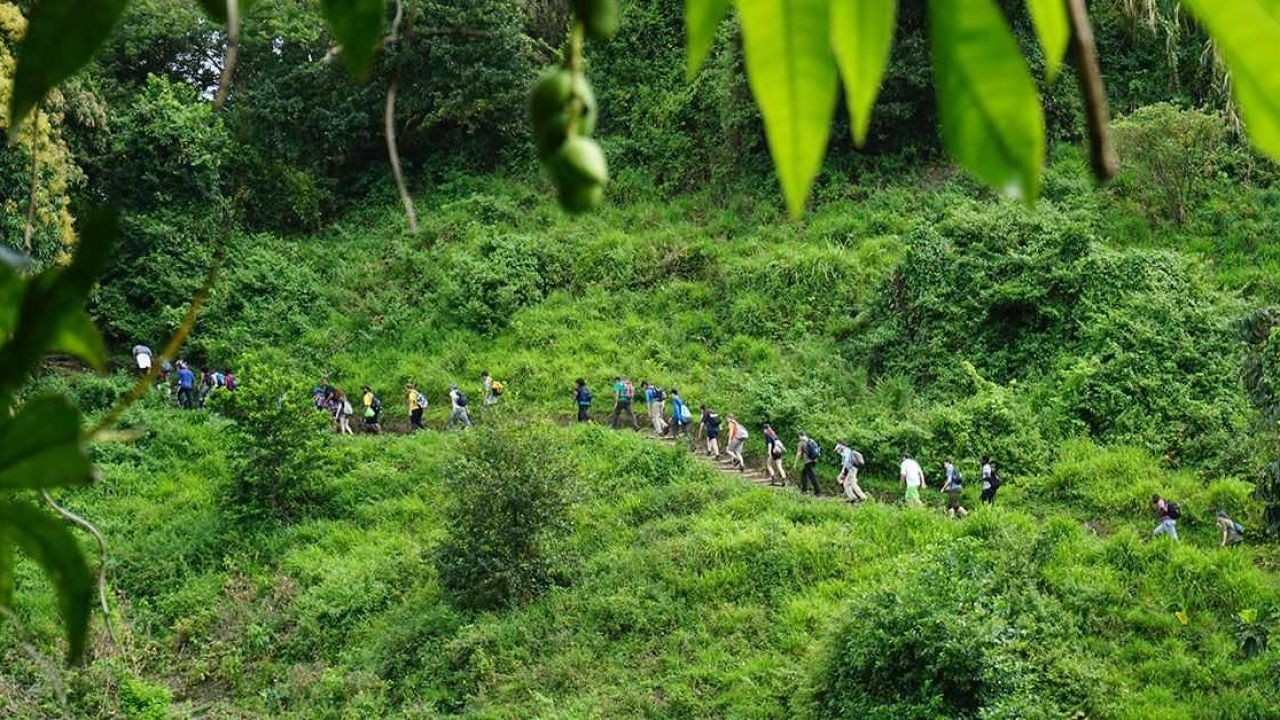
For decades, the relationship between tourism and the environment has been viewed through a lens of inherent conflict. The narrative was simple: visitors bring degradation, straining local resources and leaving a footprint that scars pristine landscapes. In New Zealand, this tension is particularly acute. Our national identity is inextricably linked to a "clean, green" image, a brand that attracts millions but is perpetually at risk from the very activity it encourages. However, a profound and financially significant shift is underway. Modern eco-tourism is no longer a niche, feel-good segment; it has evolved into a sophisticated, market-driven mechanism for environmental preservation. From an investment and property perspective, understanding this evolution is critical. It reveals where capital is flowing, how land values are being redefined, and where the future of sustainable, high-yield development lies in Aotearoa.
The Economic Engine: Quantifying eco-tourism's Value in Aotearoa
To grasp the preservation impact, one must first understand the scale of the economic force behind it. Tourism is a cornerstone of the New Zealand economy. According to Stats NZ, before the pandemic, tourism directly and indirectly contributed 20.1% to total exports and supported nearly 14% of the national workforce. The post-pandemic rebound is robust, with the Ministry of Business, Innovation and Employment (MBIE) forecasting international tourist expenditure to reach $17.1 billion by 2026. Within this, the "premium" and "sustainable" segments are the fastest-growing. A 2023 study by Tourism New Zealand found that 71% of high-value visitors rate environmental sustainability as a key factor in their destination choice, a figure that has grown steadily for a decade.
This creates a powerful economic feedback loop. Environmental quality attracts high-value tourists. Their spending funds conservation initiatives, which in turn maintains or enhances environmental quality, sustaining the appeal. It’s a classic virtuous cycle, but one that requires meticulous management. The financial clout is undeniable: every dollar spent by an eco-conscious tourist is a direct market signal that preservation has tangible economic value. From my experience analysing land deals adjacent to national parks and private sanctuaries, this signal is now the primary driver of premium valuations, far outweighing traditional agricultural yields.
Actionable Insight for NZ Investors & Developers:
- Follow the Conservation Dollar: Track funding sources like the Department of Conservation's (DOC) concessions system, the Jobs for Nature programme, and private philanthropic trusts focused on ecology. Development opportunities often exist on the periphery of these funded projects.
- Value the 'Amenity Premium': When appraising property, quantitatively model the premium attributed to proximity to a well-managed, accessible natural asset. This is no longer just a scenic view; it's access to a curated, sustainable experience.
Future Forecast & Trends: The Next Wave of Regenerative Investment
The trajectory of eco-tourism points beyond mere "sustainability" towards active "regeneration." The future model isn't about minimising harm, but about tourism activities that leave the environment in a better state than they found it. This has profound implications for property and land use.
We are moving towards integrated Carbon-Neutral and biodiversity-Positive Estates. Forward-thinking operators are not just offsetting emissions but designing entire operations as carbon sinks. This involves large-scale native afforestation, wetland restoration, and regenerative farming practices that are woven into the guest experience. For a property investor, this transforms a forestry block or marginal farmland from a single-commodity asset into a multi-revenue stream one: carbon credits, biodiversity credits (as the market develops), premium accommodation, and curated eco-experiences.
Secondly, Technology-Enabled Personalisation and Impact Tracking will become standard. Imagine guests using an app that tracks their individual ecological footprint during their stay, suggests restorative activities (e.g., "join a pest-trapping hour to offset your transport"), and directly funds a specific conservation project linked to their visit. This creates a powerful, data-driven connection between spend and outcome, justifying premium pricing. For developers, integrating this tech infrastructure from the design phase will be a key differentiator.
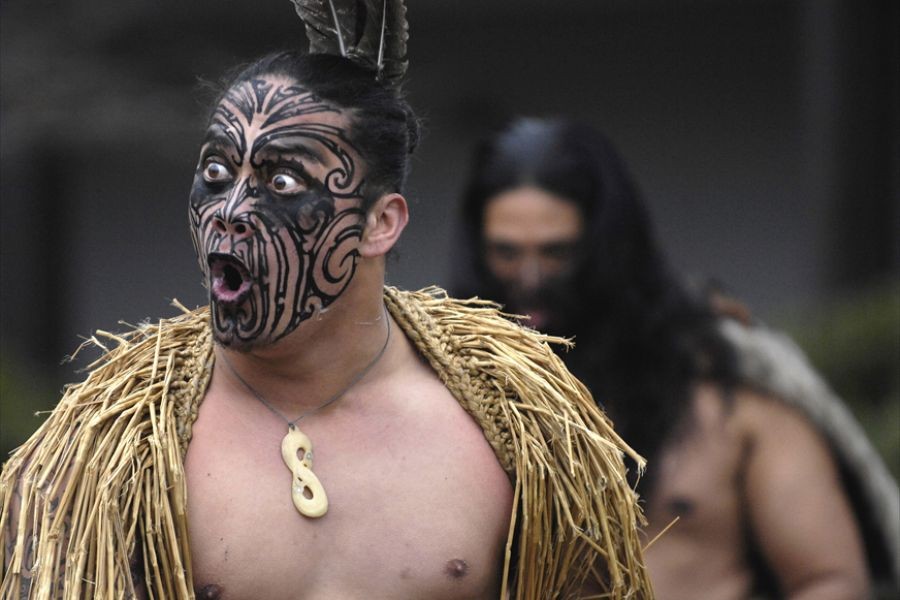
Finally, expect a formalisation of the Partnership Model between Iwi, Conservation Entities, and Private Capital. The most successful future projects will be co-designed with Mana Whenua, recognising Te Ao Māori principles of kaitiakitanga (guardianship). This isn't just a cultural imperative; it's a strategic one. Iwi hold significant land and possess deep ecological knowledge. Investment structures that respect Treaty partnerships and share long-term revenue will secure social license and access to the most compelling projects.
Myth vs. Reality: Deconstructing Common Misconceptions
Several persistent myths cloud the true investment potential and operational reality of eco-tourism's preservation role.
Myth 1: eco-tourism is a Low-Yield, "Boutique" Market.
Reality: This is a dangerous underestimation. While it includes small lodges, the sector is increasingly driven by high-net-worth individuals (HNWIs) seeking exclusive, transformative experiences. The yield is not in volume, but in extreme value-per-guest. A single guest at a top-tier eco-lodge can generate more revenue in a week than a dozen budget tourists in a month, with far lower infrastructure strain and higher net profit margins. The capital required is significant, but the ROI, when executed correctly, outperforms many conventional hospitality models.
Myth 2: The "Clean, Green" Brand is Enough; Tourists Won't Notice Greenwashing.
Reality: The modern eco-tourist is highly discerning. Vague claims about "caring for nature" are met with scepticism. They demand transparency and verifiable impact. Operators must have third-party certifications (Qualmark Enviro-Gold, Toitū carbonzero), clear metrics on waste diversion and water use, and visible, authentic conservation partnerships. A property development that pays lip service to sustainability will be found out and penalised in the market, facing reputational damage and difficulty in securing premium bookings.
Myth 3: Preservation Means Locking Land Away from Economic Use.
Reality: This is the core insight for property specialists. High-value preservation unlocks new, more resilient economic uses. Protecting a wetland isn't an economic loss; it creates an asset that provides flood mitigation (saving downstream infrastructure costs), water filtration, habitat for game birds (supporting tourism), and a unique scenic attraction. It shifts the land's value from purely extractive (e.g., drainage for pasture) to experiential and ecosystem-service based. This fundamentally rewrites the valuation model for rural and peri-urban land in New Zealand.
Comparative Analysis: Philanthropic Grant vs. Market-Driven Model
To understand the power shift, contrast two approaches to funding preservation.
The Traditional Philanthropic/Government Grant Model is reactive and constrained. A conservation group applies for funding to fence a forest block and undertake pest control. The project scope is defined by the grant's size and timeline. Work is done, but long-term, ongoing management funding is uncertain. The economic benefits are diffuse and not directly tied to the asset.
The Integrated eco-tourism Market Model is proactive and self-sustaining. A developer or operator acquires or leases the land with the forest block. They build a low-impact, high-value lodge whose very appeal is the forest's health. A portion of every night's tariff is contractually allocated to perpetual pest control, forest health monitoring, and species translocation. The preservation activity is a core, non-negotiable operational cost—a line item as essential as electricity. The better the forest thrives, the more unique the guest experience, justifying higher tariffs and ensuring the funding loop continues in perpetuity.
The latter model aligns economic incentive directly with ecological outcome. It provides a predictable, long-term revenue stream for conservation that is immune to political funding cycles. From my experience with NZ SMEs in this space, the operators who grasp this—who see their conservation team as the most critical department, not a cost centre—are the ones building resilient, valuable, and saleable businesses.
Case Study: The Brando, French Polynesia – A Blueprint for NZ's Ultra-Premium Market
While not a New Zealand example, The Brando provides a globally recognised, verifiable blueprint for the integrated regenerative model that is directly applicable to New Zealand's high-value tourism destinations, particularly the Bay of Islands, Fiordland, or the Marlborough Sounds.
Problem: The Brando was developed on Tetiaroa, a pristine atoll once owned by Marlon Brando. The core challenge was creating a luxury resort of the highest calibre without degrading the fragile atoll ecosystem. The goal was to achieve a net-positive environmental impact while delivering an unmatched guest experience.
Action: The project was founded on a deep partnership with local ecological experts. Actions included:
- Developing one of the world's first sea-water air conditioning (SWAC) systems, reducing energy demand by over 70%.
- Constructing a fully self-sufficient renewable energy grid using solar PV and coconut oil biofuel.
- Establishing the Tetiaroa Society, a non-profit scientific research organisation funded by a mandatory guest fee, dedicated to atoll conservation and global sustainability research.
- Implementing rigorous waste-to-resource systems, including an organic waste digester that produces fertiliser for on-site gardens.
Result: The resort achieved LEED Platinum certification and operates at a carbon-negative footprint. More critically:
- Scientific Output: The Tetiaroa Society has produced over 50 peer-reviewed research papers, directly advancing global understanding of atoll ecology.
- Market Position: It commands nightly rates exceeding $3,500 NZD, with occupancy consistently high, proving the premium the market places on authentic sustainability.
- Ecological Impact: The atoll's biodiversity is actively enhanced by the resort's operations, with ongoing bird and marine species monitoring and restoration projects.
Takeaway for NZ: The Brando demonstrates that the highest echelon of the market will pay a substantial premium for genuine, science-led regeneration. For New Zealand investors, the lesson is that the development cost of such integrated systems is not a barrier but the primary value proposition. A similar project in Fiordland, partnering with DOC and local iwi, could leverage our unique alpine-marine environment to create a globally unique, defensible, and immensely valuable asset. The focus must be on creating a permanent, funded conservation entity as the heart of the business model.
The Investment Framework: Evaluating eco-tourism Preservation Projects
For the property investment specialist, assessing an eco-tourism venture requires a modified due diligence framework. Look beyond standard feasibility studies to these critical pillars:
- The Preservation Covenant & Business Model Integration: Is the conservation activity legally embedded in the land title or operating agreement? Is its funding a fixed percentage of revenue, not a discretionary profit-share? This ensures preservation continues through ownership changes.
- Depth of Mana Whenua Partnership: Is the partnership transactional (a one-off consultation fee) or strategic (co-governance, revenue sharing, integrated cultural narrative)? The latter de-risks the project and adds immense cultural and experiential value.
- Third-Party Certification & Transparency: Does the project target or hold recognised, audited certifications? Are its impact metrics (water, waste, carbon, biodiversity) publicly reported? This is the audit trail that validates the premium.
- Exit Strategy Valuation Drivers: Understand that the eventual sale value will be predicated on the strength of the brand (linked to verifiable impact), the longevity of the conservation funding mechanism, and the exclusivity granted by resource consents. The asset is the entire system, not just the buildings.
Common Pitfalls and How to Avoid Them
Navigating this sector requires awareness of its unique failure points.
- Pitfall 1: Underestimating Operational Complexity. Running a regenerative operation is more complex than a standard hotel. You are managing a hospitality business and a conservation programme. Solution: Hire or partner with an experienced conservation manager from day one. Budget for this role as a core leadership position.
- Pitfall 2: Assuming "Remote" Means "Cheap." Developing off-grid, in sensitive environments is exponentially more expensive. Logistics, specialised materials, and renewable infrastructure have high upfront costs. Solution: Financial modelling must use realistic, contingency-heavy capital expenditure figures. The business case must be built on premium returns, not cost-saving.
- Pitfall 3: Neglecting the Social License. A project can be ecologically perfect but fail if the local community opposes it. Solution: Engage early and meaningfully. Create tangible local benefits—not just jobs, but training, procurement opportunities, and community access to the preserved asset.
The Controversial Take: eco-tourism as the Most Effective Land Use for Marginal NZ Land
Here is a contrarian perspective for the property sector: For vast tracts of New Zealand's marginal, erosion-prone hill country and ecologically degraded lowlands, high-value, conservation-led eco-tourism represents a more economically rational and environmentally sustainable land use than intensive agriculture.
Data from Beef + Lamb New Zealand and the Overseas Investment Office reveals that the economic return per hectare from intensive livestock farming on such land is often low or negative when externalities like waterway degradation, soil erosion, and methane emissions are accounted for. Conversely, a well-designed eco-tourism operation on the same land can generate higher net revenue, restore ecosystem services, improve water quality, sequester carbon, and create more skilled, year-round jobs. It shifts the land from being a cost to the environment (and thus to the national brand) to an asset that pays for its own restoration and protection.
This is not an argument to remove productive prime farmland. It is a case for a strategic re-evaluation of land that is economically and environmentally marginal under current uses. The future of New Zealand's "clean, green" brand—and the premium it commands for all our exports—depends on transitioning these landscapes from extractive to regenerative models. eco-tourism provides the market mechanism to fund that transition at scale.
Final Takeaways & Strategic Call to Action
- The Market Has Spoken: High-value tourists are voting with their wallets for verifiable preservation. This is a durable, growing trend, not a fad.
- Redefine "Value": Land value is increasingly defined by its ecological integrity and experiential potential, not just its productive yield. Update your appraisal models accordingly.
- Seek Structural Alignment: The most resilient projects legally and financially fuse the hospitality business with a perpetual conservation entity. This is the key to long-term asset value.
- Partnership is Paramount: Successful ventures are built on authentic partnerships with Mana Whenua and local communities. This is a strategic imperative, not a compliance exercise.
The call to action for New Zealand's property and investment community is clear: move beyond seeing conservation as a constraint on development. Recognise it as the foundational asset that can drive the next generation of high-yield, resilient, and globally competitive property projects. The opportunity is to be not just a developer, but a curator of New Zealand's most valuable brand asset—its environment—and be paid handsomely, and sustainably, for doing so.
People Also Ask (PAA)
How does eco-tourism directly fund conservation in New Zealand? It funds conservation through direct levies (e.g., DOC hut passes, concession fees), mandatory guest donations to partnered trusts, and by making preservation a core operational cost. Operators often employ dedicated conservation staff and fund predator control, habitat restoration, and species monitoring as part of their business model.
What are the biggest risks for investors in NZ eco-tourism? Key risks include underestimating remote development costs, failing to secure genuine social license from iwi and community, "greenwashing" accusations from inadequate verification, and the long-term regulatory risk associated with climate change and resource management law reforms.
Can small-scale landowners participate in this model? Absolutely. Models include forming collectives with neighbours to create a larger eco-sanctuary experience, entering conservation covenants that provide income via carbon/biodiversity credits, or offering exclusive-use agreements to high-end tour operators who manage the land and experiences.
Related Search Queries
- regenerative tourism investment New Zealand
- high-value low-impact lodge development NZ
- DOC concessions partnership opportunities
- carbon neutral tourism business model NZ
- Māori partnership eco-tourism investment
- valuing land for conservation tourism
- Toitū Envirocare Qualmark certification for hotels
- Jobs for Nature funding tourism projects
- eco-tourism exit strategy valuation
- private sanctuary accommodation development NZ
For the full context and strategies on How New Zealand’s Eco-Tourism Is Contributing to Environmental Preservation – What Every Young Kiwi Should Know Today, see our main guide: Why Local Video Matters New Zealand Education.