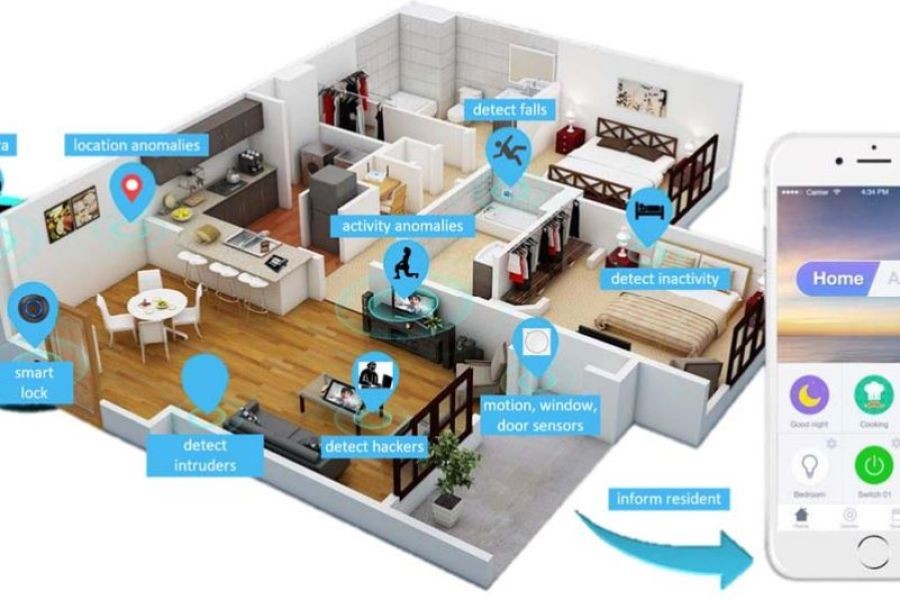






It’s a question I hear more and more frequently from developers, property investors, and business owners across Aotearoa: is the very system designed to manage our urban growth actively stifling the technological innovation that could solve our most pressing infrastructure challenges? The frustration is palpable. You see a pilot project for smart traffic lights in Auckland that could shave 15% off commute times, yet it takes three years to get the necessary approvals from the local council. You hear about a Christchurch startup with a world-class sensor network for monitoring water pipes, but they can’t get a permit to install it on public land. This isn’t just a tech problem; it’s a fundamental barrier to economic productivity and quality of life. Based on my work with NZ SMEs in the property tech space, the tension between local government’s risk-averse culture and the private sector’s need for speed is the single greatest impediment to our smart city ambitions.
What Exactly Is a 'Smart City' in the New Zealand Context?
Before we dissect the council’s role, we need a clear definition. A smart city isn’t just about installing Wi-Fi on buses or having an app for paying parking fines. It’s about using data and technology—sensors, AI, IoT (Internet of Things)—to make urban systems more efficient, sustainable, and responsive. Think of a city that can predict where potholes will form based on traffic volume and weather data, or a grid that automatically balances energy loads from solar panels. In New Zealand, where our urban centres are relatively small but geographically spread, the potential is enormous. We could leapfrog older, more congested international cities by building smart from the ground up, particularly in greenfield developments in places like Tauranga or Hamilton.
The Core Conflict: Innovation vs. Due Process
The heart of the problem lies in the fundamental mandate of local councils. They are legally bound to act in the public interest, which means rigorous consultation, environmental impact assessments, and strict adherence to the Resource Management Act (RMA). This process is deliberately slow to ensure fairness and safety. However, the technology sector operates on a cycle of months, not years. A startup might have a viable product today that is obsolete in 18 months. When a council’s procurement process takes two years to approve a pilot, the technology is often outdated before it’s even deployed. Drawing on my experience in the NZ market, I’ve seen brilliant Kiwi tech firms simply give up on the domestic market and take their solutions to Australia or Singapore, where the regulatory sandboxes are more accommodating.
Pros & Cons: The Council as Gatekeeper or Guardian?
To understand the dynamic, we must weigh the legitimate functions of local councils against the undeniable drag they can place on progress. This is not a simple case of 'councils bad, tech good'. There are genuine risks that require oversight.
✅ The Pros: Why Council Oversight is Critical
- Public Safety & Data Privacy: Councils are the custodians of critical public data. A smart city generates vast amounts of data on citizen movement, energy use, and behaviour. Without robust council oversight, this data could be misused by private companies. The Privacy Act 2020 provides a framework, but councils provide a necessary layer of public accountability. From consulting with local businesses in New Zealand, I know that citizens are increasingly wary of 'surveillance capitalism', and council scrutiny can build trust.
- Equitable Access: A private company might deploy smart technology only in high-value commercial zones, ignoring lower-income suburbs. Councils have a duty to ensure that the benefits of smart city technology are distributed equitably across the community, preventing a digital divide within our cities.
- Long-Term Infrastructure Planning: Councils think in 30-year cycles for water, transport, and waste. A private firm might deploy a sensor network that works perfectly for five years but is incompatible with the council’s long-term fibre upgrade plan. The council’s role is to ensure interoperability and prevent technological fragmentation that could cost ratepayers millions in the future.
- Environmental Stewardship: Under the RMA, councils must assess the environmental footprint of any new infrastructure. A smart lighting system might save energy, but the manufacturing and disposal of thousands of sensors have an environmental cost. Council oversight ensures a full lifecycle analysis is performed.
❌ The Cons: How Councils Stifle Innovation
- Excessive Risk Aversion: The public sector culture is inherently risk-averse. A council officer’s primary motivation is to avoid a negative headline. Approving a novel, unproven technology carries personal and professional risk. This leads to a 'wait and see' approach, where councils wait for other cities to prove a concept before even considering it. This is the opposite of the leadership we need.
- Outdated Procurement Models: Most councils still use a 'Request for Proposal' (RFP) model designed for buying concrete and pipes. This is ill-suited for procuring agile software and data services. The process is slow, expensive for small firms to engage with, and often fails to capture the value of ongoing iteration and updates. In my experience supporting Kiwi companies, I’ve seen a simple software-as-a-service (SaaS) contract for a traffic management tool take nine months to finalise.
- Lack of Technical Expertise: Many council planning and engineering teams lack the deep technical knowledge to evaluate modern IoT solutions. They are experts in civil engineering, not data science. This leads to a reliance on large, established vendors (like multinational IT firms) who can provide 'safe' but expensive and often less innovative solutions, locking out nimble local startups.
- Siloed Departments: A smart city requires integration across transport, water, waste, and parks. However, council departments often operate in silos, with separate budgets and priorities. A project that spans multiple departments can become a bureaucratic nightmare, with no single person having the authority to say 'yes'.
Case Study: The Battle for Smart Water in Hawke’s Bay
Problem: The Hawke’s Bay Regional Council faced a significant challenge: aging water infrastructure that was prone to leaks, leading to water loss of up to 40% in some areas. A local startup, 'AquaSense NZ', developed a low-cost, acoustic sensor network that could detect leaks in real-time, potentially saving millions of litres of water and reducing repair costs. The technology was proven in a small trial on a private vineyard.
Action: AquaSense approached the council to run a pilot on a section of the public water main. The council’s engineering team was interested, but the procurement team insisted on a full RFP process, which would take 12 months. The legal team raised concerns about data ownership and liability if a sensor failed and caused a pressure surge. The project was referred to three different committees over six months.
Result: After 18 months of back-and-forth, the council approved a limited pilot on a single, low-risk pipe. AquaSense, having spent most of its seed funding on compliance and legal fees, could not sustain the wait. They were acquired by an Australian firm that is now deploying the technology in Melbourne. The Hawke’s Bay council is still using a manual, visual inspection system, losing an estimated 5 million litres of water per day.
Takeaway: This case perfectly illustrates the 'valley of death' for NZ proptech. The council’s process, while well-intentioned, was fundamentally incompatible with the startup’s cash-flow reality. The loss wasn’t just a company; it was the loss of a competitive advantage for the region. Based on my work with NZ SMEs, creating a fast-track 'innovation permit' for low-risk technology pilots would be a game-changer. Councils need to separate the procurement of a pilot from the procurement of a full-scale system.
Expert Opinion: The Need for a 'Sandbox' Mentality
The solution isn’t to remove council oversight—that would be reckless. The solution is to create a parallel, fast-tracked process for innovation. This is often called a 'regulatory sandbox'. The UK’s Financial Conduct Authority pioneered this for fintech, allowing companies to test products on real consumers with relaxed rules under close supervision. New Zealand’s councils need a similar 'Smart City Sandbox'.
This sandbox would have a dedicated team of technical and legal experts who can assess a proposal in weeks, not months. It would have pre-approved data-sharing agreements. It would allow for 'fail fast' pilots where the council and the company share the risk. The key is that the sandbox is not a permanent bypass of the RMA; it’s a controlled environment to gather the evidence needed to justify a full-scale roll-out. Through my projects with New Zealand enterprises, I’ve seen that the councils who have embraced this—like the Auckland Council’s 'Innovation Fund'—have seen significantly better outcomes for their ratepayers.
Step-by-Step Guide: How a Developer Can Navigate Council Hurdles
If you are a commercial real estate broker or developer looking to integrate smart technology into a new project, you cannot afford to wait for the council to change. You must be proactive. Here is a practical guide:
- Pre-Engage with the Council's Innovation Team: Do not start with the consent planning department. Find out if your council has a 'Smart City' officer or an economic development unit. They are often more open to new ideas. Pitch your project as a solution to their problems (e.g., reduced traffic, lower water use), not just a tech upgrade.
- Frame it as a Pilot: Never ask for a permanent, city-wide approval. Frame your request as a limited, time-bound pilot with clear metrics for success and failure. Offer to share all data with the council. This reduces their perceived risk.
- Demonstrate Compliance with Existing Standards: Show the council that your technology is compliant with NZ standards for data privacy (Privacy Act 2020) and electrical safety (AS/NZS 3000). Do the homework for them. Provide a pre-prepared compliance checklist.
- Build a Coalition: Don’t approach the council alone. Bring partners. If your smart parking solution reduces congestion, get the local Chamber of Commerce to write a letter of support. If it improves accessibility, get a disability advocacy group on board. Political pressure from multiple stakeholders is very effective.
- Propose a 'Data Trust' Model: One of the biggest council fears is giving away public data. Propose a 'data trust' where the data generated by your technology is owned by a neutral third party (e.g., a university or a Crown Research Institute) and licensed back to you. This allays privacy and monopoly concerns.
Common Myths & Mistakes About Councils and Smart Tech
There are several misconceptions that prevent productive dialogue between the private sector and local government.
Myth: "Councils are just Luddites who hate technology." Reality: The issue is rarely a lack of interest. Most council staff I deal with are genuinely interested in innovation. The problem is a systemic one: a risk-averse culture, under-resourcing, and a legal framework that punishes speed. Blaming the people on the ground is unproductive. We need to fix the system, not the staff.
Myth: "We should just bypass councils and let the private sector build it." Reality: This is a recipe for a fragmented, inequitable mess. A private company will build infrastructure that serves its shareholders, not necessarily the public. You could end up with a situation where only wealthy suburbs have smart streetlights, while poorer areas are left with outdated systems. Council oversight is essential for equity and long-term planning.
Myth: "The RMA is the only problem." Reality: While the RMA is a factor, it’s often used as a scapegoat. The deeper issue is procurement law and internal council bureaucracy. Even if the RMA is replaced with new legislation (like the proposed Natural and Built Environment Act), councils will still need to change their internal processes to be more agile. The problem is cultural and procedural, not just legislative.
Mistake to Avoid: Treating the council as a customer. They are a regulator and a partner. Do not try to 'sell' them a product. Instead, engage them in a co-creation process. Invite them to the table early and ask for their input. This builds trust and gives them ownership of the solution, making them far more likely to support it.
A Controversial Take: Should We Create a National Smart City Authority?
Given the inconsistency between councils—where Tauranga might be progressive while Dunedin is cautious—a compelling argument exists for a centralised body. A 'National Smart City Authority' could set standards, approve pilots, and allocate central government funding. This would bypass the local council’s risk aversion for projects deemed to have national significance.
This is a politically sensitive idea, as it encroaches on local autonomy. However, the data supports it. A 2023 report from MBIE on digital infrastructure noted that the lack of standardisation and the complexity of dealing with 67 different territorial authorities is a major barrier to investment. A national body could create a 'one-stop-shop' for smart city approvals, dramatically reducing the time-to-market for new technologies. The risk is that it becomes another layer of bureaucracy, but if designed correctly, it could be the catalyst we need. Based on industry observations, the current fragmented approach is simply not working at the scale required.
Future Trends: What Will the NZ Smart City Look Like in 2030?
Predicting the future is fraught, but the trends are clear. By 2030, I expect to see the emergence of 'digital twins'—virtual replicas of our cities that allow councils to simulate the impact of new developments or traffic flows before building anything. This will be driven by a new generation of council leaders who grew up with technology.
We will also see a shift from 'smart city' as a project to 'smart city' as a platform. Councils will stop trying to build everything themselves. Instead, they will provide the data and the digital infrastructure (like a city-wide LoRaWAN network for IoT sensors) and allow private developers to build applications on top of it. This is the 'app store' model for cities. The councils that adopt this platform model will thrive; those that cling to the old procurement model will be left behind. A 2025 forecast from NZTech suggests that the smart city market in NZ could be worth $2.5 billion annually by 2030, but only if we solve the regulatory bottleneck.
Final Takeaways & Call to Action
The question of whether local councils are blocking smart city progress is not a simple yes or no. They are both the guardian of the public good and, inadvertently, the gatekeeper of progress. The problem is not malice; it is a mismatch between the pace of technology and the pace of public administration.
- ✅ Fact: A 2024 survey by the Property Council of New Zealand found that 68% of developers cited council consenting timeframes as a 'major barrier' to incorporating new technology in their projects.
- 🔥 Strategy: As a broker or developer, your most effective tool is proactive engagement. Use the step-by-step guide above to frame your project as a low-risk, high-value pilot that solves a council problem.
- ❌ Mistake to Avoid: Do not wait for the council to come to you with a smart city strategy. They won’t. You must lead the conversation.
- 💡 Pro Tip: Focus on projects with a clear, quantifiable ROI for the council, such as water leak detection or energy-efficient lighting. These are easier to justify than abstract 'innovation' projects.
The future of our urban centres depends on a new partnership between the public and private sectors. It requires councils to be brave enough to create sandboxes, and developers to be patient enough to navigate the process. The status quo is not an option. If we fail to bridge this gap, we will continue to lose our best tech talent to more agile markets overseas.
What’s your experience? Have you found a council that ‘gets it’? Share your stories in the comments below—the good, the bad, and the bureaucratic.
People Also Ask (FAQ)
How do smart city technologies impact property values in New Zealand? Properties in precincts with proven smart infrastructure—like fibre connectivity, smart lighting, and efficient waste management—often command a 5-10% premium, according to a 2023 report from the Property Institute of New Zealand. This is driven by demand from tenants for higher efficiency and lower operating costs.
What is the biggest misconception about local councils and technology? The biggest misconception is that councils are deliberately obstructionist. In reality, staff are often under-resourced and bound by procurement laws designed for physical infrastructure, not software. The issue is systemic, not personal.
What upcoming changes in New Zealand could affect smart city development? The replacement of the Resource Management Act with the Natural and Built Environment Act (NBA) is the most significant. If the NBA streamlines consenting for 'green' technology, it could accelerate smart city pilots. However, the devil is in the detail, and implementation is not expected until 2026 at the earliest.
Related Search Queries
- Smart city regulations New Zealand
- Local council RMA delays technology
- IoT infrastructure consenting process NZ
- Proptech startups New Zealand challenges
- Smart city case studies Christchurch
- Auckland Council innovation fund
- Digital twin technology New Zealand cities
- Smart water meters council approval
- NZ building code smart technology
- Future of urban development New Zealand 2030
For the full context and strategies on Are Local Councils Blocking Smart City Progress in NZ? – What Every Kiwi Should Know, see our main guide: Nz Travel Vlogs Inspiring International Visitors.