






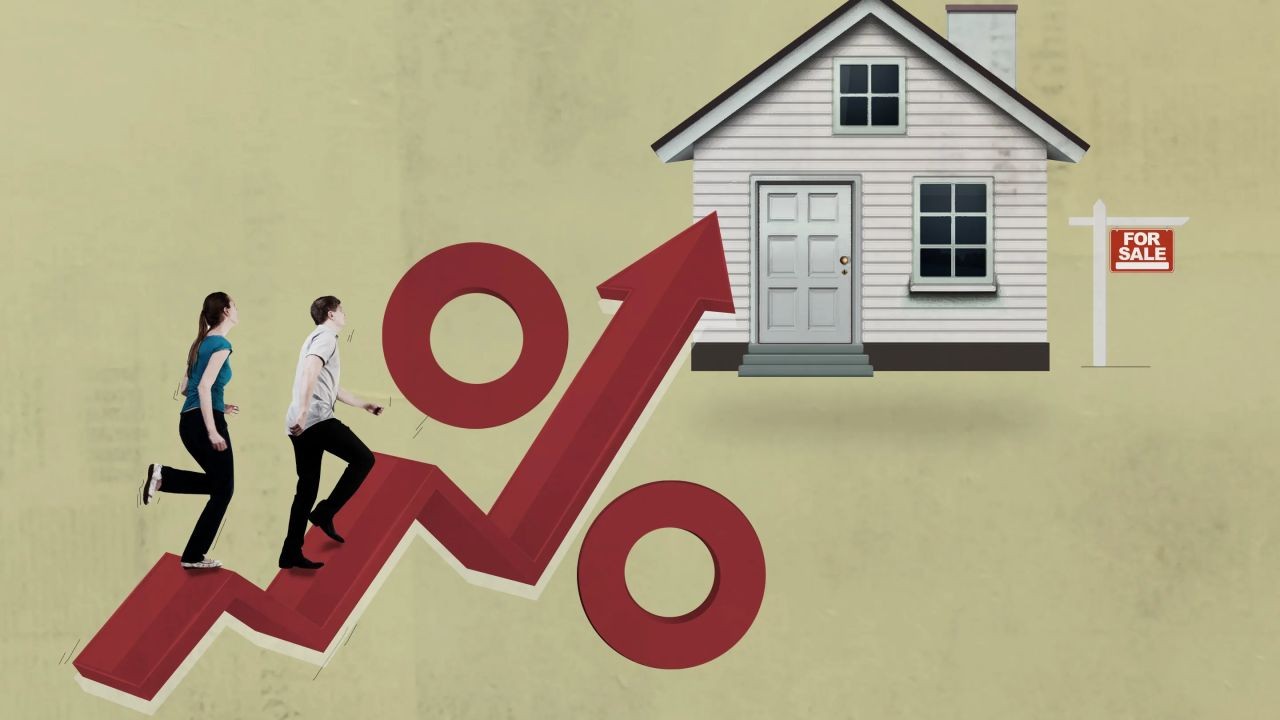
When the Reserve Bank of New Zealand lifts the Official Cash Rate, the conversation in commercial property circles rarely stays on monetary policy for long. It pivots quickly to a more tangible question: how much of the rental dollar is about to be swallowed by debt servicing. For investors holding residential or commercial assets, rising mortgage rates act as a direct tax on cash flow. The relationship is mechanical, yet the strategic response is anything but uniform across the New Zealand market.
This is not an abstract concern. The Reserve Bank’s aggressive tightening cycle, which pushed the OCR from emergency lows to restrictive territory, has fundamentally recalibrated the yield equation for landlords from Whangārei to Invercargill. While headlines focus on borrowers facing stress, the deeper story lies in how smart investors are repositioning portfolios to protect net rental income when the cost of capital is no longer cheap.
The Mechanics: How Debt Costs Bite into Rental Yields
Mortgage rates serve as the gravity of property investment. When they rise, the weight of leverage increases proportionally. Consider a standard interest-only loan on a $1.2 million residential investment property. At 2.99%, the annual interest bill sits near $35,880. At 6.99%, that same debt costs $83,880—a jump of $48,000 per year before one dollar is spent on maintenance, rates, or insurance. The rent has not changed, but the surplus has evaporated.
The Reserve Bank of New Zealand’s data shows that average new residential mortgage rates for investors moved from approximately 2.6% in early 2021 to over 7% by late 2023. For a leveraged portfolio, that is not an incremental shift; it is a structural reset. The market has moved from a period where debt amplified returns to one where debt amplifies risk.
In the commercial sector, the dynamics are similar but the outcomes differ. Commercial tenants often sit on net leases, meaning they absorb outgoings like rates and insurance. However, higher borrowing costs still drag on the landlord’s net operating income. Cap rates, which represent the yield on a property’s value, must adjust when financing costs move. A commercial asset bought at a 5.5% cap rate becomes unworkable if the cost of senior debt is 7%. The multiplier effect is brutal.
Cash Flow Compression in the Residential Sector
Residential rental yields in New Zealand have historically been modest compared to other investment classes. Stats NZ figures show gross yields in Auckland often hovered between 2.5% and 3.5% during the boom years. Those yields worked only because interest rates were lower still and capital gains expected to fill the gap. When the OCR shifted, that model broke apart.
Based on my work with NZ SMEs and private landlords, I have seen the psychology change rapidly. Investors who once measured success in gross rental multiples now run two sets of books: one for yield on cost, and one for debt service coverage. The latter is the one that keeps them awake at night.
A common scenario: a landlord owns a three-bedroom rental in Hamilton with rents held at $620 per week. At a 2.99% interest rate, the debt service was manageable. At 6.99%, the property needs $720 per week just to cover interest on a $540,000 loan. The landlord is now subsidising the tenant’s housing. This is not a rare edge case; it is the lived experience for many investors who bought between 2020 and 2021.
Where the Pressure Hits Hardest: Leverage Ratios
Rising rates do not hit all investors equally. The dividing line is the debt-to-equity ratio. Investors with loan-to-value ratios below 40% can absorb higher interest costs and still sleep at night. Those with LVRs above 70% face three simultaneous pressures: higher monthly payments, tighter bank servicing tests, and a softer sales market if they need to exit.
Banks in New Zealand have applied a conservative lens to rental income for years. Most lenders discount gross rent by 25% to 30% when calculating serviceability. When mortgage rates rise, that discount becomes more painful because the surplus after debt shrinks faster. The result is that many investors cannot refinance at all. They become what the industry calls "mortgage prisoners," stuck with their current lender on uncompetitive rates because they fail the new servicing tests elsewhere.
Case Study: A Christchurch Multi-Unit Holding Under Stress
Case Study: A Christchurch Four-Unit Block – Refinancing Pressure Meets Rising Rents
Problem: An investor held a four-unit residential block in Sydenham, Christchurch, purchased in 2021 with a floating-rate facility at 2.79%. The property produced $88,400 in annual gross rent. At purchase, the interest bill was $27,900, leaving a healthy surplus. By late 2023, the borrower faced a reset to 7.25%. The new interest bill jumped to $72,500—an increase of $44,600 per year. The net cash flow before operating costs turned deeply negative.
Action: The owner renegotiated with the bank to restructure the loan into a split facility: 50% fixed for three years at a slightly lower rate, and 50% interest-only for 24 months. At the same time, rents were reviewed unit-by-unit against market comparables from Tenancy Services data. Two units were under-rented by $65 per week combined. The landlord served 60-day notices to adjust rents in line with market rates and reintroduced a flat rate for water usage where permitted by the lease.
Result:
✅ Annual gross rent increased by 9.3% to $96,600.
✅ The blended interest rate dropped from 7.25% to 6.4% through restructuring.
✅ Net cash flow turned positive within six months, albeit at a modest $6,200 annual surplus.
✅ The owner retained the asset rather than forcing a distressed sale in a soft market.
Takeaway: This case study highlights that debt restructuring and active rent management are the two most powerful levers available to New Zealand landlords when rates rise. The investor did not rely on capital growth or hope. Instead, they attacked the cost side and the income side simultaneously. In my experience supporting Kiwi companies and property investors, those who treat rent reviews as a quarterly discipline rather than an annual afterthought tend to survive rate shocks with less damage.
The Commercial Property Divergence
Commercial real estate behaves differently from residential when debt becomes expensive. The reason is the lease structure. A well-drafted commercial lease in New Zealand often includes CPI-linked rent reviews or fixed annual increases. For a retail or industrial asset, this provides a built-in hedge against rising operating costs—including debt—provided the tenant remains solvent.
However, the industrial sector has its own complication: rents have risen sharply, but so have construction costs and land values. Many secondary industrial buildings in Auckland’s outer suburbs now trade at cap rates below 5%, which makes them highly sensitive to borrowing costs. An investor buying a $4 million warehouse with a 4.75% yield and 65% leverage needs rental growth of 3% to 4% annually just to break even on cash flow. That assumes the tenant stays and renews. If the tenant vacates, the vacancy period becomes a bleeding wound because the owner must cover debt service from reserves.
From consulting with local businesses in New Zealand, particularly those occupying commercial space, I have noticed a clear shift. Tenants are becoming more demanding about lease flexibility as their own financing costs rise. Some are seeking shorter terms, break clauses, or rent abatements in exchange for longer commitments. Landlords who refuse to bend on terms are finding themselves with longer vacancy periods. The mortgage bill, however, does not pause for a vacancy.
Pros and Cons of Investing in a Rising Rate Environment
The temptation is to declare rising rates a disaster for property investors. That is too simplistic. There are genuine advantages for disciplined buyers, alongside clear risks for the over-leveraged.
Pros
- Reduced competition: Casual investors and speculators exit the market, leaving serious buyers with better negotiation leverage.
- Higher entry yields: Vendors are adjusting price expectations downward, meaning yields on new acquisitions are improving. CoreLogic data has shown a compression in property values in several New Zealand regions, which supports higher running yields.
- Rent growth tailwind: Inflation and construction cost pressures have pushed market rents upward. For existing landlords, this provides a partial offset to debt costs.
- Long-term fixed rates provide certainty: Investors who lock in five-year rates below historical averages can model cash flows with confidence.
- Less speculative building: Higher capital costs are slowing new development, which reduces future supply risk for existing landlords.
Cons
- Cash flow compression: The primary risk. Highly leveraged properties can tip into negative cash flow rapidly.
- Refinancing traps: Borrowers who fail bank stress tests lose the ability to shop for better rates.
- Valuation risk: Capitalisation rates expand when interest rates rise, pushing values down even if rents are stable.
- Tenant stress: Residential tenants face their own cost-of-living pressures, which may cap future rent growth and increase arrears.
- Opportunity cost of equity: Cash tied up in a property earning 3% net yield may underperform term deposits offering 5% to 6% with no management burden.
A Balanced View: Rental Growth vs Debt Cost Spiral
Two competing forces are now playing out across New Zealand property markets. On one side, rental growth has been robust in many regions. Stats NZ’s rental price index showed national rent increases of over 4% annually in 2023, with stronger growth in regional centres like Tauranga and Queenstown. On the other side, mortgage rates have risen faster than rents in most areas.
The result is a squeeze on net yields that has no easy resolution. An investor who fixed at 2.99% in 2021 and faces refixing at 6.5% in 2024 needs a 50% increase in net rent to restore the same cash flow. No rental market in New Zealand is delivering that kind of growth over a three-year window. The math simply does not work for many borrowers.
The middle ground lies in moderate leverage and patient capital. Investors who carry debt at 40% or less can use rental growth to repair their cash flow over time. Those who stretched to 70% or more face a stark choice: inject fresh equity, sell into a soft market, or run negative cash flow indefinitely. The third option is not sustainable for most private investors.
Expert Opinion: The Broker’s Perspective
Jessica Langley, a property analyst focused on the New Zealand rental market, frames the issue in terms of debt service coverage. "The investors who survive this cycle are not the ones with the best properties. They are the ones with the best capital structures. A good asset with bad debt is still a bad investment."
Drawing on my experience in the NZ market, I would extend that point. The current environment rewards patience over aggression. I have watched too many investors treat rental property as a leveraged bet on capital gains. When rates rise, that bet turns into a cash flow liability. The successful investors I work with now underwrite to a 7% interest rate regardless of what the bank is offering. If the numbers work at 7%, they buy. If not, they wait. That discipline is rare but essential.
There is also a hidden challenge that most commentary misses: the interaction between mortgage rates and the Tenancy Tribunal’s approach to rent reviews. Landlords in New Zealand cannot simply raise rents to cover higher costs. The Residential Tenancies Act limits rent increases to once every 12 months, and tenants can challenge unreasonable increases. In a rising rate environment, this creates a lag effect. The landlord absorbs the higher cost immediately, but the ability to recover it through rent is delayed and legally constrained.
For commercial landlords, the issue manifests differently. Many commercial leases allow for CPI-linked reviews, but those reviews occur annually or every three years depending on the contract. If inflation peaked in 2022, a three-yearly review might not capture the full increase until 2025. The landlord is effectively financing the tenant’s real rent reduction in the interim.
Common Myths About Rising Rates and Rental Income
Myth: Landlords can simply raise rents to cover higher mortgage costs. Reality: Residential rent increases are capped at once per year under the Residential Tenancies Act, and tenants can challenge unreasonable hikes. Landlords cannot pass through debt costs directly. The market sets rents, not the landlord’s borrowing rate.
Myth: Higher rates always destroy property values. Reality: In New Zealand, a severe shortage of housing supply has partially insulated values. While values fell from the 2021 peak, the decline has been uneven. Well-located, cash-flow-positive assets retain buyers even when financing is expensive. The correction is more about the marginal, over-leveraged seller than the broad market.
Myth: Interest-only loans are a sign of financial weakness. Reality: For commercial and high-yield residential assets, interest-only structures can be a deliberate cash flow management tool. In a rising rate environment, interest-only terms can preserve liquidity and allow the investor to redeploy capital into higher-return opportunities. The risk is not the structure itself but the lack of a repayment strategy.
Myth: A rental property must be cash flow positive from day one. Reality: Many Auckland and Queenstown properties have run neutral or mildly negative cash flow for years, with investors relying on capital growth. The shift in rates has made this strategy dangerous, but it does not make the original premise invalid in all cases. The key is whether the negative position is temporary and affordable.
Future Trends: Where the Market Is Headed
The Reserve Bank of New Zealand has signalled that the OCR may have peaked, but any cuts will be gradual. Mortgage rates are likely to sit in the 5.5% to 6.5% range for some time. That means the pressure on rental income will not lift quickly.
One significant trend is the shift toward build-to-rent developments. Institutional investors, including KiwiSaver funds, are entering the rental market with scale advantages and lower financing costs than individual landlords. This is a structural change for the New Zealand rental sector. Private landlords will find themselves competing with professionally managed portfolios that can absorb lower net yields and spread costs across many units.
Another trend is the growth of short-term rental platforms as an alternative to long-term tenancies. In tourist-heavy areas, some landlords are converting long-term rentals to short-stay accommodation to capture higher gross yields. However, this strategy carries regulatory risk as local councils tighten rules on short-term rentals. The mortgage cost is fixed, but the income stream is becoming more volatile.
Having worked with multiple NZ startups in the property technology space, I have also seen a rise in data-driven rent management tools. These platforms help landlords benchmark rents against real-time market data, identify under-priced tenancies, and automate rent reviews within legal constraints. Landlords who adopt these tools gain a measurable advantage in a rising rate environment because they can move faster to capture market rents.
Biggest Mistakes to Avoid
Mistake 1: Ignoring the refix calendar. Many investors refix without shopping around or restructuring. A 0.3% rate difference on a $1 million loan is $3,000 per year. Banks rarely offer their best rate to loyal customers without negotiation. Solution: start refinance discussions 90 days before the fixed term expires.
Mistake 2: Using short-term fixed rates out of habit. A floating or one-year rate exposes the investor to constant repricing. In a period of rate volatility, a three-to-five-year fixed term provides certainty. Solution: match the fixed term to the expected holding period and cash flow needs.
Mistake 3: Letting rents lag the market. A landlord who avoids rent increases out of fear of losing a tenant is effectively choosing to pay the tenant a subsidy. In practice, with NZ-based teams I’ve advised, properties that undergo regular small rent reviews retain tenants at similar rates to those with long stagnation periods—but with materially better cash flow.
Mistake 4: Overestimating tax benefits. Interest deductibility for residential investment properties has been fully restored, which helps, but it does not eliminate the cash flow gap. A tax deduction reduces the after-tax cost of debt; it does not create income. Investors who treat tax losses as a wealth strategy are just paying a dollar to save thirty cents.
Mistake 5: Assuming rates will fall quickly. Betting on a rapid return to 3% mortgages is wishful thinking. The New Zealand economy has structural inflation pressures, from construction costs to migration-driven demand. A prudent investor models for 6% rates for the next three to five years.
Actionable Steps for Kiwi Landlords
For investors looking to protect rental income in this environment, a disciplined approach matters more than market timing.
- Stress test every property at 7% interest: If the property cannot service debt at that rate with current rents, it is not resilient. Consider whether additional equity injection or a sale is warranted.
- Review all leases and tenancy agreements now: Identify which tenancies are under-rented relative to market. Check the next available rent review date and plan the increase amount.
- Refinance early: Do not wait until the fixed rate expires. Engage a mortgage broker with commercial property experience and explore multiple lenders.
- Diversify debt structure: A split between fixed and floating can provide both certainty and flexibility. Interest-only terms may be appropriate for assets with strong growth prospects.
- Track portfolio debt service coverage monthly: Net operating income divided by total debt payments. A ratio below 1.2 signals vulnerability.
- Monitor the build-to-rent pipeline in your region: New institutional supply can cap rental growth in specific suburbs. Adjust acquisition strategies accordingly.
People Also Ask
How do rising mortgage rates affect rental prices in New Zealand? Rising mortgage rates do not directly cause rent increases, because rents are set by supply and demand. However, landlords facing higher costs may attempt to raise rents, but they are limited by tenancy laws and market resistance. The net effect is often a squeeze on landlord cash flow rather than a sharp jump in rents.
Should I sell my rental property if interest rates stay high? Not automatically. The decision depends on your loan-to-value ratio, cash flow position, and long-term investment goals. If the property is structurally cash flow negative at a 7% interest rate and you cannot comfortably subsidise the shortfall, selling may be prudent. Otherwise, holding and restructuring debt may be the better path.
Are commercial properties less affected by mortgage rate rises than residential rentals? Commercial properties often have stronger lease structures with annual rent reviews, which can offset rising interest costs better than residential tenancies. However, commercial assets are also more sensitive to tenant default risk when borrowing costs rise across the economy, as tenant businesses face their own financing pressures.
Related Search Queries
- How does the OCR affect rental yields in New Zealand
- Mortgage interest rates for NZ property investors
- RBNZ mortgage rate outlook for landlords
- Cash flow positive property New Zealand 2025
- Commercial property cap rates Auckland
- Residential rent increase rules NZ
- Build-to-rent New Zealand market size
- Refinancing rental property stress test NZ
Final Takeaway
Rising mortgage rates have ended the era of cheap leverage in New Zealand property. For investors, the new reality is a cash flow discipline that rewards modest debt, active rent management, and rigorous underwriting. Those who adapt will find opportunities in a market with fewer competitors and better entry prices. Those who do not will find themselves subsidising tenants and negotiating with banks from a position of weakness.
The most important action today is not to wait for rate cuts. Run the numbers at 7%. Understand exactly where each property stands on debt service coverage. Then decide whether to hold, restructure, or sell. The investors who act early will be the ones still in the market when conditions normalise. The ones who freeze will be the case studies in the next cycle’s cautionary tales.
What is your next move? If you own rental property, pull the latest loan statements and rent schedules. Compare the numbers against a 7% interest rate. The gap between where you stand and where you need to be is the size of the decision in front of you. Share your experience below—those conversations help every investor see the market more clearly.
For the full context and strategies on How Rising Mortgage Rates Affect Rental Income for Investors – The New Zealand Angle You’ve Overlooked, see our main guide: Nz Hospitality Videos Boost Bookings Reviews.