






Introduction
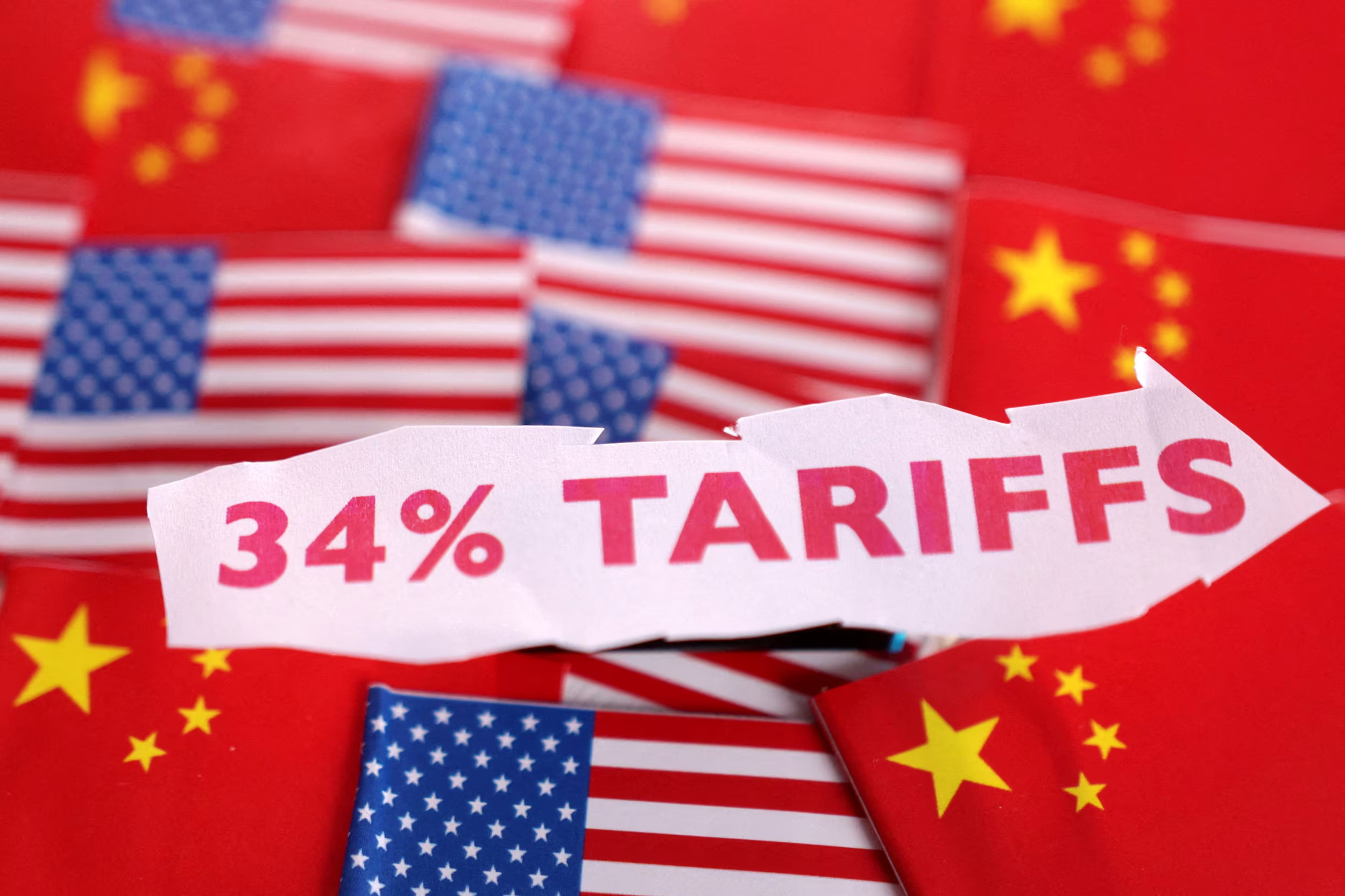
In the realm of international trade, tariffs have always been a contentious issue, stirring debates among economists, politicians, and business leaders alike. Recently, former U.S. President Donald Trump made several claims about tariffs during an announcement, sparking a wave of discussions. But how do these statements hold up under scrutiny? For New Zealand, a nation heavily reliant on international trade, understanding the implications of such statements is crucial. With sectors like agriculture and dairy forming the backbone of its economy, any shifts in global trade policies can have profound impacts. According to Stats NZ, export revenue from dairy alone was NZD 19.7 billion in 2022, highlighting the stakes involved. This article delves into the veracity of Trump's claims and explores their potential repercussions on New Zealand's economy.
Pros & Cons Evaluation of Trump's Tariff Claims
Pros of Tariffs
- Domestic Industry Protection: Tariffs can shield local industries from foreign competition, allowing them to grow and stabilize.
- Government Revenue: They generate substantial revenue for governments, which can be reinvested in infrastructure and public services.
- Bargaining Tool: Tariffs can be used as leverage in trade negotiations, potentially leading to better trade agreements.
Cons of Tariffs
- Higher Consumer Prices: Tariffs often lead to increased prices for consumers, as import costs are passed down.
- Retaliation Risks: Other countries might impose reciprocal tariffs, affecting exports.
- Supply Chain Disruptions: Global supply chains can be disrupted, leading to inefficiencies and increased costs.
While Trump's claims about tariffs often highlight their protective nature, the downsides, especially for a trade-dependent nation like New Zealand, cannot be ignored. The potential for retaliatory tariffs could severely impact New Zealand's export-driven sectors.
Data-Driven Analysis: New Zealand's Economic Context
New Zealand's economy thrives on exports, with China, the U.S., and Australia being its top trading partners. The Reserve Bank of New Zealand noted that trade tensions could lead to decreased demand for Kiwi products, affecting GDP growth. In 2023, a report from the Ministry of Business, Innovation and Employment (MBIE) highlighted that a 10% tariff on dairy exports could result in a NZD 1.9 billion loss annually. Such figures underscore the sensitivity of New Zealand's economy to external tariff changes.
Case Study: The Impact of U.S.-China Trade Tensions on New Zealand
Case Study: Fonterra – Navigating Trade Tensions
Problem: Fonterra, New Zealand's largest dairy exporter, faced challenges during the U.S.-China trade war. As tariffs were imposed on dairy products, Fonterra experienced a significant decline in exports to China.
Action: To counteract the impact, Fonterra diversified its market approach, increasing exports to Southeast Asia and the Middle East. They also invested in value-added products to maintain profitability.
Result: Within a year, Fonterra saw a 15% increase in exports to new markets, and their value-added products contributed to a 10% rise in annual profits.
Takeaway: This case study illustrates the importance of market diversification and product innovation. For New Zealand businesses, adapting to global trade shifts is crucial for resilience.
Common Myths & Mistakes
Myth vs. Reality
- Myth: "Tariffs only affect the countries imposing them." Reality: Tariffs have a ripple effect, impacting global supply chains and price structures, as seen in the U.S.-China trade tensions.
- Myth: "Higher tariffs always lead to more jobs in domestic industries." Reality: While some industries may benefit, others reliant on imported materials could suffer job losses due to increased costs.
- Myth: "Tariffs are a long-term solution for economic growth." Reality: Most economists agree that tariffs are short-term measures and can lead to trade wars and economic downturns.
These misconceptions highlight the complexity of trade policies and their multifaceted impacts, particularly for nations like New Zealand that are deeply integrated into the global economy.
Future Trends & Predictions
Looking ahead, New Zealand must brace for potential shifts in global trade dynamics. According to a 2024 Deloitte report, the Asia-Pacific region is expected to lead global trade growth, with a projected annual increase of 4.5% until 2030. For New Zealand, this presents opportunities to strengthen ties within the region. However, the rise of protectionist policies globally could pose challenges. It's essential for New Zealand to advocate for free trade agreements and continue diversifying its export markets to mitigate risks associated with tariff disputes.
Conclusion
In conclusion, while Trump's claims on tariffs may resonate with certain domestic agendas, the broader implications for global trade, particularly for countries like New Zealand, are significant. As the world navigates these complex waters, New Zealand must remain vigilant, adaptive, and proactive in its trade strategies. The stakes are high, but with informed decision-making and strategic foresight, New Zealand can weather the storm and continue to thrive in the global marketplace. What's your perspective on this issue? Share your thoughts and insights below!
People Also Ask
- How do tariffs impact New Zealand's economy?Tariffs can increase costs for New Zealand exporters, leading to reduced competitiveness and potential losses in export revenue, especially in sectors like dairy and agriculture.
- What are the biggest misconceptions about tariffs?One common myth is that tariffs only impact countries imposing them. However, they affect global supply chains, influencing prices and trade relations worldwide.
Related Search Queries
- Impact of tariffs on New Zealand economy
- New Zealand trade policies 2024
- U.S.-China trade war effects on New Zealand
- Future of New Zealand exports
- Global trade trends 2025
































homeins teaders
4 months ago