





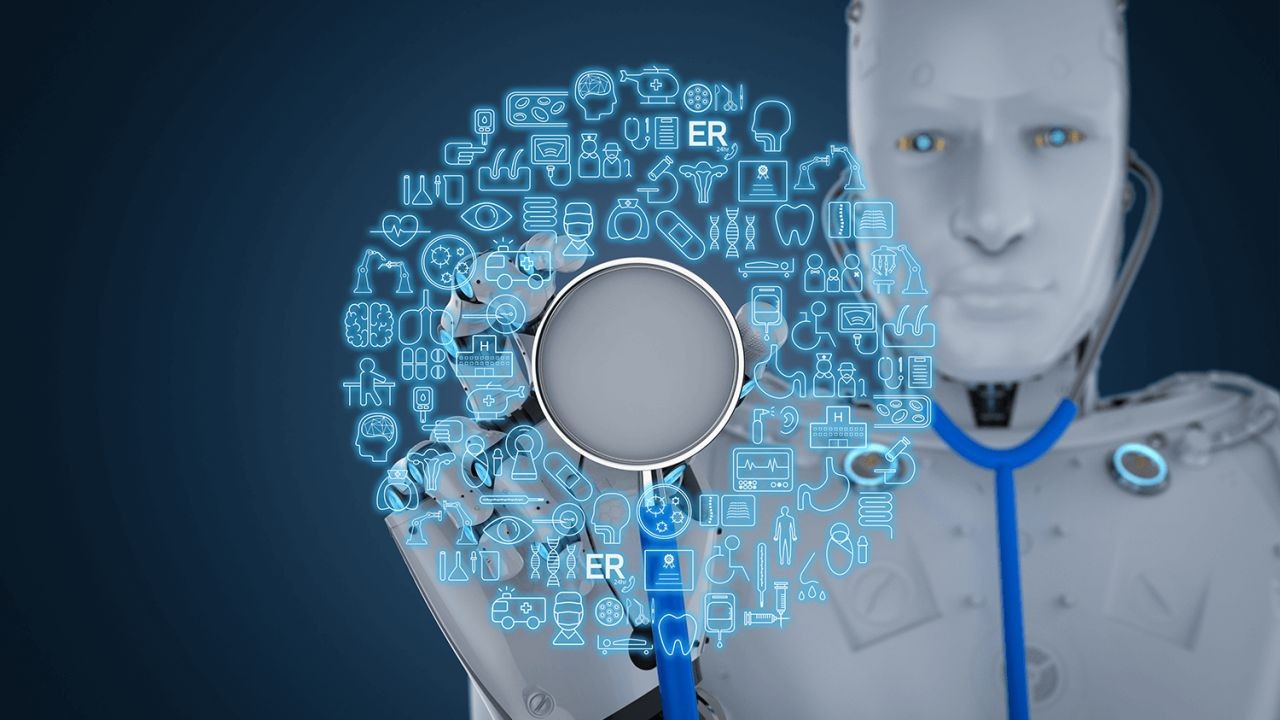
In an era where technology intertwines intricately with healthcare, the question of whether Artificial Intelligence (AI) can outperform human doctors in diagnosing medical conditions is not just academic but crucial, especially for Australia. The Australian healthcare system, renowned for its quality and accessibility, is at a crossroads as it integrates AI to enhance services. This article delves into the potential of AI in medicine, comparing it with the human touch of doctors, and explores the implications for the Australian healthcare system.
The Rise of AI in Medicine
Artificial Intelligence has made significant strides in various industries, and healthcare is no exception. In Australia, AI applications in medicine are primarily focused on diagnostics, predictive analytics, and treatment personalization. According to a report by the Australian Bureau of Statistics (ABS), the healthcare sector contributes approximately 10% to Australia’s GDP, highlighting the economic significance of innovations like AI in this field.
How AI Works in Diagnostics
AI systems in medicine use machine learning algorithms to analyze vast amounts of medical data, identifying patterns that may not be immediately apparent to human doctors. For instance, AI can process thousands of radiological images in seconds, detecting anomalies with high accuracy. This capability is particularly beneficial in areas like oncology, where early and precise detection of cancer can significantly improve patient outcomes.
Case Study: AI in Radiology
Case Study: Royal Brisbane and Women's Hospital – Enhancing Radiology with AI
Problem:
Royal Brisbane and Women's Hospital faced challenges in managing the increasing volume of radiological images, which often led to delays in diagnosis and treatment. The hospital needed a solution to streamline image analysis without compromising accuracy.
Action:
The hospital implemented an AI-powered radiology system that uses deep learning algorithms to analyze images rapidly. This system was integrated with the existing infrastructure, allowing seamless data flow and analysis.
Result:
Within six months, the hospital reported a 30% reduction in diagnosis time and increased the accuracy of anomaly detection by 15%. This improvement not only enhanced patient care but also optimized workflow efficiency.
Takeaway:
This case study illustrates the potential of AI to augment human capabilities in medical diagnostics. Australian hospitals can leverage such technologies to improve healthcare delivery, especially in rural areas where specialist access is limited.
Pros and Cons of AI vs. Human Doctors
Pros of AI in Diagnostics
- Speed and Efficiency: AI systems can analyze data faster than humans, leading to quicker diagnoses.
- Data Processing: Capable of handling and learning from vast datasets, AI can identify patterns that might elude human observation.
- Cost-Effectiveness: Reduces the need for repetitive tasks, allowing human resources to focus on complex cases.
Cons of AI in Diagnostics
- Lack of Intuition: AI lacks the intuitive judgment that human doctors develop through experience.
- Ethical Concerns: Issues of data privacy and consent are significant when implementing AI in healthcare.
- Dependence on Data Quality: AI effectiveness is highly dependent on the quality and range of data fed into it.
Challenges and Ethical Considerations
While AI offers numerous advantages, it also presents challenges, particularly around ethical considerations. The Australian Competition & Consumer Commission (ACCC) has emphasized the need for stringent data privacy regulations to protect patient information. Moreover, the potential for AI to make errors in diagnosis raises questions about liability and accountability.
Myth vs. Reality in AI Diagnostics
- Myth: AI will completely replace human doctors.
- Reality: AI is a tool to enhance doctors’ capabilities, not replace them. The human element in healthcare, such as empathy and ethical judgment, remains irreplaceable.
- Myth: AI decisions are always unbiased.
- Reality: AI systems can exhibit bias based on the data they are trained on. Continuous monitoring and updating of AI systems are essential to minimize biases.
Future Trends in AI-Driven Diagnostics
The future of AI in healthcare looks promising, with advancements expected to increase its role in diagnostics significantly. According to Deloitte's Healthcare Outlook, by 2030, AI could potentially save Australian healthcare providers up to $20 billion annually by improving efficiency and accuracy. Moreover, the integration of AI with telemedicine could revolutionize healthcare delivery, especially in remote areas of Australia.
Conclusion
AI has the potential to revolutionize healthcare in Australia by complementing the skills of human doctors, improving diagnostic accuracy, and enhancing patient care. However, it is not a panacea. The human touch, intuition, and ethical considerations are irreplaceable aspects of medical practice. As Australia continues to integrate AI into its healthcare system, a balanced approach that leverages the strengths of both AI and human doctors will be crucial.
What’s your take on AI in medicine? Share your thoughts and insights below!
People Also Ask (FAQ)
- How does AI impact healthcare in Australia?
AI enhances diagnostic accuracy and efficiency, potentially saving the Australian healthcare system up to $20 billion annually, according to Deloitte.
- What are the ethical concerns with AI in medicine?
Key concerns include data privacy, potential biases in AI systems, and accountability for errors.
- Can AI replace human doctors?
No, AI is designed to support doctors by providing data-driven insights, not replace the human elements of care.
Related Search Queries
- AI in healthcare Australia
- Future of AI in medicine
- AI vs. human doctors
- AI ethics in healthcare
- AI diagnostic tools