





The rise of Buy Now, Pay Later (BNPL) schemes has revolutionized consumer financing options in Australia. However, while these schemes offer a convenient alternative to traditional credit, their implications on economic behavior and financial stability demand closer examination. This article aims to dissect the nuances of BNPL services, presenting a balanced view of their impact on the Australian economy, with insights from industry experts and regulators.
Understanding Buy Now, Pay Later Schemes
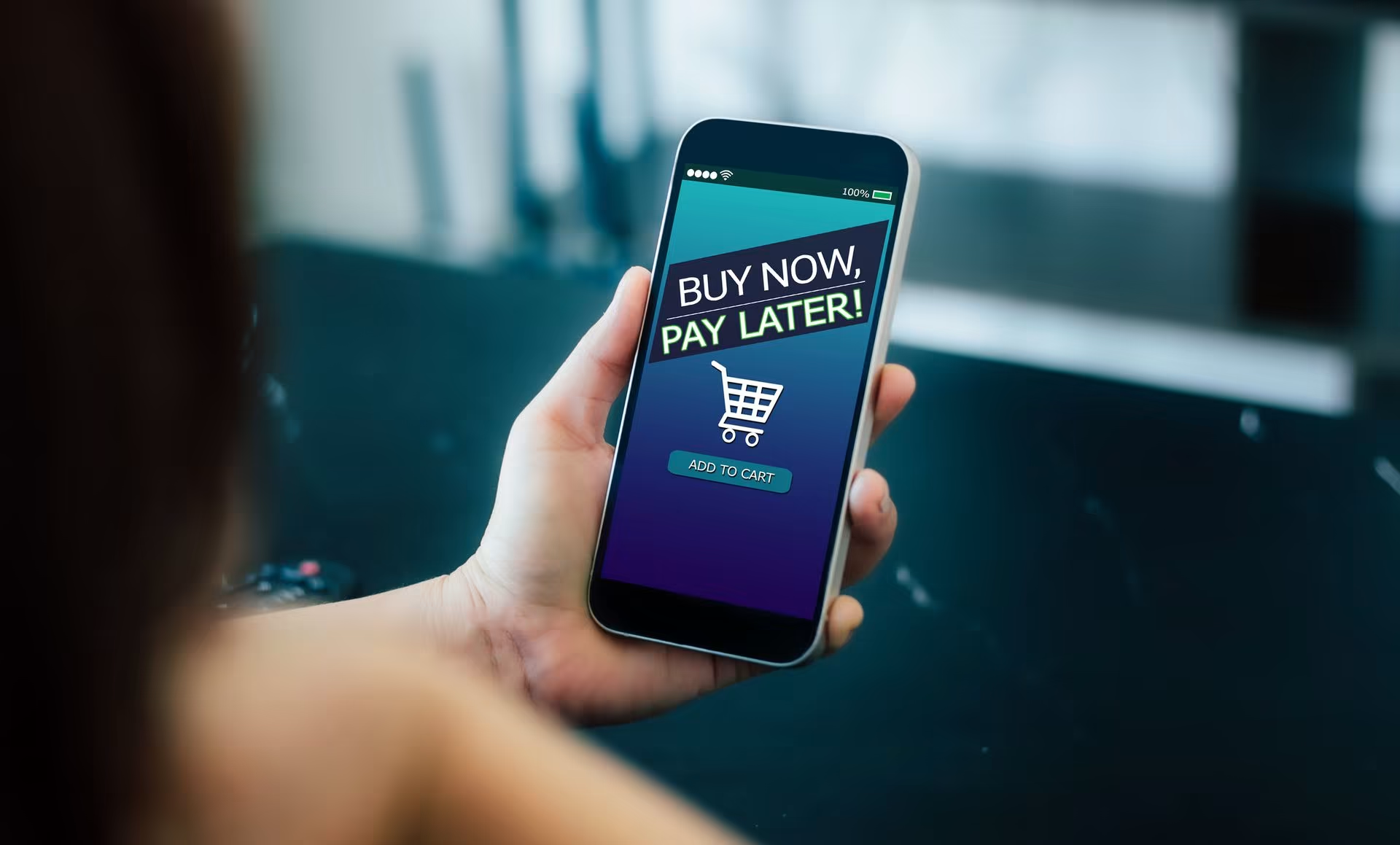
Buy Now, Pay Later services allow consumers to purchase goods immediately and defer payment over a series of installments. Popular in Australia with companies like Afterpay and Zip Co leading the market, BNPL has witnessed exponential growth. According to ASIC's 2020 report, the number of BNPL transactions increased by 90% in just two years, indicating a shift in consumer behavior towards more flexible payment options.
Buy Now, Pay Later schemes have become one of the most influential forces in Australia’s modern financial landscape. What began as a convenient alternative to credit cards has rapidly evolved into a mainstream payment method used by millions of Australians across retail, travel, healthcare, and everyday services. As adoption continues to grow, BNPL is no longer just changing how Australians shop—it is reshaping consumer behaviour, household debt patterns, and the broader economy.
At its core, BNPL appeals to Australians because it feels simple and accessible. Transactions are fast, approvals are frictionless, and repayments are split into manageable instalments. For many consumers, especially younger Australians, BNPL feels safer and more transparent than traditional credit. However, this simplicity masks complex economic consequences that are becoming increasingly visible.
One of the most significant impacts of BNPL is how it alters spending behaviour. Australians using BNPL are more likely to make impulse purchases, spend more per transaction, and shop more frequently. While this boosts short-term retail sales and supports cash flow for businesses, it also shifts consumer decision-making away from long-term budgeting. The result is a consumption-driven model that prioritises immediate access over delayed financial planning.
For retailers, BNPL has become a powerful growth tool. Merchants benefit from higher conversion rates, increased basket sizes, and access to customers who might otherwise delay or avoid purchases. This has made BNPL particularly attractive in Australia’s competitive retail environment. However, merchant fees and reliance on BNPL platforms can erode margins over time, especially for small businesses operating on tight profit thresholds.
The broader economic impact becomes clearer when examining household finances. While BNPL is often positioned as “not credit,” missed payments, late fees, and stacked instalments can create debt stress similar to traditional lending. Many Australians now juggle multiple BNPL accounts simultaneously, increasing the risk of overextension. This fragmentation of debt makes it harder for consumers to track obligations and for regulators to assess systemic risk.
Australia’s financial system is also adapting to BNPL’s rise. Traditional banks and lenders are reassessing their products as BNPL competes directly with credit cards and personal loans. This competition has driven innovation, but it has also blurred the lines between regulated credit and lightly regulated payment services. As BNPL platforms expand into larger purchases and longer repayment terms, their role in the economy increasingly resembles that of conventional financial institutions.
Labour and productivity effects are another emerging factor. Easy access to instalment payments can temporarily support consumer confidence during periods of economic uncertainty. However, if repayment stress increases, it can contribute to reduced disposable income, higher financial anxiety, and lower long-term economic resilience. These effects ripple outward, influencing savings rates, investment behaviour, and overall economic stability.
Regulatory attention is intensifying as policymakers respond to these shifts. Australia is moving toward greater oversight of BNPL schemes to ensure consumer protection, transparency, and responsible lending standards. This regulatory evolution reflects the reality that BNPL is no longer a fringe innovation but a core part of the national financial ecosystem.
The truth about Buy Now, Pay Later in Australia is that it is neither inherently harmful nor purely beneficial. It is a powerful financial tool that amplifies existing behaviours. Used responsibly, it can support cash flow and flexibility for consumers and businesses alike. Used excessively, it can deepen financial vulnerability and distort spending habits across the economy.
As BNPL continues to mature, its influence on Australia’s economy will depend on how consumers, businesses, and regulators adapt. The schemes that thrive will be those that balance convenience with accountability. For Australians, understanding the real economic impact of BNPL is no longer optional—it is essential to navigating a financial system that is changing faster than ever.
Economic Impact and Consumer Behavior
While BNPL services are lauded for enhancing consumer spending, they also raise concerns about encouraging unsustainable financial habits. According to a Reserve Bank of Australia (RBA) study, 30% of BNPL users reported spending more than they otherwise would, potentially leading to increased financial strain.
“The convenience of BNPL can mask the true cost of purchases, leading to impulsive buys,” says Tom Piotrowski, Senior Market Analyst at CommSec. “This can result in financial stress if consumers are not vigilant.”
Regulatory Insights
The Australian Competition & Consumer Commission (ACCC) and the Australian Securities and Investments Commission (ASIC) have raised concerns regarding the lack of regulatory oversight on BNPL schemes. Unlike traditional credit products, BNPL services often bypass responsible lending obligations, leading to fears of increased consumer debt.
ASIC's 2021 report emphasizes the need for stricter regulations, suggesting that BNPL providers should adhere to similar standards as credit card issuers. “Stronger consumer protections are essential to prevent potential financial harm,” the report states.
Case Study: Afterpay's Success and Challenges
Case Study: Afterpay – Balancing Growth and Regulation
Problem: Afterpay, a leading BNPL provider in Australia, faced scrutiny over its rapid expansion and the potential risks of consumer debt.
- The company witnessed a surge in users, with transactions growing by 200% in 2021, yet concerns arose regarding its impact on consumer financial health.
Action: Afterpay implemented measures to enhance consumer protection, such as introducing spending limits and late fee caps.
- They also collaborated with ASIC to ensure compliance with emerging regulatory standards.
Result: Afterpay's proactive approach led to a 15% reduction in late payment fees, while maintaining user growth.
- This strategy not only improved consumer trust but also positioned Afterpay as a responsible industry leader.
Takeaway: The case of Afterpay underscores the importance of balancing growth with regulatory compliance in the BNPL sector. Australian businesses adopting BNPL models should consider similar strategies to mitigate potential risks.
Myths and Realities of BNPL Schemes
Myth: "BNPL is the same as using a credit card."
Reality: Unlike credit cards, BNPL schemes often lack interest charges but impose late fees, potentially leading to higher costs if payments are missed. ASIC's data shows that 21% of BNPL users incurred late fees in the past year.
Myth: "BNPL improves credit scores."
Reality: Most BNPL transactions do not directly affect credit scores, as they typically bypass traditional credit reporting mechanisms. However, missed payments can indirectly impact financial health by leading to debt.
Pros and Cons of BNPL Schemes
- Pros:
- Interest-Free Payments: Offers an interest-free alternative to credit cards.
- Convenience: Simplifies the purchasing process with flexible installment plans.
- Increased Sales: Retailers see higher conversion rates and sales volumes.
- Cons:
- Potential for Debt: Encourages spending beyond means, leading to financial strain.
- Lack of Regulation: Limited oversight can expose consumers to financial risks.
- Late Fees: Accumulated late fees can offset the benefits of interest-free payments.
Future Trends and Predictions
The future of BNPL in Australia appears promising yet challenging. As consumer demand grows, BNPL services are expected to expand into new sectors, including healthcare and education. However, increased regulatory scrutiny is imminent. A report by Deloitte anticipates that by 2026, BNPL providers will need to adapt to stringent regulatory frameworks, akin to those governing traditional financial services.
Conclusion
Buy Now, Pay Later schemes represent a double-edged sword in Australia's financial landscape. While they offer significant benefits in terms of convenience and consumer spending, they also pose risks that require careful management. By understanding these benefits and risks, consumers and businesses can make informed decisions about their use of BNPL services.
Final Takeaway: As the BNPL sector evolves, staying informed on regulatory changes and adopting responsible spending habits is crucial. For businesses, aligning with regulatory expectations and implementing consumer-friendly practices will be key to sustainable growth.
People Also Ask
- How does BNPL impact the Australian economy?
BNPL boosts consumer spending, with a 90% increase in transactions reported by ASIC. However, it may also contribute to household debt.
- What are the biggest misconceptions about BNPL?
Many believe BNPL is similar to credit cards, but BNPL lacks interest charges and credit score impacts, as noted by ASIC.
- What upcoming changes in Australia could affect BNPL?
By 2026, increased regulatory scrutiny is expected, requiring BNPL providers to comply with stricter financial standards.
Related Search Queries
- Buy Now Pay Later Australia market trends
- BNPL regulatory changes Australia
- Impact of BNPL on Australian economy
- Best BNPL providers in Australia
- Future of Buy Now Pay Later in Australia
For the full context and strategies on The Truth About Buy Now, Pay Later Schemes in Australia – How It’s Reshaping Australia’s Economy, see our main guide: Banking Financial Videos Australia.