



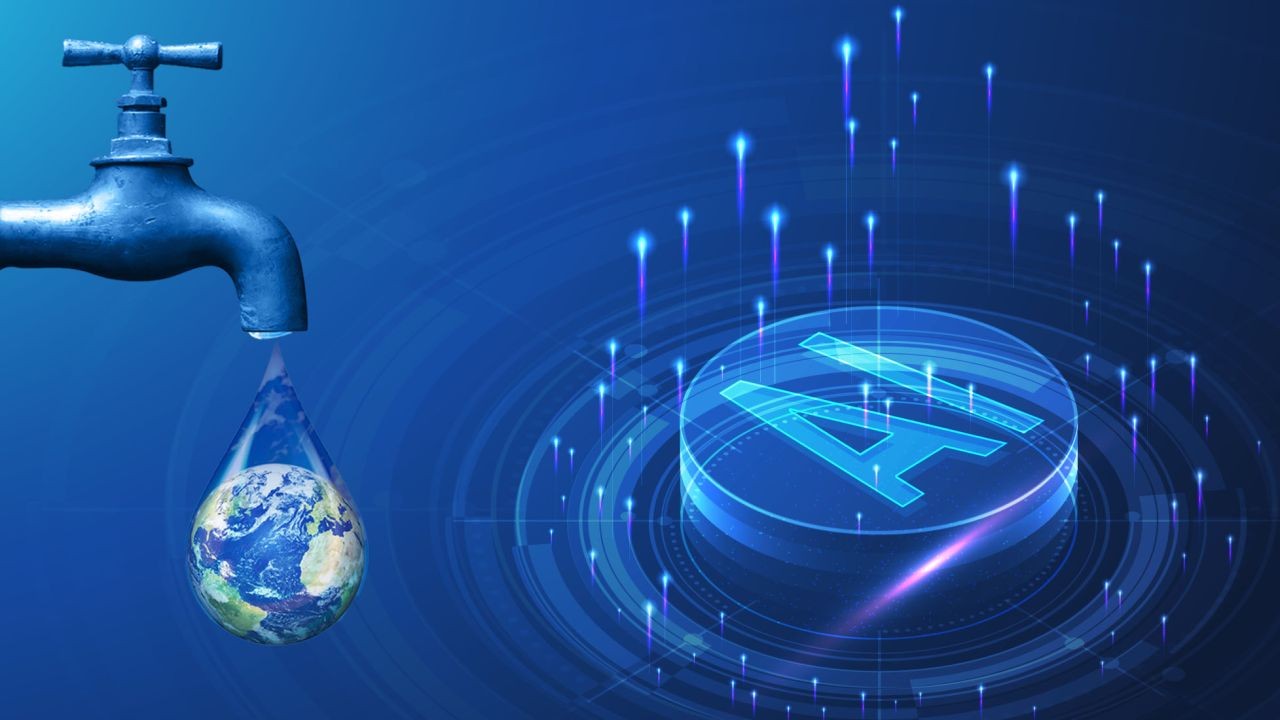
As New Zealand stands at the forefront of addressing environmental challenges, the integration of artificial intelligence (AI) in water conservation emerges as a promising beacon of hope. In a country celebrated for its breathtaking landscapes and abundant natural resources, the efficient management of water is becoming increasingly critical. With climate change intensifying weather patterns and population growth stretching resources, innovative solutions are imperative. Enter AI—a technology that holds the potential to revolutionize how New Zealand manages its water resources, ensuring sustainability for generations to come.
Why Now Is the Time to Take Action
Water has always shaped New Zealand’s economy, environment, and identity. From hydroelectric power and irrigated farming to tourism and urban growth, the country’s prosperity depends on reliable freshwater systems. Yet pressure on those systems is increasing. Climate variability is intensifying droughts in eastern regions, flooding is becoming more frequent elsewhere, and long-standing issues around water quality and allocation remain unresolved. Against this backdrop, artificial intelligence is emerging as a tool that could fundamentally change how New Zealand manages, protects, and values its water.
The urgency is not theoretical. Councils are struggling with ageing infrastructure, farmers face tightening environmental rules, iwi are asserting rights and responsibilities under Te Tiriti o Waitangi, and households are being asked to conserve more while paying higher rates. AI is not a silver bullet, but it offers practical capabilities that align with New Zealand’s scale, data environment, and governance challenges. The question is no longer whether AI has a role to play, but how quickly and responsibly it can be integrated.
New Zealand’s Water Challenge in Context
Freshwater debates in New Zealand are shaped by geography and history. While the country is often perceived as water-rich, supply is unevenly distributed. Regions such as Canterbury and Hawke’s Bay rely heavily on irrigation, drawing from aquifers and rivers that are already under stress. Urban centres face different issues, including leakage from ageing pipes and contamination risks, as highlighted by events such as the Havelock North water crisis.
Policy responses have grown more complex. The National Policy Statement for Freshwater Management requires councils to improve water quality and involve communities, including mana whenua, in decision-making. At the same time, the three waters reform debate has exposed how difficult it is to fund and manage infrastructure at a national level. These pressures create a setting where better information, faster analysis, and more adaptive management are not just desirable but necessary.
This is where AI becomes relevant. Unlike traditional modelling tools, AI systems can process vast volumes of real-time data, detect patterns that humans might miss, and support decisions under uncertainty. For a country managing thousands of catchments, ageing networks, and competing demands, that capability matters.
Smarter Monitoring of Rivers, Aquifers, and Catchments
One of the most immediate applications of AI in water conservation is environmental monitoring. New Zealand already collects significant hydrological data through councils, research institutes, and Crown agencies. The limitation has often been analysis rather than measurement.
AI models can integrate data from sensors, satellites, weather systems, and historical records to provide near real-time insights into river flows, groundwater levels, and water quality indicators such as nitrate concentrations or sediment loads. Instead of relying on periodic sampling and retrospective reporting, managers can identify emerging problems early, such as declining aquifer recharge or pollution spikes after heavy rainfall.
For regions under strict freshwater limits, this matters economically as well as environmentally. Farmers and councils can respond proactively, adjusting water takes or land management practices before breaches occur. From an iwi perspective, improved monitoring also supports kaitiakitanga by providing clearer evidence of ecosystem health and change over time.
Reducing Waste in Urban Water Systems
Urban water loss is a less visible but significant issue across New Zealand. In many councils, a substantial proportion of treated water is lost through leaks before it reaches households. Repairing every pipe is financially unrealistic in the short term, particularly for smaller councils with limited rating bases.
AI offers a way to prioritise action. By analysing pressure data, flow rates, and historical maintenance records, machine learning systems can predict where leaks are most likely to occur and which failures would have the greatest impact. This allows councils to move from reactive repairs to targeted, preventative maintenance.
For ratepayers, the implications are direct. Reduced water loss lowers treatment and pumping costs, delays expensive infrastructure upgrades, and improves supply resilience during dry periods. In the longer term, smarter networks can support population growth without proportionally increasing water extraction, aligning conservation with urban development.
Supporting Farmers Under Environmental Pressure
Agriculture sits at the centre of New Zealand’s water debate. Irrigation underpins productivity in many regions, yet it is also a focal point for concerns about over-allocation and water quality. Farmers are being asked to do more with less, while complying with increasingly detailed reporting and consent requirements.
AI can help reconcile productivity and conservation by improving precision. Systems that combine soil moisture data, weather forecasts, and crop or pasture models can recommend when and how much to irrigate, reducing unnecessary water use. Over time, these systems learn from outcomes, becoming more accurate for specific farms and microclimates.
The benefit is not only environmental. Efficient water use can lower energy costs, improve yields, and reduce the risk of regulatory non-compliance. Importantly, AI-driven tools also generate data that farmers can use to demonstrate good practice to councils, banks, and supply chain partners. In a sector under scrutiny, credible evidence matters.
Infrastructure Planning and Climate Adaptation
Climate change introduces uncertainty that traditional planning models struggle to handle. Historical averages are becoming less reliable guides for future conditions, particularly for rainfall and extreme events.
AI excels in this space by analysing multiple scenarios and continuously updating predictions as new data arrives. For water infrastructure, this means better forecasting of demand, flood risk, and system stress under different climate pathways. Councils and central agencies can use these insights to prioritise investments, balancing short-term affordability with long-term resilience.
For New Zealand, where infrastructure decisions are politically sensitive and capital-intensive, improved forecasting supports more transparent trade-offs. It does not remove the need for judgement, but it provides a clearer picture of consequences, helping decision-makers explain why certain investments or restrictions are necessary.
Risks, Trade-Offs, and Trust
Despite its potential, AI in water management raises legitimate concerns. Data quality remains uneven, particularly in rural areas with limited sensor coverage. Poor inputs can lead to misleading outputs, undermining trust. There are also governance questions about who owns and controls the data, especially when information relates to culturally significant waterways or privately operated systems.
Another risk is over-reliance on automated decision-making. Water management in New Zealand is not purely technical; it is social, cultural, and political. AI can inform decisions, but it cannot resolve value-based debates about allocation, equity, or environmental limits. Treating it as a neutral authority risks sidelining community voices and Treaty obligations.
Experts emphasise that successful adoption depends on transparency. Stakeholders need to understand how models work, what assumptions they make, and where uncertainty remains. Without that clarity, AI may deepen scepticism rather than build confidence.
Why Timing Matters Now
The case for acting now is shaped by convergence rather than novelty. Data availability is improving, computing costs are falling, and pressure on water systems is intensifying. At the same time, reforms in water governance and infrastructure are forcing difficult conversations about funding, accountability, and performance.
Introducing AI incrementally, through pilots and partnerships, allows New Zealand to build capability without locking in rigid systems. Waiting, by contrast, risks entrenching inefficiencies and making future transitions more disruptive. International experience suggests that early adopters shape standards and governance norms, rather than inheriting them.
For a small country, this matters. New Zealand has the opportunity to align AI-enabled water management with its values, including environmental stewardship and Treaty partnership, rather than importing models developed for very different contexts.
Looking Ahead
Over the next three to five years, AI is likely to move from experimentation to integration in New Zealand’s water sector. Its most visible impacts will be in monitoring, leak detection, and irrigation efficiency, but its deeper significance lies in how it reshapes decision-making. Better information can support more honest debates about limits, trade-offs, and responsibilities.
Success will depend on collaboration between councils, central government, iwi, researchers, and technology providers. It will also require investment in skills, so that public agencies understand and govern the tools they use.
AI will not solve New Zealand’s water challenges on its own. But used carefully, it can help the country conserve a resource that underpins its economy, environment, and way of life. At a moment when pressures are mounting and trust is fragile, that capability makes action not just timely, but necessary.
AI and Water Conservation: A New Zealand Perspective
In recent years, New Zealand has witnessed significant shifts in its water management strategies. With agriculture being a cornerstone of the nation's economy, accounting for approximately 6% of GDP (Stats NZ), efficient water usage is crucial. The Ministry of Business, Innovation and Employment (MBIE) highlights that optimizing water resources can enhance productivity while safeguarding the environment. AI offers tools to achieve this balance by predicting water demand, optimizing irrigation, and ensuring efficient distribution.
Voices from the Field
Dr. Sarah Collins, a Preventative Healthcare & Lifestyle Medicine Specialist, notes, "AI can provide unprecedented insights into water usage patterns, helping to mitigate wastage and improve efficiency." Her sentiment is echoed by agricultural entrepreneur John McKenzie, who has successfully implemented AI systems on his Canterbury farm. "Since integrating AI-driven irrigation, we've reduced water consumption by 30% without impacting crop yield," he shares, underscoring the tangible benefits of technology.
Case Study: AI in New Zealand's Agriculture
Problem:
Canterbury, a region known for its agricultural productivity, faced challenges with water scarcity, particularly during dry spells. Farmers struggled to balance water usage with crop needs, leading to inefficient irrigation practices and water wastage.
Action:
To address this, a group of farmers adopted an AI-based irrigation system. The technology utilized data from weather forecasts, soil moisture sensors, and crop growth stages to optimize water distribution. By analyzing these variables, the system provided precise irrigation schedules tailored to each farm's unique conditions.
Result:
- Water usage reduced by 25% on average.
- Crop yields increased by 15% due to optimized irrigation.
- Farmers reported saving over NZD 1 million collectively within the first year.
Takeaway:
This case study illustrates the profound impact of AI in transforming traditional farming practices. New Zealand can lead the way in sustainable agriculture by embracing technology that conserves resources while boosting productivity.
Debate: Promise vs. Peril
While the promise of AI in water conservation is undeniable, it is not without challenges. Advocates argue that AI enhances precision in water management, driving efficiency and sustainability. Critics, however, caution against over-reliance on technology, citing concerns about data privacy and the potential for job displacement in traditional sectors.
Pros:
- Efficiency Gains: AI reduces water wastage and improves resource allocation.
- Cost Savings: Long-term savings through optimized water usage.
- Environmental Benefits: Supports sustainable practices and reduces ecological impact.
Cons:
- Initial Investment: High setup costs can be a barrier for small-scale farmers.
- Data Privacy: Concerns about data usage and security.
- Technology Dependence: Risk of over-reliance on AI systems.
Future Trends and Predictions
As AI technology continues to evolve, its application in water conservation will expand. According to a Deloitte report, by 2028, AI-driven water management systems will be standard practice in 70% of New Zealand's agricultural operations. This shift promises not only to enhance efficiency but also to create new job opportunities in tech and sustainable agriculture.
Conclusion: Charting a Sustainable Future
The integration of AI in water conservation presents a compelling opportunity for New Zealand to lead in sustainable resource management. By embracing these innovations, the nation can ensure its water resources are managed efficiently, supporting both economic growth and environmental stewardship. As AI continues to advance, staying informed and adaptable will be key to harnessing its full potential.
What's your perspective on AI and water conservation? Share your thoughts in the comments below!
People Also Ask
- How does AI impact water conservation in New Zealand? AI enhances water conservation by optimizing resource allocation, predicting demand, and reducing wastage, leading to significant cost savings and environmental benefits.
- What are the challenges of implementing AI in water management? Key challenges include high initial costs, data privacy concerns, and the potential for over-reliance on technology.
- What future changes could affect AI's role in water conservation? Policy updates and technological advancements will likely expand AI's role, making it integral to New Zealand's agricultural operations by 2028.
Related Search Queries
- AI water management solutions New Zealand
- Sustainable agriculture NZ
- Water conservation technologies in NZ
- AI in farming New Zealand
- Environmental impact of AI in agriculture
For the full context and strategies on How AI Can Help in Water Conservation in New Zealand – Why Now Is the Time to Take Action, see our main guide: Future Of Streaming Why New Zealand Needs Local Innovation.