




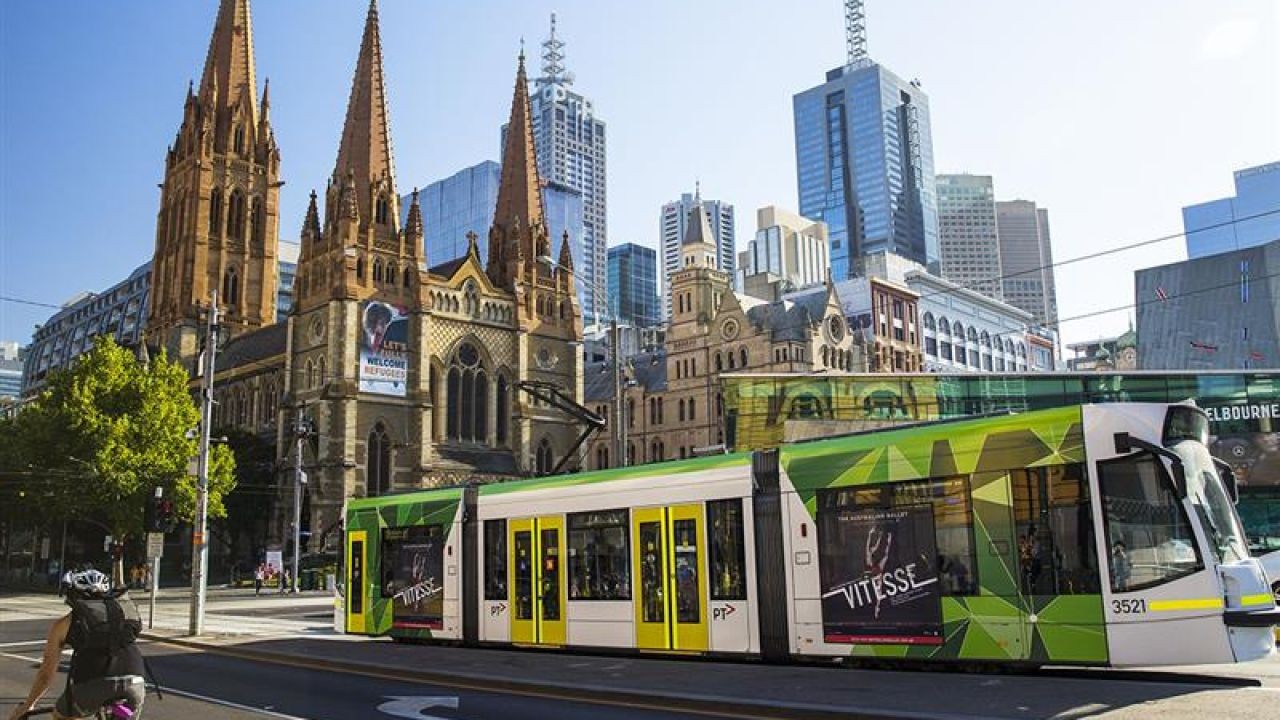
To understand the scale of Melbourne's tram network, one must first appreciate its sheer physical presence. It is not merely a transit system but a defining urban fabric, a kinetic architecture that weaves through the city's heart and suburbs with a quiet, persistent rhythm. With over 250 kilometers of double track, more than 1,700 stops, and a fleet nearing 500 trams, it stands not just as the largest operational tram network in the world but as a singular civic institution. Its survival and expansion, while other global cities abandoned their streetcars, is a story of historical foresight, sustained public investment, and a unique urban geography that made the choice not just sentimental, but economically rational.
The Historical Foundation: A Legacy of Foresight
The network's preeminence is rooted in a decision made decades ago. In the mid-20th century, as cities like Sydney and Adelaide were ripping up their tracks in favor of buses and private automobiles, Melbourne held firm. This was not mere nostalgia. The city's wide, radial boulevards, laid out in a Hoddle Grid and extended along former colonial land grants, provided an ideal right-of-way. The infrastructure, much of it originally built by private companies before being consolidated, represented a sunk capital cost that state planners, even in the austere post-war period, were reluctant to discard. The Victorian government's commitment to public ownership under the Melbourne & Metropolitan Tramways Board (MMTB) ensured a unified, strategic approach to maintenance and gradual modernization, avoiding the fragmentation that doomed systems elsewhere.
An Economic and Urban Planning Imperative
The network's retention proved prescient from an urban economics perspective. It created a structural constraint that actively shaped Melbourne's development, encouraging higher-density corridors along tram lines and reducing the city's absolute dependence on the automobile. This has had long-term implications for land use, property values, and sustainability. According to a 2021 report from Infrastructure Victoria, every dollar invested in public transport can generate up to four dollars in wider economic benefits through improved productivity, agglomeration effects, and health outcomes. The tram network is a living asset in this calculus. Its continued expansion into growth areas, such as the recent extension to Docklands and the proposed link to Fishermans Bend, is a direct application of this principle, using transit to catalyze development and connect new employment precincts to the broader labour market—a critical consideration for Australia's second-largest economy.
A Framework for Understanding Its Scale: The Three Pillars
Analysing the network's size requires looking beyond simple route length. Its scale is built on three interconnected pillars:
- Geographic Penetration: Unlike metro systems that act as a skeletal framework, trams provide a capillary-like reach deep into inner and middle suburbs. From Brunswick to St Kilda, from Bundoora to Carnegie, the network services a swath of Melbourne that houses a significant portion of its population and commercial activity.
- Service Intensity: The high-frequency "turn-up-and-go" service on core routes, especially the Bourke Street and Swanston Street spines, functions as a surface-level subway. During peak periods, trams can arrive as often as every 3-4 minutes, moving a volume of people that would require dozens of bus routes.
- Cultural Embeddedness: Its scale is also measured in its cultural footprint. The tram is an icon, a symbol of the city itself. This intangible asset creates a powerful feedback loop of public support and political will for its preservation and funding, insulating it from the whims of short-term budgetary pressures.
Case Study: Route 96 – A Microcosm of Strategic Value
Problem: By the early 2000s, Route 96, running from East Brunswick to St Kilda Beach, was a workhorse but suffered from chronic congestion, slow speeds due to mixed traffic, and unreliable scheduling. It serviced key activity centres—the University of Melbourne, the CBD, the St Kilda Road office precinct, and the St Kilda tourist strip—but was failing to meet growing demand efficiently, risking a modal shift back to cars.
Action: The solution was a phased, multi-billion dollar transformation into a "light rail" corridor. Key actions included the segregation of tracks from general traffic, signal priority at intersections, platform stops for level boarding, and the introduction of high-capacity E-Class trams. This was not merely an upgrade but a re-engineering of the corridor's operational philosophy, treating it as a dedicated rapid transit line.
Result: The outcomes were transformative. Travel times were reduced by over 20%. Passenger capacity per tram increased by up to 75% with the new rolling stock. Reliability soared, making the service a predictable backbone for commuters. Critically, it spurred commercial and residential development along its route, a tangible demonstration of value uplift driven by high-quality public transport. The success of Route 96 became the blueprint for other strategic corridor upgrades, proving the network's capacity for modernisation without sacrificing its fundamental character.
The Regulatory and Funding Landscape
The network's operation sits within a complex framework governed by the Victorian Department of Transport and Planning, with service delivery contracted to Yarra Trams. Funding is a mix of state government operational subsidies, fare revenue, and federal infrastructure grants. This interplay is crucial. Major upgrades, like the Next Generation Tram project or network expansions, often rely on federal funding through bodies like Infrastructure Australia, which requires rigorous cost-benefit analyses. The network's ability to consistently demonstrate strong benefit-cost ratios—often above 1.5, as seen in assessments for recent projects—is a testament to its embedded utility. Furthermore, the Australian Competition & Consumer Commission (ACCC) indirectly influences the landscape by ensuring procurement and contracting processes for rolling stock and infrastructure are competitive, aiming to secure value for the significant public expenditure involved.
Common Myths and Mistakes in Perception
Myth: "Trams are slow and hinder traffic." Reality: This is a function of design, not an inherent flaw. On mixed-traffic streets, this can be true. However, on prioritised corridors like St Kilda Road or in the CBD's tram-only lanes, trams move thousands of people per hour far more efficiently than the equivalent number of cars. The mistake is judging a mass transit vehicle by the metric of individual car speed rather than total corridor person-throughput.
Myth: "The network is a relic, incompatible with a modern city." Reality: The opposite is true. Its fixed-track nature provides development certainty, a principle now embraced globally as Transit-Oriented Development (TOD). Cities worldwide are spending billions to reinstall what Melbourne never removed. The network is a pre-existing, low-emission mass transit system perfectly aligned with 21st-century sustainability goals.
Myth: "Buses could do the same job more flexibly and cheaply." Reality: While buses play a vital complementary role, they lack the permanent infrastructure that spurs private investment. A bus route can be changed overnight; a tram line signals a permanent commitment. Data from the Reserve Bank of Australia's analysis of infrastructure spending highlights that fixed-line public transport investments generate more significant and longer-lasting land value uplift and productivity gains than flexible bus services, due to this permanence and higher perceived service quality.
Future Trends & Strategic Challenges
The network's future will be defined by how it adapts to several converging trends. Electrification is a given advantage, but the next phase involves further segregation from traffic, digitalisation for real-time management, and accessibility upgrades. The major strategic challenge is integration: seamlessly connecting with the Metro Tunnel project, suburban rail loop, and bus services to create a unified mesh. Furthermore, as Melbourne's population grows, pressure to expand the network further into middle suburbs will clash with funding constraints. The solution may lie in value-capture mechanisms, where a portion of the increased land value and tax revenue generated by new tram lines helps fund their construction—a model being explored in various Australian infrastructure policies.
Final Takeaways & Call to Action
- Melbourne's tram network is large not by accident but by sustained, strategic choice. Its scale is a product of historical preservation, geographic advantage, and continuous incremental investment.
- It functions as critical economic infrastructure, shaping urban form, supporting property values, and enabling the efficient movement of a large workforce, directly contributing to Victoria's economic output.
- The network's true metric of success is person-movement per corridor, not vehicle speed. Evaluating it through the lens of a single-occupancy car is a fundamental error.
- Its future relies on continued prioritisation and integration within a broader multi-modal transport plan, ensuring it evolves from a iconic relic into a dynamic, modern rapid transit system.
For the critical observer, the tram network offers a masterclass in long-term urban planning. Its story urges us to look beyond the immediate cost of maintaining legacy systems and to perceive their embedded value—cultural, economic, and functional. The next time you see a tram gliding down Swanston Street, consider it not as a moving postcard, but as a vital artery pumping life into the city, a testament to the foresight that its continued expansion represents. What other legacy infrastructure in our cities are we undervaluing today?
People Also Ask
How does Melbourne's tram network impact local businesses? The network delivers high-foot-traffic, captive audiences directly to doorsteps along its corridors. Businesses on tram routes benefit from constant visibility and accessibility, which can translate to higher commercial rents and retail viability, creating vibrant, walkable high streets that are less dependent on car parking.
What are the biggest challenges facing the network's expansion? The primary challenges are funding constraints and street space allocation in already congested areas. Expanding requires significant capital investment and often difficult decisions about re-allocating road space from private vehicles to dedicated tram lanes, a process that requires strong political will and community consultation.
How does Melbourne's network compare to modern light rail systems? While some sections (like Route 96) operate as modern light rail with full priority, much of the network operates in mixed traffic, which limits speed and reliability. The strategic direction is to gradually upgrade key corridors to light rail standards, blending the reach of a traditional tram with the performance of a dedicated rapid transit line.
Related Search Queries
- Melbourne tram network map history
- Yarra Trams vs Melbourne Metro
- Cost to build a tram line Melbourne
- Melbourne tram route planner frequency
- Future tram extensions Melbourne 2025
- Largest tram network in world comparison
- Economic benefits of trams Melbourne
- Melbourne tram manufacturing Australia
- Accessibility on Melbourne trams
- Melbourne tram system vs European cities
For the full context and strategies on Why Melbourne’s Trams Are One of the Largest Networks in the World – (And Why You Should Care in 2026), see our main guide: Corporate Commercial Law Videos Australia.