




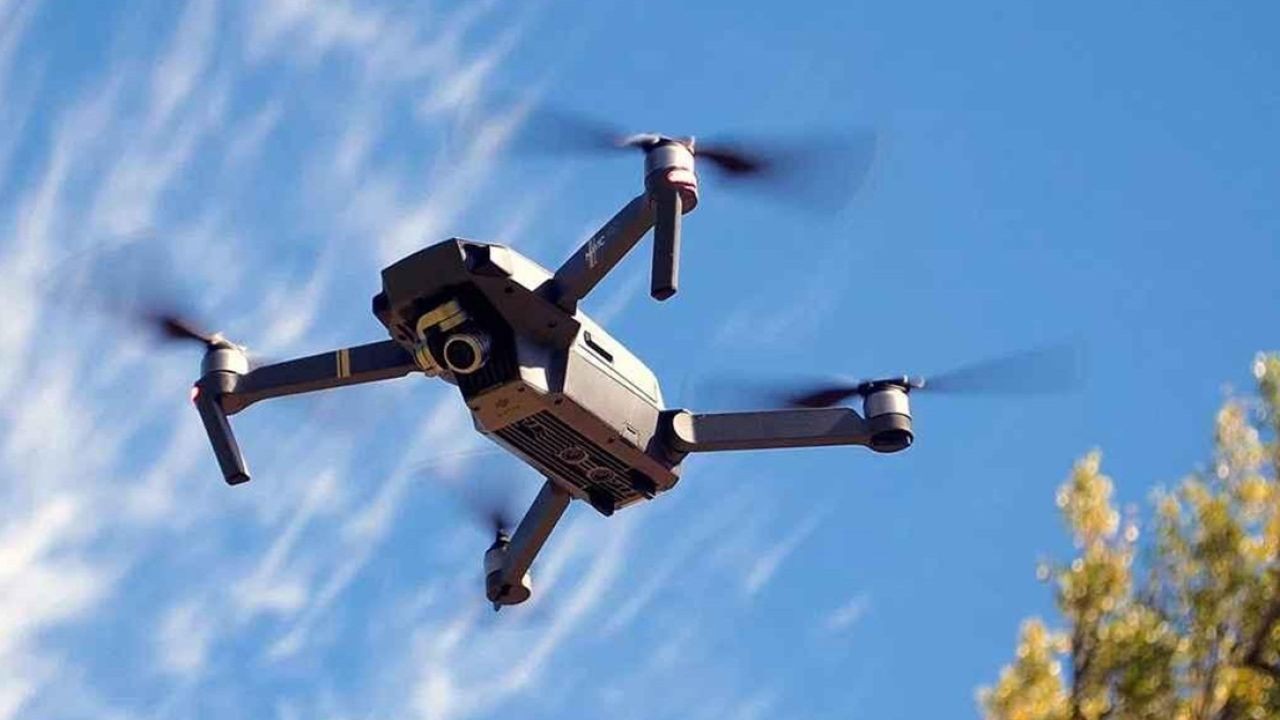
The recent incident in which a Russian drone, reportedly downed near the Ukrainian port of Izmail, detonated on Romanian territory represents a significant and concerning escalation. While the Romanian Ministry of National Defence initially denied a direct breach, subsequent confirmation by President Klaus Iohannis of debris found within Romania's borders underscores a precarious new reality for NATO's eastern flank. This event transcends immediate geopolitical posturing; it introduces a tangible, kinetic variable into the regional security calculus with potential second- and third-order effects that demand rigorous, evidence-based analysis. For the global community, including geographically distant nations like Australia, the implications are not merely abstract. They intersect with critical domains of national resilience, supply chain integrity, and the very frameworks that underpin international stability—systems upon which Australia's export-driven economy and strategic posture heavily depend.
The Anatomy of an Escalation: From Denial to Confirmation
The sequence of events following the drone incident is a textbook case of crisis communication under extreme pressure. Initial official denials, likely rooted in a desire to avoid premature escalation or public alarm, were swiftly overtaken by physical evidence and high-level political confirmation. This pattern highlights the inherent challenge for sovereign states when confronted with ambiguous, low-yield kinetic events that fall below the traditional threshold of an armed attack. The Romanian government's ultimate characterization of Moscow's actions as "irresponsible" is a deliberate diplomatic formulation. It signals a breach of trust and international norms without, at this juncture, constituting an explicit invocation of NATO's Article 5 collective defence clause. The calibrated response—condemnation, summoning of the Russian ambassador, and close consultation with allies—indicates a strategy of measured deterrence aimed at preventing a cycle of escalation while unequivocally marking a red line.
Operational Realities and the "Grey Zone" Threat
This incident is emblematic of modern "grey zone" conflict tactics, where non-state actors or state-backed forces employ deniable, asymmetric methods to probe defences, sow instability, and achieve strategic aims without triggering a full-scale military response. The use of a relatively low-cost drone to violate NATO airspace, even if ostensibly aimed at a neighbouring target, is a low-risk, high-reward manoeuvre for an aggressor. It tests alliance cohesion, response protocols, and public resolve. For military planners in Canberra and other allied capitals, it reinforces the necessity of investing in integrated air and missile defence systems capable of tracking and neutralizing small, low-altitude threats—a capability gap identified in several recent Australian Defence Force (ADF) capability reviews. The 2023 Defence Strategic Review (DSR) explicitly notes the need for the ADF to hold potential adversary forces and infrastructure at risk further from Australia's shores, a doctrine that inherently requires robust defensive systems to counter reciprocal threats.
Global Supply Chain Repercussions: A Pulse Point for Australia
The immediate context of the drone breach—the targeting of Ukrainian port infrastructure on the Danube River—directly impinges upon one of the last remaining viable corridors for global grain exports. Prior to the conflict, Ukraine and Russia accounted for a substantial share of the world's wheat, barley, and sunflower oil exports. Disruptions here have a cascading effect on global food prices and security. While Australia is a major agricultural exporter and stands to benefit competitively from higher global prices in the short term, the long-term instability is deleterious for all. Volatile commodity markets complicate forecasting for Australian farmers and agribusinesses, impacting planting decisions and investment.
More broadly, this event is a stark reminder of the fragility of globalized supply chains in the face of regional conflicts. Australia's economy, particularly its export sectors in resources, agriculture, and education, is profoundly dependent on secure maritime routes and stable international trade norms. A prolonged conflict that sporadically closes key maritime chokepoints or air corridors, as seen in the Black Sea, increases shipping insurance premiums, lengthens delivery times, and contributes to inflationary pressures. The Reserve Bank of Australia (RBA) has repeatedly cited global supply chain disruptions as a significant contributor to domestic inflation, noting in its February 2024 Statement on Monetary Policy that "conflicts in Ukraine and the Middle East pose upside risks to inflation via energy prices and supply chains." This drone incident, a micro-event in a macro-conflict, perpetuates the very uncertainty that central banks struggle to mitigate.
The Australian Context: Strategic Autonomy and Alliance Burden-Sharing
For Australia, situated far from the Black Sea but deeply embedded in the Western alliance system, the Romanian incident presents a complex dual narrative. Firstly, it validates the core strategic direction outlined in the DSR: that Australia must enhance its self-reliance or "strategic autonomy" in an increasingly contested world. Events in Europe demonstrate that even core alliance territories are not immune to spillover effects. This reinforces the Australian government's push for a domestic missile manufacturing capability, bolstered northern base defences, and a more self-sufficient defence industrial base—initiatives that have gained bipartisan support.
Secondly, it intensifies the debate on alliance burden-sharing. As a key NATO partner through its ties with the United States and the United Kingdom (via AUKUS), Australia faces implicit and explicit expectations to contribute to collective security efforts that extend beyond its immediate region. This is not merely a military contribution but an economic and diplomatic one. Sustained Australian support for Ukraine, including significant humanitarian and military aid packages, represents a tangible commitment to upholding the international rules-based order. The Australian Treasury's 2023-24 Budget documents allocate over $910 million in assistance to Ukraine, a figure that encompasses both military support and humanitarian aid, underscoring the material cost of this commitment. This expenditure exists in tension with domestic fiscal pressures, creating a policy environment where the value of distant geopolitical engagements must be continually justified to the public.
Case Study: The Global Grain Initiative & Australian Market Dynamics
Problem: Following Russia's invasion of Ukraine in February 2022, the blockade of Black Sea ports triggered a global food security crisis, spiking wheat prices to near-record levels. While Australia, as a major wheat exporter, saw initial economic benefit, the volatility threatened long-term market stability and humanitarian outcomes in import-dependent nations in the Indo-Pacific, a region of primary strategic interest to Australia.
Action: Australia played a key diplomatic and logistical role in supporting alternatives. This included advocating for the UN-brokered Black Sea Grain Initiative (which Russia later suspended) and, crucially, working with partners to develop the "Grain from Ukraine" initiative, utilizing overland routes through Eastern Europe. Furthermore, Australian grain exporters rapidly pivoted to fill supply gaps, increasing shipments to key markets in Southeast Asia and the Middle East. Domestically, the Australian government fast-tracked approvals for bulk grain exports and provided market intelligence through the Australian Export Grains Innovation Centre (AEGIC).
Result: Australia's wheat exports reached a record 28 million tonnes in the 2022-23 season, according to the Australian Bureau of Statistics (ABS). While prices have moderated from their peak, they remain historically elevated, contributing significantly to farm gate revenues. Strategically, Australia bolstered its reputation as a reliable supplier in the Indo-Pacific, deepening trade ties and demonstrating statecraft that aligns economic and strategic interests.
Takeaway: This case demonstrates how a regional security event (the war) and a tactical incident (a drone breaching a neighbouring NATO state) are linked to global commodity flows. Australia's response highlights the necessity of agile, multi-domain statecraft—combining diplomatic, economic, and logistical tools—to navigate instability. The lesson for Australian policymakers is that investment in supply chain resilience and diversified export corridors is not merely an economic policy but a core component of national security.
Pros and Cons: Australia's Stance on the Ukraine Conflict and Spillover Events
✅ Pros of Australia's Committed Stance:
- Upholding the Rules-Based Order: Consistent support for Ukraine reinforces the principle that sovereign borders cannot be violated by force, a norm critical for a trading nation like Australia that depends on stable international law.
- Strengthening Alliance Credibility: Demonstrating resolve in Europe solidifies Australia's standing within key partnerships like AUKUS and with NATO, potentially yielding greater diplomatic capital and technology-sharing benefits.
- Strategic Signaling to the Indo-Pacific: A firm stance against coercion in Europe serves as a deterrent signal to potential aggressors in Australia's immediate region, demonstrating a willingness to support partners under threat.
- Economic Opportunities: As seen in the grain case study, conflicts can create short-to-medium term market openings for Australian exporters in energy, critical minerals, and agriculture, boosting specific sectors.
❌ Cons and Risks of Australia's Stance:
- Direct Economic Costs: Financial contributions to Ukraine (nearly $1 billion) and higher defence spending (driven by the DSR) impose a fiscal burden, competing with domestic priorities like healthcare and cost-of-living relief.
- Inflationary Pressure: As noted by the RBA, continued conflict-driven energy and supply chain volatility complicates the fight against domestic inflation, impacting all Australian households and businesses.
- Risk of Entanglement: Deepening involvement, even as a non-NATO member, creates a low-probability but high-impact risk of being drawn into a wider conflict, particularly if a future incident triggers a direct NATO-Russia confrontation.
- Resource Diversion: Strategic focus and military assets (e.g., intelligence, surveillance) dedicated to supporting European security could, in theory, divert attention from primary regional challenges in the Indo-Pacific, though current policy strongly argues against this.
Common Myths and Mistakes in Assessing Spillover Conflicts
Myth 1: "Events in Eastern Europe are irrelevant to Australia's security." Reality: This is a dangerous misconception. The global order is interconnected. An erosion of sovereignty norms in Europe emboldens revisionist actors worldwide. Furthermore, as a top-20 trading nation, Australia's prosperity is directly tied to stable global commons, secure shipping lanes, and predictable international law—all undermined by conflicts like that in Ukraine.
Myth 2: "Providing military aid to Ukraine depletes Australia's own defence stocks, making us less secure." Reality: While a valid concern, Australian aid has been carefully calibrated. It primarily comprises older generation equipment (e.g., M113 APCs, Bushmasters) slated for replacement or monetary contributions for purchasing new gear. This process accelerates the renewal of the ADF's own inventory while supporting an ally, a point explicitly made by the Department of Defence in its aid announcements.
Myth 3: "A diplomatic solution is always preferable, so Australia should push Ukraine to negotiate concessions." Reality: This mistake conflates the desire for peace with the conditions for a sustainable one. Pushing for premature negotiations that legitimize territorial conquest sets a catastrophic precedent for the Indo-Pacific, where multiple territorial disputes exist. Australia's official position, supporting Ukraine's sovereignty and territorial integrity, is aligned with its long-term interest in a region where might does not make right.
The Future of Contested Logistics and National Resilience
The drone incident in Romania is a prologue to a future where logistical hubs and supply lines become primary battlefields. For Australia, this foreshadows challenges closer to home. The future security environment will likely see increased coercion against trade routes in the South China Sea or pressure on Pacific Island nations hosting critical infrastructure. The key trend is the "weaponization of interdependence." In response, Australia must double down on the resilience pillars identified in its national strategies:
- Economic Security: Diversifying trade partners, building sovereign capability in critical goods (e.g., fuel, medicines), and hardening critical infrastructure against cyber and physical attack.
- Energy Security: Accelerating the transition to decentralized renewable energy grids to reduce vulnerability to concentrated supply shocks.
- Defence Industrial Base: Executing the DSR's vision for a more self-sufficient defence industry, reducing reliance on fragile global supply chains for essential munitions and platforms.
Expert analysis, such as that from the Australian Strategic Policy Institute (ASPI), consistently argues that the next decade will be defined by "contestability" in all domains—logistical, informational, and military. The Romanian drone breach is a small but potent data point in this emerging pattern.
Final Takeaways and Call to Action
- The Normative Frontline is Everywhere: An incident on NATO's border is a stress test for the international system that sustains Australian security and prosperity. Complacency is a strategic vulnerability.
- Economics is Security: The RBA's inflation warnings directly link distant conflicts to Australian household budgets. National resilience policies must address economic and supply chain vulnerabilities with the same seriousness as military threats.
- Burden-Sharing is Complex: Australia's support for Ukraine represents a calculated investment in global stability, but it requires ongoing, transparent dialogue with the public about the costs and the even greater costs of inaction.
- Prepare for Spillover: The "grey zone" tactics seen in Europe will be employed in the Indo-Pacific. Australia's investments in domain awareness, cyber defences, and counter-disinformation capabilities are not optional extras but core requirements.
The condemnation from Bucharest is not just a regional diplomatic statement; it is a canary in the coal mine for a world where geopolitical friction generates unpredictable kinetic sparks. For Australian researchers, policymakers, and business leaders, the imperative is clear: deepen the analysis of systemic interdependencies, pressure-test national strategies against distant shocks, and build the tangible resilience that will allow Australia to navigate an era of persistent contest. The debate is no longer about whether global events affect Australia, but how quickly and through which channels the effects will manifest—and how prepared we are to respond.
People Also Ask (FAQ)
How could a drone incident in Romania impact Australian businesses? It exacerbates global supply chain uncertainty and volatility in key commodity markets (like grain and energy), affecting input costs, shipping insurance, and long-term planning for Australian exporters and importers, contributing to the inflationary pressures monitored by the RBA.
What is Australia's strategic interest in the Ukraine conflict? Australia has a fundamental interest in upholding the international rules-based order that prohibits the use of force to change borders. A failure to support this principle in Europe would undermine its credibility in the Indo-Pacific, where Australia faces its own regional security challenges.
Is Australia's military support for Ukraine weakening its own defences? The Australian government states its aid is carefully managed to avoid degrading ADF operational capability, often providing equipment scheduled for replacement. This process can accelerate the modernization of Australia's own inventory while supporting a strategic cause.
Related Search Queries
- Romania Russia drone incident NATO Article 5 implications
- Impact of Ukraine war on Australian wheat exports
- Australia military aid to Ukraine cost breakdown
- Global supply chain disruption inflation Australia 2024
- Australian Defence Strategic Review resilience logistics
- Black Sea grain deal Australia role
- NATO partners Australia Ukraine support
- RBA statement on geopolitical risks inflation
- Drone warfare threats to civilian infrastructure
- Australia strategic autonomy meaning AUKUS
For the full context and strategies on Romania condemns 'irresponsible' Moscow after Russian drone breach – Why It’s the Buzzword of 2026 in Australia, see our main guide: Investor Pitch Videos Australia.