





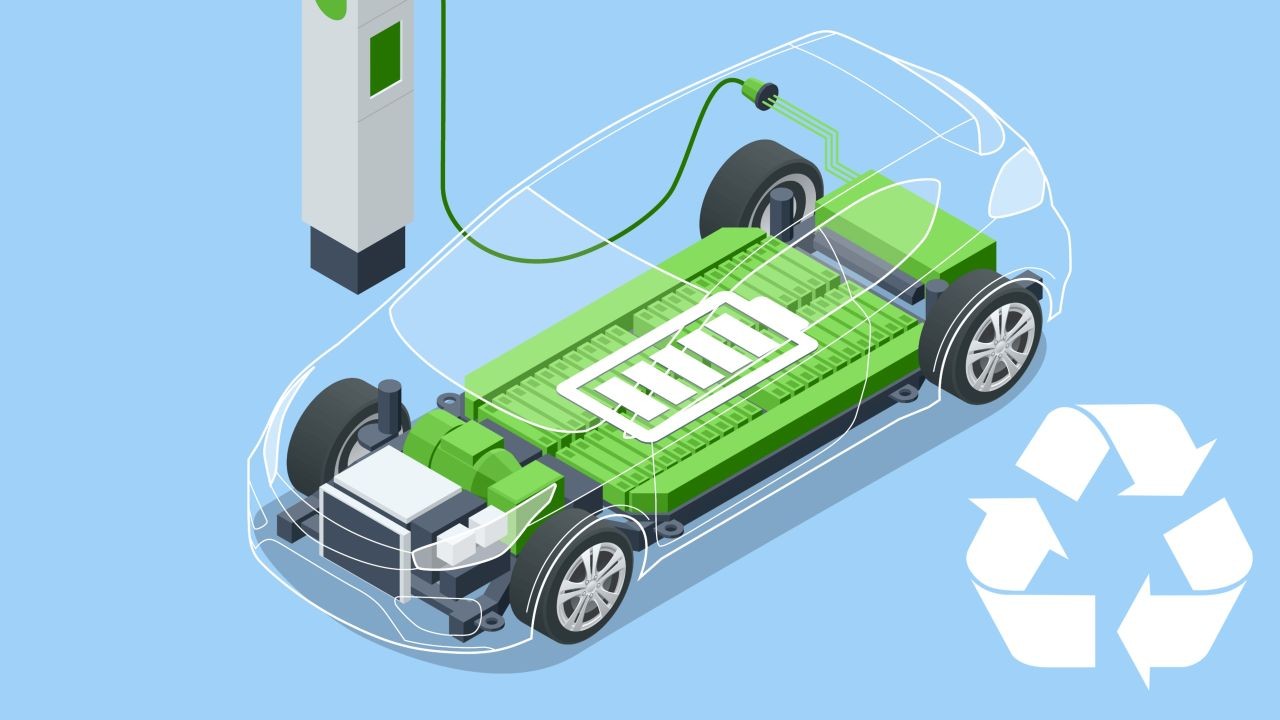
The global electric vehicle revolution is often framed as a clean, linear progression from fossil fuels to a sustainable future. This narrative is dangerously incomplete. It ignores the looming, multi-tonne elephant in the room: the impending tidal wave of end-of-life EV batteries. By 2030, this is not an environmental side-note; it will be a core determinant of economic viability, supply chain sovereignty, and true sustainability for the entire automotive and energy sectors. For infrastructure consultants, this represents a seismic shift—a move from planning charging networks to designing the circulatory system of a new industrial metabolism. The businesses and nations that master this complex value chain will capture immense strategic advantage, while those that treat it as an afterthought will face crippling costs and regulatory backlash.
The Looming Scale of the Challenge: A Data-Driven Imperative
To understand the transformation, one must first grasp the scale. The International Energy Agency projects there could be over 350 million electric cars on roads globally by 2030. In Australia, while adoption has lagged behind global leaders, the inflection point is approaching. The Australian Bureau of Statistics reports a 185% increase in new battery electric vehicle registrations in the two years to January 2024. This exponential growth translates into a predictable, and massive, waste stream. CSIRO estimates Australia will have accumulated between 80,000 and 188,000 tonnes of end-of-life EV battery modules by 2035. This is not a distant problem; it is a logistical and economic tsunami on a 6-10 year horizon, dictated by the lifespan of today's new EV sales.
The critical insight for executives is that this waste stream is also a resource goldmine. A modern EV battery contains high concentrations of lithium, cobalt, nickel, and manganese—materials that are geopolitically sensitive, expensive, and subject to volatile supply chains. The European Commission's Critical Raw Materials Act explicitly targets recycling to supply 25% of the EU's needs. For Australia, a nation rich in mineral resources but with minimal onshore refining and battery manufacturing, this presents a dual mandate: avoid becoming a dumping ground for hazardous waste, and capture a share of this secondary resource value chain. The strategic question is whether Australia will be a passive consumer or an active player in this new circular economy.
How It Works: The Technical and Economic Evolution of Recycling
The recycling landscape is evolving from crude, low-recovery processes to sophisticated, high-yield material harvesting. The industry is converging on a hybrid model that maximizes both economic return and material recovery.
The Three-Stage Value Extraction Framework
- Stage 1: Diagnostics & Re-X (Reuse, Repurpose, Remanufacture): The highest-value pathway is to avoid full recycling altogether. Advanced diagnostics assess battery state-of-health (SOH). Packs with >70-80% SOH can be remanufactured for vehicle use. Those with 50-70% SOH are prime candidates for second-life applications, such as stationary energy storage for commercial buildings or grid support—a market of immense relevance to Australia's unstable grid. This extends asset life, defers recycling costs, and creates new revenue streams.
- Stage 2: Mechanical Processing & Black Mass Production: For batteries unsuitable for second life, safe disassembly is critical. Automated lines shred battery modules, followed by sieving, magnetic separation, and air classification. This yields a "black mass"—a powder containing the valuable cathode and anode materials. This step is largely commoditized; the value is captured in the next stage.
- Stage 3: Hydrometallurgical & Direct Recycling: This is the high-tech frontier. Hydrometallurgy uses chemical leaching to dissolve the black mass into a solution, from which individual metals (lithium, cobalt, nickel) are selectively precipitated at purities exceeding 99.5%, suitable for new battery cathodes. The more revolutionary, but less mature, "direct recycling" method aims to recover and rejuvenate the cathode crystal structure itself, drastically reducing energy use and processing costs. The commercial leader who perfects this will have a decisive cost advantage.
The Australian Context: A Strategic Crossroads
Australia's position is unique. We are the world's largest lithium miner, yet we ship almost all of it overseas as spodumene concentrate for processing. The ACCC, in its 2023 inquiry into March quarter 2024 report, noted concerns about the concentration of global battery supply chains and the strategic risks this poses. Developing a domestic recycling capability is not just an environmental play; it is a sovereign resilience strategy. It creates a domestic source of critical minerals, insulating local manufacturers (when they emerge) from global price shocks and trade disputes. Furthermore, the Australian Taxation Office's (ATO) stance on waste and product stewardship liabilities will increasingly make producers financially responsible for end-of-life management, turning recycling from a cost centre into a strategic necessity for OEMs selling into the Australian market.
Case Study: Li-Cycle – Scaling a Hub-and-Spoke Model Globally
Problem: Li-Cycle, a North American leader, identified that transporting spent EV batteries over long distances was costly, hazardous, and logistically fraught. The industry needed a decentralized, scalable solution to handle geographically dispersed battery waste efficiently and economically.
Action: Li-Cycle pioneered a "Hub and Spoke" industrial model. Their "Spoke" facilities are located near key EV markets. These Spokes perform safe discharge, dismantling, and mechanical processing to produce black mass. This inert, compact material is then transported to centralized "Hub" facilities. These Hubs house the complex, capital-intensive hydrometallurgical plants that convert black mass into battery-grade materials. This model minimizes transport risks, allows for regional scaling, and achieves significant economies of scale at the Hub level.
Result: Li-Cycle has rapidly scaled this model, with multiple Spokes operational in the US and Europe and a major Hub under construction. They report a material recovery rate of over 95% for key battery materials. Their process is designed to be a near-zero-waste, closed-loop solution. While the company has faced financial challenges scaling capital-intensive Hubs, its technological and logistical model is considered industry-leading.
Takeaway for Australia: For a vast, geographically dispersed continent like Australia, the Hub-and-Spoke model is not just relevant—it is likely essential. Strategic infrastructure planning could involve Spoke facilities in major eastern seaboard cities (Sydney, Melbourne, Brisbane) feeding a national Hub located in an existing industrial or resource region (e.g., Gladstone, Kwinana, or Hunter Valley). This approach aligns with the federal government's National Battery Strategy and could form the backbone of a nationally significant circular economy project.
The Investment & ROI Landscape: From Cost to Profit Centre
The traditional view of recycling as a cost burden is obsolete. By 2030, advanced recycling will be a profit centre driven by three factors: the value of recovered materials, avoided costs, and regulatory compliance. A detailed ROI analysis must consider:
- Capital Expenditure (CapEx): Building a commercial-scale hydrometallurgical facility requires significant investment, estimated at $200-$500 million AUD. However, this is comparable to building a mid-scale mineral processing plant, an area where Australian firms have deep expertise.
- Operational Expenditure (OpEx) vs. Revenue: OpEx includes energy, labour, and chemicals. Revenue comes from selling recovered carbonate/hydroxide, cobalt sulphate, and nickel sulphate. With volatile commodity prices, the business case hinges on securing long-term offtake agreements with battery or cathode makers, locking in margins.
- Regulatory & Liability ROI: Compliance with evolving extended producer responsibility (EPR) schemes, such as those being developed under Australia's Recycling and Waste Reduction Act, will impose significant fees on companies that do not manage their products' end-of-life. Investing in recycling directly mitigates these future liabilities and potential brand damage.
For infrastructure investors, the opportunity extends beyond the recycling plant itself. It encompasses the entire ecosystem: reverse logistics networks, specialised transport, second-life integration with renewable energy projects, and data management platforms for battery passports. The total addressable market is a multi-billion-dollar vertical in the making.
Common Myths & Costly Mistakes to Avoid
Myth 1: "Recycling is primarily an environmental issue for future generations." Reality: It is an immediate economic and supply chain security issue. The ACCC has explicitly warned of supply chain vulnerabilities. Companies securing recycled material streams will have a cheaper, more stable feedstock by 2030 than those reliant on virgin mining alone.
Myth 2: "We can just export our used batteries to countries that handle recycling." Reality: This strategy is dying. The Basel Convention amendments now tightly regulate the transboundary movement of hazardous electronic waste. OECD nations like Australia will face increasing restrictions and reputational risks from "waste colonialism." Domestic capacity is becoming a prerequisite for market access.
Myth 3: "All recycling technologies are created equal; we can wait and buy the best one later." Reality: This is a critical mistake. The technology, partnerships, and feedstock contracts secured in the next 3-5 years will determine market leadership. The process of permitting, building, and commissioning a plant takes years. Waiting for perfect technology guarantees you will be a feedstock supplier to your competitors, not a market participant.
Mistake to Avoid: Underestimating the Logistics Challenge. Transporting damaged, high-voltage batteries is a specialist field requiring strict safety protocols. A failure to design this reverse logistics network—akin to a hazardous materials supply chain in reverse—will strangle any recycling operation before it begins.
Mistake to Avoid: Ignoring the "Battery Passport". The EU's upcoming digital battery passport will mandate full transparency on chemistry, origin, and carbon footprint. Australian recyclers and manufacturers must design systems to integrate with this global data standard to access key markets.
The Australian 2030 Outlook: A Call for Strategic Integration
By 2030, a mature EV battery recycling industry in Australia will not exist in isolation. It will be the critical link between several national priorities:
- Resource Sovereignty: Closing the loop on critical minerals, reducing reliance on imported processed materials.
- Energy Transition: Providing low-cost, second-life storage to firm renewable energy, and supplying recycled materials for new grid-scale batteries.
- Advanced Manufacturing: Providing a secure, local feedstock for any future onshore cathode or battery cell manufacturing.
- Waste & Environmental Leadership: Meeting climate commitments and avoiding a hazardous waste crisis.
The role of the infrastructure consultant evolves from siloed project management to systems architect. You must now evaluate sites not just for transport links, but for proximity to renewable energy zones, existing mining/metallurgical expertise, and potential synergies with hydrogen or critical minerals hubs. The business case is no longer a simple NPV calculation; it is a strategic investment in national infrastructure resilience.
Final Takeaways & Strategic Imperatives
- The Clock is Ticking: The first major wave of end-of-life EV batteries hits Australia around 2030. The lead time for major infrastructure is 5-7 years. The time for strategic planning and investment is now.
- Think Systems, Not Silos: The highest ROI will come from integrated business models that combine logistics, second-life energy services, and high-recovery recycling.
- Sovereign Capability is a Strategic Asset: In a world of fracturing supply chains, domestic recycling is a non-negotiable pillar of economic security and a potential export industry in its own right.
- Data is a Critical Feedstock: Investing in battery tracking, diagnostics, and passport systems is as important as investing in physical infrastructure.
- Actionable Step: Conduct a pre-feasibility study for a Hub-and-Spoke model tailored to the Australian geographic and market context. Engage now with OEMs, waste handlers, energy firms, and government to structure the consortium needed to build it.
The transition to electric vehicles is only half the story. The full narrative will be written by those who build the industry that takes them apart. By 2030, battery recycling will have ceased to be a niche green initiative. It will be a core, high-stakes industrial sector. For Australian businesses and policymakers, the choice is clear: lead in designing this circular system, or pay a steep premium to be dependent on those who did.
People Also Ask (PAA)
What is the biggest barrier to EV battery recycling in Australia? The primary barrier is economic scale and collection logistics. Current low EV volumes don't justify large-scale hydrometallurgical plants. Overcoming this requires proactive investment in collection networks and modular, scalable technology ahead of the demand wave, supported by clear regulatory frameworks for producer responsibility.
Are recycled battery materials as good as new? Yes, when processed via advanced hydrometallurgical or direct recycling methods. The recovered lithium, cobalt, and nickel can be purified to battery-grade specifications (>99.5%), making them chemically identical to virgin materials and fully suitable for manufacturing new, high-performance EV batteries.
How does battery recycling impact the overall carbon footprint of an EV? Significantly. Using recycled materials can reduce the carbon footprint of battery production by up to 50-70% compared to using virgin mined materials, as it avoids the energy-intensive processes of mining, extraction, and long-distance transportation of ores. This is crucial for EVs to achieve their full lifecycle environmental potential.
Related Search Queries
- EV battery recycling Australia cost
- second life battery storage Australia
- lithium ion battery recycling plant
- Australia critical minerals strategy battery recycling
- black mass recycling hub
- hydrometallurgical recycling vs pyrometallurgy
- ARENA funding battery recycling
- battery passport EU Australia compliance
- EV battery reverse logistics
- investment opportunities circular economy Australia
For the full context and strategies on How EV Battery Recycling Will Change the Industry by 2030 – Is It Australia’s Next Big Thing?, see our main guide: Beauty Product Marketing Videos Australia.