




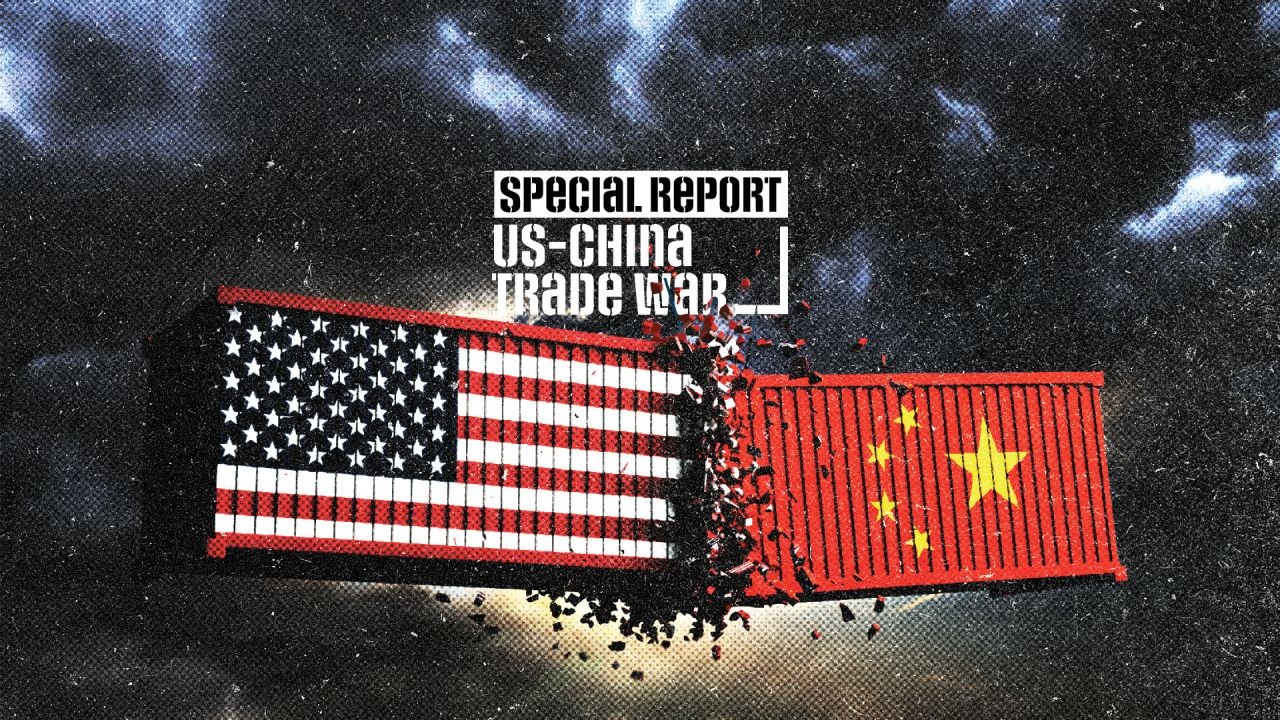
The recent sharp decline in global technology equities and broader market retreat is not an isolated event. It is the latest, and perhaps most acute, manifestation of a structural shift that has been building for years: the systematic decoupling of the world's two largest economies. For New Zealand investors and financial advisors, viewing this through the simplistic lens of a "trade war" is a dangerous oversimplification. We are witnessing a fundamental reconfiguration of global supply chains, capital flows, and technological sovereignty, with profound implications for a small, open, trade-dependent economy like ours. The volatility is not noise; it is a signal of a new, more fragmented, and risk-laden economic era.
Future Forecast & Trends: Navigating a Bifurcated World
The trajectory is clear. The US-China strategic competition will persist regardless of short-term tariff negotiations. The focus has irrevocably shifted from trade deficits to technological supremacy and supply chain resilience. For New Zealand, this creates a dual-vector challenge: managing economic relationships with both giants while insulating domestic portfolios and businesses from escalating crossfire.
The "Friend-Shoring" Imperative and NZ's Strategic Position
A dominant trend will be the acceleration of "friend-shoring," where companies relocate production to politically aligned nations. This presents both risk and opportunity for New Zealand. Our risk lies in being bypassed by major supply chain reconfigurations focused on larger allied blocs. However, our opportunity is to position ourselves as a stable, high-quality, and rules-based partner within trusted networks. The upgrade of the NZ-UK Free Trade Agreement and the CPTPP are critical frameworks in this regard. A 2023 report by the New Zealand Institute of Economic Research (NZIER) underscored this, noting that diversification of trade relationships is no longer a strategic advantage but a necessity for resilience. The data is telling: while China remains our largest trading partner, the growth rate of exports to other CPTPP members has consistently outpaced that to China in recent years, a trend we expect to accelerate.
Sectoral Winners and Losers in a Kiwi Context
The market retreat is not uniform. It exposes vulnerabilities and highlights potential havens. High-flying tech stocks reliant on integrated global supply chains (e.g., certain hardware manufacturers) or unrestricted access to both the US and Chinese markets are most exposed. Conversely, sectors aligned with "friend-shoring" themes and domestic resilience will attract strategic capital.
- At Risk: NZ exporters of undifferentiated commodities to China facing increased geopolitical premium, NZ tech firms embedded in China-centric hardware ecosystems, and tourism operators overly reliant on a single source market.
- Resilient / Opportunistic: High-value, trusted food producers (e.g., dairy, meat), specialized tech firms in software-as-a-service (SaaS) with less hardware dependency, and companies in logistics, cybersecurity, and renewable energy infrastructure supporting economic sovereignty.
How It Works (Deep Dive): The Transmission Channels to New Zealand
The mechanisms through which US-China tensions impact New Zealand are multifaceted, extending far beyond headline stock indices. A prudent advisor must understand these transmission channels to effectively safeguard client portfolios.
Channel 1: The Capital Flow Shock
Global risk aversion triggers capital flight from emerging markets and risk assets. As the US Federal Reserve maintains a restrictive stance to combat inflation, the strong US dollar exacerbates this outflow. For New Zealand, this tightens financial conditions. It becomes more expensive for businesses to raise capital and for the government to fund deficits. The Reserve Bank of New Zealand (RBNZ) faces a complex trilemma, balancing inflation control, currency stability, and economic growth. Data from the RBNZ's March 2024 Financial Stability Report highlights that while the banking system remains robust, household and business balance sheets are under strain from higher interest rates—a strain intensified by global capital market volatility.
Channel 2: The Supply Chain and Input Cost Squeeze
Decoupling disrupts decades-old efficiency-optimized supply chains. For New Zealand businesses, this translates into higher input costs, delays, and increased operational complexity. A manufacturer in Hamilton may face soaring costs for Chinese components while struggling to source alternatives. This feeds directly into domestic inflation, complicating the RBNZ's task and squeezing corporate profit margins. The hidden trend here is the rise of "inventory as a strategic asset." Businesses are moving from just-in-time to just-in-case inventory models, tying up capital and increasing working capital needs—a critical cash flow consideration for NZ SMEs.
Channel 3: The Erosion of Market Access and Confidence
Unpredictable trade policies create a chilling effect on investment and long-term planning. An NZ exporter facing arbitrary Chinese import delays or heightened US scrutiny on dual-use technology must invest heavily in compliance and market diversification. This uncertainty suppresses the animal spirits crucial for business investment and expansion. According to Stats NZ's Business Performance Benchmarker, uncertainty around export market conditions was cited as a major constraint by over 30% of exporting firms in 2023, a figure that has likely climbed.
Comparative Analysis: NZ's Position Versus Other Small Advanced Economies
New Zealand is not alone. Comparing our posture to nations like Singapore, Israel, and Denmark reveals instructive strategies and potential pitfalls.
Singapore: Has aggressively positioned itself as a neutral, hyper-efficient node in competing supply chains, investing heavily in advanced manufacturing and fintech. NZ's lesson is to double down on sectors where our "trusted brand" and agricultural/biological expertise are irreplicable, rather than trying to compete on pure logistics.
Israel: Thrives as a technology creator insulated by deep strategic ties to the US and a focus on sovereign capability (cyber, agri-tech, defense). For NZ, this underscores the national imperative to invest in R&D and commercialize home-grown intellectual property in niche, high-value areas, reducing dependency on foreign tech platforms.
Denmark: Excels in leveraging its small size and social cohesion to lead in green energy and sustainable solutions, aligning with the EU's strategic autonomy goals. NZ's opportunity is to similarly leverage its clean, green reputation to become a leader in sustainable food systems and carbon-neutral energy, aligning with the values-driven policies of key partners.
New Zealand's comparative disadvantage is its lower gross expenditure on R&D as a percentage of GDP (approximately 1.47% in 2022, per Stats NZ) compared to these peers. Closing this gap is not just an economic policy but a strategic necessity in a fragmenting world.
Case Study: A2 Milk Company – Navigating Geopolitical Consumer Shifts
Problem: The a2 Milk Company, a New Zealand-based dairy nutrition leader, achieved phenomenal growth through a deep understanding of the China market, particularly the daigou (cross-border shopping) channel. However, this success created a concentrated dependency. The "trade war" environment, compounded by China's shifting regulatory landscape for infant formula and pandemic disruptions to daigou, presented an existential strategic risk. The company's market valuation tumbled sharply as these channel vulnerabilities were exposed.
Action: Management embarked on a fundamental strategic pivot to de-risk its geographic footprint. This involved strengthening its brand and direct regulatory relationships within China itself, while aggressively diversifying into other high-growth markets like the United States and Southeast Asia. They invested in building their own manufacturing capability and supply chain control, moving away from pure reliance on third-party producers.
Result: While the journey is ongoing, the strategic shift is stabilizing the business. Revenue from China remains crucial but is now part of a more balanced portfolio. The company's focus on building a resilient, self-owned supply chain and a diversified market base has restored a degree of investor confidence, demonstrating that proactive adaptation to geopolitical reality is possible.
Takeaway: For New Zealand exporters, the A2 Milk case is a masterclass in the necessity of strategic diversification. Over-reliance on a single market or channel is a critical vulnerability in a deglobalizing world. The lesson for advisors is to scrutinize portfolio companies for similar concentrations and assess management's plans for building multi-polar resilience.
The Great Debate: Fortress vs. Bridge – NZ's Strategic Identity
A critical debate is emerging about New Zealand's optimal role. This is not academic; it directly informs investment and policy decisions.
Side 1 (The Fortress NZ Advocate): This view argues for a strategic retreat towards greater self-sufficiency and domestic resilience. It emphasizes investing in sovereign capabilities—energy, critical infrastructure, food security, and niche manufacturing—to insulate from external shocks. Investment themes would focus on domestic infrastructure, renewable energy projects, and import-substitution businesses.
Side 2 (The Bridge Builder Advocate): This perspective contends that New Zealand's future lies in deepening its role as a trusted connector and rule-of-law partner within multiple blocs. It advocates for hyper-specialization in areas where we are world-class (e.g., sustainable agriculture, certain tech niches) and using our diplomatic capital to maintain open channels. Investment themes here favor export champions with diversified market access and firms enabling global trade compliance and logistics.
The Middle Ground (The Resilient Node): The most prudent path is a synthesis. New Zealand must build a "fortress" in critical areas of sovereignty (e.g., cybersecurity, basic food and energy resilience) while simultaneously acting as a "bridge" or "node" in areas of competitive advantage. This means holding core defensive assets in client portfolios while also allocating capital to world-class, outward-facing businesses with robust, diversified market access.
Common Myths & Costly Misconceptions
Myth 1: "This is just a short-term squabble over tariffs; things will return to normal." Reality: The conflict has moved far beyond tariffs to encompass technology standards, data governance, and military positioning. The deep integration of the past 30 years is unwinding. Assuming a reversion to the pre-2016 status quo is a profound strategic error.
Myth 2: "New Zealand is too small to be affected; we can stay neutral." Reality: Our small size and trade dependence make us more vulnerable, not less. Neutrality is not an option; strategic choices are being forced upon us by the actions of larger powers. The choice is between passive vulnerability and active, managed adaptation.
Myth 3: "Selling all tech stocks is the safe move." Reality: This is a classic case of throwing the baby out with the bathwater. The sell-off creates differentiation. The risk lies in tech stocks with fragile supply chains or binary geopolitical exposure. Resilient tech firms—particularly in enterprise software, cybersecurity, and niche SaaS—are likely to emerge stronger. Discernment, not blanket avoidance, is key.
Biggest Mistakes for Kiwi Investors to Avoid
- Mistake 1: Home Country Bias on Steroids. Retreating entirely to NZX-listed stocks feels safe but concentrates risk in a small market highly exposed to the very global forces you're trying to avoid. Solution: Maintain disciplined global diversification, but shift the focus to sectors and regions aligned with friend-shoring and sovereign resilience themes.
- Mistake 2: Chasing Yesterday's Winners. Investing in sectors that thrived in the era of hyper-globalization (e.g., certain low-value commodity exporters) without assessing their new geopolitical risk profile. Solution: Conduct rigorous supply chain and market access due diligence on any investment, asking "how does this business thrive in a more fragmented world?"
- Mistake 3: Ignoring Currency as a Strategic Asset. The NZD is a risk currency. In periods of global stress, it often depreciates, which can offset gains from unhedged international assets. Solution: Develop a conscious, active currency hedging strategy as part of portfolio construction, rather than leaving it as an afterthought.
Final Takeaways & Strategic Imperatives
- Accept the Paradigm Shift: The era of frictionless globalization is over. Base all investment and business planning on this new, more volatile reality.
- Prioritize Resilience Over Pure Efficiency: In portfolios and business models, favor companies with strong balance sheets, diversified markets, and secure supply chains over those optimized for marginal cost savings.
- Embrace Strategic Diversification: This applies to geography, asset class, and currency. Avoid over-concentration in any single geopolitical narrative.
- Focus on Thematic Investing: Allocate capital to long-term structural themes: supply chain resilience, energy sovereignty, digital infrastructure, and sustainable food systems.
- Engage in Active Risk Management: Volatility is the new constant. Implement hedging strategies, maintain higher cash buffers for tactical opportunities, and conduct regular geopolitical risk assessments on holdings.
People Also Ask (PAA)
How should a New Zealand investor adjust their KiwiSaver in this environment? Review your fund's underlying assets. Ensure it has appropriate global diversification and is not overly exposed to sectors highly vulnerable to supply chain disruption or concentrated China risk. Consider shifting a portion to funds with a explicit focus on resilience or sustainability themes.
What is the biggest opportunity for NZ businesses in this shift? The opportunity lies in becoming a trusted, high-quality supplier within new "friend-shored" networks. This is particularly potent in agri-tech, sustainable food production, and niche software solutions where New Zealand's brand and expertise are highly valued by allied nations seeking secure alternatives.
Is this a good time to invest in the US stock market? The US market is not monolithic. While large-cap tech is under pressure, other sectors may benefit from friend-shoring and domestic investment policies. The key is selective, thematic investment rather than broad index exposure. Valuations are adjusting, creating opportunities for disciplined stock-pickers.
Final Takeaway & Call to Action
The current market turmoil is a wake-up call, not an anomaly. For financial advisors and investors in New Zealand, the mandate is clear: move beyond reactive portfolio adjustments and develop a forward-looking, strategic framework built for geopolitical fragmentation. This requires continuous education, deeper due diligence, and a willingness to challenge long-held assumptions about global markets. The greatest risk now is inaction or clinging to an outdated playbook.
Your immediate action: Conduct a full audit of your investment portfolio or your clients' portfolios through this new geopolitical lens. Map exposures to supply chains, end markets, and currency risks. Identify single points of failure. Then, begin constructing a strategic allocation designed not just for growth, but for resilience in the face of the defining economic shift of our time. The time for strategic clarity is now.
Related Search Queries
US China trade war impact on NZD, how to hedge geopolitical risk in portfolio, friend-shoring examples New Zealand, best resilient stocks for inflation and trade war, NZ export markets diversification strategy, RBNZ monetary policy geopolitical risks, investing in supply chain resilience ETFs, New Zealand technology sector outlook 2024, China economic slowdown impact on NZ agriculture, how to analyze geopolitical risk in investments.
For the full context and strategies on Tech stocks tumble and market retreats as US-China trade war worsens – A Simple Explainer With Big Value, see our main guide: How Tourism Videos Boost Bookings Nz Operators.