





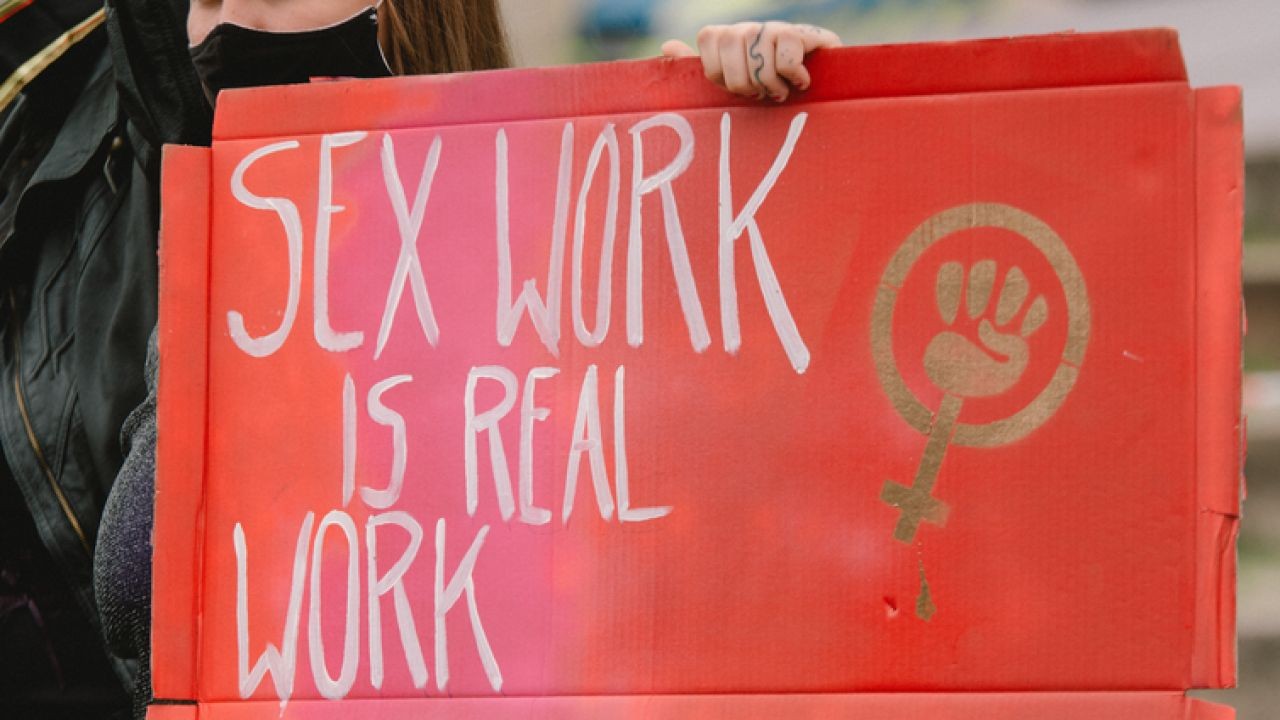
In the meticulously regulated world of modern finance, a stark and often overlooked contradiction persists. While New Zealand prides itself on a progressive social framework, including the decriminalisation of sex work since 2003 under the Prostitution Reform Act, a critical pillar of economic participation—access to banking—remains systematically obstructed for many in this legal industry. This isn't a matter of social commentary; it's a data-driven market failure. Financial exclusion creates tangible economic drag, forces activity into the shadow economy, and exposes a critical flaw in the risk-assessment models of major institutions. For market analysts, this represents a niche of systemic inefficiency and an untapped opportunity in financial inclusion technology.
The Data-Driven Chokehold: De-Risking at the Cost of Exclusion
Banks operate on algorithms and compliance frameworks designed to mitigate risk. The global financial crime watchdog, the Financial Action Task Force (FATF), mandates stringent Anti-Money Laundering and Countering Financing of Terrorism (AML/CFT) protocols. In New Zealand, these are enforced through the AML/CFT Act 2009. The inherent problem is one of categorical, rather than behavioural, risk assessment. Sex workers, as a client category, are often flagged as "high-risk" by default, leading to a cascade of automated and manual barriers.
The mechanism is clear: unexplained or irregular cash deposits, payments from numerous individuals, or business descriptions that trigger key words can lead to account freezes, sudden closures, or denied applications. A 2019 study by the New Zealand Prostitutes' Collective (NZPC) and University of Otago found that over 30% of sex workers reported issues with banking, including accounts being closed without explanation. This forces operators to rely on cash, prepaid cards, or third-party accounts, increasing personal security risks and complicating tax compliance. From a market perspective, this pushes a segment of legally recognised sole traders and small businesses out of the formal financial ecosystem, reducing the efficacy of economic metrics and tax base calculations.
New Zealand's Economic Paradox: Legality vs. Financial Access
New Zealand's legal framework was meant to normalise and safeguard sex work. The Prostitution Reform Act explicitly aims to "safeguard the human rights of sex workers" and "promote the welfare and occupational health and safety of sex workers." However, the financial sector's de facto policies directly undermine these legislative goals. This creates a regulatory schism where one government act guarantees rights that another government-regulated industry (banking) effectively nullifies.
Consider the economic contribution: while difficult to measure precisely due to the very banking issues discussed, a 2020 report from the Reserve Bank of New Zealand on the "Size and Nature of the Shadow Economy" indicated that sectors with poor banking integration naturally contribute to unmeasured economic activity. When legal businesses cannot bank effectively, they are statistically and economically marginalised, distorting our understanding of the true small business landscape. For an analyst, this signals a market inefficiency where demand for discrete, compliant financial services for legal but stigmatised industries is not being met by supply.
Case Study: The Australian Precedent and Its NZ Implications
Case Study: Suncorp Bank & The "Adult Services" Category Review
Problem: In 2021, Australian banking group Suncorp faced public and legal scrutiny after systematically closing the accounts of sex workers and adult industry businesses. The bank cited "risk appetite" but provided no individualised justification. This blanket policy affected hundreds of legal businesses, disrupting their operations, preventing them from paying taxes electronically, and forcing a retreat to cash. The industry backlash was severe, highlighting the conflict between corporate policy and legal commerce.
Action: Following advocacy from groups like Sex Work Law Reform Victoria and negative media coverage, Suncorp initiated a review of its policies. While not a complete reversal, the bank began engaging with industry representatives to develop more nuanced risk indicators that distinguished between lawful business conduct and genuine financial crime risks.
Result: The case set a powerful precedent in the Australian market. It demonstrated that indiscriminate de-banking is a reputational and regulatory risk for financial institutions. It also spurred dialogue about the need for industry-specific guidance from financial regulators. While concrete percentage improvements for account retention are not publicly disclosed, the policy shift prevented further erosion of trust and potential legal challenges.
Takeaway: This case is directly instructive for New Zealand. It proves that blanket bans are not a sustainable compliance strategy. For NZ banks and regulators like the Financial Markets Authority (FMA) and Reserve Bank, the lesson is proactive. Developing a New Zealand-specific framework for banking legal sex work, perhaps through clarified AML/CFT guidance, could prevent a similar reputational crisis and align financial regulation with other social policies.
The Analyst's Dilemma: Risk vs. Reward in a Stigmatised Market
This issue presents a classic market analysis problem with two opposing perspectives.
✅ The Bank's Perspective (Risk Aversion)
Banks argue that sex work businesses, even when legal, present elevated risks that are costly to manage. Their concerns are not entirely unfounded:
- Transaction Monitoring Costs: Patterns of many small, irregular deposits from diverse sources trigger AML alerts, requiring expensive manual review.
- Reputational Risk: Despite legality, banks fear association with the industry could damage their brand with more conservative customer segments.
- Complex Legal Patchwork: While legal in NZ, sex work is illegal or restricted in many jurisdictions where banks operate globally, creating internal policy complications.
❌ The Industry & Economic Perspective (Market Failure)
Critics, including economists and human rights advocates, see this as a failure of risk modelling and a violation of economic rights:
- Poor Risk Differentiation: Blanket categorisation is a primitive tool. Modern finance should distinguish between a compliant, tax-paying sole trader and criminal activity.
- Contradicts Regulatory Intent: It undermines the health, safety, and tax-compliance goals of the Prostitution Reform Act.
- Creates Systemic Risk: Pushing legal businesses into cash economies increases real-world security risks and makes illicit activity harder, not easier, to track.
⚖️ The Middle Ground: Technology-Enabled Solutions
The compromise lies in fintech and regulatory innovation. Specialised payment processors or "banking-as-a-service" platforms could develop tailored solutions for legal adult industries, with built-in, sophisticated compliance tools that exceed standard bank capabilities. Regulatory bodies could issue specific guidance, giving banks the confidence to serve this market with appropriate controls. This turns a compliance cost centre into a potential niche revenue stream.
Common Myths and Costly Misconceptions
Myth 1: "Bans on sex work accounts are about morality." Reality: This is primarily a commercial and compliance decision framed in risk terms. Banks are not moral arbiters; they are profit-driven entities avoiding cost and reputational damage. The moral judgement is often a secondary narrative that obscures the economic calculus.
Myth 2: "Sex workers operate mostly in cash anyway, so banking access isn't critical." Reality: This is a self-fulfilling prophecy. The lack of banking access forces cash reliance. Digital payments, invoicing, and secure savings are cornerstones of any modern small business. Denying these tools stifles business development, retirement planning, and asset accumulation, as noted in research from the NZPC.
Myth 3: "Accommodating this industry is too legally risky for banks." Reality: The greater legal risk may be in discriminatory practice. New Zealand's Human Rights Act prohibits discrimination on the basis of occupation in the provision of services. A strategic, well-documented risk-based approach is a stronger legal defence than a blanket ban.
Biggest Mistakes to Avoid
- Mistake 1: Treating a Legal Industry as Inherently Illicit. This is a fundamental analytical error. Compliance must be activity-based, not identity-based. A 2022 report from MBIE on small business growth emphasised that reducing barriers to formalisation is key to economic productivity.
- Mistake 2: Ignoring the Precedent from Other "High-Risk" Sectors. Banks successfully serve other cash-intensive, AML-sensitive industries like casinos, luxury retail, and cryptocurrency ATMs by applying enhanced due diligence. The framework exists; it requires adaptation.
- Mistake 3: Overlooking the Fintech Disruption Angle. Where traditional banks see only risk, agile fintechs see a blue ocean. A platform that solves the discrete payment and compliance needs of this market could capture it entirely, disintermediating the incumbents.
Future Trends & Predictions
The trajectory points towards resolution, driven by pressure and innovation. We predict that within the next five years, one of two scenarios will unfold in New Zealand:
- Regulatory Clarification: The RBNZ and FMA, in consultation with MBIE, will issue guidance clarifying how banks can meet AML/CFT obligations while serving legal sex industry businesses, following the intent of the Prostitution Reform Act. This will create a safer harbour for institutions.
- Fintech Capture: Specialised digital banks or payment platforms will emerge to fill the void. These entities will use advanced blockchain or ledger technology for transparent audit trails and AI-driven transaction monitoring tailored to the industry's patterns, effectively de-risking it and making it a viable portfolio.
By 2030, the banking of legal sex work in NZ will be normalised through either regulatory or technological pathways, turning a current systemic friction into a case study of market correction.
Final Takeaways & Call to Action
- Fact: Blanket financial exclusion of a legal industry is a data point indicating market failure, not effective risk management.
- Strategy: The solution lies in precision, not prohibition: enhanced, technology-enabled due diligence tailored to specific business models.
- Mistake to Avoid: Analysts and institutions must decouple legal status from perceived moral risk; the former is a binary legal fact, the latter is a subjective and commercially volatile metric.
- Pro Tip: Watch for the first NZ fintech or progressive bank to launch a compliant service suite for adult industry sole traders—it will be a landmark in financial inclusion analytics.
Final Takeaway: The difficulty sex workers face with banks is not a peripheral social issue; it is a core test of our financial system's ability to integrate all legal economic activity. For market analysts, it represents an analytical blind spot and a potential arbitrage opportunity. The question for decision-makers is not whether to engage, but how to engineer the sophisticated risk frameworks that make engagement viable. The market abhors a vacuum—will traditional banks fill it, or will they cede it to innovators?
What’s your analysis? Is this a permanent friction, or the next frontier for embedded finance? Share your data-driven predictions below.
People Also Ask (PAA)
How does bank exclusion impact New Zealand's economy? It pushes legal business into the informal cash economy, reducing accurate GDP measurement, tax revenue, and the effectiveness of monetary policy. It creates a drag on small business productivity and innovation within a lawful sector.
What are the biggest misconceptions about banking and sex work? The biggest misconception is that it's solely a moral issue. In reality, it's a failure of financial risk modelling. Banks use crude category-based assessments instead of behavioural analysis of individual business conduct, conflating legal activity with illegality.
What upcoming changes could affect this issue in New Zealand? The ongoing review of the AML/CFT Act and potential guidance from the Reserve Bank of New Zealand could create a framework for banks to serve this market. Additionally, the growth of niche fintech challengers could force incumbents to re-evaluate their risk appetite.
Related Search Queries
- Sex work banking New Zealand law
- AML/CFT compliance for adult industries NZ
- Financial exclusion legal businesses
- Fintech solutions for high-risk merchants
- Prostitution Reform Act 2003 banking access
- Reserve Bank NZ shadow economy report
- Small business banking discrimination NZ
- Alternative payment processing New Zealand
For the full context and strategies on Sex workers say banks are making life more difficult – Breaking Down What Matters Most, see our main guide: Vidude New Zealand Culture Local Content.