


For the sustainability consultant arriving in New Zealand, the imperative to engage with Māori communities transcends a simple cultural courtesy. It represents a foundational, non-negotiable component of any credible environmental or social strategy. The global sustainability framework is, in many ways, being rewritten here. Why? Because Aotearoa New Zealand is navigating a unique, legally mandated journey of partnership under Te Tiriti o Waitangi, where concepts like kaitiakitanga (guardianship) are moving from philosophical ideals into corporate reporting and environmental policy. To operate here without understanding this is to build on sand. This isn't about adding a cultural module to your project plan; it's about recognizing that the most profound, long-lasting sustainability outcomes are co-created at the intersection of indigenous knowledge and contemporary science. The risk of getting it wrong isn't just reputational—it's a fundamental failure in methodology that can invalidate your work in this context.
The Unavoidable Business Case: Why This is Core to Sustainability in NZ
Let's dispel the first myth immediately: that engaging with Māori communities is a 'soft' CSR activity separate from hard environmental metrics. In New Zealand, it is a strategic imperative with direct links to regulatory compliance, social license to operate, and project efficacy. The New Zealand government's Essential Freshwater package and the proposed Natural and Built Environments Act explicitly require engagement with iwi (tribes) and hapū (sub-tribes) and the incorporation of mātauranga Māori (Māori knowledge) into planning. From consulting with local businesses in New Zealand, I've seen resource consent applications stall for months due to perfunctory, tick-box engagement, while those founded on early, genuine partnership navigate the process with greater speed and less conflict.
Consider this data point: A 2023 report by the Aotearoa Circle and Sapere highlighted that the Māori economy is valued at over $70 billion. A significant portion of this is land-based—agriculture, forestry, and fishing—sectors at the frontline of sustainability challenges. Ignoring this economic and environmental stakeholder is not an option. Furthermore, Stats NZ data shows that Māori have a significantly younger demographic profile than the non-Māori population. Any sustainability strategy claiming to be future-focused must account for the values and aspirations of this growing segment of the population, who are increasingly asserting their rights and roles as kaitiaki.
Key Actions for the Visiting Consultant
- Reframe Your Objective: You are not "consulting" a community. You are seeking to establish a partnership to co-design solutions. Your goal is to understand the whenua (land) and wai (water) through a dual lens.
- Do the Pre-Work: Before you land, research the iwi and hapū whose rohe (area) you will be working in. Understand their Treaty settlement history, their key environmental concerns, and their commercial arms. The Tāhū portal is an excellent public starting point.
- Budget for It: Genuine engagement costs time and money. Factor in koha (a gift, often monetary, to acknowledge expertise and hospitality) and the potential costs of following proper protocol into your project scope from day one.
A Strategic Framework for Meaningful Engagement
Moving from theory to practice requires a structured yet flexible approach. The following framework, drawn from my experience supporting Kiwi companies in this space, is designed to avoid transactional interactions and build the foundations for mutual benefit.
Phase 1: Foundation & Intent (Pre-Engagement)
This phase is about internal alignment and preparation. It is often where most failures originate.
- Identify the Right Partners: Don't assume "Māori" is a monolith. Which specific iwi, hapū, or marae (community meeting ground) holds mana whenua (authority and stewardship) over the specific location? Contact the regional iwi authority or the post-settlement governance entity.
- Secure Cultural Guidance: If your team lacks internal competency, engage a reputable Māori consultant or advisor early. They can guide protocol, ensure correct pronunciation, and help interpret nuanced feedback. In practice, with NZ-based teams I’ve advised, this single step has transformed fraught meetings into productive dialogues.
- Define Your "Why" Clearly: Be prepared to articulate, transparently: What is the project? What are your hoped-for outcomes? What are the potential impacts or risks? What are you asking of them? Obscurity breeds distrust.
Phase 2: The Encounter – Protocol & Presence
The first face-to-face meeting sets the tone. This is where respect is demonstrated through action.
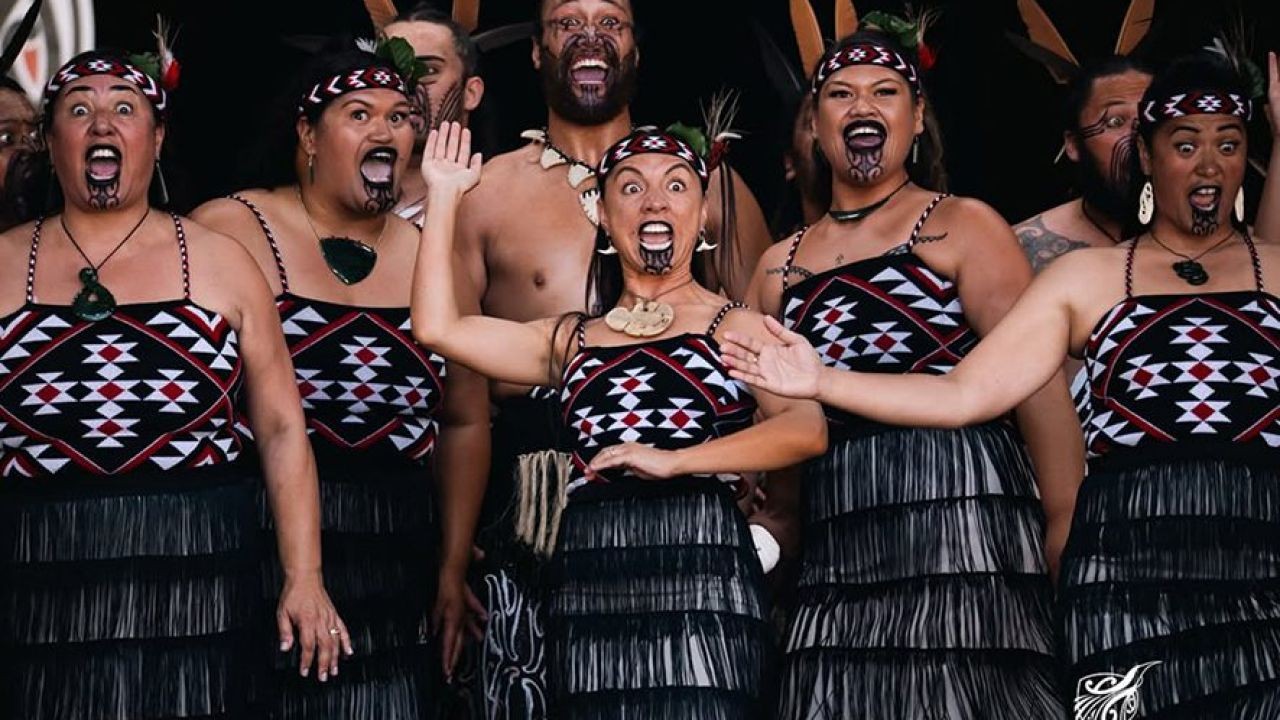
- The Pōwhiri Process: If invited to a marae, you will likely go through a pōwhiri (welcome ceremony). Understand the basic flow: the initial call (karanga), speeches (whai kōrero), song (waiata), and the final hongi (pressing of noses). Your group should appoint a culturally competent speaker to reply on your behalf.
- Listening is the Primary Objective: The first meeting is for you to listen, not to present your pre-baked solutions. Share your intent, then let the community share their history, their connection to the land (whakapapa), and their concerns. Take notes, ask clarifying questions, but do not debate or defend.
- The Critical Role of Koha: Koha is an essential part of reciprocity. It is not a payment. It is a tangible acknowledgment of the knowledge, time, and hospitality being shared. It should be presented discreetly at the appropriate time, often after speeches. Your cultural advisor will guide the amount and form.
Phase 3: Integration & Co-Design
True engagement happens after the welcome. This is where indigenous knowledge is woven into the project fabric.
- Establish Ongoing Governance: How will communication continue? Is there a joint working group? How are decisions made? Clarity here prevents the "fly-in, fly-out expert" syndrome.
- Respect Intellectual Property: Mātauranga Māori is a deep, sophisticated knowledge system. It is not free data for the taking. Agreements on how this knowledge will be used, attributed, and protected are crucial. Based on my work with NZ SMEs in the agri-tech sector, the most successful partnerships have clear, upfront IP agreements that respect Māori data sovereignty principles.
- Co-create Metrics of Success: Your sustainability KPIs might be carbon sequestered or water quality indices. The community's might be the health of a specific mahinga kai (food gathering site) or the revitalization of a native species with cultural significance. The project's ultimate success metrics should reflect both.
Case Study: Meridian Energy & Ngāi Tahu – Beyond Consultation to Partnership
Problem: Meridian Energy, a major NZ power generator, operates the Waitaki hydro scheme in the South Island. Historical relationships with mana whenua, Ngāi Tahu, were strained due to the scheme's past impact on fisheries, waterways, and cultural sites. Engagement was often transactional, focused on regulatory compliance, leading to friction and mistrust.
Action: Both parties committed to a fundamental reset. They established the Waitaki Relationship Agreement, moving from a "developer-iwi" dynamic to a strategic partnership. This included formal co-governance structures, joint committees for environmental management, and a commitment to integrating mātauranga Māori into operations and monitoring. Critically, Meridian provided resources for Ngāi Tahu to build their own technical capacity to engage as an informed partner.
Result: The partnership has yielded tangible environmental and relationship outcomes:
- ✅ Improved Environmental Outcomes: Joint management has led to enhanced fish passage programmes and habitat restoration informed by both science and mātauranga.
- ✅ Reduced Conflict & Cost: A foundation of trust has streamlined consenting processes and reduced legal challenges, creating long-term operational certainty for Meridian.
- ✅ Shared Value Creation: The partnership extends to commercial opportunities, such as joint ventures in new renewable projects, aligning economic and cultural interests.
Takeaway: This case demonstrates that the highest-ROI approach is long-term partnership, not one-off consultation. It requires institutional commitment, shared governance, and investment in the capacity of the iwi partner. For a visiting consultant, the lesson is to advocate for frameworks that outlive your specific assignment.
Critical Analysis: The Pros and Cons of Different Engagement Models
Not all engagement is created equal. The sustainability consultant must strategically select the model that fits the project's scale, impact, and timeline.
✅ The Partnership & Co-Governance Model
Pros: Leads to deeply integrated, innovative solutions with high levels of buy-in and social license. Maximizes the potential of combining knowledge systems. Creates long-term resilience and shared value. Best for large-scale, long-term projects with significant environmental impact.
Cons: Resource-intensive upfront. Requires significant time investment to build trust and shared understanding. Demands internal organizational change and commitment from senior leadership. Can be challenging for short-term consultancy assignments.
⚠️ The Consultation & Collaboration Model
Pros: More feasible for defined, shorter-term projects. Allows for specific Māori input at key decision points. Can improve project design and mitigate risks. Demonstrates a baseline level of respect and compliance.
Cons: Risk of being perceived as tokenistic or "tick-box." The power dynamic remains with the consultant/organization. May not unlock the deeper value of mātauranga Māori. Can lead to frustration if community input is sought but not meaningfully acted upon.
❌ The Transactional Notification Model
Pros: (Few). Meets minimal legal requirements in some circumstances. Logistically simple.
Cons: Almost guarantees opposition and damage to reputation. Fails to access local knowledge that could de-risk the project. Viewed as disrespectful and contrary to the spirit of partnership. In today's Aotearoa, this model is professionally and ethically untenable for a sustainability practitioner.
Debunking Common Myths and Avoiding Costly Mistakes
Misconceptions can derail engagement before it begins. Let's confront them directly.
Myth 1: "We just need to talk to the local marae committee." Reality: Governance structures can be complex. The marae committee may handle local affairs, but resource management and commercial engagement may be the domain of the iwi's post-settlement governance entity (e.g., a Trust or Charitable Company). You must identify the correct entity with the mandated authority for the issue at hand.
Myth 2: "Mātauranga Māori is just anecdotal stories; our project is based on science." Reality: This is a profound and offensive error. Mātauranga Māori is a systematic, empirically based knowledge system built over centuries of observation and intergenerational transmission. It offers nuanced insights into ecosystem relationships, species behavior, and long-term environmental patterns that Western science may overlook. The Royal Society Te Apārangi and NZ's National Science Challenges explicitly advocate for weaving both knowledge systems together for superior outcomes.
Myth 3: "A quick hui (meeting) is enough to get their sign-off." Reality: Engagement is a process, not an event. Building the trust necessary for meaningful collaboration takes multiple interactions over time. Rushing the process is the surest sign you are not serious.
Biggest Mistakes to Avoid
- Mistake: Turning up unannounced. Solution: Always make formal contact through correct channels well in advance. Respect the time and schedules of the community.
- Mistake: Using jargon and technical reports as your primary communication tool. Solution: Present information clearly, visually, and focus on impacts. Be prepared to explain concepts in plain language.
- Mistake: "Taking" knowledge without a plan for giving back or sharing benefits. Solution: From the outset, discuss how the community will benefit—whether through employment, capacity building, shared commercial benefits, or direct environmental restoration that aligns with their values.
The Future of Sustainability is Bi-Cultural: A Bold Prediction
Here is the industry insight that many international firms miss: New Zealand is becoming a global test bed for bi-cultural environmental governance. We are not merely adding an indigenous perspective to a Western sustainability model; we are witnessing the emergence of a new, hybrid framework. Within the next decade, I predict that the most sought-after sustainability professionals in New Zealand will be those who are not just technically proficient but also deeply culturally competent and fluent in the principles of Te Tiriti o Waitangi partnership.
This shift is being driven by policy (e.g., the Climate Change Response Act now requires the Climate Change Commission to develop its advice in partnership with Māori), by finance (with green bonds requiring Tiriti-aligned engagement), and by market expectations. Drawing on my experience in the NZ market, companies that master this integration will not only lead domestically but will export a powerful model of inclusive, place-based sustainability to the world. Your work as a consultant here is a chance to be at that frontier.
Final Takeaway & Call to Action
For the sustainability consultant, meaningful engagement with Māori communities is the sharpest tool in your kit for achieving durable impact in Aotearoa New Zealand. It is the difference between implementing a solution and co-creating a legacy. It moves your role from external expert to trusted facilitator of knowledge exchange.
Your action plan is this: Before you draft a single sustainability assessment, map the mana whenua. Before you design a solution, budget for the time and resource required to build a real relationship. Approach not as an expert who has come to teach, but as a learner seeking to understand a landscape through the eyes of its first navigators and guardians. The quality of your environmental outcomes will be directly proportional to the depth of your cultural respect.
Ready to operationalize this? Begin by reviewing the Iwi and Hapū Interests Map on the LINZ Data Service and reading the guiding principles of Vision Mātauranga. Then, challenge your next project proposal: Does it have a line item for cultural engagement that is commensurate with its strategic importance?
People Also Ask (PAA)
What is the difference between iwi and hapū? Iwi are the largest tribal kinship groups, often descended from a common ancestor who arrived on a specific canoe. Hapū are sub-tribes or clans within an iwi, responsible for managing a specific area of land. For engagement, identifying the correct hapū with mana whenua over your project location is often the most critical first step.
Is it appropriate for a non-Māori to lead a karakia (prayer/invocation) in a professional setting? Generally, no. Unless you are very familiar with the specific context and have been given explicit guidance or permission, it is more respectful to observe a moment of silence or to invite a Māori colleague or advisor to lead if one is present. The misuse of karakia is a common and noticeable misstep.
How does the Treaty of Waitangi affect private sector projects? While the Treaty's articles are primarily between the Crown and Māori, its principles (Partnership, Participation, and Protection) are increasingly embedded in legislation governing resource management, conservation, and environmental protection. This means private projects requiring consents are obligated to demonstrate good-faith engagement with iwi, effectively making the Treaty a de facto business concern.
Related Search Queries
- Māori consultation process New Zealand
- Kaitiakitanga meaning and examples
- How to find local iwi contacts
- Te Tiriti o Waitangi principles business
- Mātauranga Māori in environmental science
- Protocol for visiting a marae
- Koha gift amount guide NZ
- Post-settlement governance entities list
- Bi-cultural sustainability framework NZ
- Mana whenua map New Zealand
For the full context and strategies on How to Engage with Maori Communities in a Meaningful Way While Visiting New Zealand – Tips from New Zealand Industry Experts, see our main guide: Connecting Maori Pasifika Kiwi Creators Video.