




The transition to electric vehicles (EVs) is often framed as a simple equation of supply and demand: build more cars, and the infrastructure will follow. Yet, across Australia, a more complex and frustrating reality is unfolding. A surge in EV adoption is colliding with a charging network that is, in many crucial respects, failing to keep pace. This isn't merely an inconvenience; it's a systemic bottleneck threatening to stall the nation's broader decarbonisation ambitions. The gap between the growing fleet of electric vehicles and the availability, reliability, and strategic placement of charging points reveals a critical misalignment in planning and investment.
The Scale of the Mismatch: Data Tells the Story
To understand the problem, one must first appreciate the velocity of change. The Australian Bureau of Statistics (ABS) reports a staggering increase in EV sales, with battery electric vehicle (BEV) registrations soaring by 170% in the two years to January 2023. This exponential growth is set against a federal government target for 89% of new car sales to be electric by 2030. However, the charging infrastructure is expanding linearly, not exponentially. According to the Electric Vehicle Council, while Australia added over 500 new public charging locations in 2023, the ratio of EVs to public chargers has worsened significantly. We now have approximately 18 EVs for every public charging point, a figure that rises sharply outside metropolitan hubs.
From observing trends across Australian businesses, particularly in regional tourism and logistics, the operational impact is acute. A winery in the McLaren Vale may install a destination charger to attract visitors, but if the fast-charging corridor along the adjacent highway is sparse or non-functional, the journey becomes a calculated risk, deterring the very customers they seek. The infrastructure isn't just about numbers; it's about creating a cohesive, reliable network that mirrors the freedom afforded by the internal combustion engine.
Where Most Brands and Planners Go Wrong
A primary failure has been treating charging infrastructure as a uniform commodity. The industry and policymakers often conflate different charger types, leading to poor strategic outcomes.
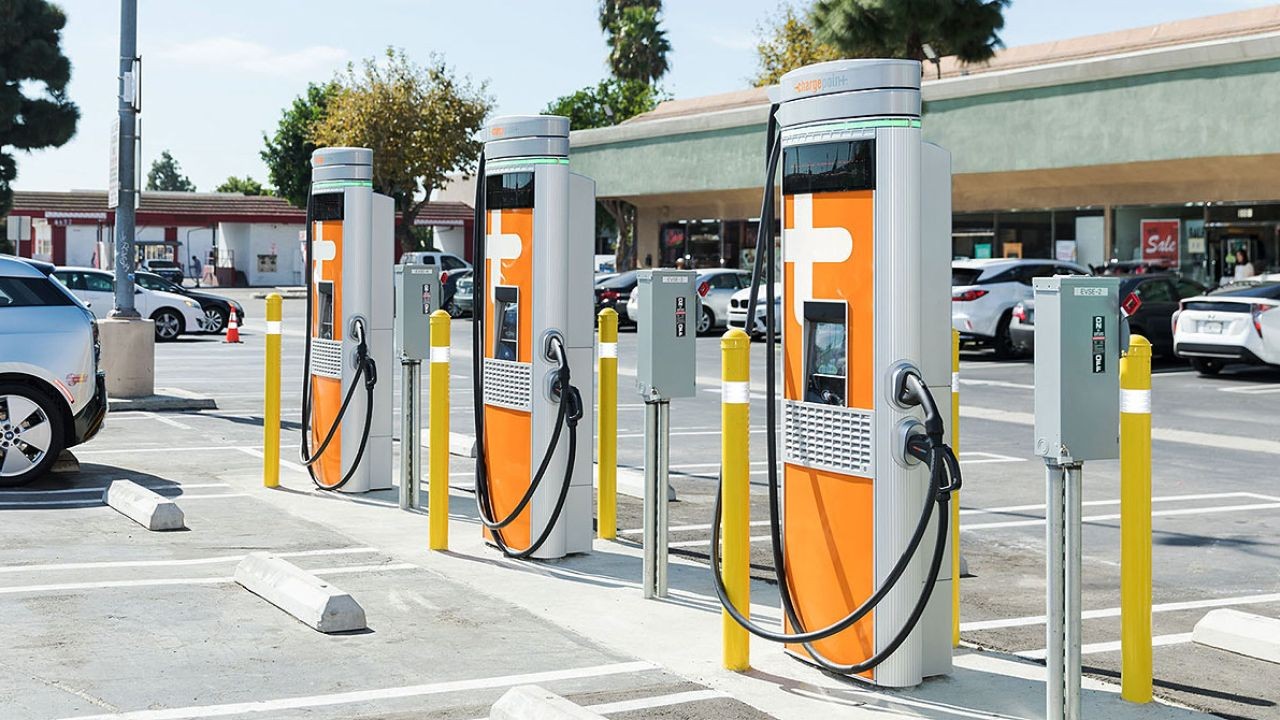
- The "Destination vs. Journey" Fallacy: An abundance of slow AC chargers (7-22kW) at shopping centres is laudable but does little to alleviate "range anxiety" for inter-city travel. The critical shortage is in high-power DC fast chargers (50-350kW), which enable long-distance travel. Placing a 7kW charger in a remote location where drivers need a rapid top-up is a fundamental misreading of user psychology and need.
- Overlooking Grid Capacity and Connection Costs: Installing a bank of ultra-rapid chargers is not simply a matter of plugging in hardware. Based on my work with Australian SMEs in the energy sector, the single greatest barrier is grid capacity and the exorbitant cost of network upgrades. A regional service station may want to host a charging hub, but the quote from the local distribution network service provider (DNSP) to upgrade the connection can run into hundreds of thousands of dollars, rendering the project unviable.
- Reliability as an Afterthought: A charger that is out of service is worse than no charger at all—it actively erodes trust. Reports from motoring organisations consistently highlight that a significant percentage of listed public chargers are offline at any given time, often due to poor maintenance, software glitches, or vandalism. This unreliability creates a perception of fragility around the entire EV ecosystem.
The Regulatory and Economic Gridlock
Australia's federated model of government creates a patchwork of regulations and incentives. While states like New South Wales and Victoria have ambitious charging rollout plans and grants, coordination at a national level for a truly interoperable, seamless network has been lacking. The Australian Competition & Consumer Commission (ACCC) has a role in ensuring fair access and competition in this emerging market, but the regulatory framework is still catching up to the technology.
Furthermore, the business case for private investment remains challenging. Electricity pricing volatility, demand charges that penalise peak usage, and the high capital expenditure for fast chargers create long payback periods. Drawing on my experience in the Australian market, many early investors are large energy companies or vehicle manufacturers acting for strategic brand positioning rather than pure profit, which is not a sustainable model for nationwide coverage.
Case Study: The NRMA's Regional Network – A Model of Pragmatism
Problem: In 2019, vast stretches of regional New South Wales were effectively inaccessible to EV drivers. A lack of commercial incentive for private operators left key tourist and transport routes without coverage, stifling EV adoption outside cities and disadvantaging regional communities.
Action: The NRMA, a member-based motoring and mobility organisation, took a not-for-dividend approach. Leveraging its existing regional presence and member service mandate, it embarked on a project to build its own network of DC fast chargers. It focused strategically on filling gaps in the national highway network and key tourist routes, often choosing locations at its own owned or affiliated properties to control site costs and reliability.
Result: The NRMA has deployed over 50 fast charging sites across NSW and the ACT. Its chargers boast a reported 99% reliability rate, a key metric. This intervention directly addressed the "journey" charging gap, enabling travel to destinations like Byron Bay, the Snowy Mountains, and Broken Hill. It demonstrated that a coordinated, reliability-focused rollout could succeed where purely commercial models hesitated.
Takeaway: This case study highlights the effectiveness of a mission-driven, gap-filling strategy. It shows that entities with a long-term view and community service obligation can de-risk the early-stage rollout. For Australian businesses, the lesson is to look for partnerships with such organisations or to advocate for similar cooperative models in their regions to support customer and employee EV transition.
The Road Ahead: A Balanced Charge Strategy
The solution requires a multi-faceted approach that acknowledges the different "fuels" of the EV ecosystem: high-speed electrons for corridors, slower electrons for destinations, and home charging as the bedrock.
✅ The Advocate's View: Accelerate Public Investment
Proponents argue that the market failure is clear and demands direct government intervention. They point to nations like Norway, where extensive public funding and incentives created a dense, reliable network that then spurred massive private investment and EV adoption. The Australian government's $500 million Driving the Nation fund is a step in this direction, but advocates insist the scale and speed must increase dramatically, treating charging infrastructure as critical national infrastructure, akin to broadband or roads.
❌ The Critic's View: Let the Market Decide
Skeptics counter that heavy government subsidy distorts the market and risks installing inefficient, poorly located infrastructure. They believe that as EV numbers reach a critical mass, private capital will naturally flow to meet demand, and that premature public investment could crowd out more innovative private solutions. They emphasise fixing regulatory barriers—like streamlining grid connection approvals and standardising rules across states—over direct funding.
⚖️ The Middle Ground: Strategic Catalysis
The most pragmatic path lies in between. Government's role should be to de-risk private investment in strategically important areas (e.g., remote highways) through co-investment, guarantee schemes, or underwriting grid upgrade costs. Its primary focus must be on setting and enforcing stringent reliability standards, ensuring payment interoperability, and coordinating a truly national plan that eliminates the state-by-state patchwork. In practice, with Australia-based teams I've advised, this means public funds should act as a catalyst for private investment in commercially challenging but socially necessary locations, not as a blanket provider.
Future Trends & Predictions
The next five years will see a decisive shift. We will move beyond simply counting plugs to evaluating the intelligence and resilience of the network. Vehicle-to-Grid (V2G) technology, where EVs can feed power back into the home or grid, will transform cars into mobile batteries, helping to stabilise the network and provide value to owners. Furthermore, the rollout will become more nuanced, with high-power charging hubs co-located with renewable generation and battery storage to mitigate grid impact. By 2028, I predict the public debate will have shifted from "range anxiety" to "cost and convenience anxiety," focusing on pricing transparency, charging speed, and the integration of charging into broader smart-city and energy-system planning.
Final Takeaway & Call to Action
Australia's charging station shortfall is not a technological failure but a planning, investment, and coordination failure. Solving it requires moving beyond simplistic narratives and embracing the complexity of the challenge. For businesses, this means factoring EV infrastructure into site selection, fleet transition plans, and customer experience. For policymakers, it demands treating charging networks as essential, regulated infrastructure. And for drivers and advocates, it involves continued pressure for reliability, fairness, and strategic growth.
The question is no longer if we will electrify transport, but how smoothly we will manage the transition. The current pace of infrastructure rollout suggests a bumpy road ahead. To change this trajectory, engage with industry bodies like the Electric Vehicle Council, demand clearer plans from your local MP and energy network, and support businesses that are investing in smart charging solutions. The power to close the gap lies not just in plugs and cables, but in coordinated action and informed demand.
People Also Ask
What is the biggest barrier to more EV chargers in Australia? The largest barrier is often economic: the high capital cost of ultra-rapid chargers combined with expensive grid connection upgrades and uncertain returns, making private investment risky without government co-investment in strategic locations.
Are EV chargers in Australia reliable? Reliability is a significant issue. Reports indicate a meaningful portion of public chargers are offline at any time due to maintenance neglect, software issues, or vandalism. Networks operated by organisations like the NRMA, which prioritise uptime, are notable exceptions.
Who is responsible for building EV charging infrastructure in Australia? It is a mixed model. Private companies (energy retailers, charge point operators), car manufacturers, motoring clubs (e.g., NRMA, RACV), and all levels of government are involved. The lack of a single, centrally coordinated responsible entity is part of the current challenge.
Related Search Queries
- EV charging station map Australia reliability
- Cost to install DC fast charger Australia
- Australian government grants for EV charging
- EV range anxiety regional Australia
- Best EV charging app Australia 2024
- How many EV chargers are in Australia?
- Vehicle-to-Grid (V2G) trials Australia
- ACCC EV charging market study
- Charging an EV at home cost Australia
- EV charging for apartments Australia
For the full context and strategies on Why Charging Stations in Australia Are Not Keeping Up with Demand – Is It Australia’s Next Big Thing?, see our main guide: Influencer Lifestyle Videos Australia.