





For a strategist accustomed to evaluating billion-dollar capital projects, the decision between a new build and renovating an older property presents a fascinating microcosm of core investment principles. It is a scenario where geological certainty meets market sentiment, where upfront capital expenditure battles operational risk, and where the final return is dictated as much by local zoning as by global commodity prices. While the residential market may seem distant from the boardrooms of mining majors, the analytical framework is strikingly similar: a rigorous assessment of risk-adjusted return on capital. In Australia's current economic climate—characterised by persistent construction cost inflation and a housing supply deficit—this decision is far from trivial. The wrong call can lock capital into an underperforming asset for a decade or more.
The Capital Project Analogy: Scoping Your Investment
Every major resources project begins with a scoping study, defining the parameters, costs, and potential value. Your property decision demands the same disciplined approach. The core question isn't merely about aesthetic preference; it's a capital allocation problem. A new build is akin to a greenfield mining operation: high initial capital intensity (CAPEX), long lead times, but theoretically lower operational risk and maintenance (OPEX) in the early years. Renovation, conversely, mirrors a brownfield expansion: leveraging existing infrastructure (the land and structure) but facing the uncertainty of latent defects and potential for cost overruns—the 'resource definition' phase happens after you've committed to the project.
From consulting with local businesses across Australia, I've observed that most private investors fail to apply a project finance lens. They underestimate contingency allowances. In resources, a feasibility study might include a 20-25% contingency for unforeseen complexities. Applying a similar buffer to a renovation budget, especially for pre-1980s Australian homes with potential asbestos or foundational issues, is not pessimism—it's prudent risk management. The Australian Bureau of Statistics data underscores this volatility: the price index for residential building materials rose by 41.5% between March 2020 and December 2022. While growth has moderated, input costs remain elevated and subject to global supply chain pressures, directly impacting both new build and renovation economics.
Assumptions That Don’t Hold Up
The market is rife with oversimplifications that can derail an investment. Let's correct three critical ones.
Myth 1: "Renovating is Always Cheaper Than Building New." Reality: This is a dangerous assumption. While the base cost per square metre for an extension might appear lower, it ignores the compounding costs of working within an existing footprint—heritage overlays, council delays for modifications, the expense of matching old materials, and the high likelihood of discovering mandatory upgrades (electrical, plumbing) once walls are opened. A strategic view must compare the fully-loaded cost of a comprehensive renovation against a new build on a comparable block.
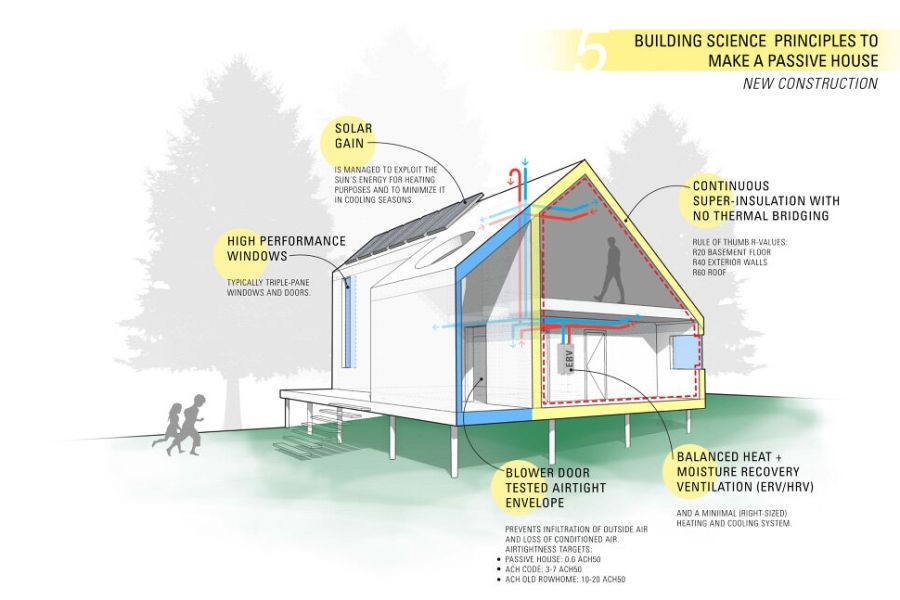
Myth 2: "New Builds Offer Guaranteed Modern Efficiency." Reality: While the National Construction Code mandates minimum energy standards, the quality of execution varies wildly. A project home built to the lowest permissible standard may have poorer long-term durability and thermal performance than a meticulously renovated older home with high-performance retrofitted insulation, glazing, and HVAC. The payoff is in the detail, not the age stamp.
Myth 3: "The Highest ROI Comes From the Most Extensive Renovation." Reality: This is a classic case of diminishing marginal returns. Data from CoreLogic and major valuation firms consistently shows that in many Australian markets, over-capitalising is a significant risk. The highest percentage returns often come from strategic, cosmetic upgrades in desirable older suburbs, not from adding a second storey to a home in a price-sensitive area. The local 'ceiling price' for the street acts as a hard economic constraint, much like a resource deposit's grade determines its maximum economic value.
Weighing the Strategic Variables: A Risk Matrix
Let's break down the decision into its core strategic components, assessing the pros and cons from a capital steward's perspective.
The Case for the New Build (Greenfield Development)
Pros:
- Predictable (Initial) OPEX: Modern materials, appliances, and building standards typically translate to lower maintenance, energy, and insurance costs for the first 10-15 years. This is a predictable cash flow advantage.
- Design Certainty & Efficiency: You control the floor plan from the ground up, optimising for modern living and solar passive design, which is increasingly valued. There are no compromises with existing, suboptimal layouts.
- Regulatory Clarity: While approvals are required, you are working within a known, contemporary regulatory framework (NCC, BASIX in NSW). There are fewer surprises from non-compliant existing work.
- Depreciation Benefits: For investors, the Australian Taxation Office allows substantial depreciation deductions on new buildings and plant items, providing a tangible cash flow advantage over the first few years.
Cons:
- High & Volatile CAPEX: You bear the full brunt of land acquisition and construction costs. With construction inflation historically high, fixed-price contracts are rarer and often include steep escalation clauses.
- Time Delays & Liquidity Lock-up: From planning to completion can take 18-24 months or more. Your capital is immobilised with no income or utility during this period, representing a significant opportunity cost.
- Land Scarcity & Premium: In established, high-demand areas, vacant land is scarce or commands a prohibitive premium. This often pushes new builds to urban fringes, impacting potential capital growth dynamics.
- Community & Character Risk: In established suburbs, a new build may be aesthetically incongruent, potentially limiting its appeal to a segment of the buyer pool who value streetscape character.
The Case for Renovation (Brownfield Expansion)
Pros:
- Established Location Premium: This is often the most compelling factor. Acquiring an older property allows entry into suburbs with mature infrastructure, schools, and transport links where land is essentially unavailable. Future capital growth is often driven more by this land value than the dwelling itself.
- Phased Capital Outlay: Renovations can be staged according to cash flow. You can live in the property, derive utility, and spread the investment over time, reducing financing pressure.
- Potential for "Manufactured Equity": A well-executed renovation can create immediate equity through 'sweat capital' and strategic improvement, a return realised more quickly than waiting for market appreciation.
- Heritage & Character Value: In many premium Australian markets, period homes (Victorian, Federation, Californian Bungalow) command a significant value premium that a new build cannot replicate.
Cons:
- Uncertainty & Contingency Risk: This is the single biggest risk. Asbestos, structural rot, faulty wiring, and non-compliant plumbing are latent conditions only revealed during works, leading to budget blowouts.
- Regulatory Hurdles: Renovating, especially in character conservation areas, can involve complex council negotiations. The process can be slower and less predictable than for a new build on a vacant lot.
- Compromised Design: You are constrained by the existing orientation, floor plan, and structure. Achieving optimal modern living may be impossible without prohibitively expensive structural changes.
- Ongoing High OPEX: Even after renovation, older elements (original flooring, roof sections) will require maintenance. The operational cost profile is typically less predictable than a new build.
The Australian Macro-Framework: Interest Rates, Policy, and Supply
No investment decision exists in a vacuum. The Reserve Bank of Australia's monetary policy directly impacts your financing costs. Higher interest rates not only increase mortgage repayments but also dampen buyer sentiment, potentially affecting the end-value of your project. Furthermore, state-level policies are critical. Victoria's recent changes to the Vacant Residential Land Tax, for instance, aim to incentivise development on empty plots in inner-city areas—a small but notable factor that could subtly shift the economics of holding dilapidated properties for future renovation.
The national housing supply shortage, estimated at a deficit of tens of thousands of dwellings, creates a powerful tailwind for both paths. However, it manifests differently. For new builds, it creates demand but exacerbates builder capacity constraints and material costs. For renovators, it supports the underlying land value in established areas but increases competition for 'renovator's delights'. Drawing on my experience in the Australian market, the current environment demands a focus on execution risk. The ability to reliably complete a project on time and near budget is a competitive advantage in itself, given widespread reports of builder insolvencies and trade shortages.
Case Study: A Tale of Two Strategies in Inner Melbourne
Scenario A (The New Build): An investor purchases a 600sqm subdivided block in a middle-ring suburb for $750,000. They engage a project builder for a 250sqm contemporary home on a fixed-price (with conditions) contract of $550,000. Total outlay (incl. stamp duty, fees): ~$1.35M. The build encounters a 4-month delay due to permit approvals and rain, incurring additional holding costs. Completed 22 months later, the property is valued at $1.5M. The gross gain is $150k, but net of holding costs, financing, and sale costs, the pre-tax ROI is modest, though boosted by depreciation claims.
Scenario B (The Strategic Renovation): An investor purchases a dilapidated but sound 1920s Californian Bungalow on 700sqm in a high-demand inner suburb for $1.4M. They undertake a staged approach: Phase 1 ($150k) addresses urgent repairs, kitchen, and bathroom, making it liveable. After 18 months, Phase 2 ($300k) adds a sympathetic rear extension and landscape. The total invested is $1.85M. Upon completion, the property's value, benefiting from the irreplaceable location and character, is appraised at $2.4M. The 'manufactured equity' of $550k is significant, though it required active project management and tolerance for living on a worksite.
Takeaway: The renovation generated a higher absolute return, but it required more expertise, risk tolerance, and time. The new build offered a more passive path but was exposed to systemic construction industry delays. The location premium in Scenario B was the non-replicable, high-grade 'ore body' that underpinned the entire investment thesis.
Actionable Insights for the Australian Investor
Your strategy must be grounded in local reality. Here is a framework for decision:
- Conduct Your Feasibility Study: Before falling for a property, commission independent reports. For a renovation, this means a thorough building and pest inspection, possibly a structural engineer's report. For a new build, it's rigorous due diligence on the builder's financials and past project delivery. This is your 'resource definition drilling'.
- Model Your Contingencies: For a new build, add 10-15% to the quoted price for variations and delays. For a renovation, a 25-30% contingency is not unreasonable. If the numbers don't work with these buffers, the project is not financially robust.
- Quantify the Location Premium: Is the value primarily in the land (suggesting renovation or knock-down-rebuild) or in the new structure (suggesting a greenfield site)? Analyse recent sales of renovated vs. new homes in your target suburb.
- Assess Your Risk Tolerance & Capacity: Are you equipped to manage trades, navigate council, and handle surprises (renovation), or do you require a turnkey solution (new build) despite its different risks? Be honest about your skills and bandwidth.
The Future of Residential Investment in Australia
The trajectory points towards increased complexity and regulation, impacting both paths. The push for net-zero emissions will see the National Construction Code continue to tighten energy efficiency requirements for new homes (7-star NatHERS ratings are now in effect). This will increase new build costs but also make poorly performing existing homes comparatively more expensive to operate, enhancing the value of deep-energy retrofits. Furthermore, as Australia's population ages, there will be growing demand for accessible, single-level living—a design feature easier to incorporate from scratch in a new build but a significant and costly retrofit in an older home. The successful investor will be the one who views a property not just as a home, but as a long-life asset requiring a strategic capital plan.
Final Takeaway & Call to Action
There is no universal answer. The optimal path is dictated by a confluence of location, budget, risk appetite, and personal capability. The new build offers modern efficiency and predictability at the cost of premium land and exposure to construction sector volatility. The renovation offers access to established location value and the potential for manufactured equity, but carries the high risk of latent defects and complex execution.
As a strategist, my final counsel is this: Run the numbers both ways for your specific market. Model the full lifecycle cost, not just the sticker price. The largest returns are not found in blindly following market trends, but in identifying and expertly mitigating the specific risks that others fear—whether that's managing a complex renovation or securing a build contract in a constrained market. Your next step is to take this analytical framework and apply it to three specific properties: one new build, one renovator, and one already renovated. The comparative financial model you create will be more enlightening than any generic advice.
People Also Ask
How does the Australian tax system treat new builds vs. renovations for investors? New builds offer significant depreciation benefits (capital works and plant/item deductions) from day one, boosting cash flow. Renovations on an existing property only allow you to depreciate the new capital works, not the original structure, and you may need a quantity surveyor's report to maximise claims. The difference can be tens of thousands in deductions over the first decade.
What is the single biggest financial risk in renovating an older Australian home? The discovery of structural issues or mandatory bring-to-code upgrades (like full re-wiring or re-plumbing) after works have commenced. This can escalate a cosmetic budget into a major structural project, often requiring additional council approvals and causing catastrophic budget overruns. Comprehensive pre-purchase inspections are your primary defence.
Is "knock-down-rebuild" a viable middle ground? Yes, it can be, particularly in established suburbs where the existing dwelling adds little value. It combines the location premium of a renovation with the design certainty of a new build. However, it involves all the costs (demolition, waste removal) and risks (site constraints, potential heritage issues) of both strategies, requiring exceptionally thorough due diligence.
Related Search Queries
- Renovation cost per square metre Australia 2024
- New home construction timeframes Australia
- Capital gains tax implications renovation vs new build
- Best suburbs for renovators in Melbourne/Sydney/Brisbane
- Fixed price building contract risks Australia
- How to budget for a renovation contingency
- Depreciation schedule for investment property Australia
- Knock down rebuild cost vs renovate
- Energy efficiency ratings for existing homes Australia
- Finding a reliable builder for renovations Australia
For the full context and strategies on Buying a New Build vs. Renovating an Older Property – Which Pays Off More? – Why 2026 Will Be a Turning Point in Australia, see our main guide: Australia.