





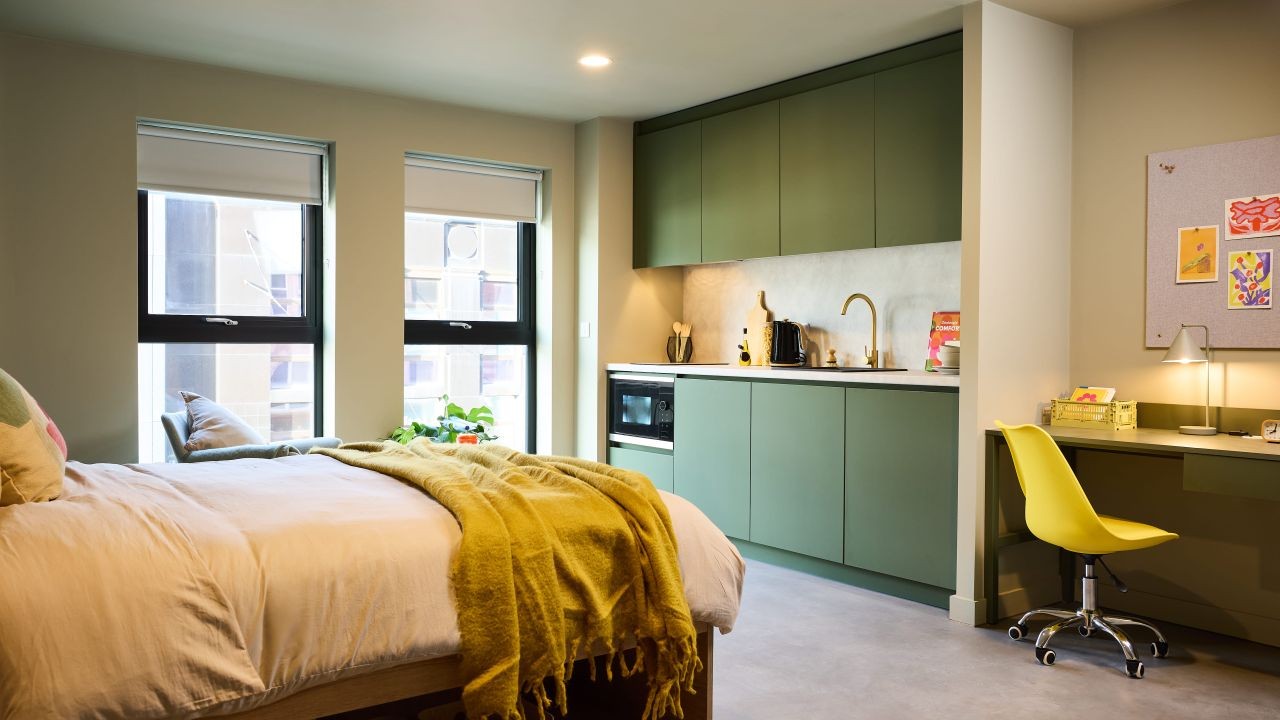
Securing the right student accommodation is far more than a logistical task; it's a foundational strategic decision that directly impacts academic performance, financial health, and overall well-being. For the analytical mind, particularly one attuned to risk assessment and systems thinking, this process mirrors a complex project requiring due diligence, threat modeling, and a clear return-on-investment framework. The Australian student housing market is a dynamic ecosystem, presenting both immense opportunity and potential pitfalls. This guide will equip you with a consultant's toolkit to navigate it successfully, transforming a stressful search into a structured, strategic victory.
The Strategic Framework: A Four-Phase Approach
Treat your accommodation search as a phased project. This structured methodology minimizes emotional decision-making and maximizes objective outcomes.
Phase 1: Intelligence Gathering & Requirements Analysis
Before browsing a single listing, define your operational parameters. This is your project brief.
- Financial Modelling: Establish a strict budget, factoring in not just rent but also utilities (often excluded), internet, transportation, and a contingency fund. The National Union of Students' 2023 Financial Stress Survey revealed that over 60% of Australian students regularly skip classes to work to cover living costs. Your accommodation choice is the largest lever to control this pressure.
- Location & Threat Assessment: Proximity to campus is a premium. Use tools like Walk Score and public transport apps to model commute times. From consulting with local businesses across Australia, I've seen students underestimate the cumulative time and cost of long commutes. A cheaper rent 45 minutes away may have a hidden "cost" of 15+ hours of lost study or work time per week.
- Non-Negotiables vs. Nice-to-Haves: Create a weighted scoring matrix. Is high-speed internet for cloud-based research a 10/10 priority? Is a gym on-site a 3/10? This quantifies your decision process.
Phase 2: Market Exploration & Source Evaluation
The Australian market offers distinct options, each with its own pros, cons, and risk profile.
University-Managed Accommodation (On-Campus)
Pros: Ultimate convenience, inclusive bills, strong community building, and academic support services. High security and predictability. Cons: Premium cost, often competitive with limited spots, less independence, and can be restrictive (e.g., guest policies). ROI Insight: The ROI here is measured in time saved and network access. For first-year or international students, the soft-landing and built-in social network can be invaluable for integration and early academic success.
Purpose-Built Student Accommodation (PBSA)
Privately operated, modern complexes like those by Scape, UniLodge, or Iglu. Pros: Turnkey solution, all-inclusive, furnished, strong amenities (cinemas, study rooms), and resident events. Often located in prime inner-city areas. Cons: Can be the most expensive option per square metre. Contracts are often tightly standardized with less room for negotiation. Data Point: According to JLL's 2024 Student Accommodation Report, the PBSA sector in Australia has seen consistent rental growth above inflation, driven by strong international student return. This underscores the need to book early if this is your chosen path.
Private Rentals (Share Houses/Apartments)
Pros: Greatest independence, potential for lower cost (especially in share houses), authentic local living experience, and lease flexibility. Cons: Highest operational overhead: dealing with real estate agents, bond lodgement, utility set-up, and potential for maintenance issues. Requires thorough tenant due diligence. Actionable Insight: Having worked with multiple Australian startups in the proptech space, I recommend using platforms like Flatmates.com.au and Fairy Floss Real Estate on Facebook, but treat them as initial sourcing tools only. The real vetting happens offline.
Reality Check for Australian Students: Assumptions That Don't Hold Up
Let's correct three costly strategic errors I frequently observe.
Myth 1: "I'll find something easily when I arrive." Reality: The rental vacancy rate in major Australian cities like Sydney and Melbourne consistently hovers around 1-2%. For students, competing without a local rental history or proof of steady income is a significant disadvantage. Securing accommodation remotely, even temporarily, is a critical risk-mitigation step.
Myth 2: "The advertised rent is the total cost." Reality: This is a classic hidden cost fallacy. In private rentals, you must add water, gas, electricity, and internet. In my experience supporting Australian companies, we call this the "Total Cost of Ownership." Apply it here. Always ask for estimated quarterly utility costs for a similar property.
Myth 3: "A digital inspection is sufficient for a 12-month lease." Reality: While virtual tours are excellent for shortlisting, they cannot assess neighbourhood noise at night, transport accessibility at rush hour, or the true condition of appliances. If a major financial commitment, an in-person or delegated inspection is non-negotiable. Consider using a reputable buyer's agent service if you cannot be there.
The Due Diligence Protocol: Your Inspection Checklist
Approach property inspections like a systems audit. Bring this checklist:
- Documentation Review: Request a copy of the lease agreement beforehand. Understand bond lodgement rules (with your state's Residential Tenancies Bond Authority) and break-lease clauses.
- Physical Systems Check: Test water pressure in showers, check phone reception in all rooms, inspect for mould (especially in bathrooms), and ensure all appliances are operational.
- Security Assessment: Check window and door locks. What is the building's security access like? Is there adequate lighting in common areas?
- Stakeholder Interview: If possible, speak to current tenants. Ask about the real cost of utilities, the responsiveness of the landlord/agent, and the true nature of the neighbourhood.
Case Study: Strategic Pivot to Secure Value
Problem: "Anjali," an international postgraduate student at the University of Melbourne, had a budget of $350 per week. Her initial strategy focused solely on studio apartments within a 20-minute walk of campus, leading to intense competition and no successful applications after one month.
Action: We reframed her strategy using a weighted matrix. She prioritized "quiet study space" and "financial buffer" over "ultra-short walk." We identified suburbs one train stop away (adding 12 minutes commute) with higher housing stock. She targeted a 2-bedroom apartment to share, effectively reducing her individual rent liability. She prepared a "tenant dossier" including her offer letter from the university, references from a previous overseas landlord, and three months of bank statements showing sufficient funds.
Result: Within two weeks, Anjali secured a modern, spacious 2-bedroom apartment in a quieter suburb for $620 per week total ($310 each). The commute was 25 minutes door-to-door via a direct train. Her financial buffer increased by $160 per month, and she gained a dedicated study roommate.
Takeaway: Flexibility on a single variable (exact location) and a shift in model (share vs. solo) unlocked superior value and reduced risk. The professional presentation of her application outshone competitors.
Future Trends & Proactive Positioning
The landscape is evolving. Savvy students will position themselves ahead of these trends:
- Rise of the "Digital Nomad" Student: With hybrid learning remaining, accommodation with dedicated, ergonomic study spaces and redundant, high-speed internet will command a premium.
- Sustainability as a Value Driver: Properties with solar panels, efficient appliances, and good thermal performance are not just ethical choices; they directly reduce the variable cost of utilities. This is a tangible financial benefit.
- Regulatory Scrutiny: Drawing on my experience in the Australian market, state governments are increasingly scrutinising rental standards and tenant rights. Ensure your landlord is compliant with minimum standards (e.g., in Victoria, rental providers must provide a working heater). Knowledge of your rights is a powerful tool.
Final Takeaway & Strategic Call to Action
Finding the best student accommodation is a project that rewards a strategic, data-informed approach. Move beyond passive browsing to active, systematic sourcing and due diligence.
Your Immediate Action Plan:
- Build Your Brief: Finalize your weighted scoring matrix (Budget, Location, Type, Amenities).
- Run the Models: Compare the Total Cost of Ownership for your top three accommodation types over a 12-month period.
- Initiate Outreach: Contact university services, set alerts on key platforms, and prepare your "tenant dossier" now.
- Schedule Audits: Line up virtual and, if possible, in-person inspections for your shortlist.
Treat this process with the same rigor you would any critical project. The result is more than a roof over your head—it's a stable platform for academic and personal success. Now, deploy your strategy.
People Also Ask
What are the hidden costs of student accommodation in Australia? Beyond rent, budget for utilities (electricity, gas, water), internet, contents insurance, transport, and one-off costs like the rental bond (usually 4 weeks rent) and furniture if not included. Always ask for past utility bills.
Is it better to live on-campus or off-campus in Australia? The "better" choice depends on your ROI definition. On-campus offers convenience and community at a premium price, ideal for first-years. Off-campus offers independence and potential cost savings but requires more management. Model the total cost and time impact for your specific situation.
How can international students secure accommodation before arriving in Australia? Use university-approved homestay or temporary accommodation for your first 2-4 weeks. This provides a base to conduct in-person inspections. Leverage university housing services, use reputable PBSA providers with secure online booking, and be wary of sending money without verified contracts.
Related Search Queries
- student accommodation Sydney vs Melbourne cost
- how to check rental property history Australia
- tenant rights Australia bond claim
- best suburbs for students Brisbane 2024
- share house agreement template Australia
- utility cost estimator Australia rental
- Residential Tenancies Authority (RTA) by state
- Scape vs UniLodge reviews
- how to negotiate rent Australia student
- accommodation for postgraduate students Australia
For the full context and strategies on How to Find the Best Student Accommodation in Australia – Proven Strategies for Australians, see our main guide: Law Firm Branding Videos Australia.