





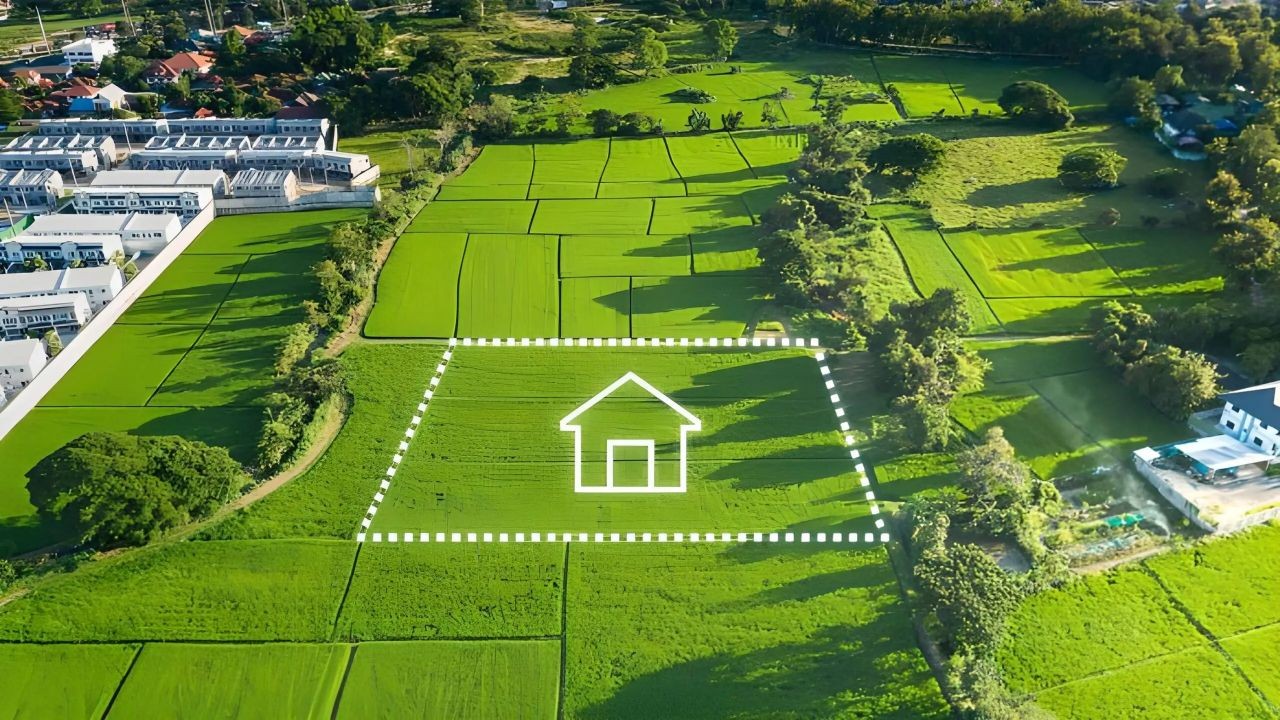
Land development is not a game for the faint of heart or the poorly informed. It is a high-stakes exercise in applied economics, where capital allocation meets regulatory labyrinth, and where the thin margin between profit and catastrophic loss is often defined by foresight and rigorous analysis. In New Zealand's unique and often volatile property landscape, the cost of error is magnified. A seemingly minor miscalculation in feasibility, a blind spot in infrastructure liability, or a naive reading of market cycles can swiftly transform a promising project into a multi-million-dollar quagmire. This analysis dissects five critical, yet frequently overlooked, mistakes that have the potential to decapitalise even the most experienced developers, drawing on hard data and the distinct realities of the Kiwi market.
Mistake 1: The Fatal Flaw in Feasibility – Underestimating True Holding Costs & Inflation
The initial feasibility study is the foundational economic model for any development. The critical error here is not merely getting the end-sale price wrong, but profoundly misjudging the journey to completion. Developers often anchor their models to best-case, linear timelines, failing to adequately stress-test for delays and the corrosive effect of inflation on holding costs. These costs—land financing, rates, insurance, and security—are not static. In an inflationary environment, they compound silently, eroding equity long before a single section is titled.
Consider the New Zealand context. The Reserve Bank of New Zealand's (RBNZ) aggressive monetary tightening cycle saw the Official Cash Rate (OCR) rise from 0.25% in August 2021 to 5.50% by mid-2023. For a developer with a $10 million land loan, the annual interest cost could have ballooned by over $500,000 within two years. Concurrently, construction cost inflation peaked at nearly 10% annually according to Stats NZ's construction input price indexes. A project delayed by 12-18 months during this period faced a double-barrelled assault: soaring financing costs and a significantly more expensive build.
Case Study: The Suburban Gridlock – A Canterbury Cautionary Tale
Problem: A well-capitalised development group embarked on a 150-lot greenfield subdivision in Greater Christchurch in early 2021. The feasibility was robust based on pre-sales and costings at the time. However, the project became ensnared in protracted infrastructure negotiations with the local council and encountered unexpected geotechnical challenges, pushing the development timeline out by 22 months.
Action: The original model assumed a steady OCR and 3% annual construction inflation. As delays mounted, the developers were forced to re-finance at higher rates and re-tender building contracts, with suppliers passing on soaring material costs.
Result: The holding costs on the land debt alone increased by $1.85 million over the delay period. Construction costs per unit rose by 18%, slashing the projected profit margin from a healthy 22% to a precarious 4%. The project survived but delivered a return on capital that was a fraction of what was initially modelled, effectively a loss when considering risk-adjusted opportunity cost.
Takeaway: Feasibility is not a one-time exercise. It is a dynamic model that must be pressure-tested against interest rate shocks, supply chain disruptions, and bureaucratic delay scenarios. From consulting with local businesses in New Zealand, I've observed that the most resilient developers build contingency buffers of 20-25% on timelines and 15% on costs, not the standard 10%. They also actively hedge interest rate exposure where possible, treating it as a non-negotiable risk management cost.
Key Actions for Kiwi Developers:
- Model for Stress, Not Stability: Run scenarios with OCR peaks at 6.5%+ and construction inflation at 8-10% annually. Use RBNZ inflation forecasts and MBIE construction sector reports as baseline inputs.
- Engage Early with Councils: Pre-application meetings are essential. Understand the true capacity of existing water, wastewater, and roading networks. The cost of upgrading off-site infrastructure can be catastrophic if unanticipated.
- Lock in What You Can: Pursue fixed-price construction contracts with clear escalation clauses tied to specific Stats NZ indices, not open-ended "market increase" terms.
Mistake 2: The Infrastructure Mirage – Assuming "Services to Boundary" is the End of the Story
A fundamental misconception is that once services are provided to the boundary of a development, the developer's infrastructure liabilities are complete. This is a dangerous mirage. The true cost lies in the long-term performance and maintenance obligations of newly created assets—roads, footpaths, stormwater systems, and reserves—that are often required to be vested in the council. Councils, under the Subdivisions and Development Contributions Policy, will only accept these assets if they are built to exacting, often future-proofed, standards that exceed the minimum necessary for the immediate development.
Drawing on my experience in the NZ market, I've seen projects where the cost of bringing a simple residential road up to council vesting standard—including footpaths, cycle lanes, landscaping, and stormwater treatment devices like rain gardens—was 300% higher than the cost of installing a basic accessway. Furthermore, developers can be held liable for defects in these assets for a warranty period of several years after vesting, creating a lingering financial exposure.
The Industry Insight: The Rise of the "Infrastructure Gap" Financing Model
An emerging, and under-discussed, trend is the use of targeted rate structures or public-private partnerships to fund major off-site infrastructure required to unlock development. For example, a large-scale development may be contingent on a new wastewater treatment plant or a major arterial road extension. Councils, facing debt ceilings, are increasingly looking to developers to fund this upfront, with the cost recouped via a targeted rate on the new properties over 20-30 years. While this unlocks the land, it transfers massive upfront capital risk to the developer and complicates cashflow projections. Understanding these mechanisms is now a core competency.
How NZ Readers Can Apply This Today:
- Decode the Engineering Standards: Before purchasing land, obtain the council's Land Development & Subdivision Infrastructure Standards. Have a quantity surveyor and civil engineer cost the infrastructure to vesting standard, not just functional standard.
- Budget for the "Green" Components: Modern requirements for ecosystem health, water sensitivity, and urban canopy mean significant portions of your infrastructure budget will go to non-traditional elements like stormwater treatment wetlands and native planting schemes.
- Negotiate the Vesting Agreement: Engage legal counsel to scrutinise the asset vesting and warranty agreements. Limit liability periods and define clear handover protocols.
Mistake 3: Misreading the Market Cycle – Building the Wrong Product at the Wrong Time
Development timelines of 3-5 years mean you are selling into a future market, not today's. A common, costly error is extrapolating current high demand for a certain product type (e.g., large standalone homes) linearly into the future. By the time your titles are ready, the market may have pivoted due to demographic shifts, policy changes, or economic contraction. The 2022-2024 correction in New Zealand house prices, with values falling over 15% from their peak (as per REINZ House Price Index), starkly illustrated the peril of buying land at peak prices to build a product for a peak market that had already vanished.
In my experience supporting Kiwi companies, the most successful developers adopt a counter-cyclical mindset. They secure land during periods of market pessimism (when it's cheaper) and design for flexibility, allowing them to pivot product mix—from standalone houses to townhouses, or from large lots to more intensive, affordable configurations—as market signals evolve.
The Data-Driven NZ Insight: The Demographic Imperative
Ignoring Stats NZ population projections is commercial folly. New Zealand's population is ageing rapidly, with the median age projected to rise from 37 years in 2023 to 41 years by 2048. Simultaneously, household sizes are shrinking. The economic implication is profound: long-term demand is shifting toward lower-maintenance, accessible, and medium-density housing close to amenities and healthcare. A development today that caters exclusively to young families seeking quarter-acre sections may be targeting a shrinking segment of the future market.
Next Steps for Kiwi Developers:
- Design for Density Flexibility: Seek zoning that allows for a mix of housing types. Can your lot layout accommodate both standalone houses and terrace housing if the market shifts?
- Monitor Leading Indicators, Not Lagging Ones: Watch net migration figures, building consent issuance (a leading indicator of future supply), and mortgage approval data rather than just historical sale prices.
- Engage a Market Economist Early: Make a professional market analysis, with 5-year forecasts, a core part of your initial due diligence, not a marketing afterthought.
Mistake 4: The Policy Blind Spot – Ignoring the Velocity of Regulatory Change
The regulatory framework governing land use in New Zealand is not a static rulebook; it is a rapidly evolving landscape. Treating it as a compliance checkbox, rather than a strategic variable, is a critical error. The most glaring example is the Resource Management Act (RMA) reform. While the replacement legislation has been fraught, the direction of travel is clear: towards greater emphasis on environmental outcomes, climate change adaptation, and enabling more density in urban areas. A developer who purchased rural land for subdivision based on old district plan rules may find it impossible to gain consent under new National Policy Statement directives on freshwater or highly productive land.
Through my projects with New Zealand enterprises, I've seen savvy developers treat policy analysis as a competitive advantage. They actively submit on proposed district and regional plan changes, not just to protect existing interests, but to anticipate and position for future rules. They understand that a change in a National Policy Statement can render vast swathes of land undevelopable or dramatically alter development economics overnight.
Controversial Take: The "Billion-Dollar Blunder" of Ignoring Climate Risk
Many developers continue to assess coastal or floodplain land based on historical flood maps and current insurance availability. This is a billion-dollar blunder in the making. As climate change intensifies, insurers and banks are rapidly internalising climate risk through sophisticated modelling. The Reserve Bank of New Zealand has explicitly warned financial institutions to manage climate-related risks. Land that is insurable today may become uninsurable, and thus unfinanceable, within the lifespan of a new mortgage. The future liability for retreat or resilience works could fall on property owners, making such developments toxic assets. The forward-looking developer now runs future climate scenario modelling (e.g., 1.5m sea-level rise, increased rainfall intensity) as a standard part of due diligence, walking away from sites that fail.
Practical Actions for NZ-Based Teams:
- Conduct a Regulatory Horizon Scan: Subscribe to MBIE and Ministry for the Environment updates. Understand the implications of the National Adaptation Plan, the Emissions Reduction Plan, and the proposed Spatial Planning Act.
- Integrate Climate Due Diligence: Commission a report from a climate risk consultancy using NIWA data to model future flood, coastal erosion, and wildfire risk over a 50-80 year horizon.
- Engage with Iwi Early and Meaningfully: The principles of Te Tiriti o Waitangi are being increasingly woven into resource management. Early, genuine partnership can unlock opportunities and prevent costly consenting delays.
Mistake 5: Capital Structure Arrogance – Over-Leveraging and Under-Capitalising
This is the ultimate, balance-sheet-level mistake that turns all other errors fatal. It is the belief that a project can be funded with 80-90% debt, with the developer's equity stretched thin across multiple ventures. This model works only in a world of perpetually rising prices, falling interest rates, and zero delays—a fantasy. When the cycle turns, as it always does, highly leveraged developers are the first to face margin calls from nervous banks, forcing fire sales of assets at the bottom of the market to meet equity covenants.
The New Zealand property downturn of 2022-2024 exposed this ruthlessly. Developers who had borrowed against the inflated equity of existing projects to fund new acquisitions found themselves in negative equity as valuations fell. Having worked with multiple NZ startups and established firms, the differentiating factor in survival was not the quality of the project, but the strength of the balance sheet. Conservative capital structures, with 30-40% equity at a minimum, provide the essential buffer to absorb shocks, negotiate with banks from a position of strength, and wait for the market to recover rather than being a forced seller.
Pros vs. Cons: High-Leverage Development Strategy
✅ Pros:
- Amplified Returns on Equity (ROE): In a rising market, using high debt (leverage) can magnify the percentage return on the developer's own capital invested.
- Capital Efficiency: Allows a developer to control more assets and undertake larger projects with a limited equity base, potentially growing the portfolio faster.
- Tax Deductibility: Interest costs are typically tax-deductible, improving after-tax cashflow during the development phase.
❌ Cons:
- Extreme Risk Exposure: Amplifies losses in a downturn. A small decline in asset values can wipe out thin equity cushions entirely.
- Interest Rate Vulnerability: Cashflow is highly sensitive to rising interest rates, which can quickly turn a viable project insolvent.
- Loss of Control: Banks can impose strict covenants. If breached, they can appoint receivers, seizing control of the project and assets from the developer.
- Forced Sale Scenarios: In a market correction, leveraged developers may be forced to sell assets at distressed prices to repay debt, crystallising losses.
Key Actions for Young Kiwis in Development:
- Partner for Strength, Not Just Skill: Seek equity partners who bring capital and patience, not just expertise. A strong joint venture balance sheet is more valuable than a 100% share of a failing project.
- Stress-Test Your Banking Covenants: Model what happens to your loan-to-value ratio (LVR) if land valuations drop by 20%. Have a pre-agreed equity injection plan with your investors.
- Build Relationships with Multiple Lenders: Avoid reliance on a single bank. Having alternative funding sources provides negotiating power and a lifeline if one institution turns risk-averse.
Final Takeaways & The Path Forward
Land development in New Zealand remains a powerful wealth-creation engine, but its mechanics have grown infinitely more complex. The era of easy gains through simple land banking is over. Success now belongs to the economically literate, the strategically agile, and the financially resilient.
- Fact: Feasibility is a dynamic risk model, not a static profit projection. Stress-test relentlessly.
- Strategy: Treat infrastructure and regulatory analysis as core competitive disciplines, not compliance overheads.
- Mistake to Avoid: Never confuse a cyclical market peak with a permanent new plateau. Design for the future demographic, not yesterday's trend.
- Pro Tip: Conservative capital structure is your ultimate insurance policy. It grants you the time to be right when the market is wrong.
The future of New Zealand development will be defined by sustainability, density, and resilience. The developers who thrive will be those who see these not as constraints, but as the new parameters for value creation. They will be masters of data, diplomacy with councils and iwi, and disciplined capital allocators. The question is not whether the next cycle will come, but whether your next project is structured to survive it.
People Also Ask (FAQ)
What is the single biggest financial risk for a new land developer in NZ today? Underestimating holding cost inflation amid volatile interest rates. With the OCR historically high and construction costs elevated, a delay of 12-18 months can erase a project's entire profit margin through compounding finance and increased build costs.
How can I assess the true infrastructure cost of a potential development site? Go beyond the headline "services to boundary." Obtain the council's Infrastructure Development Standards and engage a civil engineer to produce a cost estimate to bring all internal roads, footpaths, and stormwater systems up to the council's vesting standard for takeover, which is often significantly more expensive than basic installation.
Are there specific areas in New Zealand that are considered higher risk for development currently? Areas with high exposure to climate-related hazards (coastal erosion, flooding, wildfire) and regions where significant infrastructure upgrades are needed to support growth but lack clear funding pathways. Always conduct future-focused climate risk due diligence using NIWA projections.
Related Search Queries
- New Zealand land development feasibility study template
- RBNZ OCR forecast impact on property development
- Council development contributions calculator NZ
- Climate change due diligence for NZ property developers
- Resource Management Act reform latest updates 2024
- Average construction cost per square metre NZ 2024
- Joint venture structures for property development NZ
- Stats NZ population projections housing demand
- How to finance infrastructure for large scale subdivision NZ
- Commercial vs residential land development risk NZ
For the full context and strategies on 5 Land Development Mistakes That Could Cost You Millions – Why It’s Becoming a Big Deal in New Zealand, see our main guide: Bar Nightlife Video Promotion Nz.