






The New Zealand housing market, long a barometer of national confidence and a repository of generational wealth, is no longer a monolith moving in predictable, ever-upward unison. The era of straightforward capital gains has given way to a more complex, fragmented, and psychologically fraught landscape defined by pronounced price fluctuations. These are not mere statistical blips but profound cultural and economic tremors, revealing deep fissures in the Kiwi psyche between the property-owning class and the locked-out generation, between regional resilience and metropolitan vulnerability. To understand these fluctuations is to understand a nation grappling with its identity, its economic dependencies, and the limits of its most cherished asset.
The Anatomy of a Fluctuation: Beyond Interest Rates
Conventional wisdom pins housing volatility squarely on the Official Cash Rate (OCR). While the Reserve Bank of New Zealand's (RBNZ) tightening cycle—lifting the OCR from a historic low of 0.25% in 2021 to 5.5% by mid-2023—is the primary antagonist in the recent correction narrative, this is a reductive analysis. The fluctuation is a symphony of interlocking pressures, each with a distinct timbre.
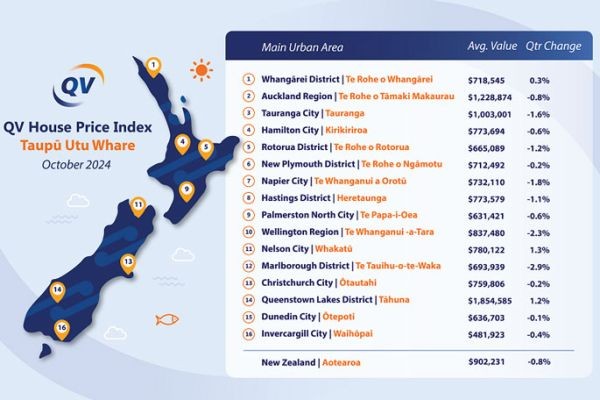
Data from the Real Estate Institute of New Zealand (REINZ) paints a stark picture of the downturn: the national median house price fell approximately 15% from its late-2021 peak to its trough in early 2023. However, this aggregate masks a critical divergence. While Auckland bore the brunt with declines exceeding 20% in some suburbs, regions like the West Coast and Southland demonstrated remarkable stability, with prices even showing modest gains. This isn't a national crash; it's a strategic recalibration. From observing trends across Kiwi businesses, particularly those in construction and real estate services, the feedback is clear: the market has shifted from a fear-of-missing-out (FOMO) frenzy to a fear-of-overpaying (FOOP) caution. Buyer psychology, now tempered by high debt-servicing costs, has become the invisible hand guiding price discovery.
Key Actions for Prospective Buyers & Sellers
In this climate, blanket advice is useless. Your strategy must be hyper-local.
- For Buyers: Abandon national median price obsession. Drill into REINZ's suburb-by-suburb data and CoreLogic's interactive mapping tools. A "bargain" in a declining Auckland fringe suburb may still be overvalued compared to a stable, in-demand provincial centre. Your pre-approval amount is not a target.
- For Sellers: Price expectations must be grounded in recent, verified sales (not 2021 listings). Marketing must now articulate value beyond square metres—think energy efficiency, proximity to amenities, and development potential. Emotional attachment has zero market value.
- For All: Engage a financial advisor to stress-test your position against potential further OCR holds or minor increases. The RBNZ's forward track, suggesting rates will remain restrictive into 2025, is your most important planning document.
The Great New Zealand Housing Debate: Correction vs. Collapse
The current volatility has ignited a fierce debate among economists, policymakers, and commentators. This is not academic; the chosen narrative influences consumer behaviour, investment, and political pressure.
The "Healthy Correction" Perspective
Advocates of this view, including some within the RBNZ, argue the decline is a necessary and managed recalibration. They point to the unsustainable 40%+ price surge during the pandemic, fueled by cheap money and suppressed supply. The correction, they contend, has improved affordability metrics from their worst levels and shaken out speculative investors. The core demand drivers—a housing deficit estimated by MBIE to be in the tens of thousands, strong net migration (a record 139,000 net gain in 2023), and constrained new construction—remain structurally intact. The fluctuation is seen as a painful but essential purge, restoring long-term market stability.
The "Systemic Risk" Perspective
Critics warn that labelling this a mere "correction" dangerously underestimates embedded risks. They highlight the record levels of household debt, now over 170% of disposable income according to RBNZ figures. The concern is that prolonged high interest rates could trigger a rise in mortgagee sales, creating a negative feedback loop of forced selling and further price declines. Furthermore, they argue the demand pillar of migration is fickle, and the construction sector is faltering under cost pressures and insolvencies, threatening the supply response. From this vantage point, the market is not finding a floor but hovering over a precipice, vulnerable to an external shock.
The Middle Ground: A Fragmented, "Bumpy Landing"
A more nuanced, and arguably more accurate, analysis synthesises these views. The market is undergoing a "bumpy landing," where outcomes will vary dramatically by location, property type, and buyer segment. Based on my work with NZ SMEs in the property sector, I see evidence supporting this: premium, well-located properties in major centres are still transacting, albeit after longer campaigns, while interest in affordable, new-build homes remains relatively robust due to favourable lending rules. The true risk lies in the middle market—the leveraged investor or the stretched owner-occupier in an area with weak economic fundamentals. The systemic collapse is unlikely, but significant pockets of severe distress are inevitable.
Case Study: The Christchurch Conundrum – Resilience in the Face of National Trends
Problem: Following the 2010-2011 earthquakes, Christchurch embarked on a massive rebuild, fundamentally altering its housing stock and market dynamics. As the national market soared post-2020, Christchurch's growth was more muted. When the national correction began, the question was whether Christchurch, with its different supply-demand equation, would experience a sharper or shallower downturn.
Action: The Christchurch market's action was largely passive, dictated by its unique fundamentals. The rebuild had injected a significant amount of new, often more affordable and higher-spec housing into the market. The city's price-to-income ratio remained more favourable than Auckland or Wellington. There was less speculative "hot money" in the market during the boom, meaning less fuel for a fire sale during the bust.
Result: Christchurch demonstrated remarkable resilience. While prices softened, the decline was markedly less severe. Data from CoreLogic shows that while Auckland values fell over 20% peak-to-trough, Christchurch's decline was contained to roughly 10%. More importantly, sales volumes held up better, indicating continued underlying demand and a lack of panic selling. The city's market fluctuation was a gentle wave compared to the tsunami that hit other centres.
Takeaway: This case study powerfully debunks the myth of a single, national New Zealand housing market. Local factors—historical supply shocks, economic diversification, and demographic trends—are paramount. For investors, this underscores the critical importance of geographic diversification and deep local due diligence over following national headlines.
Pros and Cons of a Volatile Housing Market
Price fluctuations, while stressful, create distinct winners and losers and reshape opportunities.
✅ Potential Advantages
- Improved Entry Points for First-Home Buyers (FHBs): While still difficult, the combination of lower prices, less competition from investors, and targeted government support (e.g., reduced Bright-Line test, First Home Grant) has opened a narrow window for prepared FHBs.
- Market Efficiency Reset: Irrational exuberance has been dampened. Due diligence is back, and over-leveraged, poor-quality investments are being exposed, leading to a healthier, more sustainable market in the long run.
- Policy Focus on Supply: Volatility keeps political attention on the core issue: a chronic shortage of homes. It creates pressure for reforms to the Resource Management Act (RMA), infrastructure funding, and building sector productivity.
❌ Significant Risks and Downsides
- The Wealth Effect in Reverse: Falling prices erode household wealth, dampening consumer confidence and spending. This has a direct knock-on effect on retail, hospitality, and construction sectors. In my experience supporting Kiwi companies in consumer goods, a direct correlation exists between falling house prices in a region and decreased discretionary spending.
- Mortgage Stress and Financial Stability: The rapid transition from 2-3% to 6-7% mortgage rates represents a profound income shock for recent buyers. The RBNZ's Financial Stability Report notes a rising number of households facing severe payment pressure, a risk to both social well-being and the banking system.
- Construction Sector Contraction: Falling prices and high costs are squeezing developers, leading to project cancellations and builder insolvencies. This threatens to worsen the long-term supply shortage, storing up problems for the next cycle.
- Deepening Social Inequality: Volatility disproportionately harms those with the least buffer—first-home buyers who bought at the peak, and renters who face passed-on costs via rising rents, which have hit record highs nationwide according to Stats NZ.
Debunking Common Housing Market Myths
Navigating fluctuations requires clearing the fog of pervasive misconceptions.
Myth 1: "When interest rates fall, prices will immediately skyrocket again." Reality: This assumes a return to pre-2021 conditions, which is highly unlikely. The RBNZ has explicitly stated its intent to avoid fuelling another housing bubble. Credit conditions will remain tighter due to the Credit Contracts and Consumer Finance Act (CCCFA) reforms and more conservative bank lending. Any future rate cuts will likely be gradual, and the market response will be muted compared to the past.
Myth 2: "Renting is always dead money." Reality: This outdated mantra ignores the high cost of homeownership in a high-interest-rate environment. When accounting for mortgage interest, rates, insurance, and maintenance, the upfront cost of buying can far exceed renting in the short-to-medium term. The financial benefit of buying is a long-term play based on capital growth, which is no longer guaranteed. A 2023 study from the University of Auckland suggested that in many current scenarios, investing the difference between rent and a mortgage in other assets could yield a better financial outcome.
Myth 3: "The government will always step in to prop up prices." Reality: Policy priorities have shifted. While political sensitivity remains, the focus is now squarely on affordability and supporting first-home buyers, not protecting investor capital gains. Policies like the removal of interest deductibility for landlords and the reinstatement of a bright-line test based on actual property ownership periods signal a tolerance for moderated prices. The state's role is now more referee than cheerleader.
The Future of New Zealand Housing: Five Bold Predictions
Based on current trajectories and structural constraints, the next decade will see the market transform, not revert.
- The End of the "One-Size-Fits-All" Market: National medians will become increasingly meaningless. We will speak of the "Auckland market," the "Wellington apartment market," the "regional growth centre market." Investment success will hinge on micro-level expertise.
- Policy-Led Reshaping of Tenure: The Build-to-Rent (BTR) sector, bolstered by recent government incentives, will mature significantly, providing high-quality, long-term rental options and becoming a major institutional asset class. Homeownership rates may continue a gentle, long-term decline.
- Climate Risk Priced In: Insurability and climate adaptation reports will become as critical as builder's reports. Properties in flood zones or with poor energy efficiency will see steep discounts, creating a new form of value stratification based on resilience.
- Technology-Driven Transparency: AI and big data will democratise market analysis. Buyers will have real-time access to valuation models, neighbourhood sales histories, and investment yield calculators, reducing information asymmetry.
- A Focus on "Cost of Occupancy": The conversation will shift from pure purchase price to the total cost of living in a home. Energy-efficient, low-maintenance, well-located properties will command a growing premium over larger, inefficient homes in car-dependent suburbs.
Final Takeaway & Call to Action
The era of effortless wealth generation through residential property in New Zealand is conclusively over. The market's future will be defined not by smooth appreciation but by managed fluctuations, driven by a complex matrix of interest rates, migration, policy, and—increasingly—climate. This demands a more sophisticated, less emotional approach from all participants.
For Kiwis, this means moving beyond the cultural dogma of property at any cost. Conduct your own due diligence as if you were analysing a business. Interrogate the data, stress-test your finances against realistic scenarios, and choose a home first as a place to live, not just a vehicle for investment. The greatest risk in this new environment is not missing out on a boom, but being caught overexposed when the next inevitable fluctuation arrives.
What’s your next move? Is your strategy built for the volatile, fragmented market of the future, or is it anchored in the myths of the past? Share your perspective and questions below—the most insightful discussions emerge when we challenge our deepest-held assumptions.
People Also Ask (PAA)
How do housing price fluctuations impact the wider New Zealand economy? Fluctuations directly affect consumer spending via the "wealth effect," influence construction sector health, and impact government revenue through GST and property-related taxes. A falling market can dampen economic growth, while a rising one can exacerbate inflation and inequality.
What is the biggest mistake buyers make in a volatile market? The biggest mistake is emotional decision-making—either panic buying in a rising market out of FOMO, or refusing to buy in a softening market due to an expectation of endless falls. Both approaches ignore fundamental, long-term value and personal circumstances.
Are there any parts of New Zealand expected to see growth despite the downturn? Yes. Regions with strong, diversified local economies, population growth, and relative affordability—such as parts of the Waikato, Bay of Plenty, and Canterbury—are expected to show more resilience and potentially experience modest growth while larger centres correct.
Related Search Queries
- NZ house price forecast 2024 2025
- Best time to buy a house in New Zealand
- Impact of migration on NZ housing market
- Christchurch vs Auckland housing market
- First home buyer tips NZ 2024
- New Zealand mortgage stress statistics
- Bright-line test rules 2024
- Build-to-Rent developments New Zealand
- Climate change property risk NZ
- RBNZ OCR announcement dates 2024
For the full context and strategies on 10. Housing market trends: price fluctuations – The Key to Unlocking Growth in New Zealand, see our main guide: Nz Horticulture Viticulture Seafood Videos.