



The landscape of modern business is undergoing a profound and necessary transformation, one that moves beyond mere compliance and greenwashing to a fundamental re-evaluation of value creation. In New Zealand, a nation whose global brand is inextricably linked to pristine environments and a 'clean, green' image, this shift carries particular weight and complexity. The traditional linear economic model—take, make, dispose—is not only ecologically bankrupt but is increasingly seen as a strategic liability. A 2022 report by the Ministry for the Environment (MfE) starkly illustrated this, noting that Aotearoa New Zealand generates over 17 million tonnes of waste annually, with a concerningly low recovery rate. This data point is not just an environmental statistic; it is a glaring indicator of systemic economic inefficiency and a direct threat to the nation's long-term prosperity and international reputation. The cautious path forward, therefore, lies not in incremental adjustments, but in a deliberate, strategic embrace of the circular economy—a model designed to eliminate waste, circulate products and materials, and regenerate nature.
Beyond Recycling: Deconstructing the Circular Economy for Kiwi Business
Too often, sustainability is conflated with end-of-pipe solutions like recycling. While important, this is a dangerously narrow view. The circular economy is a systemic framework that demands innovation at every stage of a product's lifecycle. It requires rethinking design for durability, repairability, and disassembly. It necessitates new business models based on sharing, leasing, or product-as-a-service. It compels us to see 'waste' not as an inevitable byproduct, but as a design flaw and a potential feedstock for another process.
Drawing on my experience supporting Kiwi companies, I've observed a common initial hurdle: the perception that circularity is the sole domain of large corporations with vast R&D budgets. This is a critical misconception. In practice, small and medium-sized enterprises (SMEs), which constitute 97% of all New Zealand businesses according to MBIE, are often more agile and better positioned to innovate in this space. Their closer connection to local supply chains and communities can be a powerful advantage in closing resource loops. The challenge is shifting from a mindset of cost-centric linear operations to one of value-centric circular systems.
Key Actions for New Zealand Enterprises Today
- Conduct a Material Flow Analysis: Map the journey of key materials through your operations. Where do they come from, and where do they end up? This identifies the largest leaks in your system.
- Engage with Local Innovation Ecosystems: Connect with organisations like the Sustainable Business Network's Circular Economy Accelerator or regional economic development agencies exploring circular initiatives.
- Explore Design-Led Change: Investigate how principles of modularity, non-toxic material use, and ease of repair could be integrated into your product or service design from the outset.
A Tale of Two Models: Linear Risk vs. Circular Resilience
To understand the imperative, we must contrast the two systems in stark relief. The linear model is inherently vulnerable. It is exposed to volatile global commodity prices, supply chain disruptions, and increasing regulatory costs associated with waste and emissions. For an island nation like New Zealand, with long, vulnerable supply lines, this dependency on imported raw materials and offshore processing for waste is a profound strategic risk.
Conversely, the circular model builds resilience. It decouples economic activity from the consumption of finite resources. By keeping materials in use, it buffers against price shocks. By designing out waste, it reduces compliance costs and environmental liabilities. From consulting with local businesses in New Zealand, the most successful early adopters are those who frame circularity not as an environmental add-on, but as a core driver of risk mitigation, cost reduction, and customer loyalty. They are future-proofing their operations.
Pros of Embracing a Circular Model
- Enhanced Resilience & Supply Chain Security: Reduced dependence on volatile global commodity markets and fragile linear supply chains.
- Cost Reduction & New Revenue Streams: Savings from waste disposal, material efficiency, and income from refurbishment, remanufacturing, or leasing services.
- Stronger Brand Alignment & Customer Loyalty: Meeting the growing consumer and B2B demand for genuine sustainability, particularly crucial for NZ's export sectors.
- Regulatory Foresight: Proactively adapting to inevitable future regulations on waste, product stewardship, and carbon emissions.
- Innovation Catalyst: Unlocks R&D into new materials, service models, and collaborative partnerships.
Cons and Inherent Challenges
- High Initial Transition Costs: Requires investment in R&D, new technology, staff training, and potentially revamping core operations.
- Complexity of System Change: Moving from a linear to a circular system often requires collaboration across entire value chains, which can be difficult to orchestrate.
- Market & Consumer Readiness: Not all markets yet value or understand circular products, and consumer behaviour change can be slow.
- Policy & Infrastructure Gaps: In many regions, including parts of New Zealand, the infrastructure for collecting, sorting, and reprocessing materials at scale is still developing.
- Measurement Difficulties: Traditional financial metrics often fail to capture the full value (risk mitigation, brand equity) of circular strategies.
Case Study: Methanex & the Circular Carbon Economy – A Controversial Blueprint?
Problem: Methanex New Zealand, a major producer of methanol, operates in the Taranaki region, historically the heart of the country's fossil fuel industry. Its core process traditionally relied on natural gas, a linear extractive model with significant carbon emissions. Facing global pressure to decarbonise and the eventual decline of the Maui gas field, the company confronted an existential threat to its long-term viability in New Zealand.
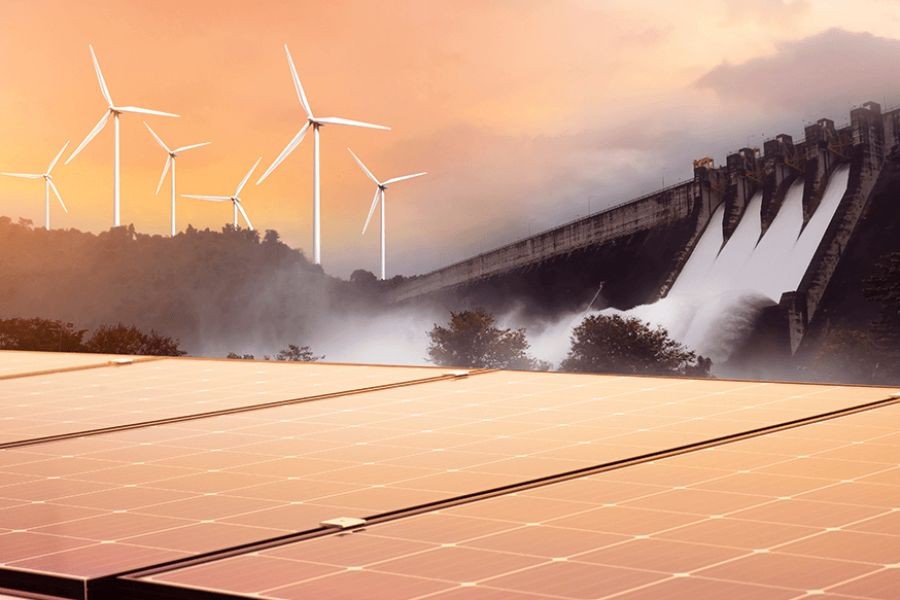
Action: Methanex embarked on a pathway to explore circular carbon solutions. This involved piloting and investing in technology to capture waste CO2 from industrial sources (like its own and others' operations) and combine it with 'green' hydrogen (produced from renewable electricity) to create low-carbon methanol. This "e-methanol" could then be used as a marine fuel or chemical feedstock, effectively recycling carbon atoms within a circular system rather than releasing them into the atmosphere.
Result: While still in development and scaling phases, this strategic pivot has several implications. It positions Methanex to produce a lower-carbon product for demanding international markets, such as the European Union. It creates a potential new use for captured CO2, turning a waste liability into a feedstock. According to industry analysis, successful scaling could significantly reduce the lifecycle carbon intensity of its product, though it remains energy-intensive.
Takeaway: This case is a potent, if controversial, example of a large incumbent applying circular economy thinking to its core process. It highlights that circularity is not just for new startups but is a necessary transition for heavy industry. For New Zealand, it presents a critical debate: can we leverage our abundant renewable energy to circularise hard-to-abate industries, or should we phase them out entirely? The Methanex example suggests a potential middle ground—using circular principles to decarbonise existing industries while building new, cleaner export capabilities, a complex but necessary discussion for the nation's economic transition.
Debunking Common Myths Hindering Circular Progress in NZ
Progress is often stalled by persistent myths. Let's dismantle three prevalent ones in the New Zealand context.
Myth 1: "The Circular Economy is just advanced recycling." Reality: Recycling is a last-resort, downstream process in a circular system. True circularity prioritises upstream innovation: designing products that don't become waste, adopting reuse and repair models, and keeping products and materials at their highest value for as long as possible. Based on my work with NZ SMEs, the greatest wins come from design and business model innovation, not just better waste contracts.
Myth 2: "It's too expensive and only for big corporations." Reality: While upfront costs exist, circular strategies drive long-term cost savings through material efficiency, waste reduction, and new revenue. SMEs, like Auckland's Again Again (a reusable cup system) or Wellington's Nisa (manufacturing underwear from recycled materials), are proving that circular, lean business models can be both scalable and profitable from the outset.
Myth 3: "New Zealand is too small and remote to make a difference." Reality: Our size and geography are advantages. We can pilot systems more easily and build tight-knit, regional circular loops. Our 'clean, green' brand depends on authentic action; leading in circular innovation is a strategic imperative to protect and enhance this valuable national asset. Our remoteness makes supply chain resilience via circularity even more critical.
The Infrastructure Imperative: Building the Backbone for a Circular NZ
Visionary businesses cannot operate in a vacuum. A functional circular economy requires robust enabling infrastructure. This goes beyond recycling plants to include: reverse logistics for product take-back, nationwide repair and refurbishment networks, materials innovation hubs, and digital platforms for tracking material flows (like blockchain for provenance).
Currently, New Zealand's infrastructure is piecemeal. Having worked with multiple NZ startups in the waste-to-resource space, I've seen first-hand the frustration of brilliant solutions hamstrung by a lack of consistent, nationwide collection systems or processing facilities. Government policy, through mechanisms like the Waste Minimisation Fund and potential mandatory product stewardship schemes, must accelerate investment in this backbone. The recent shift by several councils to standardise kerbside recycling is a positive step, but it is merely the foundation. The next phase must support the infrastructure for reuse, repair, and high-value remanufacturing.
Future Trends: The Circular Economy as a Driver of NZ's 2030 Prosperity
Looking ahead, the convergence of technology, policy, and consumer sentiment will rapidly accelerate the circular transition. We can anticipate:
- Digital Product Passports: EU regulations are pioneering this, requiring detailed material information for products. NZ exporters must prepare, but this also offers a chance to verify and market our sustainable production stories.
- Advanced Material Science: Growth in bio-based, compostable, and easily separable materials will transform product design. New Zealand's strong agricultural and forestry research sectors could lead in developing next-generation biomaterials.
- The Rise of 'Servitisation': More companies will shift from selling products to selling performance or access (e.g., lighting-as-a-service, carpet leasing). This aligns producer and consumer incentives for durability and recoverability.
- Embedded Carbon & Circularity in Finance: Banks and investors will increasingly use circularity metrics to assess risk and allocate capital. Companies with linear models may face higher borrowing costs or exclusion from investment portfolios.
Based on industry observations, I predict that by 2030, circular economy principles will be a non-negotiable component of corporate strategy in New Zealand, driven less by altruism and more by hard-nosed economic, regulatory, and competitive imperatives. The businesses thriving will be those that started this complex transition yesterday.
Final Takeaway & Call to Action
The transition to a circular economy is not a simple sustainability project; it is a fundamental re-engineering of how New Zealand creates and retains value. It is a cautious, strategic pathway to de-risk our economy from global volatility, protect our environmental brand, and build genuine resilience. The data is clear, the case studies are emerging, and the direction of travel is inevitable.
The question for every Kiwi business leader, policymaker, and investor is no longer if but how and how quickly they will engage. Start by mapping one material flow. Initiate one conversation with a potential partner in your value chain about closing a loop. Investigate one circular business model relevant to your sector. The scale of the change can be daunting, but the first step is a deliberate choice to see your operation not as an endpoint, but as a node in a regenerative system.
What's the single biggest barrier to circularity you see in your NZ industry? Share your insight below to continue this critical discussion.
People Also Ask (PAA)
How does the circular economy impact New Zealand's primary industries? It transforms them. For agriculture, it means nutrient cycling, on-farm renewable energy, and converting waste like effluent into fertiliser or energy. For forestry, it involves using every part of the tree for high-value products, moving beyond just logs and pulp. It turns waste streams into revenue and reduces environmental liabilities.
What are the best first steps for a small NZ business to become more circular? Conduct a waste audit to identify your largest, most valuable material leaks. Then, explore partnerships: can a local business use your 'waste' as their feedstock? Simultaneously, engage your product design team (or designer) with the question: "How could this be designed for disassembly, repair, or return?"
Is the circular economy compatible with New Zealand's economic growth goals? Absolutely, but it redefines growth. It shifts the focus from GDP growth based on raw material throughput to growth in value creation through innovation, services, and extending the life of assets. It aims for qualitative growth that regenerates natural and social capital, which is the only sustainable foundation for long-term prosperity in NZ.
Related Search Queries
- circular economy examples New Zealand
- product stewardship scheme NZ
- zero waste business model
- circular design principles
- Sustainable Business Network circular economy
- New Zealand waste statistics 2024
- biomaterials research New Zealand
- servitisation business models
- closed loop supply chain
- MBIE circular economy funding
For the full context and strategies on How to Contour Like a Pro (Even if You’re a Beginner) – The Do’s and Don’ts for Success in NZ, see our main guide: Community Centric Advertising Vidude Vs Global Ad Platforms.