






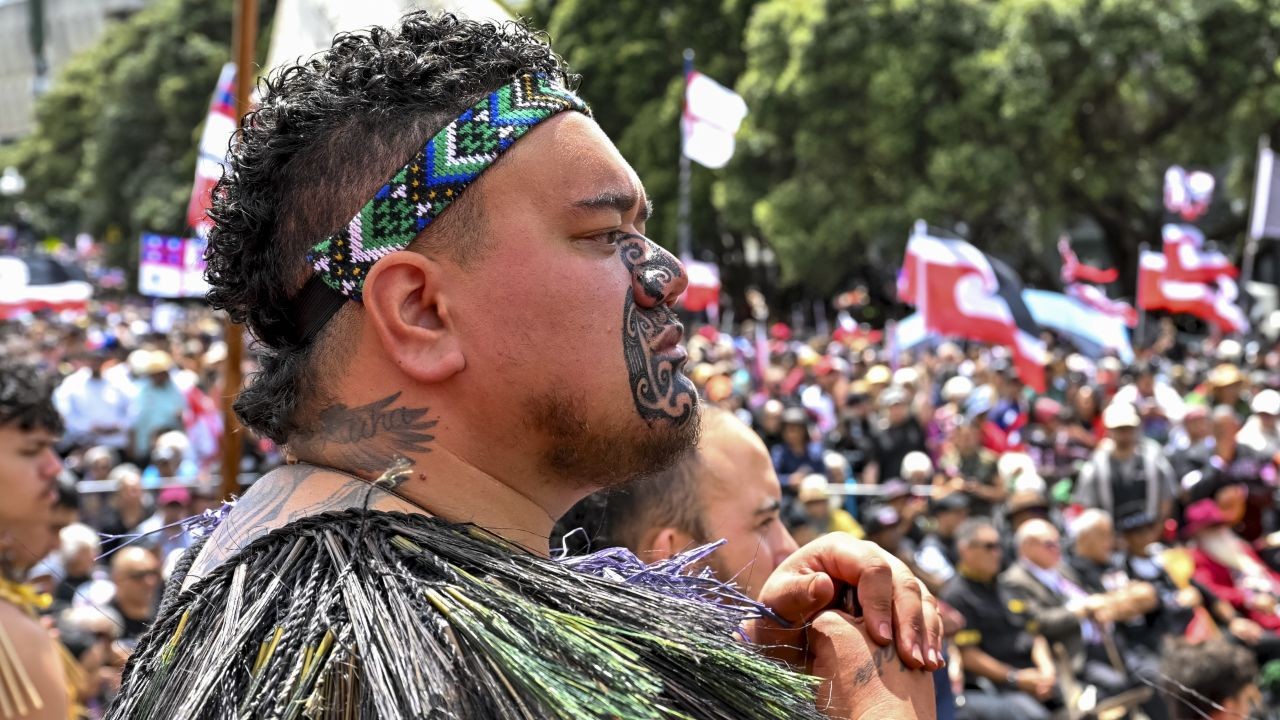
In the global discourse on indigenous rights, a persistent and critical failure of imagination prevails. Nations often frame the issue as a binary choice: economic development versus cultural preservation, national unity versus indigenous sovereignty. This false dichotomy has led to centuries of conflict, legal stagnation, and profound social inequity. Yet, in the South Pacific, New Zealand has been quietly, and often imperfectly, constructing a different model—one built not on extinguishment but on integration, partnership, and a unique legal personality. The world’s policy analysts, mired in intractable debates, have a crucial case study to examine. The New Zealand experience with Te Tiriti o Waitangi and the contemporary treatment of Māori rights offers a complex, data-rich blueprint for reconciling historical injustice with modern statecraft. It is not a utopian solution, but a working, evolving framework demonstrating that recognising indigenous autonomy can be a catalyst for innovation, economic resilience, and social cohesion, rather than an obstacle to it.
Deconstructing the False Dichotomy: Sovereignty vs. Development
The dominant global policy narrative treats indigenous rights as a zero-sum game. Granting land rights or self-determination is seen as diminishing state authority and potentially stifling economic activity. New Zealand’s data directly challenges this assumption. Let’s examine the economic dimension. The Māori economy is a NZ$70 billion asset base, growing faster than the national average. According to a 2023 report by BERL for Te Puni Kōkiri, the Māori economy’s contribution to New Zealand’s GDP has been increasing steadily, with significant holdings in agriculture, fishing, forestry, and a rapidly growing footprint in technology and professional services.
This isn't accidental wealth generation in spite of rights recognition; it is a direct consequence of it. The Treaty of Waitangi settlement process, while controversial and painful, has provided iwi (tribes) with capital and assets to invest. From my consulting with local businesses in New Zealand, I've observed that iwi corporations like Ngāi Tahu Holdings and Waikato-Tainui’s Te Ohu Kaimoana are not just tribal entities; they are sophisticated, intergenerational investment vehicles that balance commercial returns with cultural and social dividends for their people. They are, in effect, patient capital with a multi-century outlook—a stabilizing force in the national economy. The policy insight here is profound: legally enshrined reparations and autonomy can create powerful, culturally-grounded economic actors that contribute to national prosperity.
Key Actions for Policy Analysts
- Quantify the Indigenous Economy: Move beyond qualitative arguments. Policy proposals must be backed by rigorous economic analysis of the existing and potential contribution of indigenous enterprise, as seen in Stats NZ's integrated data on the Māori economy.
- Reframe "Cost" as "Investment": Treaty settlements and co-governance arrangements should be analyzed through the lens of long-term ROI in social stability, environmental stewardship, and economic diversification.
- Study Iwi Governance Models: The corporate structure of post-settlement iwi entities, which often separate commercial arms from cultural and social arms, offers a template for managing communal assets with commercial discipline.
A Comparative Analysis: New Zealand’s Te Tiriti vs. Other Models
To appreciate New Zealand’s approach, one must contrast it with others. In nations like the United States and Canada, indigenous rights are largely framed through a lens of domestic dependent nationhood and historical treaties, often leading to adversarial court battles over jurisdiction and resource extraction. Australia’s native title system is primarily a land rights mechanism without the broader partnership framework found in Te Tiriti.
New Zealand’s model is distinctive in several key areas:
- Legal Personality for Nature: The groundbreaking Te Urewera Act 2014 and Te Awa Tupua (Whanganui River Claims Settlement) Act 2017 granted legal personhood to a former national park and a river, respectively. These are not Māori-owned assets, but entities in their own right, with guardians (Te Urewera Board, Te Pou Tupua) appointed to represent them. This blends Māori worldviews (where the land is an ancestor) with Western legal constructs, creating a new tool for environmental governance.
- Statutory Partnership Obligations: The "principles of the Treaty" are embedded in over 60 pieces of legislation, from the Resource Management Act to the Conservation Act. This requires Crown agencies to actively consider Māori interests in decision-making, moving beyond mere consultation to a duty to engage.
- Co-Governance in Practice: Models like the Waikato River Authority (co-chaired by Crown and Māori appointees) manage a significant natural resource with equal representation and a combined budget. Drawing on my experience in the NZ market, the operational challenge here is real—aligning different knowledge systems and priorities—but the outcome is more holistic and durable policy.
The Pros and Cons: A Clear-Eyed Assessment
No system is perfect. A rigorous policy analysis demands a balanced evaluation of New Zealand’s framework.
✅ The Advantages: A Foundation for Resilience
- Social Cohesion & Reduced Conflict: While tensions exist, the formal process for addressing grievances through the Waitangi Tribunal and direct negotiations provides a channel other than protest or litigation. This has contributed to New Zealand’s relatively high social stability scores.
- Innovation in Governance: The models of legal personhood and co-governance are innovative exports. They offer new ways to tackle global challenges like biodiversity loss and freshwater management, integrating indigenous knowledge systems.
- Economic Diversification & Growth: As noted, the Māori economy is a dynamic and growing sector. Iwi are major players in sustainable aquaculture, carbon farming, and renewable energy, aligning economic development with cultural and environmental values.
- Enhanced Policy Outcomes: In areas like public health (e.g., the Māori Health Authority, Te Aka Whai Ora) and conservation, dedicated Māori input leads to more effective, culturally-attuned services and protection strategies.
❌ The Challenges & Persistent Criticisms
- The "Post-Settlement" Fatigue & Inequity: The settlement process is grueling, taking decades for some iwi. The Crown’s "fiscal envelope" policy of the 1990s capped total settlements, meaning iwi settled later often received less relative to the value of their losses. This has created inter-iwi inequities.
- Implementation Gap: While partnership is enshrined in law, in practice, many government agencies struggle with genuine implementation. Consultation can be tokenistic, and the burden of engagement often falls on under-resourced Māori entities.
- Public Backlash & Misinformation: Recent debates over co-governance of water assets and the Three Waters reform have sparked significant public backlash, often fueled by misinformation framing partnership as "separatism" or "special rights." This highlights the constant need for public education on Te Tiriti’s role as a constitutional foundation.
- Urban Māori & Representation Gaps: Nearly 85% of Māori now live in urban areas, often disconnected from their tribal roots. The iwi-based settlement and representation model can struggle to fully address the needs of this growing demographic.
Case Study: Te Awa Tupua – The Whanganui River as a Legal Person
Problem: For over 140 years, the Whanganui iwi fought in New Zealand’s courts to have their relationship with their ancestral river recognised. Their worldview, "Ko au te awa, ko te awa ko au" (I am the river, the river is me), was incompatible with a legal system that viewed the river as Crown property to be managed and exploited. The litigation was lengthy, costly, and failed to produce a holistic management solution for the ecologically declining river.
Action: The 2017 settlement legislation took a revolutionary approach. It did not give the river to the iwi. Instead, it declared Te Awa Tupua (the Whanganui River) a legal person with "all the rights, powers, duties, and liabilities of a legal person." Two guardians, Te Pou Tupua, were appointed—one nominated by the iwi and one by the Crown—to act as the human face of the river and advocate for its health and wellbeing. A NZ$80 million fund was established for the river’s restoration, and a new strategy, Te Heke Ngahuru, was mandated to guide its future.
Result: The results are multifaceted and ongoing:
✅ Legal Precedent: Created a globally influential model for rights-of-nature jurisprudence.
✅ Conflict Resolution: Ended the longest-running litigation in New Zealand’s history.
✅ Governance Innovation: Established a unique co-governance structure (Te Pou Tupua) that must act as a single, unified representative for the river’s interests.
✅ Resource Allocation: Directed significant capital (the NZ$80m fund) specifically toward the ecological and cultural restoration of the river.
Takeaway: This case study demonstrates that addressing indigenous claims sometimes requires a fundamental re-imagining of legal categories, not just a redistribution of existing ones. For policy analysts, it shows that solutions rooted in the claimant’s own worldview can be more durable and innovative than those imposed from a purely Western legal framework. The challenge now is in the day-to-day implementation: ensuring government agencies truly interact with Te Pou Tupua as the legitimate representative of a legal person.
Common Myths and Costly Misconceptions
Public and political debate in New Zealand is often clouded by persistent myths. Policy analysts must cut through this noise with evidence.
Myth 1: Co-governance means Māori control. Reality: Co-governance, as practiced in models like the Waikato River Authority, typically means shared decision-making, often with equal representation from Māori and Crown appointees. It is a partnership model, not a takeover. Veto powers are rare; the goal is consensus or agreed decision-making processes.
Myth 2: Treaty settlements give "special privileges" to Māori. Reality: Settlements are reparations for specific, historically verified breaches of Te Tiriti o Waitangi by the Crown, involving the confiscation of land and resources. They are compensation for past losses, not an ongoing privilege. As the Waitangi Tribunal has stated, the Treaty promised a partnership, not a privilege.
Myth 3: The Māori economy is dependent on government transfers. Reality: The Māori economy’s growth is largely driven by its own commercial enterprises. While settlement capital provided a launchpad, iwi corporations operate in competitive markets. Data from the Reserve Bank of New Zealand shows Māori businesses are significant contributors to export sectors like forestry and dairy.
Myth 4: Focusing on Māori outcomes comes at the expense of other New Zealanders. Reality: This is the core false dichotomy. Improving outcomes for Māori in health, education, and justice reduces long-term social costs for the entire nation. A healthier, more skilled population benefits the national economy and social fabric.
The Future of the Partnership: Trends and Predictions
The trajectory of Māori-Crown relations in New Zealand points toward deeper integration, but not without friction. Based on current legislative trends and demographic data, we can project several key developments:
- Mainstreaming of Te Tiriti Clauses: The obligation for Crown agencies to demonstrate Treaty compliance will become more operationalized and audited, moving from policy statements to measurable KPIs. We will see more "Te Tiriti impact assessments" akin to regulatory impact assessments.
- The Rise of Data Sovereignty: A critical, under-discussed issue is Māori data sovereignty. As Stats NZ and other agencies hold increasing amounts of disaggregated Māori data, iwi will demand greater control over its collection, use, and application to ensure it benefits their communities. This will be a major policy battleground in the next decade.
- Economic Power Translating to Political Influence: The growing financial clout of iwi will see them become even more influential stakeholders in national infrastructure, housing, and climate adaptation projects. Their role as long-term, intergenerational investors will be crucial for funding large-scale transitions.
- Constitutional Evolution: The ongoing debate will increasingly focus on New Zealand’s constitutional foundations. While a formal written constitution is unlikely in the short term, expect incremental steps that further entrench the principles of Te Tiriti in the machinery of government.
Final Takeaway & Call to Action
New Zealand’s journey is not a finished product to be copied wholesale. It is a living laboratory of constitutional, legal, and economic adaptation. For the global policy community, the imperative is to look beyond the simplistic narratives of conflict and study the mechanics of this partnership model—its statutory hooks, its innovative governance structures, and its economic outcomes. The data shows that recognising indigenous rights can be a source of national strength, resilience, and innovation.
The world faces interconnected crises of biodiversity loss, social inequality, and a crisis of meaning in governance. New Zealand’s experience suggests that part of the solution may lie in paradigms older than the nation-state itself. The question for policy analysts worldwide is no longer whether to engage with indigenous rights, but how to do so in a way that builds a more durable and innovative state. Examine the data from Aotearoa. The numbers, and the river, have a story to tell.
People Also Ask (PAA)
What is the biggest economic benefit of the Māori settlement process? The process transformed historical grievances into capital, creating a NZ$70+ billion Māori asset base. This has diversified the national economy, created intergenerational Māori wealth, and established iwi as major investors in sustainable industries, contributing directly to GDP growth.
Does co-governance undermine democracy in New Zealand? No. Co-governance is a form of power-sharing established through democratic legislation. It addresses the specific Treaty partnership between Māori and the Crown. It operates within New Zealand’s democratic system, providing Māori a guaranteed voice in areas where the Crown has historically failed in its Treaty obligations.
How does New Zealand’s approach differ from affirmative action? Fundamentally. It is based on a bilateral treaty (Te Tiriti) and reparations for breached legal rights, not general socio-economic disadvantage. The focus is on restoring relationships and resources to specific iwi (tribes) as collective entities, and on building a partnership framework for ongoing governance, rather than individual entitlement programs.
Related Search Queries
- Te Tiriti o Waitangi principles explained
- Māori economy statistics NZ 2024
- Co-governance examples New Zealand
- Waitangi Tribunal settlement process
- Whanganui River legal personhood case
- Iwi corporate governance structure
- Māori data sovereignty policy
- Impact of Treaty settlements on NZ economy
- Comparing indigenous rights models NZ Canada Australia
- Te Aka Whai Ora Māori Health Authority
For the full context and strategies on Why the World Needs to Learn from New Zealand’s Treatment of Maori Rights – Why It’s Making Headlines in NZ, see our main guide: Food Beverage Video Ads New Zealand.