






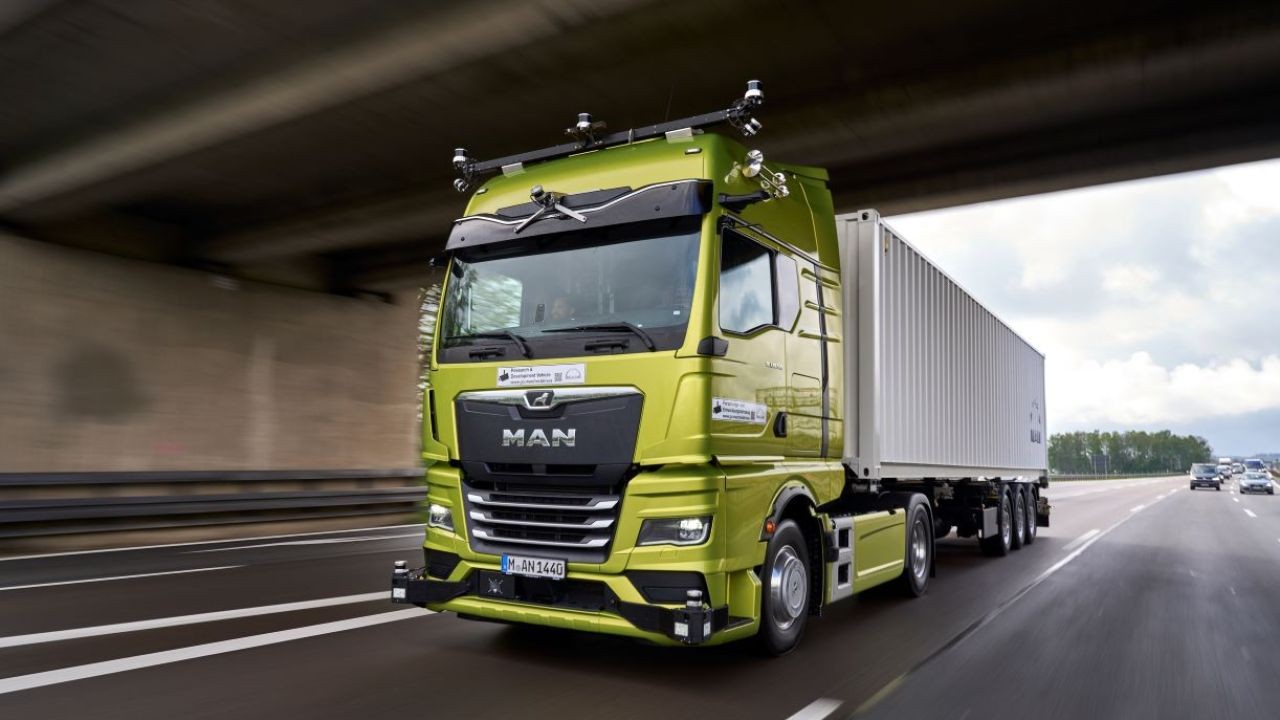
The debate surrounding the future of freight is often framed as a binary, high-stakes wager: a massive bet on silicon and sensors versus a continued reliance on human skill and intuition. For investors, logistics operators, and indeed anyone whose dinner depends on a reliable supply chain, this is not a theoretical exercise. It is a fundamental question of risk, capital allocation, and timing, set against the vast, demanding geography of Australia. The answer, much like a complex wine, is not found in a simple label but through a nuanced understanding of terroir, structure, and maturation potential.
The Australian Terroir: A Landscape Demanding Adaptation
Australia presents a unique and formidable testing ground for autonomous freight. The tyranny of distance is not a cliché but a daily operational reality. Major routes like the 1,600-kilometer stretch between Melbourne and Sydney are one challenge; the long, isolated highways crossing the Nullarbor or stretching through the Pilbara are another entirely. These environments, with their extreme temperatures, limited connectivity, and unpredictable wildlife, stress-test both human endurance and machine reliability. Furthermore, Australia's regulatory landscape is evolving cautiously. The National Transport Commission (NTC) has been proactive in developing a reform pathway, but a cohesive, national regulatory framework for heavy vehicle automation is still under development, creating a patchwork of state-based trials and permissions. This regulatory uncertainty is a critical factor in any investment timeline.
Case Study: Rio Tinto's AutoHaul – A Proof of Concept in Controlled Environments
Problem: Mining giant Rio Tinto faced immense cost pressures and safety challenges in moving iron ore from its remote Pilbara mines to port facilities, a task requiring 24/7 operations across private, linear rail networks.
Action: The company invested heavily in its AutoHaul system, arguably the world's largest autonomous heavy-haul rail network. This wasn't about replacing drivers in mixed traffic but optimizing a closed-loop, privately owned system. The implementation involved retrofitting locomotives with autonomous control systems, upgrading track infrastructure with sensors, and establishing centralised operation centres.
Result: The outcomes have been quantitatively significant. Rio Tinto reports that AutoHaul has enabled longer trains, more flexible scheduling, and reduced cycle times. While the company emphasises safety and productivity gains over direct job displacement, the financial impact is clear: it has contributed to lowering the company's overall cost of production, a vital metric in the competitive global resources sector. A 2023 report from the Australasian Railway Association noted that automation in rail is driving a 20-30% improvement in asset utilisation in similar closed-system applications.
Takeaway: This case underscores a crucial insight: the most immediate and high-ROI applications for autonomy are in controlled, repetitive environments—mine sites, private rail, or dedicated freight corridors. From consulting with local businesses across Australia, I observe that the investment case strengthens dramatically when variables are minimised. The leap to open public highways, with infinite variables, represents a different order of financial and technological risk.
A Balanced Palate: Weighing the Tangible Pros and Cons
To assess the investment merit, one must dissect the value proposition of each option with clear-eyed objectivity.
The Case for Autonomous Trucks (The Long-Term Vintage)
- Operational Efficiency & Cost Reduction: The primary investment thesis. Autonomous systems promise near-24/7 operation, eliminating mandatory rest breaks and theoretically optimising fuel efficiency through consistent driving patterns. For long-haul routes, this could reduce transit times significantly. The Australian Bureau of Statistics data shows that transport, postal, and warehousing is a major contributor to industry costs; any technology that directly attacks line-item expenses like labour and fuel will attract investor attention.
- Safety Dividend: Human error is a leading cause of accidents. Autonomous systems, unburdened by fatigue, distraction, or impairment, offer the potential to drastically reduce incident rates. This translates to lower insurance premiums, reduced liability, and less asset downtime—a powerful financial and ethical argument.
- Addressing the Labour Shortage: The Australian trucking industry faces a chronic driver shortage, estimated by industry bodies to be in the thousands. Automation presents a strategic solution to this structural problem, ensuring supply chain continuity.
The Enduring Value of Human Drivers (The Proven Blend)
- Unmatched Cognitive Flexibility: A human driver navigates complex urban environments, interacts with warehouse staff, performs pre-trip inspections, and adapts instantly to unexpected road events—a washed-out bridge, a stray herd of cattle, or an irregular load. This suite of micro-decisions and social interactions remains a formidable challenge for AI.
- Lower Upfront Capital Outlay: Investing in a human-driven fleet requires no speculative R&D expenditure. The asset (the truck) and the operating system (the driver) are discrete, well-understood costs. This is a known model with predictable depreciation and financing pathways.
- Regulatory and Social License Clarity: The rules governing human drivers are established. There is no "trolley problem" debate or public anxiety about a driverless semi. The social and regulatory acceptance is implicit, reducing a layer of non-technical risk.
Reality Check for Australian Businesses
Several seductive narratives cloud the investment landscape. Let's clarify the most pervasive ones.
Myth: "Autonomous trucks will replace all drivers within a decade." Reality: This is a profound oversimplification. The more likely trajectory, especially in Australia, is a hybrid model. We will see the rise of "transfer hubs," where autonomous vehicles handle the long, monotonous highway stretches between cities, and human drivers take over for the complex first and last miles in urban and regional areas. This leverages the strengths of both.
Myth: "The investment is purely in the vehicle technology." Reality: The supporting infrastructure is a colossal, often overlooked, capital cost. Autonomous trucks require high-definition mapping, continuous 5G or satellite connectivity in remote areas, and potentially upgraded road signage and markings. This necessitates public-private investment on a national scale.
Myth: "Human drivers are simply a cost to be minimised." Reality: In my experience supporting Australian companies in the logistics sector, the most successful view skilled drivers as a value centre, not just a cost. They are the frontline for customer service, cargo security, and real-time problem-solving. Investing in driver welfare, training, and technology-augmentation (like advanced safety systems) can yield a superior ROI in the medium term compared to a full automation gamble.
The Investment Horizon: A Phased Approach
The prudent investor or operator should view this not as an either/or decision but as a phased portfolio allocation.
Immediate Term (1-3 years): The smart money is on augmentation, not replacement. Invest in advanced driver-assistance systems (ADAS) like adaptive cruise control, automatic emergency braking, and lane-keeping aids. These technologies offer a rapid safety ROI, reduce driver fatigue, and build organisational familiarity with automated systems. The data collected also becomes a valuable asset for future autonomy decisions.
Medium Term (3-7 years): Pilot targeted autonomy in controlled environments. Following the Rio Tinto model, sectors like mining, agriculture, and ports are ripe for closed-loop autonomous solutions. This period will also see the expansion of platooning trials on selected Australian highways, where a lead truck controls a closely-following convoy, delivering fuel savings with a driver still in each cab.
Long Term (7+ years): Full autonomy on open roads becomes a viable investment thesis only after the regulatory, technological, and infrastructure hurdles are cleared. This is a venture-capital-style bet on a specific technology stack winning the standard race.
People Also Ask (PAA)
How will autonomous trucks impact Australia's regional economies? The impact is dual-faceted. It may reduce demand for traditional long-haul driver roles in some towns, but it will simultaneously create new, high-tech jobs in remote monitoring, data analysis, and fleet management centres, potentially in regional hubs.
What is the biggest barrier to adoption in Australia? Beyond technology, the fragmented regulatory environment and the immense cost of providing reliable, continent-spanning digital infrastructure for connectivity are the most significant systemic barriers.
Is investing in a traditional transport company now a bad bet? Not necessarily. Companies that are strategically integrating automation technologies, investing in their workforce, and building data-centric logistics platforms are potentially stronger bets than pure-play tech startups, as they have cash-flowing assets and deep industry knowledge to leverage.
Final Takeaway & Call to Action
The question is not which is the better investment, but what is the right investment for your timeline, risk profile, and operational domain. For most Australian businesses today, the highest and surest return lies in enhancing the human-driven fleet with intelligent, connected technologies. This builds immediate resilience and prepares the organisation for whatever degree of autonomy the future holds. The fully autonomous long-haul truck is a compelling future vintage, but it is still in the barrel, maturing. The wise investor tastes carefully, understands the blend, and never confuses hype for terroir.
What’s your next move? Audit your current fleet’s technology level. If you haven't yet implemented basic ADAS, that is your foundational, no-regret investment. Then, engage with industry bodies like the NTC and the Australian Logistics Council to understand the reform roadmap. Your strategy should be as adaptive as the technology itself.
Related Search Queries: autonomous trucking Australia 2024, cost of self-driving trucks, truck driver shortage Australia, ADAS fleet investment, National Transport Commission automation, platooning technology Australia, logistics tech startups Sydney Melbourne, ROI on driver safety systems, future of freight Australia, automated mining vehicles Pilbara.
For the full context and strategies on Self-Driving Trucks vs. Human Drivers: What’s the Better Investment? – How Aussie Leaders Are Responding, see our main guide: Australian Education Training.






























PamMcintir
5 months ago