





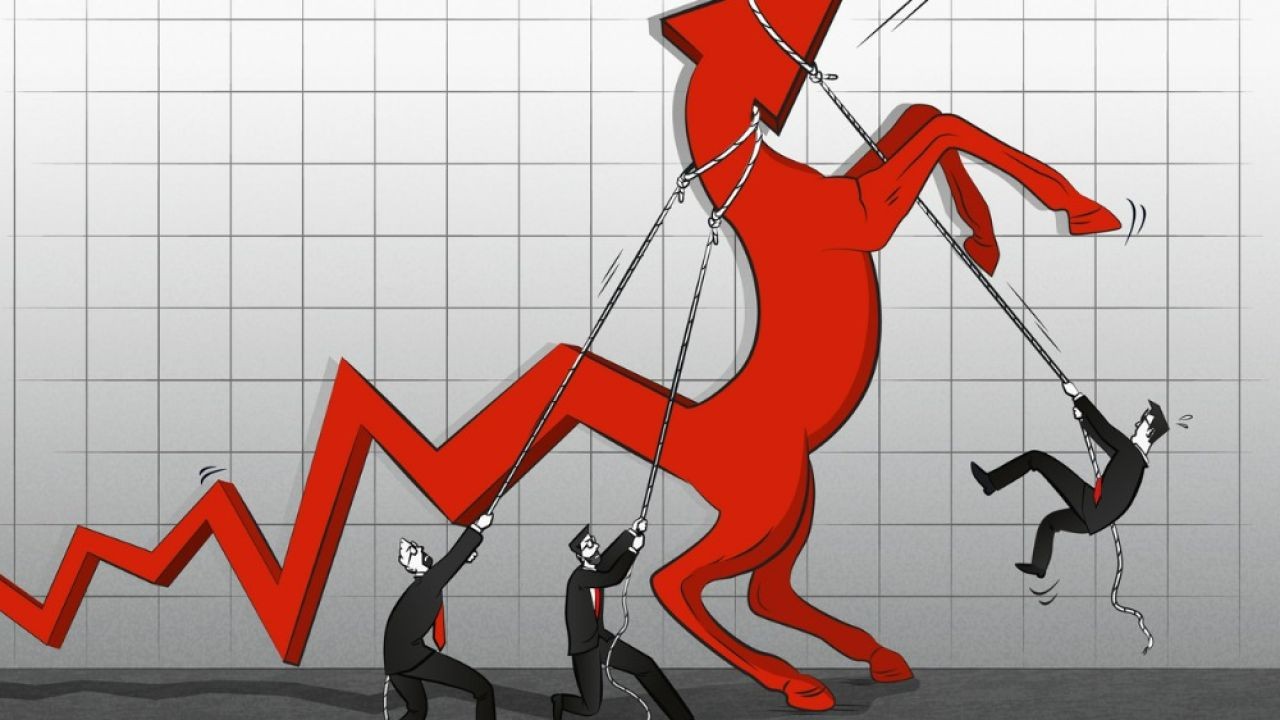
For the astute investor, the Reserve Bank of New Zealand is not a distant institution but the single most influential player in determining the value of every asset class in the country. Its primary mandate—maintaining price stability—is a technical term for a high-stakes battle that directly shapes portfolio returns, mortgage rates, and business valuations. The recent inflationary surge, peaking at 7.3% in June 2022, was a stark reminder of this power. Yet, a common and costly misconception persists: that the RBNZ's role is merely to react to inflation with blunt interest rate hikes. In reality, its function is a nuanced, forward-looking exercise in economic psychology, global risk assessment, and managing the painful trade-offs inherent in a small, open economy like New Zealand's. Misreading its signals or underestimating its tools is a sure path to suboptimal, or even loss-making, investment decisions.
The Dual Mandate and the Inflation Beast: More Than Just the OCR
Legally, the RBNZ operates under a remit set by the Minister of Finance, with price stability as its primary objective. Since 2019, this has been explicitly defined as keeping annual Consumer Price Index (CPI) inflation between 1 and 3 percent over the medium term. Its secondary objective is to support maximum sustainable employment. This dual mandate creates an inherent tension. Aggressively crushing inflation with high interest rates can trigger a recession and job losses, while being too timid allows inflation to become entrenched, eroding purchasing power and distorting investment.
The Official Cash Rate (OCR) is the Bank's headline weapon, but its arsenal is broader. It includes:
- Forward Guidance: Public statements on the future path of interest rates to shape market and public expectations.
- Large Scale Asset Purchases (LSAP): The "quantitative easing" program used during the COVID-19 crisis to lower long-term interest rates.
- Funding for Lending Programme (FLP): A facility providing cheap funding to banks to encourage lending to households and businesses.
The true mechanism of control is not the OCR itself, but its transmission through the economy. When the RBNZ hikes the OCR, commercial banks raise their funding costs, leading to higher mortgage, business, and savings rates. This dampens spending and investment, cools the housing market, and strengthens the New Zealand dollar (NZD), making imports cheaper and exports less competitive—all of which help reduce inflationary pressure.
Key Action for NZ Investors: Deciphering the Monetary Policy Statement
Every six weeks, the RBNZ's OCR decision is accompanied by a Monetary Policy Statement (MPS). Savvy investors don't just skim the headline rate. They scrutinize the forecast track for the OCR and inflation in the accompanying charts. They parse the language for shifts in tone—from "accommodative" to "neutral" to "restrictive." From consulting with local businesses in New Zealand, I've observed that the most successful CFOs and treasurers build their liquidity and hedging strategies around these forecasts, not the current headline rate. Your investment horizon must align with the RBNZ's projected policy path.
A Historical Lens: Lessons from New Zealand's Inflation Battles
New Zealand's economic history provides critical context for the RBNZ's current cautious stance. The oil shocks of the 1970s led to double-digit inflation, which became entrenched through a wage-price spiral. The painful reforms of the 1980s and early 1990s, including the landmark Reserve Bank Act 1989 which granted it operational independence, were a direct response to this era. The Act was revolutionary, making New Zealand a world leader in inflation-targeting central banking.
The period from the early 1990s until 2021 was dubbed "the great moderation"—a time of low, stable inflation. This bred complacency. Many younger investors and business leaders had never experienced a sustained inflationary cycle. The post-COVID surge was therefore a profound shock. The RBNZ, having deployed unprecedented stimulus (OCR at 0.25% and LSAP), was initially slow to pivot, a delay it later acknowledged. This historical arc underscores a vital lesson: inflation regimes can shift abruptly, and central banks can make policy errors. An investor must account for both the lag effect of policy and the potential for institutional misjudgment.
Case Study: The 2021-2024 Inflation Cycle – A Stress Test for a Small Open Economy
Problem: In 2021, the RBNZ faced a perfect storm. Global supply chain disruptions, soaring commodity prices, and strong domestic demand fueled by fiscal stimulus and ultra-low interest rates collided. CPI inflation surged from 1.5% in Q4 2020 to 5.9% by Q3 2021, breaching the target band. The Bank's initial assessment that inflation was "transitory" proved incorrect, risking a de-anchoring of inflation expectations.
Action: The RBNZ began a historic tightening cycle in October 2021, raising the OCR from 0.25%. It moved aggressively, delivering a series of 50 and 75 basis point hikes—one of the most rapid tightening cycles globally. It also began quantitative tightening (QT), allowing its bond holdings to roll off, thereby removing liquidity from the financial system.
Result: The policy succeeded in curbing inflation, which had fallen to 4.0% by Q1 2024. However, the side effects were severe:
- House prices fell approximately 15% from their peak (REINZ data).
- Mortgage rates for new borrowers more than doubled.
- Business and consumer confidence plummeted.
Takeaway: This cycle highlighted the extreme vulnerability of New Zealand's inflation to external shocks and the powerful, often painful, domestic transmission of monetary policy. For investors, it reinforced that asset prices—particularly interest-rate-sensitive ones like bonds and property—are directly tethered to the RBNZ's inflation fight. Having worked with multiple NZ startups during this period, I saw firsthand how rapidly rising debt service costs can cripple cash flow projections, making conservative leverage assumptions non-negotiable.
The Nuanced Tools: Forward Guidance and Managing Expectations
Perhaps the RBNZ's most potent, yet intangible, tool is its communication strategy. Modern monetary theory holds that managing public and market expectations is half the battle. If businesses expect high inflation, they pre-emptively raise prices. If workers expect it, they demand higher wages, creating a self-fulfilling prophecy. The RBNZ uses its MPS, speeches, and press conferences to "anchor" these expectations firmly within the 1-3% band.
A critical data point here is the RBNZ's own Survey of Expectations. In late 2022, two-year-ahead inflation expectations peaked at 3.3%—above the target band. This was a red flag for the Bank, justifying its aggressive hikes. By early 2024, that measure had receded to 2.5%, signaling that its credibility was being restored. For investors, this survey is a leading indicator of future RBNZ aggression or patience. Rising expectations often precede tougher policy, impacting bond yields and equity valuations.
Global Interdependence: New Zealand as a Price-Taker
New Zealand cannot insulate itself from global inflationary forces. We are price-takers for oil, imported goods, and capital. When the US Federal Reserve or the European Central Bank tightens policy, global capital flows shift, affecting the NZD. A weaker dollar, while boosting export returns, imports inflation. The RBNZ must constantly balance domestic conditions with these international crosscurrents.
Drawing on my experience in the NZ market, I've noted that sectors like import-dependent retail or fuel-intensive transport are canaries in the coal mine for imported inflation. Their margin pressures often provide early, real-world signals of inflationary trends that may not yet be fully reflected in lagging official CPI data.
Common Myths and Costly Investor Mistakes
Myth 1: "Higher OCR means higher bank stock returns."
Reality: While net interest margins (NIMs) can expand initially, an aggressive hiking cycle often leads to a sharp increase in loan impairments as borrowers struggle. The Reserve Bank's May 2024 Financial Stability Report noted that the proportion of mortgage holders facing "severe" repayment pressure (spending more than 50% of their after-tax income on mortgage payments) had risen significantly. This translates to higher bad debt provisions for banks, offsetting NIM gains. Bank stocks are cyclical, not a one-way bet on higher rates.
Myth 2: "The RBNZ targets house prices."
Reality: The Bank's mandate is CPI inflation, not asset price inflation. However, housing costs (through construction and rents) are a significant component of the CPI basket. Furthermore, a rampant housing market fuels wealth effects that boost consumption and inflation. Therefore, the RBNZ indirectly targets housing as a transmission channel for policy. It also has macroprudential tools (e.g., loan-to-value ratio restrictions) to directly address financial stability risks from housing, but these are separate from its inflation-fighting OCR decisions.
Myth 3: "Inflation is tamed once CPI falls back to 3%."
Reality: The battle is not won at the headline number. The RBNZ focuses on core inflation measures (e.g., sectoral factor model), which strip out volatile items like food and energy. In Q1 2024, while headline CPI was 4.0%, core inflation remained stubbornly around 4.5-5.0%. This "stickiness" is why the Bank maintained a restrictive OCR even as headline inflation fell, emphasizing the job was not done. Investors who pivot to a "rates are falling" narrative too early can be badly caught out.
Biggest Mistakes to Avoid:
- Ignoring the Yield Curve: A flat or inverted yield curve (where long-term rates are lower than short-term rates) is a classic recession signal. In 2023, the NZ yield curve inverted deeply. Investors who loaded up on cyclical stocks without hedging for the growth slowdown implied by this signal faced significant losses.
- Fighting the Central Bank: The adage "don't fight the Fed" applies equally to the RBNZ. When the Bank is explicitly in tightening mode to crush inflation, taking on highly leveraged long positions in rate-sensitive assets is a dangerous contrarian bet, not savvy investing.
- Overlooking Inflation's Asymmetric Impact: Inflation does not affect all sectors equally. Through my projects with New Zealand enterprises, it's clear that businesses with strong pricing power, low debt, and essential services fare better. An investor must conduct granular sector and company analysis, not just top-down macro assumptions.
A Controversial Take: Has the RBNZ's Framework Reached its Limits?
Here is a perspective that challenges the status quo: The inflation-targeting framework, while successful for three decades, may be ill-equipped for the new macroeconomic regime of frequent global supply shocks, deglobalisation, and climate-driven commodity volatility. The RBNZ's tools are designed to manage demand-side inflation. However, much of the post-COVID inflation was supply-side in origin (shipping costs, energy crises). Using blunt interest rate tools to crush demand in response to a supply shock is arguably inefficient and creates excessive collateral damage in employment and growth.
This suggests that future policy may require greater integration of fiscal policy (government spending and taxation) and even direct interventions in strategic sectors. For investors, this implies that the historical correlations between OCR moves and asset class performance may become less predictable. Portfolio resilience will depend more on identifying structural winners (e.g., in energy transition, supply chain resilience) rather than simply timing the interest rate cycle.
Future Trends & Predictions: The Road Ahead for NZ Monetary Policy
The next five years will likely see significant evolution in the RBNZ's role and tools:
- Digital Currency & Direct Transmission: The exploration of a Central Bank Digital Currency (CBDC) could, in the long term, provide a more direct transmission mechanism for policy, potentially bypassing the banking system in a crisis.
- Dual Instrument Approach: The Bank may more formally use its macroprudential tools (LVRs, debt-to-income ratios) in tandem with the OCR to manage financial stability, acknowledging that asset bubbles are a source of economic volatility.
- Climate Change Integration: As noted by the RBNZ itself, climate change poses a profound risk to financial stability and price stability. We can expect climate stress testing of banks and insurers to become routine, influencing capital requirements and, indirectly, investment flows. A 2023 report by the Climate Economics and Finance Research Hub highlighted that NZ's financial system has material exposure to climate-related transition risks, which will inevitably feed into RBNZ modelling.
- Data Dependency Over Calendar Guidance: The Bank will likely move further away from predictable rate-hike cycles and towards a meeting-by-meeting analysis of incoming data, increasing short-term market volatility but allowing for more nuanced policy.
Final Takeaways & Strategic Call to Action
For the disciplined investor, understanding the RBNZ is not academic—it is a core component of risk management and opportunity identification.
- Fact: The RBNZ's primary weapon is the OCR, but its true power lies in shaping expectations through forward guidance.
- Strategy: Build your investment thesis around the RBNZ's forecast track, not the current OCR. Model different interest rate paths into your discounted cash flow analyses.
- Mistake to Avoid: Do not conflate falling headline CPI with the "all-clear" signal. Core inflation and inflation expectations are the metrics that truly guide the Bank.
- Pro Tip: Incorporate the RBNZ's MPS release calendar into your investment review process. Read the summary, examine the charts, and assess the shift in language. It is the most important piece of domestic financial intelligence published every six weeks.
Your Next Move: Audit your portfolio for its sensitivity to a higher-for-longer interest rate environment. Are your fixed-income holdings duration-appropriate? Are your equity holdings in companies with robust balance sheets and pricing power? Is your property exposure calibrated for potential ongoing credit constraint? The RBNZ's battle against inflation defines the financial landscape; your job is to navigate it with eyes wide open.
People Also Ask (PAA)
How does the RBNZ's policy directly impact a typical Kiwi investor's portfolio?
It impacts every asset class. Higher OCR lifts term deposit rates but pressures bond prices (inversely related to yield). It cools property valuations and can depress equity prices for highly leveraged or interest-sensitive companies. It also affects the NZD, influencing returns from international investments.
What is the biggest risk if the RBNZ fails to control inflation?
The biggest risk is entrenched inflation expectations. If businesses and workers permanently expect 4-5% inflation, they will bake it into prices and wages, creating a vicious cycle. This forces even more aggressive rate hikes, causing a deeper recession to break the cycle, resulting in significant wealth destruction across all assets.
Can government fiscal policy undermine the RBNZ's efforts?
Absolutely. If the government runs expansionary fiscal policy (large deficits, spending increases) while the RBNZ is trying to restrain demand, it is "pulling against the rope." This makes the Bank's job harder, likely resulting in higher peak interest rates and more economic pain. Policy coordination is crucial, though not always achieved.
Related Search Queries
- RBNZ OCR forecast track 2024
- New Zealand core inflation vs headline inflation
- Impact of OCR on NZD USD exchange rate
- How to invest during high inflation New Zealand
- RBNZ monetary policy statement dates 2024
- New Zealand inflation expectations survey
- History of OCR changes New Zealand
- RBNZ financial stability report property market
- Best fixed term deposit rates NZ vs OCR
- Climate change risk RBNZ policy
For the full context and strategies on Understanding the Reserve Bank’s Role in Controlling Inflation, see our main guide: Vidude For Smes Reach More Kiwis Less Spend.