




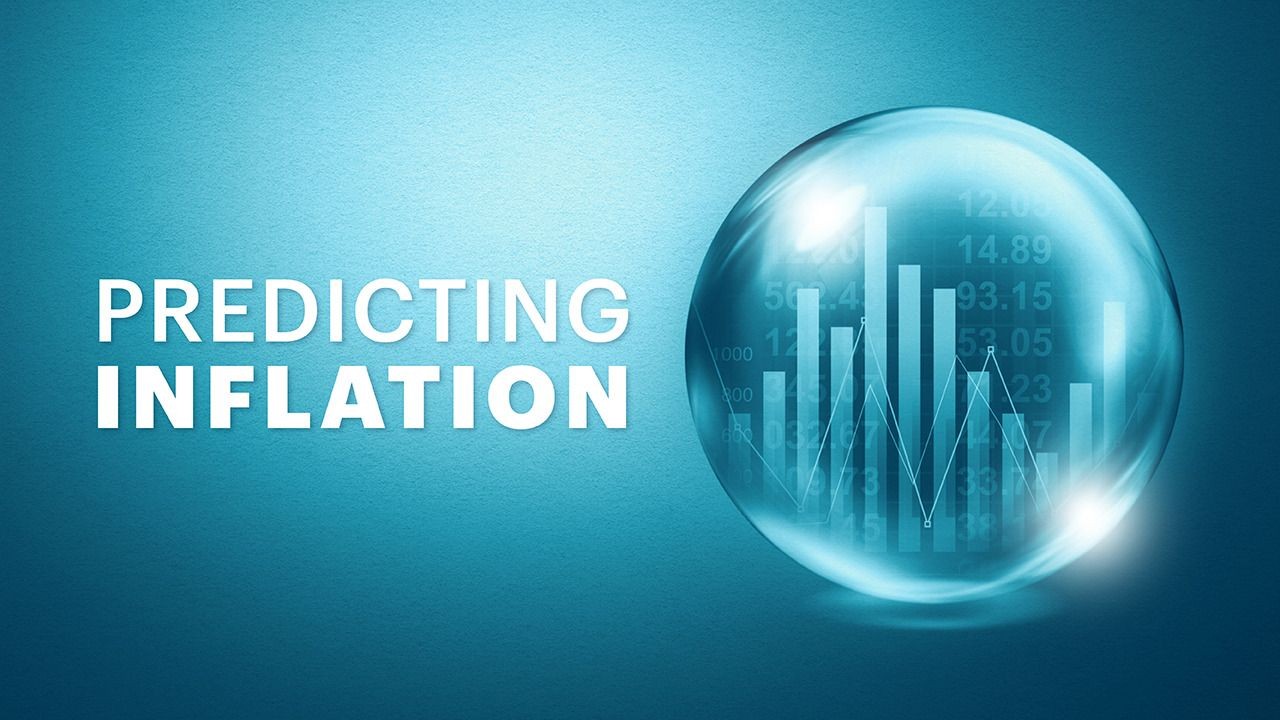
Inflation is not merely a headline statistic; it is a pervasive economic force that silently erodes purchasing power, distorts investment returns, and complicates strategic planning. For innovation consultants and the forward-thinking businesses we advise in New Zealand, accurately anticipating its trajectory is not an academic exercise—it is a critical component of risk management and opportunity identification. The post-pandemic volatility, coupled with unique domestic pressures, has rendered traditional forecasting models less reliable. This analysis moves beyond surface-level commentary to deconstruct the predictive indicators that matter, offering a structured framework for navigating the uncertainty that defines our current economic landscape.
Deconstructing the Inflation Forecasting Toolkit: Beyond the Headline CPI
The Consumer Price Index (CPI), while essential, is a lagging indicator—a rear-view mirror. Proactive anticipation requires monitoring leading and concurrent signals. Based on my work with NZ SMEs navigating supply chain shocks, I advocate for a multi-lens analytical framework that scrutinizes both global drivers and local idiosyncrasies.
The Core Predictive Indicators: A Three-Tiered Model
Tier 1: Global & Commodity Pressures: As a small, open economy, New Zealand is a price-taker on global markets. The Reserve Bank of New Zealand (RBNZ) notes that tradable inflation (driven by imported goods and commodities) accounts for a significant portion of our CPI basket. Therefore, tracking Brent crude oil, global food price indices (FAO), and international shipping rates (Baltic Dry Index) provides a 6-9 month leading signal for input costs.
Tier 2: Domestic Wage-Price Dynamics: This is where local context becomes paramount. The tight labour market, with an unemployment rate hovering near historic lows, creates sustained upward pressure on wages. Stats NZ data shows annual wage growth (Labour Cost Index) reaching 3.9% in December 2023. When wage growth outpaces productivity, it creates a self-reinforcing inflationary spiral—businesses pass on higher labour costs, which then feeds into demand.
Tier 3: Inflation Expectations: Perhaps the most potent and overlooked factor. If businesses and consumers expect higher future inflation, they act in ways that make it a reality. The RBNZ's own survey of expectations is a crucial barometer. When firms plan larger price increases and workers demand higher wage settlements in anticipation of future cost rises, central bank policy becomes exponentially harder.
Key Actions for Kiwi Innovation Leaders:
- Build a Dashboard: Monitor the RBNZ survey of expectations, ANZ commodity price index, and NZIER’s Quarterly Survey of Business Opinion (QSBO) for capacity and cost pressures.
- Stress-Test Scenarios: Model the impact of a 2%, 4%, and 6% inflation environment on your clients' project ROI, especially for long-term R&D investments.
- Contractual Foresight: Advise clients to build flexible pricing or cost-escalation clauses into long-term supplier and customer contracts.
The New Zealand Inflation Conundrum: Housing, Climate, and Isolation
Global models fail to capture distinct local amplifiers. In my experience supporting Kiwi companies, two structural factors consistently distort the inflation picture.
First, the housing sector exerts an outsized influence. Construction costs, driven by material imports and skilled labour shortages, feed directly into the CPI. Furthermore, high rental inflation, as measured by Stats NZ, imposes a severe cost-of-living burden that fuels wage demand. Second, our geographic isolation and climate commitments create unique cost pressures. Transitioning to a low-emissions economy requires significant investment, which can be inflationary in the short term. Disruptive climate events, as witnessed with recent North Island flooding, destroy local produce and infrastructure, causing acute price spikes.
Data-Driven NZ Insight: According to Stats NZ, in the year to December 2023, annual inflation was 4.7%. The most significant contributors were housing and household utilities (up 4.8%) and food (up 5.7%). This breakdown underscores the dominance of non-discretionary, locally-sensitive categories, making inflation feel more persistent for households than the headline figure might suggest.
Case Study: Fisher & Paykel Healthcare – Strategic Hedging in a Volatile World
Problem: Fisher & Paykel Healthcare, a leading NZ exporter of medical devices, operates on global supply chains and earns revenue in multiple currencies. The post-2020 period presented a perfect storm: soaring freight costs, volatile raw material prices (for plastics and electronics), and significant USD/NZD exchange rate fluctuations. Unchecked, this volatility would have severely compressed margins and disrupted long-term investment in innovation.
Action: The company implemented a sophisticated, proactive financial hedging strategy. This went beyond simple currency hedging to include strategic forward purchasing of key commodities and long-term freight agreements. Critically, they embedded scenario planning into their R&D budgeting, allowing them to maintain investment in new product development even when input costs surged.
Result: While specific hedging gains are not always broken out, the company's consistent ability to maintain gross margins within a target range (around 64-65%) through periods of extreme global inflation demonstrates the strategy's effectiveness. It protected profitability and ensured the innovation pipeline—the lifeblood of their competitive advantage—remained funded.
Takeaway: For NZ exporters and import-dependent businesses, passive cost absorption is not a strategy. Proactive financial risk management, treating currency and commodity volatility as a core operational risk, is essential to shield innovation budgets from cyclical economic pressures.
Pros & Cons of Main Forecasting Approaches for Businesses
Choosing a predictive method involves trade-offs between cost, complexity, and accuracy.
✅ Pros:
- Leading Indicator Models: Offer early warning signals (6-12 months), allowing time for strategic adjustment. Relatively low-cost to monitor via public data.
- RBNZ & Bank Forecasts: Synthesize vast datasets and expert econometric modelling. Provide a credible consensus view critical for aligning with broader market expectations.
- Scenario Planning: Doesn't predict a single outcome but prepares the organization for multiple futures. Builds resilience and flexible decision-making processes.
❌ Cons:
- Leading Indicator Models: Can provide false signals; their relationship with core inflation can break down during structural shifts (e.g., a pandemic).
- RBNZ & Bank Forecasts: Often converge around a consensus, potentially missing "black swan" events. Historically, major turning points have been missed by institutional forecasts.
- Scenario Planning: Resource-intensive to develop and maintain. Can lead to analysis paralysis if not tightly focused on actionable business levers.
Debunking Common Inflation Forecasting Myths
Myth 1: "The Official CPI Accurately Reflects My Business's Cost Pressures." Reality: The CPI is a broad basket for an average household. A manufacturing business will be more sensitive to PPI (Producer Price Input) inflation, while a tech firm cares more about wage inflation. Drawing on my experience in the NZ market, I've seen SMEs make flawed pricing decisions by blindly indexing to CPI. You must build a custom cost index reflecting your unique input mix.
Myth 2: "Low Unemployment is Always Good News." Reality: In the current context, extremely low unemployment (sub-4%) is a primary driver of persistent domestic inflation. It shifts power to labour, accelerating wage growth without corresponding productivity gains. For the RBNZ, this is a key signal that may necessitate keeping the Official Cash Rate (OCR) higher for longer.
Myth 3: "Once Inflation Falls Back to the 1-3% Target Band, the Problem is Solved." Reality: The psychological and structural damage of a high-inflation period lingers. Inflation expectations can remain "sticky" on the high side. Furthermore, the cumulative price level is permanently higher—a $10 item that rose to $12 during high inflation will not drop back to $10 when inflation cools; it may just rise more slowly from $12.
The Innovation Consultant's Strategic Playbook
Our role is to convert economic insight into strategic advantage. Here is a structured approach.
- Inflation-Adjusted ROI Calculations: Mandate that all business cases and innovation project proposals use a realistic inflation assumption (e.g., 3-4%) for future costs and revenues, not the outdated 2% target. Discount rates must be updated accordingly.
- Product & Pricing Innovation: Advise clients on value engineering—can product features be modified to use less inflation-sensitive inputs? Explore subscription or value-based pricing models that are more resilient than one-off sales tied to volatile input costs.
- Supply Chain Resilience: Diversify suppliers geographically and explore local or near-shoring options for critical components, even at a slight premium. The cost of disruption now far outweighs minor efficiency gains from a fragile global chain.
Future Trends & Predictions: The Next Five Years in NZ
The inflation landscape is undergoing a structural shift. We are moving from the "Great Moderation" to a period of "Greater Volatility." Driven by my projects with New Zealand enterprises, I anticipate three key trends:
- Climate Inflation Will Become Measurable: Carbon pricing, climate adaptation costs, and insurance premiums will embed a persistent "green premium" into goods and services. The MBIE's Energy Scenarios report implies this transition, while necessary, will not be cost-free.
- De-globalisation Will Raise Costs: The reshoring of strategic industries for national security (e.g., semiconductors, pharmaceuticals) will come at the expense of the low-cost efficiency of hyper-globalised supply chains, creating a floor under goods inflation.
- Technology as a Deflationary Wildcard: AI and automation hold the potential to dramatically boost productivity, particularly in services. If this surge materialises, it could counteract wage-driven inflation. However, this is a medium-term hope, not a short-term certainty.
People Also Ask (PAA)
How do inflation predictions impact R&D investment decisions in NZ? High or volatile inflation increases the discount rate used in NPV calculations, reducing the present value of long-term R&D returns. This can skew investment toward short-term, incremental innovations over transformative projects unless specifically adjusted for.
What is the biggest mistake NZ SMEs make regarding inflation? The most common error is using historical cost data for future budgeting and pricing. This guarantees eroding margins. The second is failing to communicate price increases effectively to customers, risking relationship damage.
Can innovation itself help combat inflationary pressures? Absolutely. Process innovations that boost productivity directly offset wage inflation. Product innovations that deliver superior value justify price adjustments. Business model innovations (e.g., circular economy models) can reduce dependency on virgin, volatile commodities.
Final Takeaway & Call to Action
Predicting inflation with precision is impossible, but navigating its implications with confidence is a non-negotiable business competency. The era of passive financial management is over. For innovation consultants and the leaders we advise, the mandate is clear: integrate macroeconomic foresight directly into your strategic and innovation processes. Move from reactive cost-cutting to proactive value engineering and business model adaptation.
Your Next Step: This quarter, conduct an "Inflation Resilience Review" for your firm or key client. Audit one critical project's ROI under different inflation scenarios, map the single point of failure in your supply chain most exposed to global prices, and review your pricing model's sensitivity to a 4% cost increase. The goal is not to predict the future perfectly, but to build an organization robust enough to thrive across multiple possible futures.
Related Search Queries
- NZ inflation forecast 2024 2025 RBNZ
- How to hedge against inflation NZ business
- Impact of OCR on NZ startups
- Wage price spiral New Zealand
- Climate change inflation New Zealand
- Best investments during high inflation NZ
- Product pricing strategy inflation
- NZ dollar inflation import costs
- Reserve Bank survey of expectations explained
- Cost of living data Stats NZ latest
For the full context and strategies on Predicting Inflation: What Kiwis Need to Know, see our main guide: Adventure Tourism Videos Showcase Nz Thrills.