






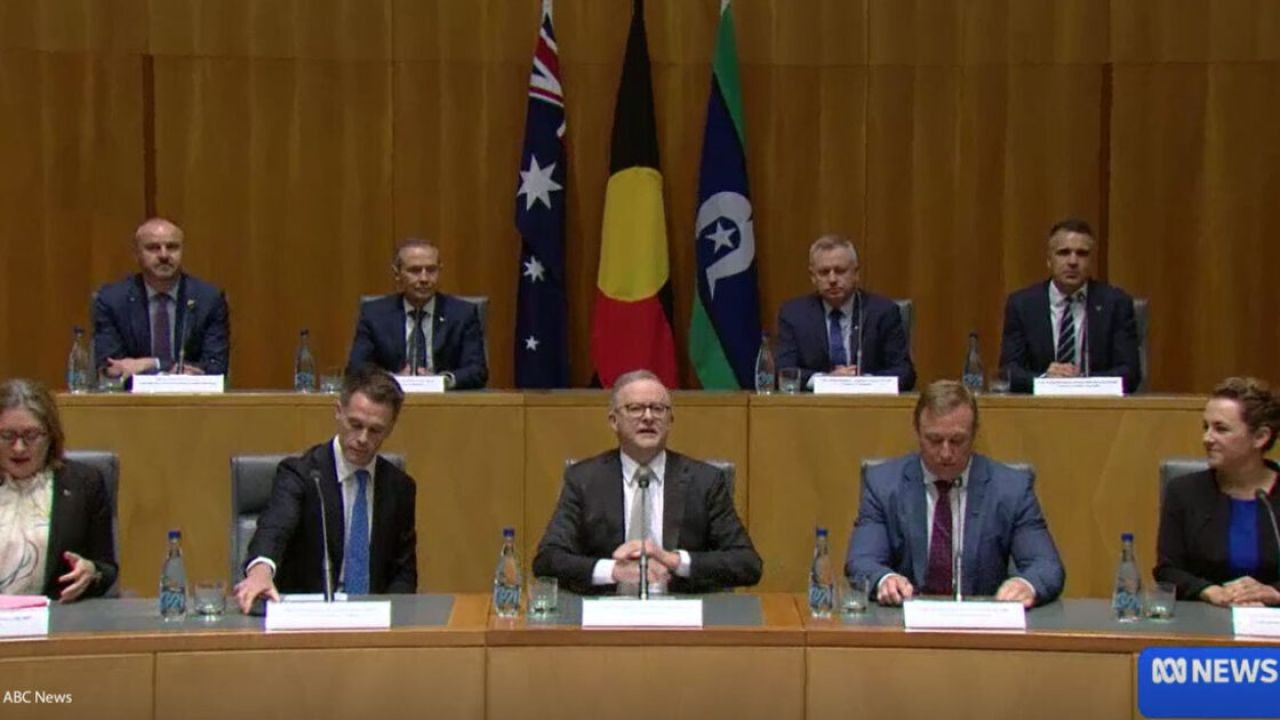
While the headlines following a National Cabinet meeting often focus on the political theatre—the handshakes, the press conferences, the carefully worded communiqué—the real story unfolds in the weeks and months that follow. For technology leaders, founders, and investors, these intergovernmental gatherings are not political spectacles but strategic weathervanes. They signal shifts in regulatory winds, unveil new funding priorities, and often crystallise the nation's approach to its most pressing economic and social challenges. The outcomes are a blueprint for where public capital and policy focus will flow, creating both immediate opportunities and long-term strategic imperatives for the tech sector.
Decoding the Agenda: From Housing to AI Sovereignty
Recent National Cabinet meetings have been dominated by a triad of issues with profound tech implications: the housing crisis, the energy transition, and the future of domestic critical technologies. Each presents a distinct vector for innovation and investment.
Take housing. The ambitious national target to build 1.2 million new well-located homes over five years is not merely a construction challenge; it's a digital infrastructure and proptech mandate. The communiqué’s emphasis on "streamlining approvals" is a direct call for digitisation. From my consulting with local businesses across Australia, I've seen a surge in local government areas partnering with SaaS platforms that automate development application tracking, integrate geospatial data for zoning, and use AI to assess building plans against complex council codes. This isn't just about efficiency; it's about capacity. The human-led system cannot scale to meet this target. The companies providing these digital foundations—often Australian startups like Archistar or Informed Decisions—are becoming critical infrastructure partners to the state.
Similarly, the coordinated energy transition talks, while focused on grids and renewables, are a green light for climate tech. The focus on community battery programs and flexible export limits for rooftop solar creates a market for virtual power plant (VPP) aggregators and smart energy management systems. Based on my work with Australian SMEs in the energy sector, the next battleground is software intelligence—platforms that can optimise distributed energy assets at scale, a necessity as we move from thousands to millions of home-based power generators.
The Silent Priority: Australia's Strategic Tech Capability
Perhaps the most significant, yet under-reported, outcome for the tech commentator is the deepening consensus on sovereign capability. This isn't about nostalgic manufacturing; it's about strategic resilience in the digital age. Discussions around critical technologies—quantum, AI, cybersecurity, and robotics—increasingly frame them as essential to national security and economic prosperity. The 2023 Defence Strategic Review explicitly tied technology to security, a sentiment now echoed in National Cabinet's focus on economic resilience.
Drawing on my experience in the Australian market, this shifts the goalposts for startups. It’s no longer sufficient to have a globally competitive product; there’s a growing premium on solutions that enhance national resilience, reduce supply-chain dependencies, or secure critical infrastructure. We see this in the success of companies like QuintessenceLabs in quantum cybersecurity or Baraja in lidar for autonomous systems. Their value proposition is now doubly weighted: commercial viability plus sovereign strategic value. This alignment with national policy dramatically de-risks investment and opens doors to government as a first customer, a powerful catalyst for scaling.
Where Most Brands Go Wrong: Misreading the Funding Signal
A common error in the tech ecosystem is to view National Cabinet outcomes as vague political statements with no tangible pathway to revenue. This is a costly strategic misreading. The communiqué is the starting pistol for a complex relay of funding agreements, state-based implementation plans, and new procurement criteria.
Myth: "National Cabinet agreements are just talk; the money and details come later, if at all." Reality: These agreements directly unlock tied Commonwealth funding to the states and establish new national partnerships. For example, the housing accord is backed by the $3.5 billion New Homes Bonus and the $500 million Housing Support Program. This money flows to states contingent on meeting reform milestones, creating immediate demand for the tech solutions that enable those reforms. A company whose platform helps a state government transparently track dwelling approvals against targets is providing a direct reporting mechanism for accessing these funds.
Myth: "Our B2B SaaS product is for the private sector; government policy doesn't affect our roadmap." Reality: This is an archaic view. Policy shapes entire markets. The decision to accelerate renewable energy deployment doesn't just create work for installers; it forces energy retailers, property developers, and large industrials to seek software for management, trading, and compliance. In practice, with Australia-based teams I’ve advised, the most successful tech firms build "policy intelligence" into their business development. They map their solution stack to the implementation challenges inherent in each National Cabinet priority.
Case Study: How PropTech Aligns with National Housing Policy
Case Study: Archistar – Digitising Planning for Density
Problem: Australia's housing shortage is exacerbated by a slow, opaque, and manual planning system. Developers faced high uncertainty and costs in assessing site feasibility, while councils were overwhelmed by complex, paper-based development applications. This systemic friction directly contradicted National Cabinet's goal of accelerating housing supply.
Action: Archistar built an AI-powered platform that automates site analysis against planning rules. Users can input any address in Australia and within seconds receive a report on permissible building heights, densities, shadowing, and yield. For councils, it provides tools to digitise their planning instruments and automate pre-lodgement checks.
Result: The platform has become a critical tool for aligning private sector development with public policy goals.
- Reduces initial site assessment time from weeks to minutes, de-risking project pipelines.
- Empowers developers to identify "missing middle" housing opportunities that comply with state-level density targets arising from National Cabinet.
- Adopted by multiple local and state government bodies to streamline their own planning processes, directly supporting reform agendas.
Takeaway: Archistar’s success demonstrates that the most powerful tech solutions are those that sit at the intersection of a commercial need and a public policy imperative. They didn't just build a better tool for developers; they built an essential infrastructure for delivering a national priority. Australian tech companies in sectors like construction, energy, and resources must analyse their offerings through this dual lens.
The Investment Landscape: Policy as a De-risking Agent
For venture capital and institutional investors, National Cabinet outcomes provide critical signals for sector allocation. Policy commitment de-risks investment in capital-intensive, long-horizon sectors. The government’s stated ambition to make Australia a "renewable energy superpower" or a leader in critical technologies is not mere rhetoric; it is a guide to future regulatory support, R&D incentives, and procurement.
Consider the data. The Australian Bureau of Statistics (ABS) reports that total business expenditure on R&D (BERD) was $20.6 billion in 2021-22. Government policy directly influences where this expenditure is focused through matched funding programs like the Commonwealth’s $392 million Industry Growth Program or state-based equivalents. When National Cabinet agrees on a "National Battery Strategy," it triggers a cascade of aligned grants, research partnerships (e.g., with CSIRO), and co-investment vehicles. An investor backing a battery materials recycling startup today is not just betting on a technology, but on the sustained policy follow-through from these high-level agreements.
The contrasting viewpoint here is caution against over-reliance on government direction, arguing it can distort market signals and create "zombie" sectors dependent on subsidies. This is a valid critique. The middle ground is for investors to seek companies whose technology is globally competitive but whose initial scaling pathway is dramatically accelerated by aligned Australian policy—companies that would succeed anyway, but for which sovereign strategy provides a powerful launchpad.
Actionable Insights for Australian Tech Leaders
Navigating this landscape requires a structured approach. Here is a practical framework for translating National Cabinet outcomes into strategy:
- Map Your Stack to the Implementation Gap: Don't just read the headlines. Download the 1-2 page National Cabinet communiqué. For each priority (e.g., "simplify migration for skilled workers"), ask: What are the systemic frictions in implementing this? Is it data sharing between agencies? Is it credential verification? Your product may solve an adjacent problem that just became critical.
- Engage at the State Level: National Cabinet sets the direction, but states and territories are the engines of delivery. Monitor the individual implementation plans each jurisdiction releases following these meetings. The procurement opportunities and pilot programs will be state-based. Having worked with multiple Australian startups, the most effective strategy is often to win a single state as a reference customer, then scale nationally as others follow.
- Leverage Sovereign Capability Narratives: In your investor decks and customer proposals, explicitly articulate how your solution contributes to a national priority—be it housing supply, decarbonisation, or tech sovereignty. This frames your commercial offering within a larger, strategic value proposition that resonates with government partners and mission-aligned capital.
- Monitor the Derivative Regulations: The real impact often comes 6-12 months later in updated building codes, new energy market rules, or changes to skilled occupation lists. These derivative regulations, crafted by bodies like the Australian Building Codes Board or the Energy Security Board, create compliance needs that are pure business opportunities for tech.
The Future of Federal-State Tech Governance
Looking ahead, the very mechanism of National Cabinet will likely be reshaped by the technologies it seeks to govern. We are moving towards a future of data-driven federalism. Imagine a national housing dashboard, updated in real-time, showing progress against the 1.2 million home target across every LGA, powered by automated data feeds from planning platforms. This isn't science fiction; it's the logical endpoint of current digitisation efforts.
Furthermore, the success of complex national agreements will increasingly depend on shared digital infrastructure—national registers, interoperable data standards, and secure identity frameworks. The companies that build this "plumbing" will become indispensable. My prediction is that within the next five years, we will see the creation of dedicated "National Mission" tech funds, jointly funded by Commonwealth and state governments, to directly co-invest in the startups providing these foundational capabilities. The era of tech policy as a sidebar is over; it is now central to the execution of the nation's most important goals.
Final Takeaway & Call to Action
For the astute technology commentator and practitioner, National Cabinet meetings are a rich source of strategic intelligence. They reveal where the government will struggle to meet its promises using legacy systems and manual processes—and that struggle is your opportunity. The gap between political commitment and practical delivery is a market gap waiting to be filled by innovative technology.
Your next step should be systematic. Go beyond the news cycle. Analyse the latest National Cabinet communiqué line by line, not as a citizen, but as a strategist. Identify the single biggest implementation hurdle mentioned or implied. Then, conduct an audit: does your current product roadmap, or that of a company you're invested in, contain a solution? If not, what would it take to build one?
The alignment of technology innovation with national necessity is the most powerful growth vector in the Australian market today. The question is no longer if policy matters to your tech strategy, but how deliberately you will integrate it.
People Also Ask
How do National Cabinet decisions directly affect Australian tech startups? They create immediate demand for solutions that help state governments implement agreed reforms, particularly in housing, energy, and skills. Startups that digitise manual processes, provide data transparency, or enable faster approvals can access new government procurement pathways and de-risked markets aligned with national funding.
What's the biggest mistake tech founders make regarding government policy? Treating policy as irrelevant "noise" or too complex to navigate. This ignores the fact that policy shapes market rules, allocates capital, and can become a startup's first major customer. Founders who build policy intelligence into their strategy unlock a significant competitive advantage.
Is sovereign capability a real trend or just political talk? It is a concrete, funded trend. Driven by geopolitical shifts and supply-chain crises, both major parties support building strategic tech resilience. This is evidenced by targeted grants, defence partnerships, and procurement preferences for solutions that reduce critical dependencies, creating a tangible market for qualifying Australian tech companies.
Related Search Queries
- National Cabinet Australia tech policy outcomes
- How does National Cabinet affect innovation funding
- Australian government housing policy tech opportunities
- Sovereign capability strategy Australia technology
- State and federal government collaboration tech sector
- National Cabinet communiqué analysis for businesses
- PropTech startups Australian government policy
- Climate tech investment National Cabinet energy
- Government procurement trends Australia tech
- Implementing National Cabinet reforms technology solutions
For the full context and strategies on 8. National Cabinet meeting outcomes – (And How Australians Can Stay Ahead), see our main guide: Publishing Print Media Videos Australia.