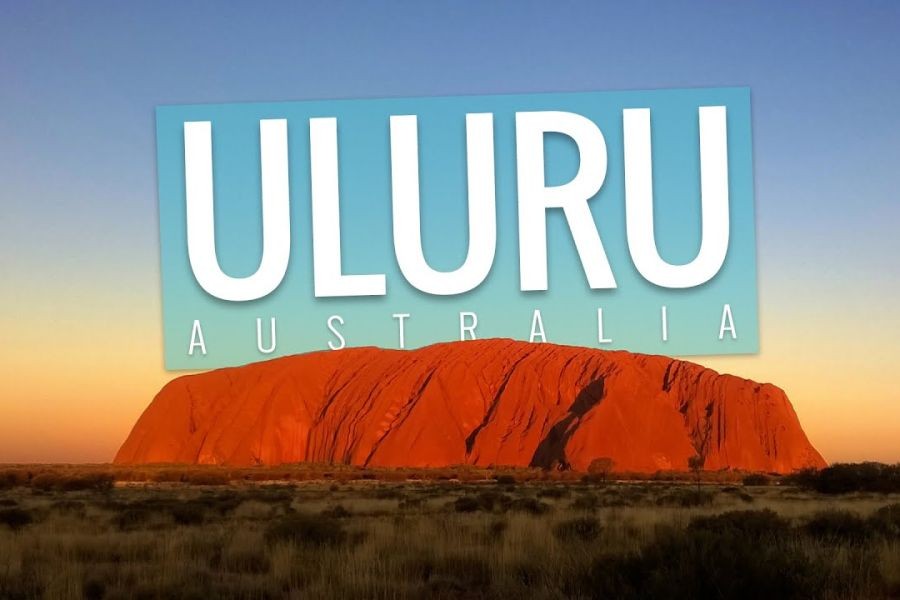






For decades, the narrative around Australian tourism has been painted in broad, picturesque strokes: pristine beaches, iconic wildlife, and the rugged Outback. While these images drive visitation, from a commercial real estate and economic perspective, tourism is a sophisticated, high-value economic engine with a direct and measurable impact on asset values, development pipelines, and regional growth. Its contribution extends far beyond hotel occupancy rates, permeating retail, industrial, office, and infrastructure sectors. To understand its true weight, we must move past the postcard and examine the hard data, historical policy shifts, and the tangible asset-class implications that define tourism's role in shaping Australia's built environment.
The Evolution: From "Stopover" to Strategic Economic Pillar
The modern structure of Australian tourism was fundamentally forged in the 1980s and 1990s. Prior to this, Australia was often a distant afterthought on long-haul itineraries. The pivotal shift came with the deregulation of air travel and the strategic entry of airlines like Qantas into global alliances, which dramatically improved accessibility. Concurrently, government bodies like Tourism Australia (established in its modern form in 2004) began executing data-driven, targeted marketing campaigns—"Where the Bloody Hell Are You?" notwithstanding—that moved beyond generic appeals to specific demographic and interest-based segments.
This period also saw the rise of the Experience Economy. Australia’s offering matured from passive sightseeing to curated experiences: luxury lodges in the Kimberley, world-class food and wine trails in Margaret River or the Barossa, and immersive indigenous cultural tours. This evolution demanded a more diverse and sophisticated real estate footprint: not just hotels, but boutique villas, dedicated tour operator premises, high-end retail precincts, and specialised transport hubs.
The Economic Footprint: A Data-Driven Perspective
According to the Australian Bureau of Statistics (ABS) and Tourism Research Australia (TRA), tourism's direct contribution to Australia’s Gross Domestic Product (GDP) was approximately $60.8 billion in the year ending September 2023. Pre-pandemic, it consistently accounted for over 3% of GDP, with the total contribution (including indirect effects through supply chains) reaching nearly 6%. For context, this places tourism’s economic footprint on par with sectors like agriculture or education.
Critically, tourism is a major employment driver, supporting around 660,000 jobs directly. These are often geographically dispersed, providing vital economic lifelines to regional communities outside the major capital city CBDs. From a commercial brokerage viewpoint, this dispersion creates multiple secondary and tertiary markets with investment-grade fundamentals. A strong tourism flow in Far North Queensland, for instance, supports not only hospitality assets but also local retail leasing, demand for storage and logistics facilities for goods, and professional services requiring office space.
The Commercial Real Estate Multiplier Effect
The most insightful analysis for an investor or developer lies in the multiplier effect across asset classes. A major international event or a sustained inbound tourism surge doesn't just fill hotels.
- Retail: High-spending tourists, particularly from China, the US, and the UK, target specific retail precincts. Prime luxury and duty-free retail in Sydney's CBD or at major airport outlets see a direct correlation between passenger arrival numbers and turnover. From consulting with local businesses across Australia, I've observed retail tenants in these corridors often have lease clauses or turnover rents linked to tourism metrics.
- Industrial & Logistics: The demand for fresh, high-quality produce for hotels and restaurants, alongside the logistics for tour operations (vehicles, equipment), fuels the cold-storage and warehouse sector. The growth of "foodie tourism" directly impacts the demand for specialised industrial space near key agricultural regions and transport nodes.
- Office: Tourism’s ecosystem requires a backbone of corporate services: regional tourism board offices, marketing agencies, tour operator headquarters, and financial services supporting the industry. This creates steady, if niche, demand for commercial office space in both capital cities and key regional centres.
Reality Check for Australian Businesses and Investors
A prevalent, costly assumption is that tourism development is primarily a "hospitality play," best left to specialised hotel operators. This underestimates the integrated asset strategy required. Another misconception is that tourism growth is linear and immune to sharp corrections. The pandemic was the ultimate stress test, revealing both vulnerability and remarkable resilience. Assets with flexible design, multiple revenue streams (e.g., hybrid retail/F&B), and locations tied to domestic as well as international tourism recovered fastest.
Drawing on my experience in the Australian market, a critical error is failing to underwrite tourism-dependent assets with a sensitivity to exchange rates and geopolitical factors. A luxury retail store in Sydney reliant on Chinese tourists saw revenues plummet during diplomatic tensions and travel restrictions, a scenario that should be stress-tested in any investment model. The data contradicts the idea of a monolithic "tourism sector"; performance is highly segmented by visitor origin, purpose, and asset type.
Case Study: The Transformation of Tasmania's Tourism and Its Real Estate Impact
Problem: Two decades ago, Tasmania's economy faced significant challenges, with tourism a seasonal, low-yield activity focused primarily on heritage sites. Commercial real estate investment in hospitality and related sectors was limited, with little premium on design or experience. The state struggled to retain visitors and capture high-value expenditure.
Action: A coordinated, long-term strategy was implemented, combining state government investment in key attractions (MONA – Museum of Old and New Art, opened 2011) with aggressive marketing of Tasmania's gourmet food, whisky, and wilderness experiences. Policy streamlined development approvals for boutique accommodation. This wasn't just marketing; it was a deliberate curation of a premium destination brand, which in turn de-risked private real estate development.
Result: The transformation is quantifiable in real estate terms. According to Tourism Tasmania, visitor expenditure grew from approximately $1.4 billion in 2010 to over $2.8 billion pre-pandemic. This demand triggered a commercial and hospitality development boom:
- Valuation uplifts for waterfront and historic building stock in Hobart suitable for conversion to hotels or premium F&B.
- New build-to-rent and boutique lodge developments in previously undeveloped regional areas like the East Coast.
- Stronger retail leasing demand in Hobart's CBD, supporting niche retail and specialty food stores.
Takeaway: Tasmania's success demonstrates that tourism-driven real estate growth requires a powerful, authentic narrative that attracts private capital. It highlights the opportunity for "place-making" investments, where commercial real estate is not just a service for tourists but an integral part of the attraction itself. For investors, it underscores the potential in secondary markets where a coherent destination strategy is being executed by both public and private entities.
The Infrastructure Imperative: Gateways and Connectivity
Tourism is fundamentally an exercise in logistics. The value of a destination is capped by its accessibility. Australia's geographical isolation makes aviation policy and airport infrastructure not just supporting actors, but primary value drivers for vast swathes of commercial real estate. The expansion of airport precincts—such as the ongoing developments at Sydney Airport's Aerotropolis or Melbourne Airport's business park—are creating new sub-markets for logistics, office, and retail uses that are directly tied to passenger and freight flows.
Having worked with multiple Australian startups in the experience sector, a common constraint is domestic connectivity. A world-class lodge in the Northern Territory is only viable if reliable, cost-effective air links exist from major gateways. Therefore, analysing regional airport upgrades or new flight routes is a leading indicator for commercial real estate potential in those catchments. This is a tangible action point: commercial brokers and investors should monitor announcements from Airport Development Groups and state transport departments as diligently as they follow interest rate movements.
Future Trends & The Next Disruption
The future of tourism, and by extension its real estate demands, is being shaped by three powerful forces:
- Sustainability & Regenerative Travel: The market is bifurcating. There is growing demand for assets that demonstrably minimise environmental impact and contribute positively to local communities. This goes beyond a "green star" rating. It encompasses carbon-neutral operations, direct partnerships with Traditional Owners, and architectural design that enhances the natural setting. Assets lacking credible ESG credentials will face brand and valuation pressure.
- Experience Hyper-Personalisation & Technology: The rise of AI-driven itinerary planning and demand for unique, "Instagrammable" moments will favour flexible, adaptable spaces. We may see a growth in pop-up retail/experience venues and hotels with reconfigurable event spaces. The real estate must facilitate unique storytelling, not just accommodation.
- Blurring of Work, Travel, and Living ("Workations"): The remote work revolution is permanent for a segment of the workforce. This creates demand for accommodation that blends high-speed connectivity with lifestyle amenities for longer stays. This trend could revitalise certain regional office markets and drive demand for serviced apartment-style developments in non-traditional locations.
Based on my work with Australian SMEs in the sector, the next five years will see a shakeout. Generic, undifferentiated assets will struggle. Premium, experience-focused, and sustainably operated properties with strong digital distribution will capture disproportionate value. The data from the RBA and ABS on consumer spending patterns already shows a clear shift towards spending on services and experiences over goods, a macro-trend that directly benefits high-quality tourism offerings.
Final Takeaway & Strategic Call to Action
Tourism is not a siloed sector; it is a dynamic, high-value flow of capital and people that directly dictates occupancy, rental growth, and development feasibility across multiple commercial real estate asset classes. Its economic contribution is both substantial and multifaceted, embedded in national and regional GDP figures.
For commercial real estate professionals, the imperative is to analyse tourism not as a generic headline figure, but through specific, actionable lenses:
- Drill into the data: Move beyond total visitor numbers. Analyse spend per visitor, length of stay, and purpose of visit (holiday vs. business) for your target market. Tourism Research Australia's regional data is an invaluable, free resource.
- Think ecosystemically: When evaluating a retail, office, or industrial asset, model its exposure to tourism flows. Who are the tenants' customers? What portion is derived directly or indirectly from visitor expenditure?
- Incorporate resilience: Underwrite assets with scenarios for exchange rate fluctuations, geopolitical shocks, and domestic economic cycles. The most robust tourism-dependent assets cater to a mix of international and high-yield domestic markets.
The landscape is evolving rapidly. The winners will be those who see the curated experience as the core product and the real estate as the essential, value-enabling platform for its delivery.
People Also Ask (PAA)
How does tourism directly impact commercial property values in Australia? Tourism drives direct demand for hotel, retail, and F&B space, pushing up rents and capital values in prime precincts. It also creates indirect demand for supporting logistics, office, and service-based real estate, influencing valuations in broader catchment areas linked to visitor activity.
What is the biggest risk for real estate investors in tourism-dependent assets? The highest risk is over-exposure to a single, volatile source of demand (e.g., one international market) without a domestic or diversified visitor base. Assets lacking flexibility to adapt to market shifts or sustainability expectations are also vulnerable to devaluation.
Which Australian city has the most tourism-driven commercial real estate? Sydney and the Gold Coast have the highest concentration, but the most dynamic growth markets are often in targeted regional destinations like Tasmania, Cairns, or Margaret River, where tourism can represent a larger proportion of the total local economy and real estate demand.
Related Search Queries
- Tourism investment opportunities Australia 2024
- Impact of international students on Australian real estate
- Hotel development feasibility study Australia
- Regional commercial property growth Australia tourism
- ESG investing hospitality sector Australia
- Aviation infrastructure and property values Australia
- Retail turnover linked to tourist arrivals data
- Post-pandemic tourism trends Australia real estate
- Boutique accommodation development funding Australia
- Economic multiplier effect of tourism by region
For the full context and strategies on How Tourism Contributes to Australia’s Economy – A Results-Driven Approach for Australians, see our main guide: Commercial Property Videos Australia.