






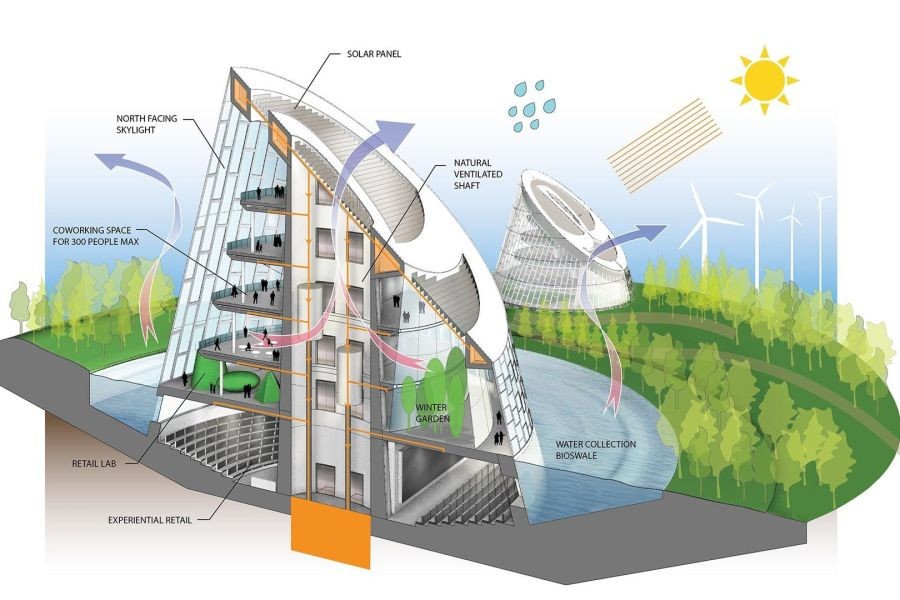
Imagine a New Zealand where every building touted as sustainable actually contributes to environmental degradation. While sustainable construction is heralded as a key solution to our ecological crisis, this perception might not be as green as it seems. As New Zealand rapidly moves towards more eco-friendly construction, it's crucial to scrutinize the true impact of these practices. According to the Ministry for the Environment, construction contributes to approximately 20% of the country's carbon emissions, raising questions about the effectiveness of current sustainable methods. This article delves into why sustainable construction might not be the panacea it's claimed to be, offering local business owners insights into both the promises and pitfalls of this growing trend.
The Realities of Sustainable Construction
While sustainable construction aims to reduce environmental impact, the reality can be more complex. The initial stages of sustainable projects often involve high energy consumption due to the production of eco-friendly materials. For instance, bamboo, a sustainable alternative to traditional timber, requires extensive processing and transportation. In New Zealand, the carbon footprint of sourcing bamboo from Asia can outweigh its ecological benefits.
Case Study: The Wellington Green Building Initiative
- Problem: A Wellington company sought to build a green-certified office.
- Action: They used locally sourced timber and recycled materials.
- Result: The building achieved a 5 Green Star rating but at a 30% higher cost than traditional methods.
- Key Takeaways: Local sourcing reduced transportation emissions, but the financial viability is a concern for smaller businesses.
Data-Driven Analysis: Environmental and Economic Impacts
According to Stats NZ, construction waste accounts for over 50% of the country's landfill content. Sustainable construction aims to mitigate this, yet the production of 'green' materials often involves significant energy use. A 2023 report from BRANZ highlighted that the lifecycle emissions of some sustainable materials can be 10-20% higher than conventional options when factoring in production and transportation.
Financially, sustainable buildings can yield long-term savings through energy efficiency, but the initial costs can be prohibitive. A report by PwC found that sustainable buildings in New Zealand see a 15% increase in construction costs, raising questions about accessibility for small businesses. Thus, while the intent behind sustainable construction is noble, the execution often falls short of its promises.
Contrasting Views: The Sustainable Construction Debate
Sustainable construction has its champions and critics. Proponents argue that, despite higher upfront costs, green buildings lead to lower operational expenses and improved occupant health. Critics, however, point out that the industry is rife with greenwashing—where companies exaggerate their environmental efforts to boost sales. A 2024 study by the University of Auckland revealed that 60% of consumers felt misled by sustainability claims in the construction sector.
Storytelling: The Tale of a Misguided Eco-Friendly Venture
Meet Sarah, a local business owner in Christchurch. Inspired by the sustainability movement, she decided to build her new café using eco-friendly materials. She envisioned a space that would attract eco-conscious customers. However, Sarah quickly discovered the hidden costs of sustainable construction. The materials were expensive, and the certification process was cumbersome. Her venture taught her that while sustainability is important, balancing ecological goals with financial realities is crucial for small business success.
Common Myths & Mistakes
- Myth: "Sustainable buildings are always more energy-efficient." Reality: Energy efficiency varies widely based on design and material choices. Buildings with poor insulation can still be inefficient.
- Myth: "Green buildings are too expensive." Reality: While upfront costs are higher, operational savings can offset these over time.
- Myth: "All sustainable materials are eco-friendly." Reality: Some materials, like bamboo, have a high carbon footprint due to transportation and processing.
Which of these myths did you believe before reading this? Drop your thoughts below!
Final Takeaways
- ⚠️ Fact: Sustainable construction can lead to higher upfront costs but offers long-term savings.
- 🔥 Strategy: Prioritize local materials to reduce transportation emissions.
- ❌ Mistake to Avoid: Don't assume all eco-friendly materials are automatically sustainable.
- 💡 Pro Tip: Consider a lifecycle assessment to understand the true environmental impact of your building choices.
- 🔮 By 2026, stricter regulations may enforce more transparent sustainability practices.
Conclusion
Sustainable construction is a complex but crucial part of New Zealand's environmental strategy. While the journey towards greener buildings is fraught with challenges, understanding the nuances can help local business owners make informed decisions. Ready to build sustainably? Start by evaluating your material choices and considering the long-term impact. Share this article with your network or comment with your thoughts!
People Also Ask
- How does sustainable construction impact businesses in New Zealand? Sustainable construction can lead to operational savings and attract eco-conscious customers, but the initial costs may be higher.
- What are the biggest misconceptions about sustainable construction? Many believe all sustainable materials are eco-friendly, but their carbon footprint can vary significantly.
Related Search Queries
- Sustainable construction in New Zealand
- Green building materials NZ
- Eco-friendly construction techniques
- Environmental impact of construction
- Cost of sustainable buildings
- New Zealand green certification for buildings




























The Farber Consulting Group Inc.
13 days ago