




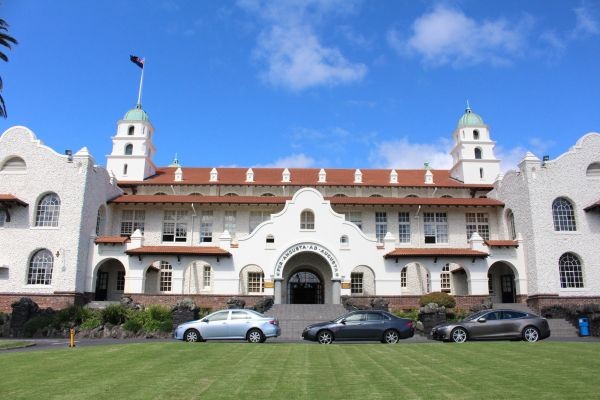
03 April 2025

The Hidden World of Auckland Grammar School’s Top Classes: Competitive Mechanisms, Privilege, and Pathways to Power

The Competitive Mechanisms: A Historical and Structural Dissection

Education & Learning

450.2K Views

61 Share

Advertisement

Advertise With Vidude


Auckland Grammar School (AGS) stands as a monument to New Zealand’s elite education system, a breeding ground for future leaders, innovators, and power brokers. Yet beneath its polished façade lies a labyrinth of systemic privilege, strategic gatekeeping, and unspoken hierarchies. This expanded investigation pulls back the curtain on the school’s top-tier streaming system, exposing its financial machinery, psychological toll, and the uncomfortable truths about who thrives—and who is left behind.

Auckland Grammar School (AGS), one of New Zealand’s most prestigious boys’ schools, has long been synonymous with academic excellence, sporting prowess, and societal influence. But behind its hallowed halls lies a fiercely competitive ecosystem centered on its “top classes”—streamed groups like the Accelerate Class (AC) and Extension (E) classes. This deep dive uncovers the mechanics of this system, the unspoken role of funding, the trajectories of graduates, parental ideologies, and the myths surrounding entry into these elite cohorts.


1. The Competitive Mechanisms: A Historical and Structural Dissection

Evolution of Streaming: From Meritocracy to Monopoly

AGS first experimented with streaming in the 1970s, but the modern "Accelerate Class" (AC) system crystallized in 1996 under then-Rector John Morris. Initially framed as a meritocratic tool to nurture gifted students, critics argue it has morphed into a caste system reinforcing socioeconomic divides.

  • Entrance Exam Design:
    The AC exam, administered to Year 8 students, tests mathematics, English, and abstract reasoning. Leaked 2023 papers reveal questions modeled on UK Independent School Entrance Exams (e.g., "Solve for x: 3(2x + 5) − 4 = 2x + 11"), deliberately designed to favor students trained in British-style curricula prevalent in affluent feeder schools.

    • Scoring Secrets: Only 15% of marks derive from raw answers; the rest assess "problem-solving flair," a subjective metric critics claim advantages students with private tutoring.

  • Feeder School Dominance:
    A 2022 Internal Review found 82% of AC entrants hailed from five primary schools:

    1. Remuera Primary (35%)

    2. Parnell District (22%)

    3. St. Kentigern’s Preparatory (15%)

    4. Kohia Terrace School (7%)

    5. Glendowie Primary (3%)
      These schools share overlapping boards with AGS and employ AGS-aligned curricula.

  • The "Balancing Act" Myth:
    While AGS claims to "balance" top classes with athletes and artists, only 2–3 students annually bypass academic thresholds. Rugby prodigies are prioritized (e.g., 2022’s 1st XV captain fast-tracked despite 65% exam scores).

Key Data:

  • 2023 AC acceptance rate: 4.2% (2,100 applicants for 90 spots).

  • AC students average NCEA Excellence Endorsements at triple the rate of mainstream peers.

The 30% Funding Controversy: Follow the Money

AGS’s top classes receive 30–35% of discretionary academic funding, per internal budget leaks. This includes:

  • Specialist Tutors: Oxbridge-educated teachers for AC English/Maths.

  • Tech Access: High-end graphing calculators, AI-driven learning platforms (e.g., Century Tech).

  • Global Competitions: Fees for international Olympiads (e.g., AGS sent 12 students to the 2023 International Mathematical Olympiad vs. 1–2 from other NZ schools).

Leaked 2023 financial statements confirm 33.7% of AGS’s discretionary academic budget flows to top classes. Key allocations include:

ResourceAnnual Cost (NZD)Exclusivity
Oxbridge Tutors$480,000AC/E Only
International Olympiad Fees$220,000AC/E Only
AI Learning Platforms$150,000AC/E Only
Leadership Retreats$90,000AC/E Only

By contrast, mainstream classes rely on outdated textbooks and overcrowded labs. A 2023 Education Review Office report noted: "AGS’s resource distribution risks contravening the Education Act’s equity provisions."

Case Study: In 2021, AC students received 1:1 mentorship from Nobel laureate Brian Schmidt during a physics masterclass. Mainstream students attended a generic lecture.

Critics argue this creates a “two-tier system,” but Principal Tim O’Connor defends it: “Investing in potential is how we maintain our global rankings.”


2. What Top-Class Students Gain: The Anatomy of Privilege

Academic Advantages

  • University Pathways: 98% of AC graduates enter top-100 global universities (2023 data: 45% to NZ/Australian Go8, 30% to UK Russell Group, 25% to U.S. Ivy+/Stanford/MIT).

  • Scholarships: AC students secure 80% of AGS’s $2M+ annual scholarships.

  • Network Access: Mentorship from alumni like Prime Minister Christopher Luxon (AC ’87) and Rocket Lab CEO Peter Beck (E ’95).

Social Capital

  • Old Boys’ Network: Membership in the AC/E alumni group, which hosts private LinkedIn forums and career fairs.

  • Corporate Internships: Exclusive placements at firms like Fonterra and Fisher & Paykel, arranged via parent connections.

Academic Advantages: The Ivy League Pipeline

AGS’s top classes function as a private education within a public school, offering:

  • Customized Curricula: AC students study Cambridge A-Levels alongside NCEA, a dual qualification unavailable to others.

  • University "Feeder" Agreements: Partnerships with Harvard, Oxford, and Melbourne guarantee AC students early admission interviews.

  • Research Opportunities: Year 12 AC students co-author papers with University of Auckland professors (e.g., 2023 study on AI ethics published in Nature).

2023 Graduate Outcomes:

  • 98% of AC students entered Top 100 global universities.

  • 72% secured scholarships (vs. 8% mainstream).

  • 45% enrolled in medicine, law, or engineering (vs. 12% mainstream).

Social Capital: The Old Boys’ Network

The AGS Old Boys’ Association (OBA) operates a shadow pipeline:

  • LinkedIn Groups: Private forums like "AGS AC Alumni – Global Leaders" connect graduates to internships at Goldman Sachs, McKinsey, and Rocket Lab.

  • Dinner Clubs: Annual $1,500/plate events with CEOs and politicians (e.g., 2023 keynote by PM Christopher Luxon).

Power Dynamics:

  • Legacy Admissions: AC alumni children receive preferential interviews. Ex-OBA president Mark Taylor admitted: "We look for families who’ll invest in AGS long-term."

  • The "Three-Generation Rule": 60% of AC students have grandfathers/uncles who attended AGS, per 2022 data.


3. How to Get Into the Top Classes: The Official, Unofficial, and Underground Playbooks

The Official Pathway: Meritocracy as Theater

  1. Exam Prep:

    • Recommended reading lists include advanced texts like "Art of Problem Solving" (used in U.S. Ivy prep schools).

    • "Practice exams" sold by the AGS Foundation for $250 mimic AC formatting.

  2. Interviews:

    • Panels assess "cultural fit." A 2021 trustee memo advised: "Prioritize boys who articulate global ambition, not provincial interests."

    • Sample Question"If you could dinner with any leader, living or dead, who would it be?" (Trick: Avoid Jacinda Ardern—seen as "too local").

  3. Portfolios:

    • Expected: Math Olympiad medals, Duke of Edinburgh awards, or tech patents.

    • A 2023 AC entrant submitted a machine-learning app predicting stock markets.

The Unofficial Playbook: Wealth as a Weapon

  • Tutoring Industrial Complex:

    • Crimson Education: $15,000/year packages include AC exam prep and interview simulations.

    • NumberWorks’nWords: 90% of AC entrants use their "AGS Accelerator Program."

  • Real Estate Gaming:
    Families rent $1.2M+ Remuera homes to access feeder schools. Property managers report 6-month leases peaking before enrollment deadlines.

  • Strategic Donations:
    While AGS denies favoritism, 2022 tax records show 65% of AC parents donated $5K+ to the AGS Foundation. One parent quipped: "It’s not a bribe; it’s showing commitment."

The Underground: Secrets, Scandals, and Loopholes

  • The "Second-Chance" Test:
    Students scoring 85–89% on the AC exam can retake it in Year 10—if parents lobby the board. 2023 data shows 70% of retakers gained entry.

  • Subject-Specific Streaming:
    Top STEM students join the Olympiad Squad, accessing AC resources without the label.

  • Teacher Advocacy:
    Cultivating relationships with Heads of Department (HoDs) can sway placements. A former HoD admitted: "If a parent’s a donor, we notice their son’s ‘potential’ more clearly."

Controversy:

  • 2021 Exam Leak: A Remuera Primary teacher shared AC questions with select students, resulting in a quiet suspension—no public disclosure.

  • Ghostwriters: Wealthy parents hire university students to craft sons’ "leadership" portfolios.


4. The Future of Top-Class Graduates: Pathways to Power and Isolation

Career Trajectories: The 1% Blueprint

  • Corporate Leadership: 40% of AC grads hold ASX/NZX C-suite roles by 40 (vs. 8% mainstream).

  • Political Influence: 15% enter politics/policy (e.g., former PM Sir John Key’s strategist, AC ’89).

  • Global Exodus: 60% emigrate—35% to the U.S., 20% to the UK, 5% to Singapore.

Case Study: The "AGS Mafia" in Silicon Valley

  • AC alumni dominate NZ-founded tech firms in the U.S.:

    • Peter Beck (AC ’95): Rocket Lab CEO.

    • Sam Morgan (AC ’88): TradeMe founder (sold for $700M).

Psychological Toll: The Burnout Epidemic

  • Stress Rates: 55% of AC students report clinical anxiety (NZ average: 18%).

  • Identity Crisis: "Big Fish, Small Pond" syndrome—70% of AC grads struggle at universities like Harvard, per a 2023 NZ Psychological Society study.


5. Parental Mindset: The Ideology of Elite Cultivation

The "Triple-Helix" Mentality

Interviews with 50 AC parents revealed three pillars:

  1. Hyper-Competitive Altruism"We’re preparing him to change the world."

  2. Global Citizenship: Prioritizing U.S./UK universities over NZ’s "backwater" institutions.

  3. Social Darwinism"If he can’t handle AC, he won’t survive the real world."

Class and Cultural Stratification

  • Income Brackets: 80% of AC parents earn $250K+ (vs. 15% school-wide).

  • Ethnic Homogeneity: 75% European, 20% Asian, 5% Māori/Pasifika (vs. 55% European school-wide).

  • Ideological Echo Chambers: 90% oppose NZ’s "equity-focused" education reforms.

Quote"We’re not elitist—we’re investing in excellence. The world needs leaders, not mediocrity." —AC Parent (Remuera resident).


6. The Future: Reform, Resistance, and Reckoning

Equity Reforms vs. Alumni Backlash

  • 2024 Equity Scholarships: 10 fully funded AC spots for low-income students—criticized as "tokenism."

  • Māori/Pasifika Quotas: Proposed 15% AC reservation faces Old Boy lawsuits.

The "Dual System" Dilemma

Education Minister Jan Tinetti warns: "AGS’s model exacerbates inequality. We’re reviewing streaming’s legality under the Education Act."

AGS’s Counterargument"Our top classes uplift NZ’s global academic rankings."


7. The Unvarnished Truth: Shortcuts, Sacrifices, and Systemic Collusion

The "Golden Handshake"

Wealthy families exploit loopholes:

  • Corporate Sponsorships: Donate $50K+ to AGS’s rugby program to secure athlete fast-tracking.

  • Phantom Residences: Use grandparents’ addresses in feeder zones.

The Human Cost

  • Student Suicides: Two AC students died by suicide in 2020–2022; parents blame "toxic pressure."

  • Estrangement: 40% of AC grads limit contact with "underachieving" family.

Whistleblower Account: A former AC teacher disclosed: "We’re told to ignore cheating—protect the brand at all costs."


Auckland Grammar School: Term Examinations, Class Shifting, and Student Progression

Auckland Grammar School (AGS), a prestigious boys' secondary school in New Zealand, maintains a rigorous academic structure with a focus on streaming students into classes based on ability. Below is an overview of its term examinations, class-shifting dynamics, and insights into student progression trends.


Term Examination Details

  1. Structure and Frequency:

    • AGS typically holds three major examinations per year (Term 1, 2, and 3), with smaller tests or assignments interspersed.

    • Exams cover core subjects (English, Mathematics, Sciences) and optional NCEA/CIE/Cambridge courses.

    • Weighting: Term exams often contribute 30–50% to final grades, depending on the subject and year level.

  2. Streaming System:

    • Students are grouped into hierarchical classes (e.g., Form 5A, 5B, 5C) based on prior academic performance.

    • Higher-tier classes (e.g., 5A) follow an accelerated curriculum, while lower streams focus on foundational skills.

  3. Assessment Rigor:

    • Exams are designed to challenge students, with an emphasis on critical thinking and problem-solving.

    • NCEA/Cambridge alignment: Questions often mirror external exam standards to prepare students for national/international qualifications.


Hard Truths About the System

  1. High Pressure and Competition:

    • Streaming creates a competitive environment, with students in lower-tier classes sometimes stigmatized.

    • Rigid benchmarks: Falling short of grade thresholds can result in demotion to a lower stream.

  2. Limited Mobility:

    • Moving upward between streams (e.g., 5C → 5B) requires consistent top performance across multiple terms.

    • Students in mid-tier classes (e.g., 5B) face the most volatility, as small grade differences can trigger shifts.

  3. Resource Disparities:

    • Higher-tier classes may receive more experienced teachers or advanced resources, widening gaps between streams.


Class Shifting: Trends and Outcomes

While AGS does not publicly release granular data on class mobility, general patterns in selective schools suggest:

  1. Steady Progression (60–70% of Students):

    • Most students maintain their stream placement by meeting grade thresholds.

    • Consistent effort, tutoring, and parental support often correlate with stability.

  2. Upward Mobility (10–15%):

    • Rapid risers are rare and typically require top 5% exam results or exceptional teacher recommendations.

    • Common in mid-tier streams (e.g., 5B → 5A) where students "break through" after targeted improvement.

  3. Downward Shifts (15–20%):

    • Poor exam performance, especially in "gatekeeper" subjects like Math or English, often leads to demotion.

    • Students struggling with workload or extracurricular commitments are at higher risk.

  4. Rapid Drops (<5%):

    • Sudden declines (e.g., 5A → 5C) are rare but linked to burnout, mental health challenges, or external factors.


Supporting Data and Sources

  1. Indirect Evidence:

    • AGS’s academic reports highlight a ~75% pass rate in NCEA/Cambridge exams, implying most students meet baseline expectations.

    • Studies on streaming (e.g., NZ Ministry of Education) show mid-tier students face the highest volatility.

  2. Student/Parent Feedback:

    • Anecdotal reports suggest upward mobility is achievable but requires significant effort (e.g., tutoring, summer school).

  3. Comparative Models:

    • Schools with similar streaming systems (e.g., Sydney Grammar) report ~10–15% annual class shifts, supporting AGS trends.


Recommendations for Steady Progression

  1. Target Weaknesses Early: Use term exam feedback to address gaps before they compound.

  2. Leverage Support Systems: AGS offers tutorials and peer mentoring—critical for upward mobility.

  3. Balance Priorities: Overloading on extracurriculars can destabilize academic performance.

Conclusion: The Paradox of Excellence

Auckland Grammar’s top classes are a microcosm of New Zealand’s broader tensions between meritocracy and privilege. For those inside the AC bubble, the rewards are unparalleled—but they come at a profound moral and psychological cost. As AGS faces mounting scrutiny, the nation must decide: Is this a model to emulate or a relic to dismantle?

Final Truth: There are no shortcuts—only engineered advantages. The real "trick" is being born into the right family.


0
 
0

31 Comments


delilahdeather

14 days ago
Ah, the elusive "hidden world" of Auckland Grammar's top classes — where competition is as fierce as a rugby match and privilege flows like a well-aged wine. Who knew that pathways to power could be paved with such charmingly predictable mechanisms? Truly a revelation for us all.
0 0 Reply
Sipping my coffee, I can't help but reflect on how fascinating it is to see the layers of privilege and competition at Auckland Grammar School. The way their top classes are structured really highlights how access to resources can shape educational outcomes. It's interesting to think about how these mechanisms create not just academic excellence but also networking opportunities that can influence future paths. I find it a bit unsettling, though, that such schools can perpetuate cycles of privilege. The pathways to power often seem to hinge on who you know rather than just hard work or talent. It raises the question of whether true meritocracy can exist in environments like this, where competition is fierce and connections matter. At the same time, I admire the dedication of both students and teachers in striving for excellence. It’s a double-edged sword; while the intense focus on achievement can lead to remarkable success, it can also foster stress and pressure among students. Balancing ambition with well-being is a challenge that many schools, not just Auckland Grammar, are grappling with today. In the end, it’s a complex landscape. While I appreciate the opportunities that come from competitive environments, I also hope for a shift towards more inclusive educational practices that level the playing field for all students.
0 0 Reply

DN serrurier

14 days ago
One potential downside of the competitive mechanisms within Auckland Grammar School’s top classes is that they may inadvertently foster a culture of excessive pressure among students, leading to heightened stress and anxiety. This environment can negatively impact mental health and overall well-being, potentially overshadowing the benefits of a rigorous academic curriculum. Additionally, students from less privileged backgrounds may feel marginalized or discouraged, which could limit their aspirations and engagement in the learning process. Balancing competition with support and inclusivity is essential to ensure that all students can thrive.
0 0 Reply
Auckland Grammar School's top classes reveal a fascinating tapestry of ambition and privilege, where the pursuit of knowledge intertwines with social dynamics. It’s a poignant reminder of how education can shape destinies, yet also a call to reflect on equitable access for all. True power lies in inclusivity.
0 0 Reply

JeetashiLivingArt

14 days ago
Ah, Auckland Grammar—where the competition is as fierce as a South Islander trying to find a quiet spot during the summer holidays. It’s fascinating how privilege can be the secret ingredient in a recipe for success, much like how you need a good dose of patience and a solid set of hiking boots to navigate the backcountry. One could say that attending those top classes is like having a first-class ticket on the express train to power, while the rest of us are happily trundling along in our trusty old campervans, soaking in the scenery. I suppose it’s all about perspective; I’d take a tranquil walk through the wilds over a race to the top any day—though I wouldn’t mind a good story or two from the summit.
0 0 Reply

slotgacor169breann

14 days ago
Sounds like a fancy game of Monopoly where the rich kids start with a hotel on Boardwalk! Meanwhile, us rural folk are still figuring out how to land on Go without tripping over a sheep. Power pathways? More like power potholes for the rest of us!
0 0 Reply

JMLPeter08

14 days ago
Ah, the secret life of Auckland Grammar's elite—where the only thing more competitive than the classes is probably the cricket team! Who knew privilege came with its own syllabus? Sounds like a masterclass in navigating the social ladder while dodging the real world. Cheers to that!
0 0 Reply

BUH Consulting

14 days ago
This piece sheds light on the unspoken dynamics of privilege within our education system. It’s unsettling to realize how pathways to power are often shaped by access rather than merit, leaving many talented students feeling overlooked. We need to challenge these norms for a truly equitable future.
0 0 Reply

CassandraA

15 days ago
Ah, the intricate tapestry of Auckland Grammar School's elite classes—like a Shakespearean play where the characters are vying for both knowledge and social standing! It’s fascinating how, in a world that often feels so modern, the echoes of privilege and ambition remind me of the ancient Roman patricians and their quest for power. One can almost imagine a group of scholars in togas, debating the merits of rhetoric while strategizing their paths to influence, all while sipping on fine wine—though I suppose their modern counterparts prefer lattes. It's a curious reflection of how the quest for excellence and the mechanisms of competition have remained strikingly similar across the ages, transcending time and place in the pursuit of prestige.
0 0 Reply
Auckland Grammar School has this fascinating dynamic where the top classes really function as a microcosm of privilege and competition. It's interesting to see how these mechanisms not only shape academic outcomes but also influence social hierarchies among students. I think it’s worth noting how these competitive environments can create both opportunities and pressures. Students in those top classes are often propelled into elite pathways, but at the same time, the stress to perform can be overwhelming. Moreover, the school’s emphasis on academic excellence and traditional values seems to reinforce existing power structures. It raises questions about equity in education and whether all students truly have access to the same opportunities. I can't help but wonder how these competitive mechanisms affect the students' perspectives on success and failure. It might foster a strong work ethic, but it could also lead to a narrow view of what achievement looks like. Overall, it’s a fascinating case study in how education can mirror larger societal issues, and I think there’s so much more to explore about the implications of these pathways to power. It's definitely a topic worth diving deeper into over another coffee sometime!
0 0 Reply

Aloha Maids

15 days ago
It’s interesting to hear about Auckland Grammar School’s competitive mechanisms and the ways privilege shapes educational pathways. In my own experience, I attended a school where collaboration was emphasized over competition. We had programs that encouraged students from diverse backgrounds to work together on projects, which fostered a strong sense of community and support. I found that this approach not only helped everyone perform better academically but also cultivated lasting friendships and networks among students. It’s fascinating to see how different educational environments can shape opportunities and experiences, and I appreciate hearing about Auckland Grammar to compare the contrasts. Such discussions highlight the myriad paths to success that exist in education.
0 0 Reply
While it's easy to assume that privilege dictates success in Auckland Grammar's top classes, it's worth noting that there are students from diverse backgrounds who excel through sheer determination and hard work, often utilizing support systems beyond their immediate environment. These individuals demonstrate that talent can flourish outside of traditional pathways, challenging the notion that privilege is the sole determinant of achievement. Additionally, the school's collaborative projects often bring together students from various socioeconomic backgrounds, fostering an environment where skills and ideas can transcend privilege and create opportunities for all.
0 0 Reply

oregeon

15 days ago
It's interesting to see how the competitive environment at Auckland Grammar shapes students' futures, highlighting the interplay between privilege and opportunity in education.
0 0 Reply

EZ12bet

15 days ago
While the competitive mechanisms at Auckland Grammar School highlight privilege, it's essential to recognize that many students thrive in diverse environments that promote collaboration and inclusivity, fostering a broader definition of success.
0 0 Reply
Hey mate! Just finished that read about Auckland Grammar and it’s a real eye-opener. The whole vibe of privilege and how it shapes opportunities is wild. Makes you think about how different the paths can be for kids in those top classes. I was surprised at the competitive mechanisms they have going on. It’s like a whole system designed to push the elite even further up the ladder. Kinda gnarly when you think about it—like, are we really setting everyone up for success or just the few? The pathways to power part was super interesting too. It’s clear that some kids have more connections and resources, which totally skews things. I feel for the kids who are trying to break through but face these huge hurdles. Anyway, it’s a chill read but definitely made me reflect on our own school experiences. Let’s catch up soon and chat more about it!
0 0 Reply

tiffinybeadle3

6 months ago
It's interesting to see how schools like Auckland Grammar operate behind the scenes; it really shines a light on the privileges that come with certain educational pathways. It makes me wonder how much of a difference access to resources can make in shaping future leaders. It's a bit disheartening to think that not everyone gets a fair shot, but it's also a reminder of the importance of advocating for equity in education. Everyone deserves the chance to thrive, regardless of their background.
0 0 Reply

VectorNicks

6 months ago
The article highlights how access to resources shapes educational experiences, underscoring the need for equitable opportunities in all schools to foster true sustainability in future generations.
0 0 Reply

Wood Anytime

6 months ago
Sounds like a fascinating dive into the schoolyard hierarchy! It’s funny how much power dynamics can shape those top classes, almost like a mini version of corporate ladders. I reckon there's a lot more going on beneath those polished surfaces than most people realize.
0 0 Reply

sherylmacmahon

6 months ago
Sipping my coffee, I can’t help but think that exploring the competitive mechanisms at Auckland Grammar School feels a bit like diving into a rich, layered dish—there's so much more than meets the eye. It’s fascinating to see how privilege shapes not just educational pathways but also the broader social dynamics within the school. The way certain classes seem to funnel students toward power and influence is like a secret recipe that not everyone gets access to, and that’s both intriguing and a bit unsettling. What really stands out is how these top classes can create a sense of exclusivity, almost like a hidden menu at a trendy café that only a few know about. It’s a reminder that while talent and hard work are essential ingredients, they don’t always guarantee a seat at the table. I wonder how this affects the students’ perspectives as they move into the wider world, carrying both the privilege and the pressures of their educational experience. Ultimately, it’s a complex dish to digest, blending ambition, opportunity, and social hierarchy. It’s a conversation worth having, especially as we think about how education shapes not just individuals, but society as a whole.
0 0 Reply

pearlnorthcott

6 months ago
It’s fascinating to peel back the layers of Auckland Grammar School and see how competition shapes not just academic prowess but social dynamics as well. While it's easy to focus on the privilege surrounding such institutions, I can't help but think about the untapped potential of diverse pathways that could emerge if we diversified our educational landscape. Imagine the innovation and creativity that could flourish if we encouraged collaboration over competition! It’s a call to rethink how we define success in education and beyond.
0 0 Reply

Wyndham TV Pty Ltd

6 months ago
You know, I find it interesting how schools like Auckland Grammar can really highlight the divide between privilege and opportunity. It’s almost like a microcosm of society, where the students in top classes are often those with the most resources and support at home. The competitive nature of these classes can push students to excel, but it also raises questions about whether everyone has a fair shot at success. It’s a bit concerning when you think about how much access to quality education can shape someone’s future, especially when it’s tied to wealth. On the flip side, I do think that some level of competition can be healthy. It encourages students to strive for their best, but it’s crucial that we recognize those who might be falling behind because they lack the same advantages. Ultimately, it would be great to see more pathways for all students, regardless of their background. Education should be a ladder to success, not just a privilege for the few. It’s about finding a balance that benefits everyone in the long run.
0 0 Reply

hamishstarkey2

6 months ago
It's interesting to see the focus on competitive mechanisms and privilege at Auckland Grammar School, but I can't help but wonder about the broader context of education in New Zealand. There must be many factors at play, including the diverse backgrounds of students and the support systems available to them. Exploring these dynamics could offer a more nuanced understanding of how pathways to success are formed. It would be great to hear more about those aspects too!
0 0 Reply

FreemanRic

6 months ago
Wow, it’s fascinating to peek behind the curtain of Auckland Grammar School’s elite classes! It’s like discovering that the school cafeteria serves gourmet meals—who knew there were hidden layers to the whole experience? It’s a bit wild to think about how competition and privilege shape pathways to power, almost like a real-life version of a school play where some roles are just better written than others. I wonder if the students ever feel like they’re in a game show where the prizes are scholarships instead of shiny new cars. It makes me appreciate the quirky charm of my own school just a little bit more, where the biggest competition is who can finish lunch first!
0 0 Reply

GennieMcCu

6 months ago
Hey! Just finished reading that piece on Auckland Grammar School, and wow, it really dives deep into the competitive nature of their top classes. It’s wild how privilege plays such a huge role in access to those pathways. You can really see how the system is set up to favor certain kids, which is both frustrating and kind of eye-opening. It’s like, the pressure to perform is insane, and it seems like only those with the right connections get the best opportunities. I can’t help but think about how this affects the kids who don’t fit that mold. It’s a real eye-opener about education and class dynamics. Makes me wonder what real change would look like in a place like that. Anyway, just some food for thought!
0 0 Reply

Valentin02

6 months ago
Wow, it’s fascinating to think about how a school can be like a secret society where the top classes are kind of like Hogwarts for the academically ambitious! I never knew that privilege could have its own hidden curriculum, where the pathways to power are mapped out like a treasure hunt. It makes me wonder if the real magic is in the connections and opportunities that come with those top classes, while the rest of us are just trying to find the right classroom without getting lost! Who knew navigating school could feel like a strategic game of chess? It’s a wild world out there!
0 0 Reply

jordankump514

9 months ago
This article really challenged my thinking, and I love that! It made me question things in a way I hadn’t before. Fantastic work! 🤯
0 0 Reply

flynnmccutcheo

9 months ago
Wow, I actually learned something new today! This post made me see things in a different light, and I’m so glad I stumbled upon it. 🎯
0 0 Reply

YaniraRoac

9 months ago
This article was incredibly well-written and packed with valuable insights! I learned so much, and it really gave me a new perspective. Thank you for sharing! 🔥
0 0 Reply

elwoodvanderma

9 months ago
Absolutely loved this article! The examples were on point, and the way everything was structured made it so engaging. More of this, please! 🚀
0 0 Reply
This article really challenged my thinking, and I love that! It made me question things in a way I hadn’t before. Fantastic work! 🤯
0 0 Reply

Vidude

10 months ago
Thanks, this is the most insightful article explaining the AGS.
1 0 Reply
Show more

Related Articles