






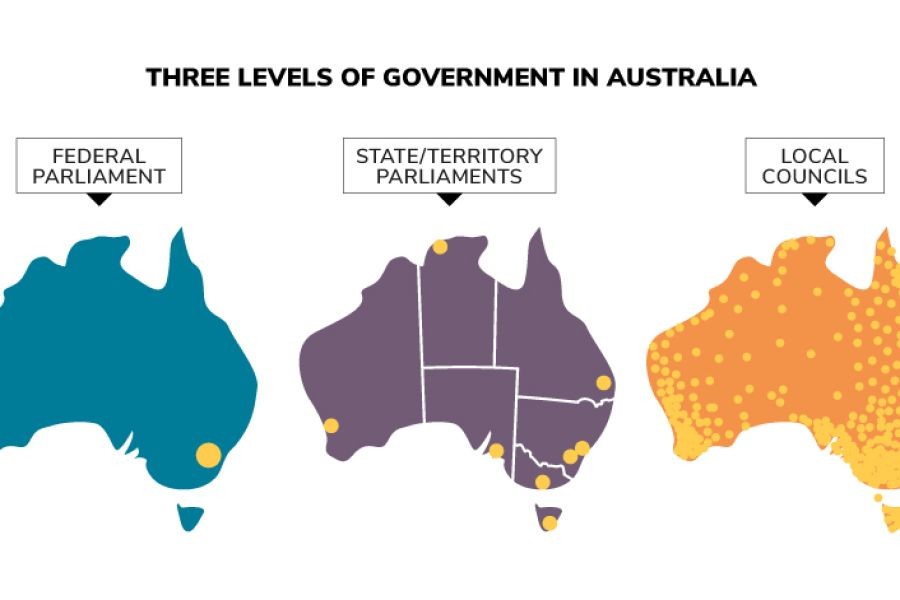
In the ever-evolving landscape of Australian governance, the interplay between federal and state laws presents a complex tapestry that impacts every facet of daily life, from commerce to healthcare. Understanding the power dynamics between these two levels of government is crucial for cultural analysts and policymakers alike. As Australia navigates challenges such as economic fluctuations, technological advancements, and environmental sustainability, the question of whether federal or state laws wield more influence becomes increasingly pertinent.
The Constitutional Framework: A Balancing Act
At the heart of the federal-state power dynamic is the Australian Constitution, which delineates the responsibilities of each level of government. The Constitution grants specific powers to the federal government, such as defense and foreign affairs, while leaving residual powers to the states. However, this division is not always clear-cut, leading to frequent jurisdictional overlaps and legal disputes.
For instance, the federal government holds the power to legislate on matters of national economic importance, yet states retain the authority over areas like education and health. This division can create friction, as seen in the ongoing debates over education funding, where both levels of government claim jurisdiction, leading to complex funding arrangements and policy negotiations.
Federal Supremacy in Practice
The concept of federal supremacy is embedded in the Australian legal system through the doctrine of inconsistency. When state and federal laws conflict, federal laws prevail. This principle ensures a cohesive national legal framework, but it can also limit state autonomy.
An example of this is the competition policy governed by the Australian Competition and Consumer Commission (ACCC). The ACCC enforces federal laws that override state regulations, ensuring uniformity in competition and consumer protection across the country. This centralization is crucial for businesses operating across state borders, providing them with a consistent regulatory environment.
State Power and Local Autonomy
Despite the overarching power of federal laws, states retain significant authority and independence, particularly in areas not explicitly covered by the Constitution. Health, education, and transportation are domains where state governments exercise substantial control, allowing them to tailor policies to local needs.
For instance, during the COVID-19 pandemic, varying state responses highlighted the importance of state autonomy. States implemented region-specific health measures, reflecting their unique circumstances and priorities. These actions, while sometimes at odds with federal guidelines, demonstrated the states' capacity to address local issues effectively.
Case Study: The Mining Industry in Western Australia
Western Australia (WA) stands as a testament to the power of state laws, particularly in the mining sector. As the world's largest producer of lithium, WA has crafted its regulatory framework to support the mining industry, contributing significantly to the national economy.
The state's Mineral Resources and Energy Laws provide a flexible and responsive legal environment that encourages investment and innovation. By setting its mining royalties and environmental regulations, WA ensures that local interests are prioritized while still contributing to the national economy. This approach has led to mining exports exceeding $135 billion annually, underscoring the economic impact of state autonomy.
Expert Opinion: The Role of State Governments in Economic Growth
Dr. Sarah Johnson, an economist at the University of Western Australia, emphasizes the importance of state governments in driving economic growth. "State governments are crucial in tailoring economic policies to local conditions, fostering innovation, and supporting industries that align with regional strengths," she notes. "Their ability to adapt quickly to changing circumstances is a significant advantage."
Debunking Myths: Federal vs. State Powers
- Myth: Federal laws always take precedence. Reality: While federal laws are supreme in cases of conflict, states retain significant power in areas not covered by federal legislation, such as education and health.
- Myth: State laws are irrelevant in national matters. Reality: State laws can significantly impact national policies, as seen in environmental regulations where states often lead the way in setting stringent standards.
- Myth: The federal government controls all economic policies. Reality: States have a substantial role in economic development, particularly through their control of land use and infrastructure planning.
Challenges and Opportunities: The Federal-State Dynamic
Navigating the federal-state dynamic presents both challenges and opportunities for policymakers and businesses. The complexity of overlapping jurisdictions can lead to inefficiencies and conflicts, but it also allows for diverse approaches and innovations tailored to local needs.
The Reserve Bank of Australia (RBA) highlights the need for cooperation between federal and state governments to ensure economic stability. In their 2023 report, the RBA emphasizes that coordinated policies can enhance economic resilience, particularly in times of global uncertainty.
Pros and Cons of Federal and State Laws
Pros of Federal Laws:
- Uniformity: Provides a consistent legal framework across the nation, essential for businesses operating in multiple states.
- National Cohesion: Ensures policies are aligned with national goals, such as defense and foreign relations.
- Resource Allocation: Federal government can allocate resources to areas of national importance, such as infrastructure.
Cons of Federal Laws:
- Limited Local Flexibility: May not address specific regional needs effectively.
- Bureaucratic Complexity: Can lead to slower decision-making processes.
- Centralization of Power: Can limit state autonomy and innovation.
Pros of State Laws:
- Local Adaptation: Allows for policies that reflect regional needs and priorities.
- Innovation: State governments can experiment with new approaches and solutions.
- Responsive Governance: States can react quickly to emerging issues and local challenges.
Cons of State Laws:
- Fragmentation: Can lead to inconsistencies and conflicts with other states or federal laws.
- Resource Limitations: States may lack the resources to address large-scale issues effectively.
- Potential for Inequality: Differences in state policies can lead to disparities in services and opportunities.
Future Trends: The Evolving Federal-State Relationship
As Australia confronts new challenges, the relationship between federal and state laws will continue to evolve. Climate change, technological advancements, and economic shifts will necessitate greater collaboration between the two levels of government.
According to a 2024 report by Deloitte, the integration of digital technologies in governance will enhance cooperation and efficiency. By leveraging data analytics and AI, governments can better coordinate policies and address complex issues, such as climate change and economic inequality.
Furthermore, the ongoing discussions about constitutional reform indicate a potential shift towards greater state autonomy in certain areas. These reforms could redefine the balance of power, allowing states to play a more prominent role in national policymaking.
Conclusion: Navigating the Complex Landscape
Understanding the intricate balance of power between federal and state laws is essential for navigating Australia's legal and cultural landscape. While federal laws provide a cohesive national framework, state laws offer the flexibility to address local needs and innovate. As Australia faces new challenges, the ability to balance these two levels of governance will be crucial for fostering economic growth, social cohesion, and environmental sustainability.
In an era of rapid change, the interplay between federal and state laws will continue to shape Australia's future. By embracing collaboration and leveraging technology, both levels of government can work together to create a prosperous and resilient nation.
Final Takeaways
- Federal laws provide consistency and cohesion across Australia, essential for national interests.
- State laws offer flexibility and innovation, allowing for tailored solutions to regional challenges.
- The balance of power between federal and state laws is dynamic, requiring ongoing collaboration and adaptation.
- Future trends indicate a potential shift towards greater state autonomy and the integration of digital technologies in governance.
Call to Action
To stay informed about the evolving legal landscape in Australia, join discussions on platforms like LinkedIn AU and participate in forums organized by the Business Council of Australia. Share your insights and experiences to contribute to a deeper understanding of the federal-state dynamic.
People Also Ask (FAQ)
- How do federal laws impact businesses in Australia? Federal laws provide a consistent regulatory environment, crucial for businesses operating across state borders, ensuring compliance and reducing legal complexities.
- What are the biggest misconceptions about federal vs. state laws? A common myth is that federal laws always take precedence, but states retain significant power in areas not covered by federal legislation.
- How can businesses navigate the federal-state legal landscape? Businesses should stay informed about both federal and state regulations, leveraging legal expertise to ensure compliance and capitalize on opportunities.
Related Search Queries
- Federal vs State Laws Australia
- Australian Constitution and State Powers
- Impact of Federal Laws on Australian Businesses
- State Autonomy in Australia
- Federal-State Collaboration in Australia
- Future of Australian Governance
- Australian Competition and Consumer Commission
- Economic Impact of State Laws in Australia
- Federal-State Legal Disputes in Australia
- Constitutional Reform in Australia





























Fred92H03
3 days ago